Trump dyed diesel executive order
Topics: Trump dyed diesel executive order, red dye diesel tax free, diesel prices October 2026, dyed diesel highway use, federal diesel tax 24.4 cents
The Trump dyed diesel executive order signed Monday night temporarily opens tax-exempt red-dyed diesel to highway use and directs the Treasury Department to defer the federal excise tax for the rest of 2026. President Donald Trump signed it on stage at a campaign rally at the Pinnacle Bank Expo Center in Grand Island, Nebraska, according to Reuters, CNN and the New York Post.
The order is more precise—and more conditional—than the rally shorthand. It instructs the Treasury secretary, consulting the Defense secretary, to defer federal diesel excise tax on on-road use of dyed fuel through December 31 without interest or penalties. It also tells Treasury to “explore pathways to eliminate the obligation to pay the deferred taxes.” That last phrase matters: elimination is an instruction to explore, not a present guarantee of forgiveness. The White House release presents the measure as emergency relief; Reuters likewise describes the tax as deferred while Treasury studies whether the liability can be removed.
Two other departments receive operational assignments. Agriculture is directed to ensure farmers can obtain dyed diesel in high-demand areas. Transportation is told to coordinate with states, industry leaders and labor organizations. Those instructions acknowledge a practical truth: changing the tax treatment does not automatically put the right fuel in every truck stop, rewrite every state's rules, or settle how distributors track gallons that once belonged only in off-road tanks, as Reuters reported.
Why this matters: relief is real, but the scale is bounded
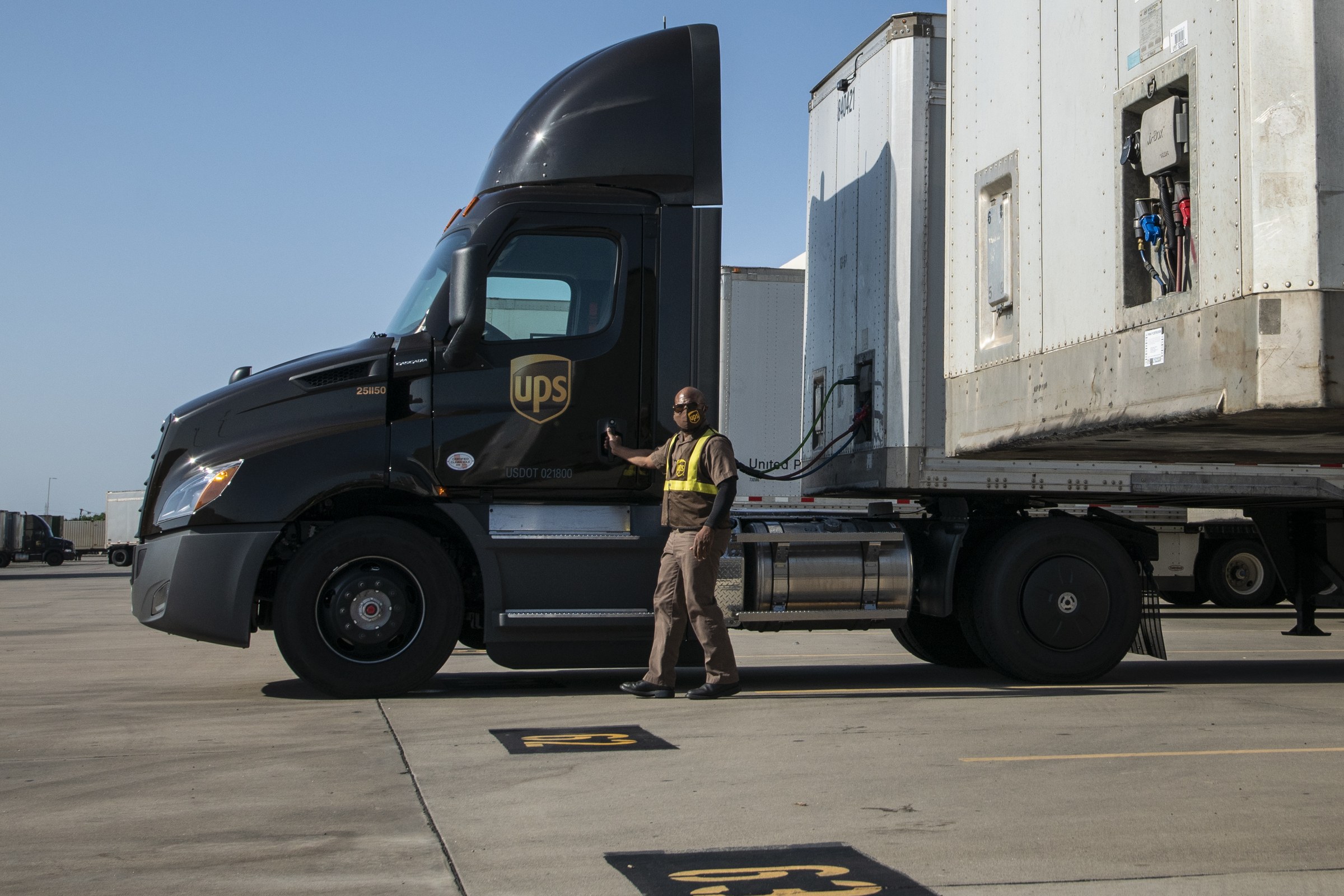
Diesel is not a niche consumer product. It moves trailers, farm inputs, construction equipment and much of the physical economy. When its price rises, carriers can add fuel surcharges, farmers face higher field and hauling costs, and retailers eventually confront pressure somewhere in the supply chain. That is the administration's strongest case: even a modest per-gallon reduction reaches a broad set of transactions, and the benefit can arrive faster than new refinery capacity or a diplomatic settlement.
The counterpoint is arithmetic. AAA's national diesel average was $6.32 a gallon on October 5, after remaining above $6 since September 11 and reaching roughly $6.50 the previous month, according to Reuters and USA Today. Removing 24.4 cents from $6.32 is a reduction of about 3.9% before distribution costs, retail pricing decisions or state action. That is useful money for a high-mileage fleet. It is not, by itself, a reversal of the international supply shock that pushed diesel to a record.
This is why two apparently conflicting judgments can both be true. The policy can produce meaningful cash-flow relief for fuel-intensive businesses while producing only a limited movement in the posted national average. USA Today reported expert skepticism that the change would materially resolve high fuel costs. The White House, meanwhile, emphasizes the immediate dollars retained on each fill. The responsible reading is neither “nothing” nor “solution”; it is a narrow tax intervention inside a much larger price crisis.
The diesel math: $60 is clear; “over $100” needs help from states
The White House uses a 24.4-cent federal rate and says a 250-gallon fill would save about $60. The multiplication is straightforward: 250 times $0.244 equals $61. USA Today, citing the Energy Information Administration, lists the rate at 24.3 cents, a one-tenth-cent presentation difference that produces essentially the same result. On a 100-gallon purchase, the federal portion is about $24.40; on 1,000 gallons, about $244.
Trump said an average trucker would save “over $100 every time they fill up.” The White House's own explanation ties that larger figure to states matching the federal move. Average state diesel taxes are 35.5 cents a gallon, according to EIA figures cited by USA Today. Combine 24.4 federal cents with 35.5 state cents and the average tax relief would be 59.9 cents per gallon—about $150 on 250 gallons. Without state participation, the $100-plus claim does not follow from the federal order alone.
Scale also matters when evaluating last week's G7 announcement of a 100 million-barrel diesel release. Recent EIA data put U.S. distillate consumption near 3.7 million barrels a day, roughly 4 million in round numbers, as reported by Wyoming News. At that pace, 100 million barrels equals roughly 25 to 27 days of U.S. use. But it would be wrong to call the release a month of free U.S. supply: the barrels are international, timing and product quality matter, and Reuters noted it was unclear how much represented entirely new supply.
Why diesel is dyed—and what changes on the highway
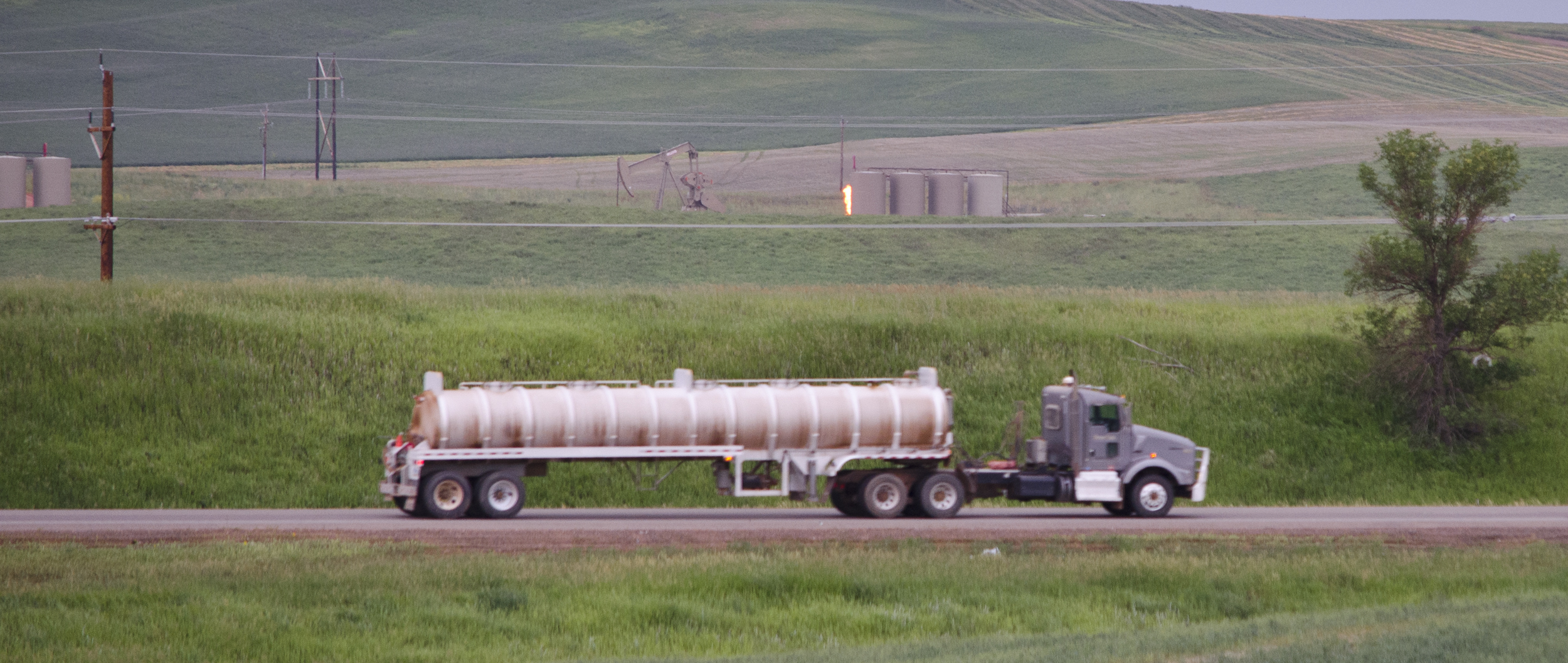
Red dye is an enforcement marker, not a different energy product. Off-road users such as farms and construction sites have long been able to buy diesel without the road-use tax because the fuel powers equipment that generally does not use public highways. Dye lets inspectors distinguish that tax-exempt fuel from taxed highway diesel. Trump summarized the point at the rally in characteristically informal language, saying he did not know “what the hell it is” before describing it as the same diesel sold tax-free, according to the New York Post.
The order temporarily waives the off-road restriction for the federal tax treatment. That creates an unusual bridge between two fuel channels that have been kept apart by tax law and compliance systems. The immediate question for suppliers is how quickly dyed inventory can reach highway customers without starving agricultural or construction users who already depend on it. Agriculture's high-demand-area instruction appears designed to guard against that displacement risk, while Transportation's coordination mandate puts states, carriers and labor at the table, according to Reuters.
The tax is not simply general revenue. Federal diesel taxes support the Highway Trust Fund, which finances roads and transit, as USA Today explains. Every deferred gallon therefore creates a second ledger entry: relief for the buyer and delayed revenue for transportation programs. How large the gap becomes depends on eligible gallons, enforcement, and whether Treasury ultimately collects the deferred amount. A short emergency deferral may be manageable. A permanent cancellation would turn the funding question from timing into a real fiscal choice.
The price crunch came from several directions at once
The administration is acting against a market shaped by war and disrupted trade, not a normal seasonal fluctuation. CNN and Reuters point to the U.S.-Israel war with Iran, Ukrainian strikes on Russian refineries and Chinese export restrictions as overlapping causes. Each touches a different part of the diesel balance: crude and shipping risk in the Middle East, lost refining capacity in Russia, and fewer export barrels from China.
That combination helps explain why a tax change may show up at the pump yet fail to restore pre-crisis prices. Taxes are one component of retail diesel. Crude cost, refining margins, transport, regional inventories and retailer pricing remain. If military risks recede or refinery output returns, prices may fall for reasons that have little to do with the order. If disruptions worsen, the 24.4-cent relief may be swallowed by another market increase. Attribution will be politically tempting and economically difficult.
The G7's 100 million-barrel release is the supply-side counterpart to the tax deferral. Trump pressed allies for the release, and his administration had also considered restricting U.S. diesel exports, Reuters reported. The release can soften scarcity if barrels arrive where refiners and distributors need them. An export ban, by contrast, might hold more product at home but could distort allied markets and trade flows. For deeper context, see Signal Post News's analyses of the G7 diesel reserves release, warnings that oil stores are “scarily thin”, and what the administration knew about Iran-war energy-price risk.

Who benefits—and who carries the cost
Truckers get immediate cash-flow relief
For independent operators and small fleets, the clearest benefit is timing. Fuel is purchased before freight invoices are paid. Cutting about $61 from a 250-gallon fill leaves cash available for tires, insurance, maintenance or payroll. Larger fleets multiply smaller per-gallon savings across many tractors and routes. Whether consumers see an equivalent reduction in shelf prices is less certain: freight contracts, surcharges, competition and inventory cycles determine how quickly savings pass through.
Trump said the order would save farmers “millions and millions of dollars” and “drive down the cost of all goods, including groceries very substantially,” according to the New York Post and USA Today. The direction of the effect is plausible—lower transport costs reduce pressure—but “very substantially” is a political forecast, not an established result. Food prices also reflect labor, processing, packaging, crop yields and retail margins.
Farmers gain protection, but access could tighten
Farmers already qualify for tax-exempt dyed diesel in off-road equipment, so their direct new benefit is narrower than the rally framing may imply. They can benefit when trucks hauling inputs and crops pay less. They may also face competition for the dyed-fuel pool once highway drivers enter it. The Agriculture Department's mandate to ensure access in high-demand areas is therefore not ceremonial; it is a safeguard against relief for one group creating shortages for another.
States face a political and budget choice
States are under pressure to match the federal action if the administration wants the “over $100” fill-up example to become typical. A governor can point to household and business relief. A transportation department can point to lost road revenue. States also have different tax rates, budget reserves and legal procedures, so a uniform response is unlikely. Some may suspend taxes, others may offer narrower rebates, and others may decline.
The Highway Trust Fund absorbs the federal delay
The federal side has the same trade-off at national scale. Money left with drivers is money not immediately credited to the Highway Trust Fund. If the liability is merely postponed, revenue could return later—along with a collection problem. If the liability is forgiven, Congress and the administration would eventually have to accept lower trust-fund receipts, replace the money, reduce spending or borrow. The order does not yet resolve that accounting.
The legal question: can an executive order defer a congressionally set tax?
Congress enacted the federal diesel excise tax, and Congress ordinarily controls taxes. The executive branch, however, administers collection and has used enforcement and deadline discretion in emergencies. The unresolved question is how far that administrative authority reaches here—especially if “deferral” becomes cancellation. The order's language may be designed to distinguish immediate administrative relief from a later legal pathway to elimination.
That distinction deserves precision rather than a premature verdict. The order is in force as an executive directive; whether its tax provisions survive a challenge would depend on the legal authority Treasury cites, the details of implementing guidance and the standing of any challenger. Congress could settle the issue by passing a law that authorizes relief, appropriates replacement Highway Trust Fund money or rejects forgiveness. Until Treasury publishes its mechanism, categorical claims that the tax is permanently gone—or that the order is necessarily invalid—run ahead of the available facts.
The uncertainty is practical, not academic. A trucking company needs to know whether to treat 24.4 cents per gallon as permanent savings or as a payable liability due after December 31. Responsible accounting may require reserving for the tax until Treasury says otherwise. The phrase “no interest or penalties” protects against the cost of waiting during 2026, according to the White House. It does not, on its face, erase the principal.
The rally staging made the economics inseparable from politics
White House aide Natalie Harp carried the order onto the stage; Trump signed at the podium and tossed the Sharpie into the cheering crowd, according to USA Today. He mocked former President Joe Biden's use of an autopen and told Republican Sen. Pete Ricketts and Gov. Jim Pillen, both seeking reelection, that the move “should absolutely assure your election,” the New York Post reported. The scene turned tax administration into campaign theater by design.
The timing is equally political. Midterm voting is set for November 3. A Reuters/Ipsos poll completed October 5 put Trump's approval at a record-low 32% and registered voters' congressional preference at 44% Democratic to 37% Republican, according to Reuters. Those numbers explain the urgency of an affordability message; they do not prove how the policy will affect votes. Truckers, farmers and consumers may value immediate relief, question its size, or do both.
Trump has defended the fuel-price burden as “a small price to pay” to prevent Iran from obtaining a nuclear weapon and has argued prices will fall after the wars are resolved, USA Today reported. That is the administration's strategic case: security objectives can impose temporary economic costs. Critics can reasonably answer that households and freight operators need relief now. The order attempts to bridge those positions without changing the underlying foreign-policy course.
What happens next
1. Treasury guidance will determine whether “deferred” means manageable
The first document to watch is not another speech but Treasury's implementation. It must define eligible purchases, recordkeeping, effective dates, treatment of already-taxed inventory and the procedure after December 31. Most importantly, it must tell buyers whether the tax remains a contingent liability. If Treasury cannot lawfully erase it without Congress, the January bill could become both a business shock and a political argument.
2. State decisions will determine the headline savings
Transportation's coordination effort should reveal which states are prepared to match the federal deferral. A state-by-state map of tax action will matter more to drivers than the national average because the combined saving could range from only the federal 24.4 cents to substantially more. States will also decide how they protect road budgets and police cross-border fuel purchases.
3. Distribution will test the policy's physical limits
Dyed fuel has to be available where highway drivers can legally buy it, while farms and construction sites keep their supply. Terminals, wholesalers and retailers need compatible storage, labeling and accounting. If demand moves faster than logistics, local shortages or price spreads could dilute the advertised benefit. The Agriculture and Transportation directives are meant to reduce that risk; execution will show whether they can.
4. Markets may overwhelm—or amplify—the tax effect
Trump told the crowd, “We are not going to need it long, I hope,” according to Reuters, and called signing the order “an honor,” according to USA Today. His hope could be vindicated if war risks ease, refinery capacity returns and export flows improve. In that case, the tax change would accelerate a decline already under way. If disruptions persist, the federal relief may remain visible only as a smaller increase than drivers otherwise would have faced.
5. Voters will judge the result, not the multiplication
By Election Day, many drivers will know whether the pump price fell and whether their state joined. They will not yet know whether deferred taxes have been forgiven. That timing favors an immediate benefit while pushing the hardest fiscal and legal questions past the vote. Voters can fairly credit the administration for acting quickly and still demand clarity about the later bill; they can also criticize the policy's limits without denying the value of $61 retained on a large fill.
The bottom line
The executive order is a targeted bridge across an extraordinary diesel-price spike. Its federal value can be stated without spin: about 24.4 cents a gallon, roughly $61 on 250 gallons, or about 3.9% of a $6.32 pump price. State matching could push the saving above $100 per large fill. None of that repairs refineries, ends wars or guarantees cheaper groceries.
The most consequential word in the order is not “dyed” but “defer.” If Treasury finds a lawful route to eliminate the liability—or Congress acts—buyers keep the relief. If not, the government has shifted a tax bill across the calendar while delaying Highway Trust Fund receipts. The policy deserves to be measured against both ledgers: what truckers and farmers save now, and what taxpayers or transportation programs may be asked to cover later.
Sources
- Reuters: Trump signs order expanding access to tax-exempt diesel
- CNN: diesel prices and the executive order
- New York Post: rally signing and red-dyed diesel remarks
- White House: action to lower diesel costs
- USA Today: tax-free dyed diesel order and expert reaction
- Wyoming News: EIA distillate-demand data
Reporting note: Price and polling figures are dated October 5, 2026. Savings estimates are arithmetic, not forecasts. The article distinguishes the current tax deferral from the unresolved possibility of later forgiveness.