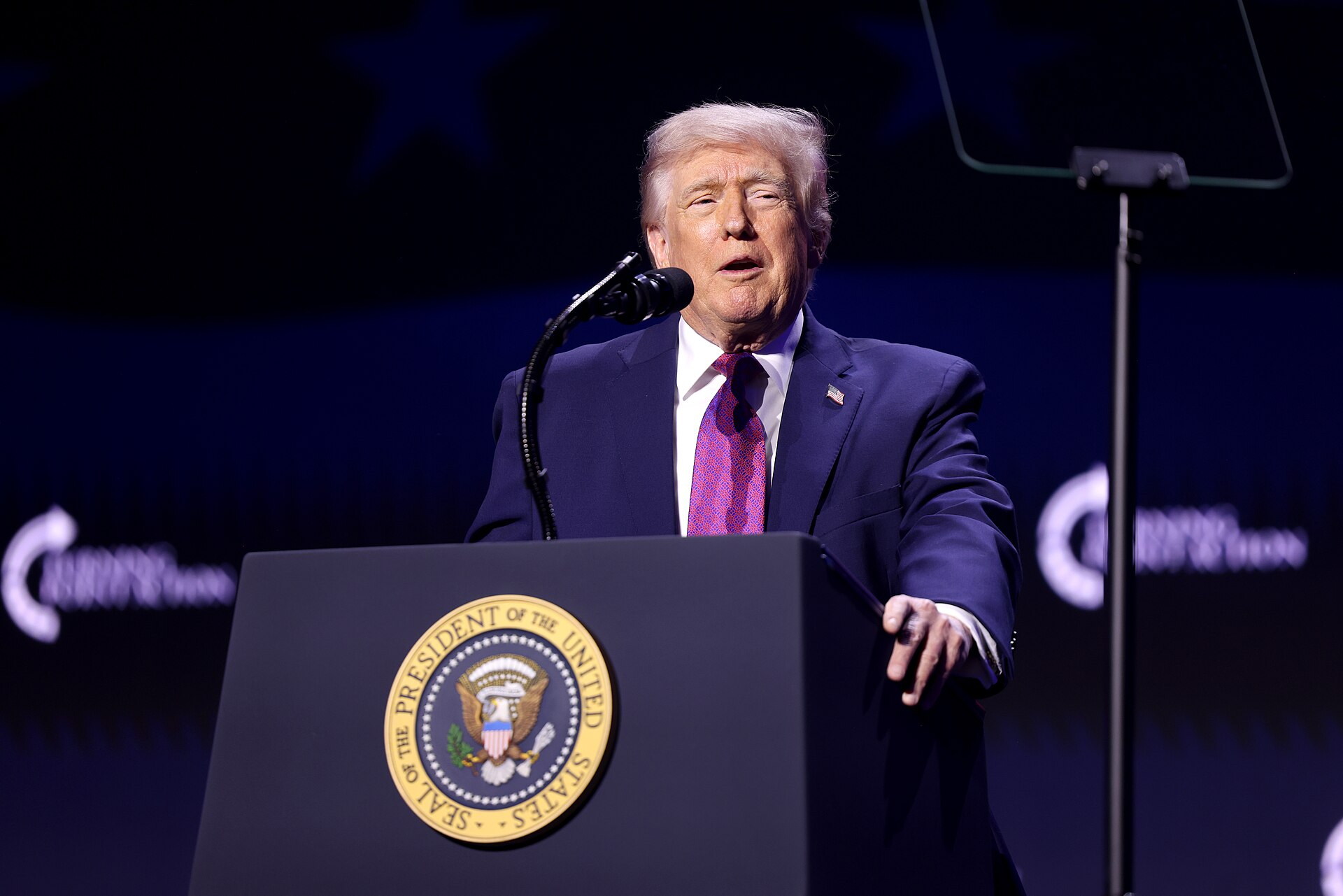
A Trump rally protester was allegedly punched by a supporter at the president’s Clemson-area rally for Senator Darline Graham on Wednesday night — and Trump praised the punch from the stage, telling the man he reminded him of Evander Holyfield.
Politics / 2026 Midterms — at least a dozen hecklers interrupted the South Carolina rally, two protesters were reportedly struck on camera, and the punchline from the podium was about a punch
What happened inside the arena
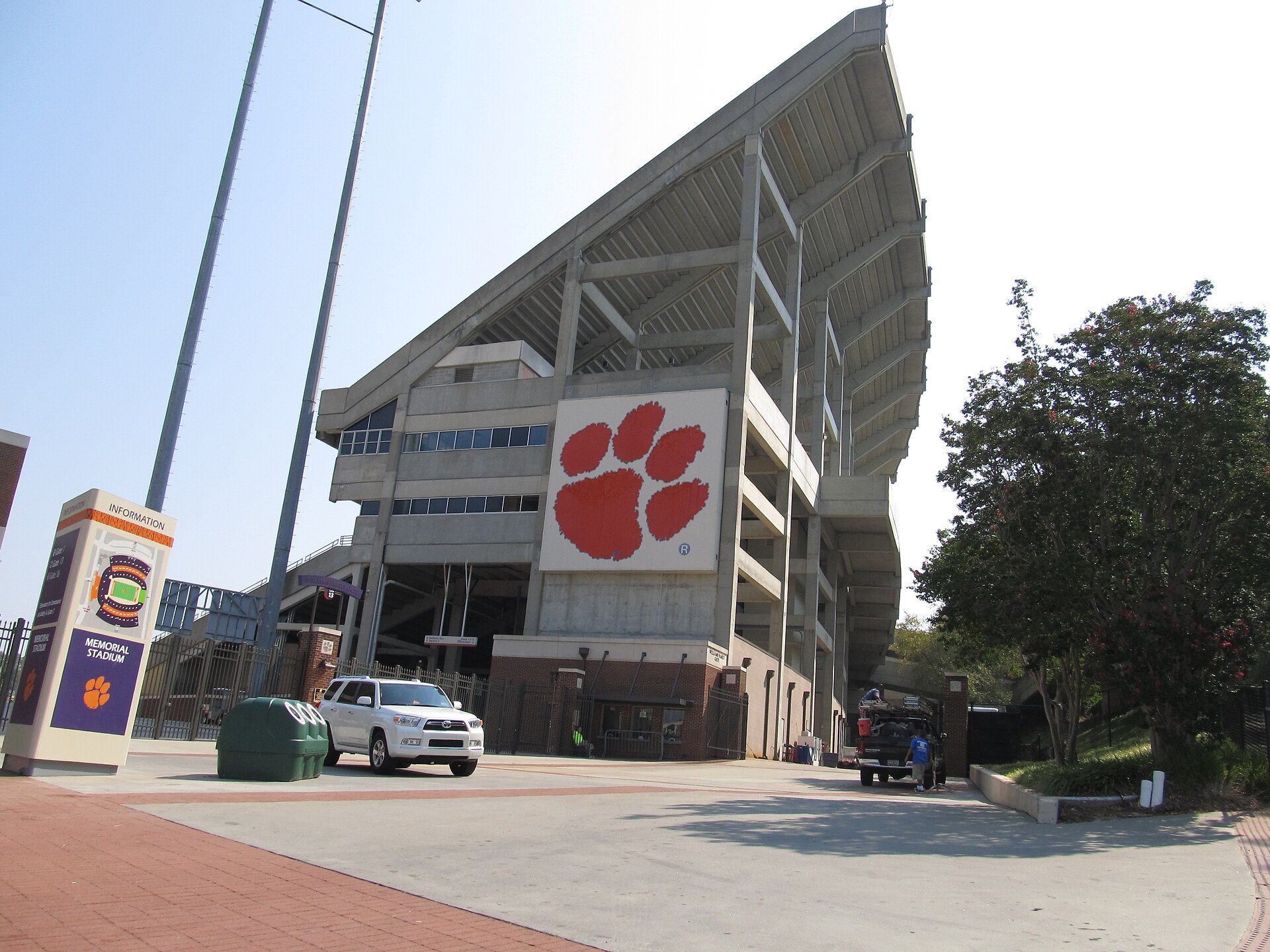
The rally, held at Clemson University’s T. Ed Garrison Arena in Pendleton, was supposed to be a straightforward rescue mission: Trump came to South Carolina to push Darline Graham, the appointed Republican senator running for a full six-year term in her late brother Lindsey Graham’s seat, over the line in a race that polling shows is unexpectedly close less than two weeks before the November 3 election. Thousands filled the arena, according to the Greenville News live blog, which followed the event from the first lines outside to Trump’s arrival aboard Marine One. Graham herself spoke shortly after 6 p.m. Eastern, and Trump took the stage to Lee Greenwood’s “God Bless the USA” shortly after 7 p.m.
The interruptions began almost immediately. The Greenville News noted that a couple of protesters were escorted from the venue during the first few minutes of Trump’s remarks. What followed, by the Post’s count, was at least 12 hecklers in total — an unusually large number even by the standards of Trump’s rallies, the Post noted, and one that repeatedly derailed the president’s set pieces. “It’s always right at my punchline,” Trump complained at one point. “I’ve had three punchlines, and three of them — they time them beautifully.”
Twice, according to the reports, the heckling turned physical. The Guardian reported that footage emerged online of an apparent Trump supporter striking a protester who was being escorted out by police in the back of the head. The Post described an earlier heckler, a man wearing a suit and tie, being followed outside the expo center’s main floor and smacked on the head by another older man. And in the moment that defined the night, a protester near the stage was allegedly punched by a senior-citizen supporter as deputies removed him — prompting Trump’s Holyfield comparison. “They don’t realize it’s really dangerous to do that,” Trump said of the hecklers, according to the Post. “It takes courage to do that at a Trump rally. He got whacked. Just he started, you know, that screech, whatever the hell they do, whatever they practice. And as he’s in the process of the screech, he got whacked!” The precise words the hecklers shouted were difficult to hear, the Post reported, though one young man showed the president two middle fingers. Trump dismissed the protesters as paid operatives, the Guardian reported — a claim for which no evidence was offered at the rally.
The race the rally was meant to save
The chaos landed in the middle of one of the strangest Senate races of the 2026 midterms. Darline Graham was appointed to her brother’s seat after Lindsey Graham died unexpectedly in July, and she is now defending it against Dr. Annie Andrews, a Charleston pediatrician whose campaign has run surprisingly close in a state Trump won in 2024 by nearly 18 percentage points, as Reuters reported in its pre-rally analysis. Non-partisan analysts rate the race only as likely or leaning Republican — language nobody expected to use about a South Carolina Senate seat this cycle.
The rally also carried a fresh rift. Last week Trump waived sanctions on Russia that Lindsey Graham had championed and that had been named in his honour, putting him publicly at odds with Darline Graham, who told the Associated Press she disagreed with the decision. “Personally, I would choose to put the pressure on Russia to end the war and get gas prices down,” she said. “I don’t trust Putin, and I don’t trust Russia.” Trump nonetheless campaigned for her in person on Wednesday — and, away from the hecklers, attacked Andrews in the harsh terms he first used on Truth Social earlier in the week, a broadside we covered in our report on Trump’s Truth Social attack on Annie Andrews. Andrews told Forbes last month: “I don’t support biological men playing in women’s sports and I also don’t support and have never performed gender surgery on minors.” Her campaign did not immediately respond to the Post’s request for comment on Wednesday night.
Why this matters
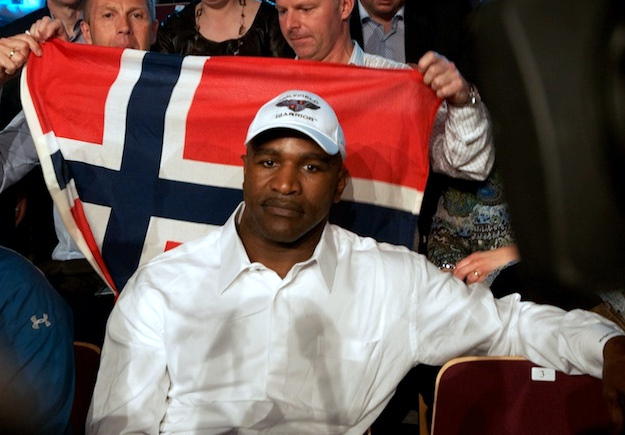
A president praising a punch thrown at a protester is not a gaffe; it is a signal, and it travels. The words were spoken on camera, at a rally broadcast and clipped in real time — one clip of the Holyfield exchange posted on X during the event was already ricocheting around social media before the rally ended. Every future heckler, and every future supporter sitting near one, has now heard the president of the United States describe being hit at his rally as something the victim brought on himself, and the man who threw the punch as a figure worthy of comparison to a four-time heavyweight champion who was, pointedly, in the room: Holyfield had flown to South Carolina with Trump that afternoon and attended the rally.
The context makes the signal heavier. This was not the first Trump rally of this midterm swing to produce a struck protester. In Youngstown, Ohio, earlier this month, a woman protesting over the Epstein files was punched by supporters at a rally for Senator Jon Husted — an episode we covered in our Ohio rally report — and in Greenville, North Carolina, just one night earlier, on October 20, video appeared to show a supporter striking a protester as he was led away, as we reported in our Greenville rally coverage. Three rallies, three struck protesters, inside ten days. A pattern repeated often enough stops being a series of incidents and becomes an atmosphere — one in which the line between heckling, which is protected political speech however rude, and being hit for it is being publicly blurred from the podium.
There is a historical echo that Americans of a certain age will hear without prompting. The Post itself reached for it, noting that Wednesday’s scuffles were reminiscent of Trump’s chaotic 2016 campaign events, when rally violence — including a protester being sucker-punched in North Carolina — became a recurring national story and Trump mused from the stage about paying supporters’ legal fees. A decade later, the setting has changed in one respect: the man praising the punch is no longer a candidate. He is the sitting president, speaking in the final fortnight of a midterm campaign, at an event staged to hold a Senate seat his party cannot comfortably afford to lose.
What the numbers say about the stakes
Strip away the spectacle and the arithmetic of the night is stark. Thirteen days remain until the November 3 election. South Carolina, which Trump carried by nearly 18 points in 2024, is rated only likely or leaning Republican in a Senate race Republicans expected to hold without effort. More than 16 million Americans have already voted early, according to University of Florida Election Lab figures cited in the Guardian’s live coverage, and national polling published the same day put Trump’s approval at 36 percent in the New York Times/Siena survey, with likely voters preferring Democratic congressional candidates by 11 points. A rally that was meant to project strength for a wobbling incumbent instead produced a headline about a punch — in a cycle where the president’s party is defending narrow margins everywhere, the difference between a rally that helps and a rally that dominates the news for the wrong reason is not academic.
Both sides, stated plainly
Trump’s defenders will make an argument that deserves to be stated in its strongest form: the protesters came to disrupt a lawful political rally, they did so repeatedly and by the dozen, and being escorted out is the ordinary consequence of shouting down a speaker. Trump’s own framing — that it “takes courage” to heckle at his rally, and that hecklers know the risk — casts the punches as the crowd’s rough justice rather than his instruction, and no report from Wednesday night suggests Trump directed anyone to hit anyone. The Guardian was careful to describe the central punch as alleged, and the facts of who struck whom, and whether anyone was arrested, remained unconfirmed as the rally ended.
His critics will answer that the strongest form of that argument collapses at the exact point where the president started praising. A crowd removing a heckler is one thing; a president telling the man who hit him “I loved that” and comparing him to a boxing great is another, and the distinction is not subtle. When the most powerful person in the room applauds the punch, he sets the terms for the next rally, and the next — and the record of this month, in Ohio and North Carolina before South Carolina, suggests the terms are already being learned. No statement from the Graham or Andrews campaigns on the punches themselves had been reported as of Wednesday night, and law enforcement had not publicly confirmed any arrest.
What happens next
Three things will decide whether Wednesday night becomes a footnote or a turning point of the final fortnight. First, the factual record: whether sheriff’s deputies or arena security identify and charge either man reported to have struck a protester, and whether the protesters themselves face charges — answers that will either restore a line or confirm there isn’t one. Second, the campaign record: whether Darline Graham, who needs voters well beyond the rally hall in a race polling this close, distances herself from the praise or lets it stand as the rally’s defining clip; her disagreement with Trump over Russia already showed a candidate willing, carefully, to separate herself from the president when her state demands it. Third, the pattern: Trump’s midterm blitz continues through the final 13 days, and every remaining rally now takes place under a simple test — whether a heckler can shout, be removed, and leave unhit. That ought to be the easiest test in American politics to pass. On Wednesday night in Pendleton, it wasn’t.
Sources
- New York Post, October 21, 2026 — at least 12 hecklers, two protesters reportedly assaulted on camera, Trump’s Holyfield praise and “he got whacked” remarks, no arrest confirmed
- The Guardian live coverage, October 21, 2026 (syndicated) — protester allegedly punched and praised, second protester struck in the back of the head on footage, paid-operative dismissal, sanctions context
- Greenville News (USA Today Network) live blog, October 21, 2026 — T. Ed Garrison Arena, Pendleton; Graham speaking shortly after 6 p.m. ET; protesters escorted in the opening minutes; outside protests
- Reuters, October 21, 2026 — pre-rally analysis: tight South Carolina Senate race, Russia sanctions rift with Darline Graham, November 3 stakes