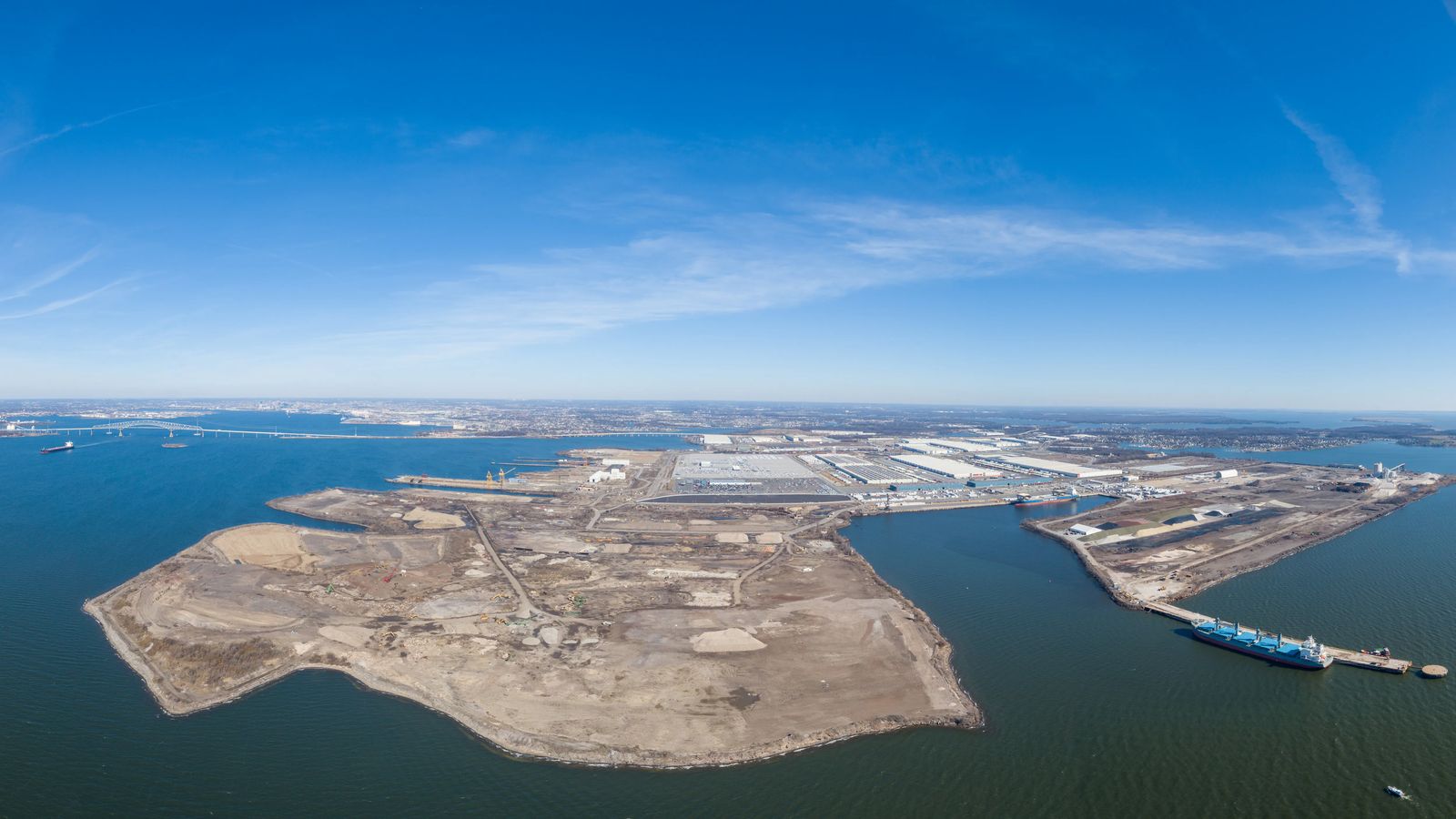
The Trump Anduril submarine announcement is a $6.6 billion wager on a new way to build an old symbol of American power. President Donald Trump is expected to appear Tuesday afternoon at Tradepoint Atlantic in Baltimore County, where Anduril Industries plans a two-million-square-foot manufacturing campus called Arsenal-2. The financial package combines $3.7 billion in Anduril private capital with a U.S. Navy production contract worth up to $2.9 billion.
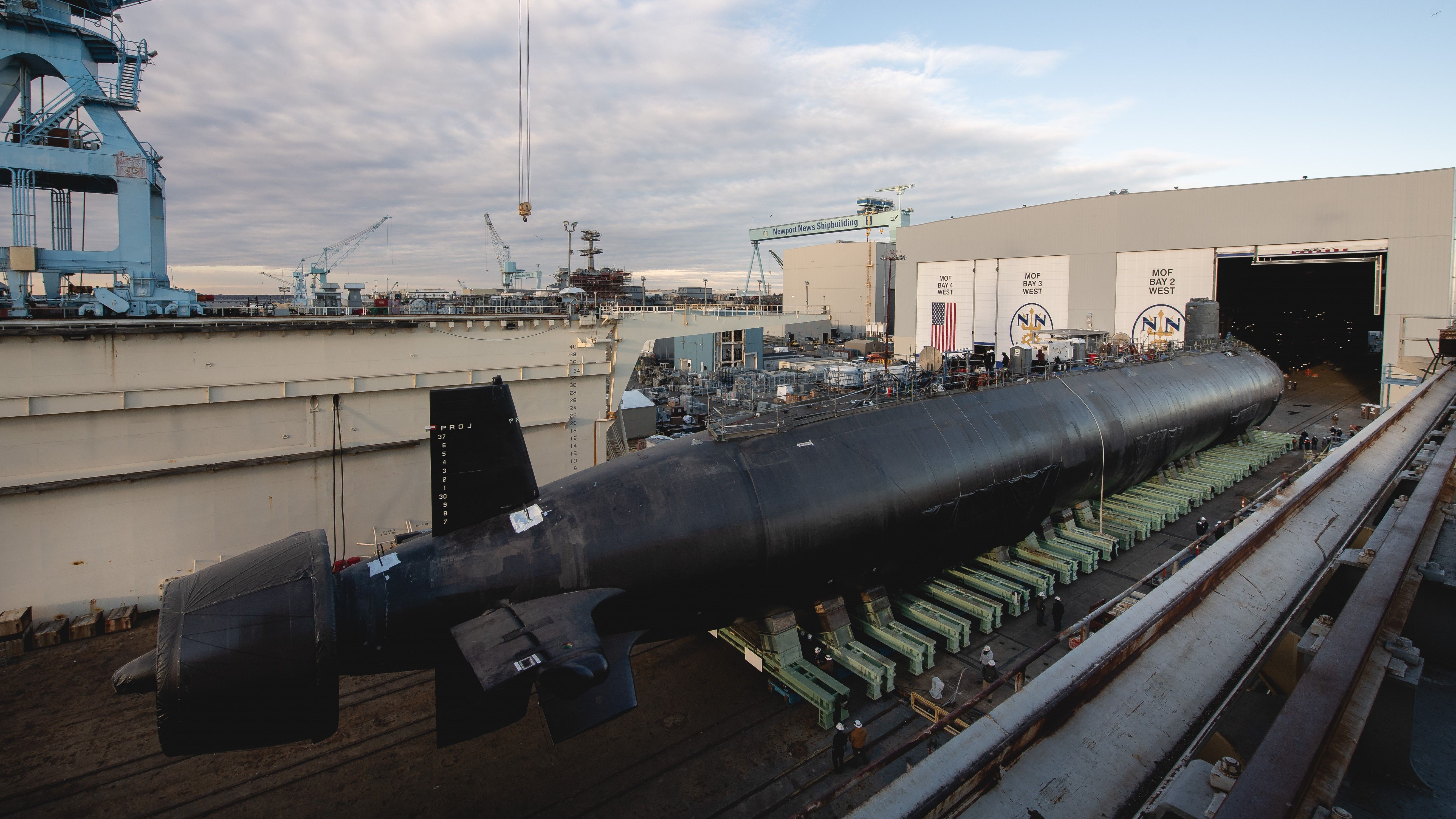
The first products would be torpedo tubes, followed by bows, sterns and other complex modules and assemblies for Virginia-class nuclear attack submarines. Arsenal-2 would not replace America's two submarine builders: final assembly remains at General Dynamics Electric Boat in Groton, Connecticut, and Huntington Ingalls Industries' Newport News shipyard in Virginia. Anduril would operate as a new supplier beneath Electric Boat and alongside Huntington Ingalls inside a supply chain that has struggled for years to match Navy demand.
That distinction matters. This is not a third final-assembly shipyard. It is an attempt to give the two existing yards more finished sections, more predictable throughput and fewer production bottlenecks.
Why this matters for the U.S. Navy submarine industrial base
The Navy is receiving roughly 1.3 Virginia-class boats a year against a long-standing goal of two. With 26 in service, every missed delivery compounds pressure on a fleet that must cover the Atlantic, Pacific and undersea intelligence missions while older submarines retire. The Navy has said it expects to reach a two-per-year pace around 2032.
Arsenal-2 is designed to add about nine million labor hours annually—roughly 15% of current industrial capacity. Put another way, the estimate implies an existing system on the order of 60 million annual labor hours. That is large enough to matter, but not large enough to solve every welding, design, supplier and workforce problem by itself.
The timing creates both the strategic case and the central limitation. Initial operations are not expected until 2030. If the Navy's own 2032 target holds, the new factory could arrive in the decisive ramp-up window. If delays push construction, permitting or workforce training to the right, Arsenal-2 will offer little relief during the next several budget cycles.
China's much larger commercial shipbuilding base gives the proposal added urgency. Submarines are not container ships, and tonnage comparisons can mislead, but commercial scale supports deep pools of welders, yards and suppliers. Washington's challenge is rebuilding specialized nuclear-submarine capacity without assuming that a large factory alone can recreate decades of production knowledge.
What the Arsenal-2 submarine facility changes—and what it does not
Anduril is best known as a fast-growing defense-technology company, not a traditional shipbuilder. Arsenal-2 marks its first entry into the supply chain of a major legacy weapons program. Its pitch is that private capital, modern factory design and outcome-based contracting can move faster than the cost-plus practices that dominate parts of defense procurement.
The company says, “Anduril, not the taxpayer, takes on the majority of the execution risk.” President Chris Brose describes the project as “bringing it back to shipbuilding glory.” White House deputy press secretary Anna Kelly framed the announcement as both an expansion of the defense industrial base and a manufacturing revival.
The business model shifts risk, but it does not erase it. A contract worth up to $2.9 billion still requires milestones, oversight and acceptance standards. Anduril has not built submarine components at this scale before. Nuclear-submarine work demands exacting quality control, traceability, cybersecurity and a workforce able to produce repeatedly—not merely a successful first article.
Supporters see that inexperience differently. They argue that the backlog is evidence the current structure needs another source of capital and another production system. Anduril's willingness to put $3.7 billion of its own money at stake gives it an incentive to make the factory productive rather than simply bill for effort. The fair test will be delivery: components accepted on schedule, at the required quality and at a cost the Navy can sustain.
Why Sparrows Point and Bethlehem Steel history matter
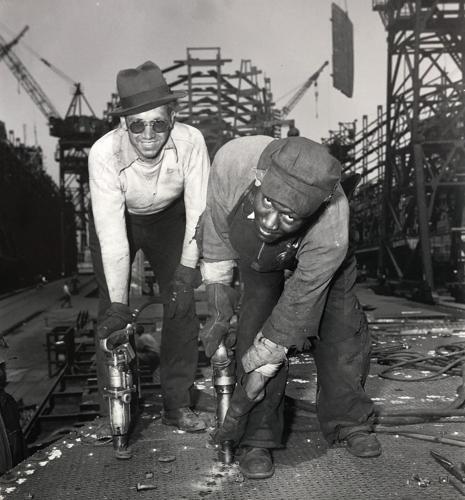
Sparrows Point is not a blank canvas. Bethlehem Steel once made the peninsula synonymous with American heavy industry and employed generations of Baltimore-area workers. The steel mill's collapse left an enormous industrial scar and a skilled-manufacturing memory that redevelopment could not instantly replace. Tradepoint Atlantic has remade the site as a logistics and industrial hub since 2014.
For Baltimore County, the projected 3,100 direct jobs would make Anduril a top-five private employer, according to the announcement. The White House puts the wider direct-and-indirect employment effect above 13,000 jobs and estimates $2 billion in annual economic output. Annual output is not the same as payroll, profit or tax revenue, but it signals a recurring production footprint rather than a one-time construction burst.
There is also a public-price question. Roughly $500 million in state and county subsidies remains subject to legislative approval, including a property-tax incentive worth up to $210 million over 30 years. Backers can argue that public support is justified by thousands of jobs and a strategic industrial asset. Skeptics can reasonably ask what protections taxpayers receive if hiring, construction or production targets slip.
Who benefits from the Anduril Baltimore shipyard
Anduril gains an industrial foothold
Success would move Anduril beyond drones, software and autonomous systems into the most demanding tier of traditional defense production. It would also make the company a supplier to the prime contractors whose relationships and standards define naval shipbuilding.
Baltimore County gains a long-horizon employer
The direct-job projection is significant, especially at a site built for heavy industry. But the distribution of benefits will depend on hiring pipelines, apprenticeship programs, wages, supplier geography and whether residents can reach the jobs. Headline employment totals do not answer those questions.
The Navy gains a new capacity option
For the Navy, additional modules could allow Electric Boat and Newport News to concentrate more labor on integration, testing and final assembly. That is the promise. The risk is that adding a supplier creates new interfaces, certification work and scheduling dependencies before it improves throughput.
The skeptical case: execution, subsidies and a four-year gap
Three concerns deserve more than a footnote. First, Anduril has never manufactured ship components at this volume. The company must prove that methods built around software and autonomy translate to thick steel, nuclear-quality procedures and the unforgiving rhythm of submarine construction.
Second, the public subsidy package is not final. Legislative approval gives state and local officials leverage to demand clear job, investment and clawback terms. It also means the project's public financing remains exposed to political bargaining.
Third, 2030 is a long way from the current production shortfall. The fleet has to manage the gap between 1.3 boats a year and the two-boat goal now. Existing yards and suppliers will still carry that burden while Arsenal-2 is permitted, built, staffed and certified.
The announcement's political timing will also invite scrutiny. Trump's Baltimore stop is a rare appearance in a blue state during a midterm swing that includes Texas, Alabama and Nebraska before the November 3 elections. Ravens cornerback Marlon Humphrey is set to join him before the remarks. A high-profile industrial pledge offers both national-security substance and campaign imagery; those facts can coexist without proving the project's merits or defects.
What happens next for Virginia-class submarine production
The delivery scenario: permitting begins immediately, construction stays on schedule, suppliers qualify and initial torpedo-tube production starts in 2030. In that case, larger bows, sterns and assemblies could help the industrial base approach the Navy's 2032 two-boat goal.
The delay scenario: environmental review, site work, equipment lead times or workforce shortages push operations past 2030. The Navy would then have committed planning effort to capacity that arrives after the most important part of its production recovery.
The integration scenario: the buildings open on time but the hardest constraints move elsewhere—to castings, propulsion components, design changes or final-assembly labor. Nine million added hours would still be useful, yet the overall delivery rate might improve less than the 15% capacity figure suggests.
The political-risk scenario: midterm results alter the balance in Congress or Maryland's legislature, changing oversight, contract funding or subsidy terms. Long defense programs routinely outlast the political coalition that launches them. Durable milestones and enforceable performance standards matter more than Tuesday's ceremony.
The Trump administration's 2026 maritime action plan frames shipbuilding as economic policy, defense policy and competition with China. Arsenal-2 fits all three ambitions. But industrial bases are rebuilt in quarters and years, not at podiums. The measure of this announcement will be whether steel, workers and certified modules move through Sparrows Point on schedule—and whether the two established yards can turn that added flow into submarines delivered to the fleet.
Related coverage
- South Korea's Lee Pledges Nuclear-Powered Submarines by Mid-2030s
- Inside the $15 Billion Iowa Steel Plant Package
- Trump Paxton San Antonio Rally: What It Signals for Midterms