Published October 2, 2026 at 1:15 a.m. PDT
Trail Blazers fire announcer
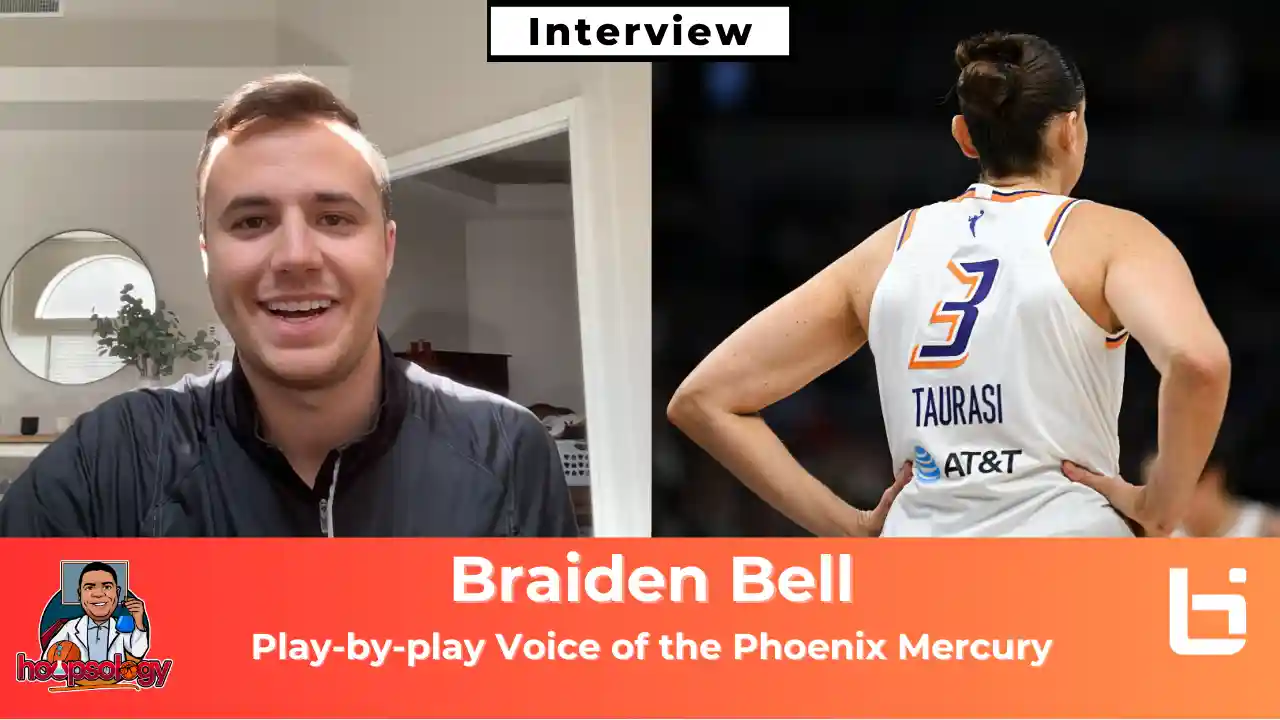
PORTLAND, Ore. — The Portland Trail Blazers fired newly hired television play-by-play broadcaster Braiden Bell on Thursday, October 1, less than eight hours after announcing him, after racist and misogynistic posts from his existing X account resurfaced. Bell wrote the posts in 2012 and 2013, when he was about 15. He is now 29.
KGW reporter Devon Haskins found the posts, contacted the franchise before publishing and triggered a sequence that ended with Bell losing one of the most visible jobs in Oregon sports before he had called a game. KGW reported that it found no offensive posts from 2015 onward and that Bell's feed later became almost entirely sports-focused. Bell had not publicly responded as of publication.
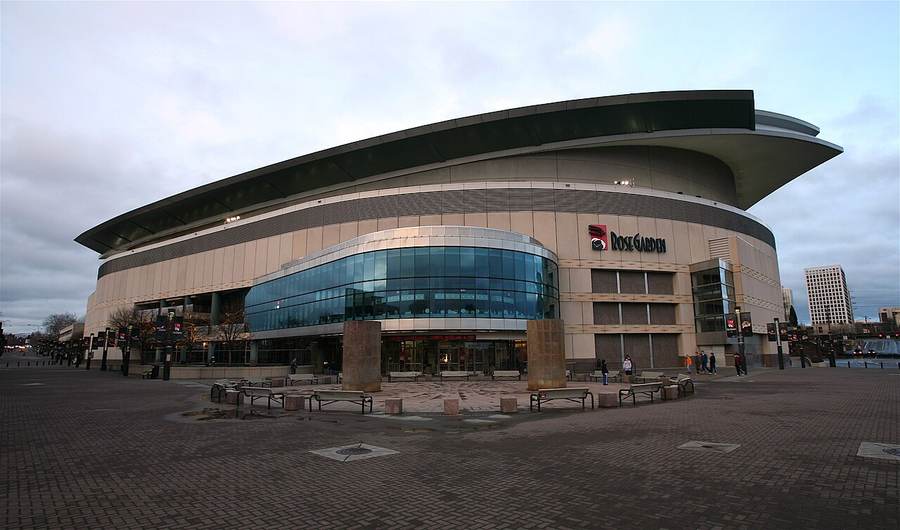
The immediate facts are stark. Portland chose Bell to replace Kevin Calabro, the team's television voice for nine seasons. It introduced Bell as the future of the broadcast in the morning. By the evening, the club had repudiated the hire, apologized to fans and admitted that its process failed. With the October 21 home opener against Phoenix under three weeks away and preseason approaching, the Trail Blazers now have to start over.
What happened: eight hours from hire to fired
A morning announcement became an evening reversal
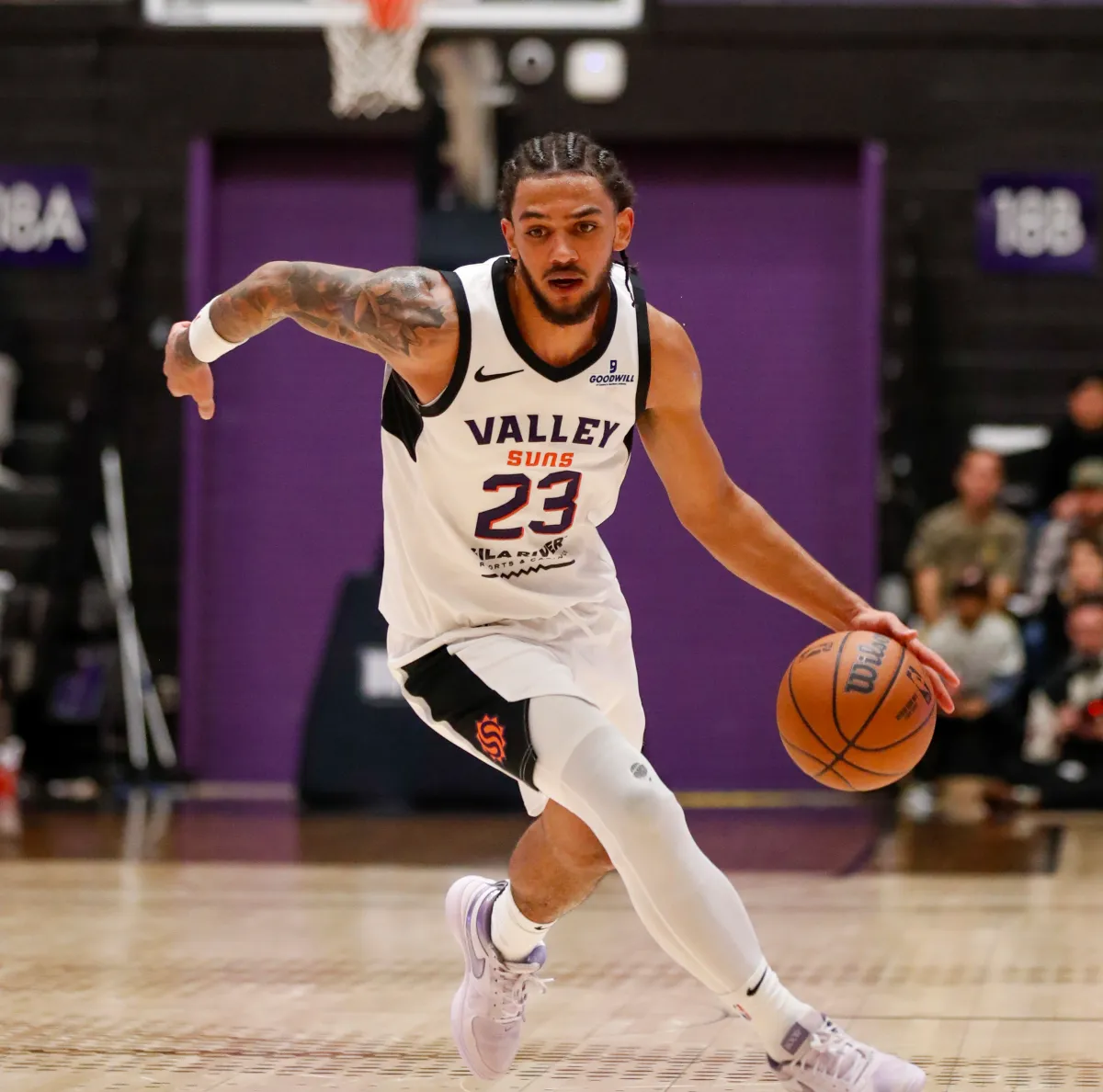
Portland's first announcement presented Bell as a young broadcaster on a fast rise. He had become the first play-by-play voice of the G League's Valley Suns in 2024 and worked Phoenix Mercury games in 2025. The Blazers' opening appeared to be the next step: a full-time NBA television chair with an established local audience and a long lineage.
Then Haskins reviewed Bell's public X history. Among the posts KGW reported were a December 9, 2012 message that read, “I'm not racist at all.. But not gonna lie.. Asian people piss me off! Hahaha #Honest”; a February 24, 2013 post reading, “Girls these nights… Smh. #ThirstyForTheD”; a February 13, 2013 post saying, “We got a sl-t alert on aisle 10”; and a November 30, 2012 post that included, “Gotta give a shoutout to all the big girls out there and those closet w--res.”
Those words are reproduced because the content of the posts—not merely the fact that “old tweets” existed—explains the speed and severity of the team's response. The comments targeted Asian people and women, and they remained attached to the same public identity Bell used while building a sports-media career.
KGW contacted the Trail Blazers before publication. Within hours, Portland issued an unusually direct statement and terminated the relationship:
“The Portland Trail Blazers have zero tolerance for racist, sexist, or harmful comments. Social media posts made by our recently announced play-by-play broadcaster are in clear violation of team and league policies, as well as our values and expectations. Therefore, we will not be moving forward with this broadcaster. The play-by-play role carries a long legacy of excellence, on the broadcast and in character, and we hold that standard without exception. We did not meet our own bar in this process, and for that, we apologize to Blazers fans and to Rip City. We believe strongly that everyone who is a part of Rip City should feel welcome and safe and we will make sure that our new broadcaster reflects these values. We will do better.”
The essential phrase was not “zero tolerance.” It was “we did not meet our own bar.” That sentence moved the episode beyond a personnel decision. Portland acknowledged that the posts were discoverable before the announcement and that the organization, not only Bell, had failed.
Who is Braiden Bell?
A fast ascent from the Valley Suns and Phoenix Mercury
Bell's résumé explains why Portland saw upside. In 2024, he became the first play-by-play broadcaster for the Valley Suns, the Phoenix Suns' G League affiliate. In 2025, he added Phoenix Mercury play-by-play work. Those assignments required the same skills an NBA television job demands: live description, preparation under travel pressure, chemistry with analysts and the ability to carry a game for viewers who are not in the arena.
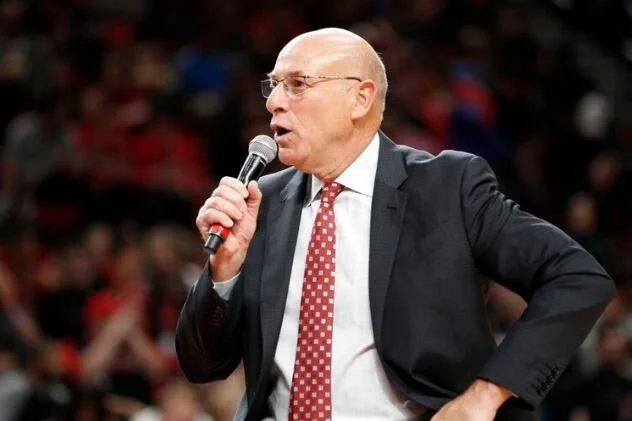
At 29, Bell would have represented a generational change in Portland's booth. The job opened after Calabro departed during a broader round of layoffs under new owner Thomas Dundon. Calabro had called Blazers television games for nine seasons and brought decades of major-market experience. Replacing him was never simply a matter of finding a strong voice; it meant choosing a public representative who could inherit a relationship with fans built across hundreds of nights.
Bell's route—from a new G League franchise to the Mercury and then an NBA job—also reflected the sport's broadcaster pipeline. Teams increasingly identify talent across women's basketball, the G League, digital streams and regional productions rather than waiting for a conventional local-TV ladder. That can broaden opportunity. It also makes background review more important, not less, because a rapid promotion can put a young broadcaster's entire online history under an audience far larger than any previous one.
Why this matters
The local-TV reporter did the background check the employer missed
The most damaging institutional detail is the simplest: a reporter found material the hiring process did not catch—or did not treat as disqualifying—before Portland attached its name to Bell. That does not mean reporters and human-resources teams do identical work. It does mean the public record was searchable, the account was known and the risk was foreseeable.
For a franchise, a play-by-play announcer is not a contractor hidden behind the product. The announcer narrates the team, appears in promotional material, interviews players and coaches and enters fans' homes dozens of times a season. Character review is therefore part of the job description, especially when the employer publicly promises an inclusive arena and league culture. Portland's apology recognizes that point.
The vetting failure also raises practical questions. Did the club search the full account history? Did an outside firm conduct a review? Were decision-makers told about the posts? Did the team weigh Bell's age at the time? The statement answers none of those. Without a fuller explanation, “we will do better” is a promise rather than a demonstrated change.
The teen-tweets-follow-you-forever era
Bell's case sits at the uncomfortable edge of the permanent internet. He was about 15 when he wrote the posts, and the distance between a teenager's judgment and a 29-year-old professional life is substantial. Yet the posts were not in a forgotten school notebook. They remained in a public feed tied to the professional identity through which he sought a public-facing job.
That distinction matters. The argument is not that every adolescent error should define a person forever. It is that people entering visible positions should review what they have published, address material that conflicts with their current values and give employers enough context to make informed decisions. Silence leaves the interpretation to the first reporter, fan or opposition researcher who finds it.
The league-wide lesson is procedural. Social-media review cannot be a last-minute keyword scan. It must examine context, chronology, account continuity and evidence of change. Teams also need a consistent framework for conduct committed as a minor—one that can distinguish a pattern, a single post, a public reckoning and a record of later behavior.
The accountability debate
Should words written at 15 end a career at 29?
Critics of Portland's decision have a serious argument: punishing a 29-year-old for words written at roughly 15 can collapse adolescence and adulthood into one continuous moral record. Teenagers are impulsive, imitate language they do not fully understand and often become people their younger selves would not recognize. If there is no path back from a teenage offense, accountability can become permanent exclusion rather than growth.
KGW's finding strengthens that concern. The station found no offensive posts from 2015 onward, and Bell's account became sports-focused. That does not prove a private transformation, but it is relevant evidence that the public pattern stopped. A fair assessment should not erase that fourteen-year span.
Supporters of the team's decision answer that a broadcast job is unusually public and unusually discretionary. Portland was not imposing a criminal penalty or preventing Bell from working anywhere; it was deciding who should embody the franchise on television. The team had announced a zero-tolerance standard, and the cited language directly conflicted with the welcome and safety it promised to fans. Under that view, the age of the posts mitigates the conduct but does not require an employer to proceed.
There is also uncertainty that neither side should fill with assumptions. Bell had not publicly responded as of publication. The record therefore does not establish whether he remembered the posts, had discussed them privately, regretted them, tried to remove them or believed they no longer represented him. It also does not show whether Portland gave him an opportunity to explain before acting. Those missing facts limit any confident judgment about his growth or the fairness of the process.
The numbers
- About 15: Bell's age when the 2012–13 posts were published.
- 29: Bell's age when Portland hired and fired him.
- Less than eight hours: the reported span between the Trail Blazers' announcement and reversal.
- 2015 onward: the period in which KGW said it found no offensive posts, with Bell's account becoming focused on sports.
- Nine seasons: Kevin Calabro's tenure as Portland's television broadcaster.
- October 21: the date Portland opens the 2026–27 season at home against the Phoenix Suns.
- Under three weeks: the time left before opening night when the club restarted its search.
What happens next
Portland needs both a voice and a repaired process
The Trail Blazers can appoint an interim broadcaster, reopen the candidate pool or accelerate talks with finalists from the original search. Experience now has extra value: with preseason production imminent, the replacement must learn personnel, terminology and broadcast-team rhythms quickly. But speed cannot become the excuse for another incomplete review.
The likely candidate landscape includes established regional voices, national radio and streaming broadcasters, women's-basketball talent and G League announcers. Portland should be able to find a qualified caller. The harder task is rebuilding confidence that the second choice has been evaluated consistently and that the team has defined how youthful misconduct, later conduct and evidence of accountability will be weighed.
Other NBA clubs will study the episode because the vulnerability is not unique to Portland. A generation of candidates now has public posts dating to middle school. Teams that rely on résumés, references and recent searches will miss context that sits deeper in an account. The answer is not indiscriminate digital archaeology; it is transparent, role-specific review before an announcement rather than crisis management after one.
For Bell, the next move is his. A substantive response could acknowledge the language, explain what changed and address why the posts remained public. Silence may be a legal or personal choice, but it leaves the record frozen at the moment Portland ended the hire. For the Blazers, the next announcement will be judged not just on the new voice but on whether “we did not meet our own bar” produced a better bar.
Sources
- USA Today — “NBA team fires broadcaster hours after hiring him over racist social posts,” October 2, 2026.
- New York Post — Trail Blazers fire broadcaster after past posts emerge, October 2, 2026.
- The Arizona Republic / AZCentral — Phoenix Mercury and Trail Blazers broadcaster report, October 1, 2026.
- Hoops Wire — Blazers fire new play-by-play announcer after old posts surface, October 2, 2026.
- Blazer's Edge — Trail Blazers fire Braiden Bell for offensive comments, October 1, 2026.
Reporting basis: The hiring timeline, quoted posts, team statement, career history and schedule are drawn from the cited reports, which credit KGW's Devon Haskins with finding the posts. Analysis of vetting, accountability and league-wide implications is original Signal Post News reporting and commentary.