Tencent Bond Sale Draws $17 Billion in Bids as AI Spending Doubles
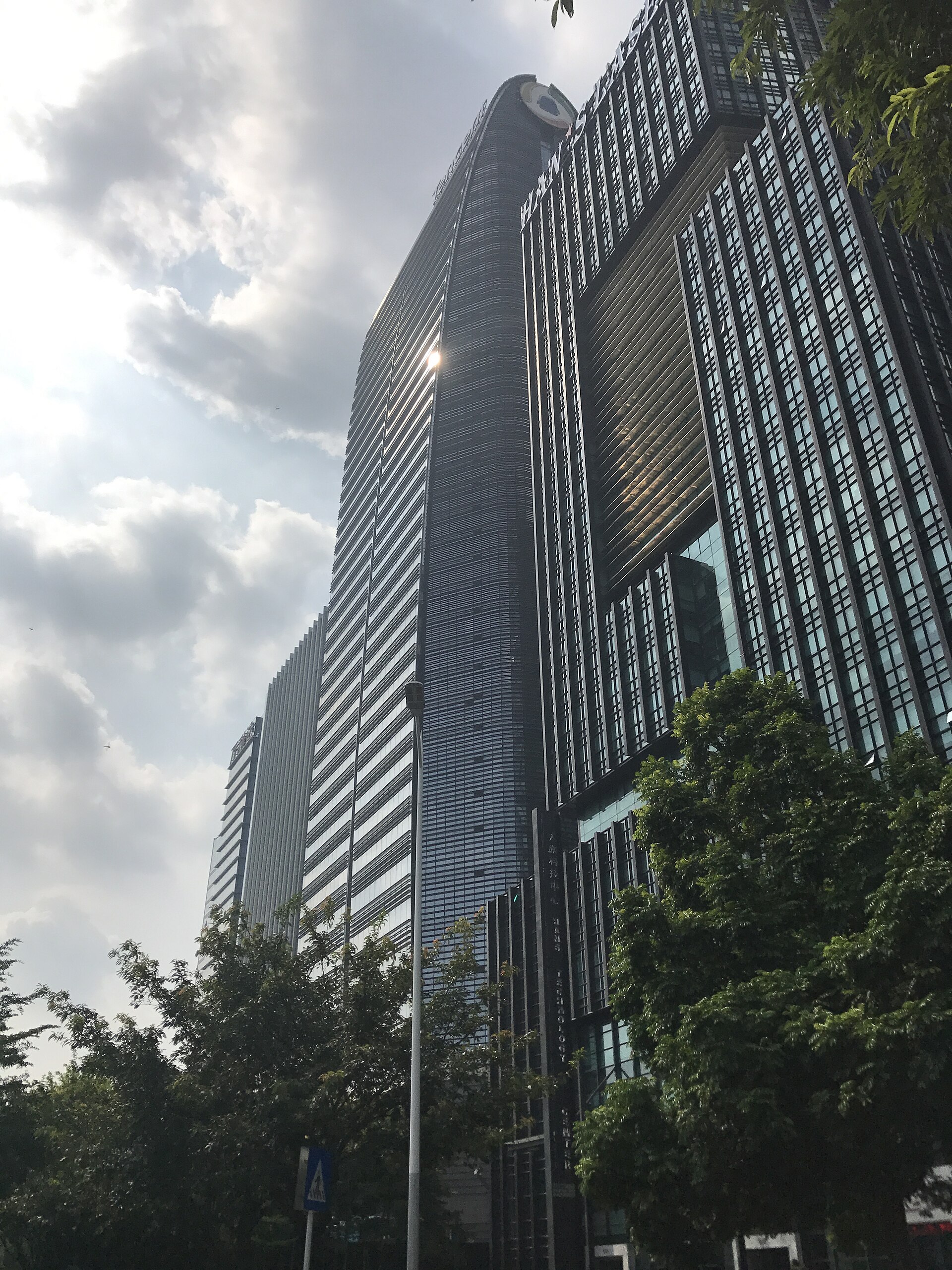
The Tencent bond sale AI spending story begins with a simple imbalance. Tencent Holdings set out to raise at least $4.5 billion — split between 10-year and 20-year US dollar notes and 10-year and 30-year offshore yuan notes, the so-called dim sum market — and investors placed orders totalling roughly $17.1 billion, according to Reuters reporting on October 13. The dollar tranches alone drew books above $5.6 billion; the dim sum books exceeded 77 billion yuan, about $11.5 billion. A deal covered nearly four times over, across two currencies and maturities out to thirty years, is not a company scrambling for funding. It is a queue.
Formally, the proceeds are for general corporate purposes, as the term sheet puts it. In practice, everyone in the book knew what balance sheet they were funding. Tencent's capital expenditure roughly doubled in the first half of 2026, to CNY 96.3 billion from CNY 45.9 billion a year earlier, as the company poured money into AI infrastructure and product development. Nor is this an isolated tap: Tencent last came to the bond market in June and raised about $4.66 billion. Two multi-billion-dollar raises in five months describes a deliberate funding programme — a company terming out its AI investment with long-dated, fixed-rate money while investors are eager to provide it.
Two currencies, one message
The structure of the deal carries information of its own. Selling 10- and 20-year dollar notes reaches the global institutional base that benchmarks against US rates. Selling 10- and 30-year dim sum notes — offshore yuan debt issued in Hong Kong — reaches investors who want yuan exposure and supports the slow internationalisation of the currency that Beijing has encouraged for a decade. That the offshore yuan books, at more than 77 billion yuan, were larger in dollar terms than the dollar books themselves is a data point worth pausing on: dim sum demand of that depth for a corporate — not sovereign — issuer would have been hard to assemble a few years ago. Tencent gets cheaper, more diversified funding. The dim sum market gets a flagship deal. Both sides can plausibly claim the trade proves their market works.
Thirty-year money deserves a note, too. An investor buying a 30-year Tencent note, and a company happy to sell one, are jointly making a statement about time horizons: that the AI build-out is not a two-year capex spike to be financed on revolving credit, but a decades-long infrastructure commitment to be funded like one. Utilities and railways fund themselves this way. The technology industry is learning to.
Why this matters
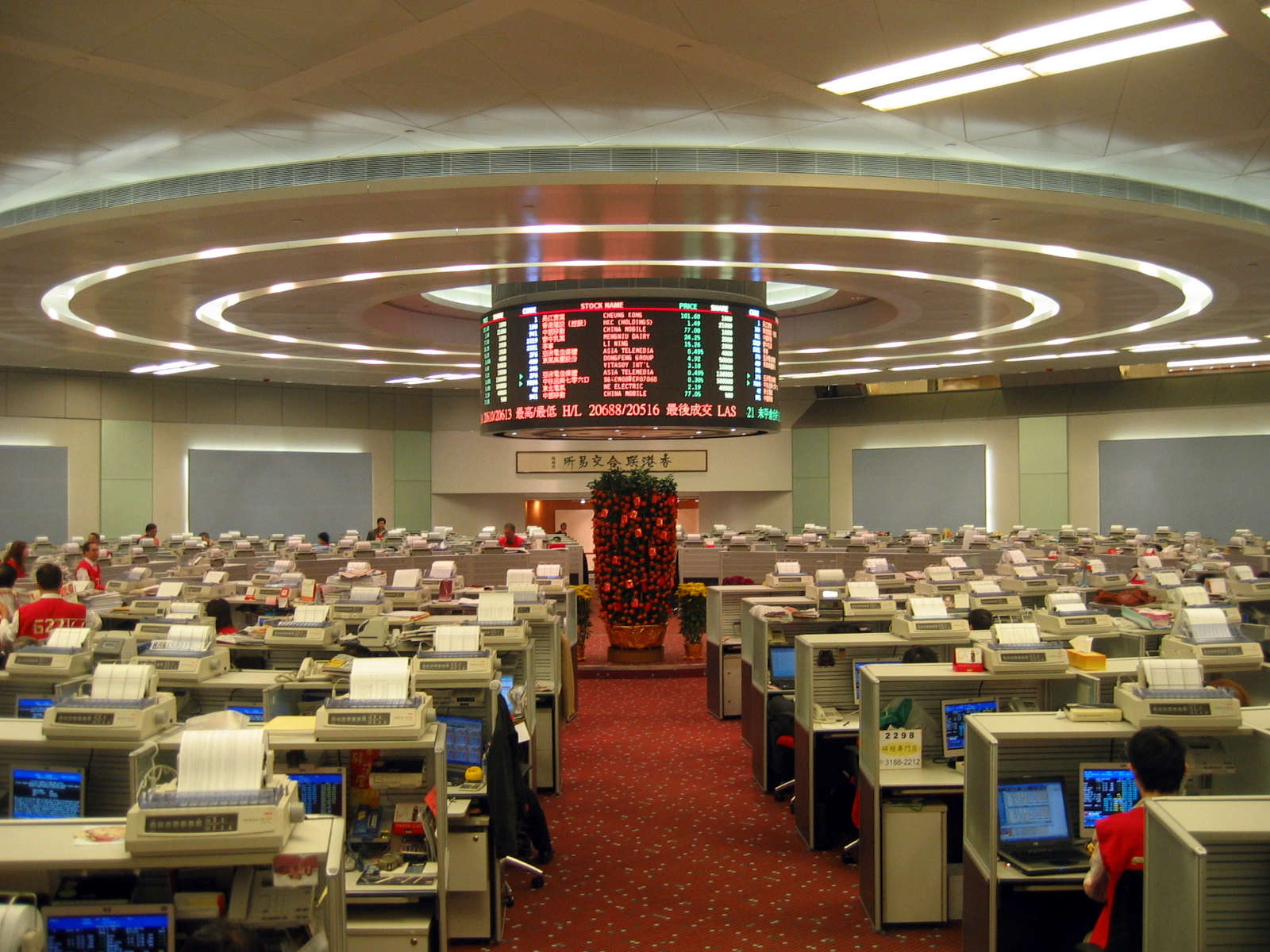
The gap between the bond market's enthusiasm and the stock market's mood is the real story. On the day the books were filling nearly four times over, Tencent's shares fell 1.3% in Hong Kong — outperforming a Hang Seng index down 1.1% only in the sense that the Hang Seng Tech index fell 2.7% — and the stock remains down roughly 30% year to date. Credit and equity are answering different questions. Bondholders ask: will this company generate the cash to pay us, on schedule, for thirty years? For Tencent — owner of WeChat's ecosystem, a games business of global scale, and a fintech and cloud franchise — the answer has never really been in doubt, and a doubling of capex to CNY 96.3 billion a half does not change it. Equity holders ask a harder question: will the AI spending earn a return above its cost, and when? On that, the market's 30% mark-down this year is a running vote of scepticism.
Allspring's Gary Tan captured the credit side's logic in comments reported by Reuters: capital remains available for AI spending by companies with strong cash flow and a credible path to monetising it. That sentence quietly divides the AI world in two. On one side sit firms like Tencent — and its American hyperscaler counterparts — whose existing businesses throw off enough cash that lenders compete to fund their data centres at fine rates. On the other side sit the pure-play AI ventures and second-tier cloud firms, for whom the same spending must be funded with equity at falling valuations or debt at punitive rates. The AI race is often described as a contest of models. It is at least as much a contest of funding costs, and on funding costs, incumbency is a compounding advantage. The pattern rhymes with the equipment side of the build-out, where the $5 billion collaborative bet in our Applied Materials EPIC Center report is likewise being placed by a cash-rich incumbent — and with the sovereign-scale infrastructure spending in our Europe AI supercomputer coverage, where public backing substitutes for a corporate balance sheet.
The numbers in context
Set the deal against Tencent's own recent history and the scale settles. June's raise was about $4.66 billion; this one targets at least $4.5 billion with $17.1 billion of demand behind it. H1 capex of CNY 96.3 billion — roughly $13.5 billion at recent exchange rates — means a single half of Tencent's investment programme costs about three of these bond deals. The bonds are not funding the AI build-out by themselves; they are smoothing it, replacing shorter or more expensive funding and pre-funding quarters ahead, which is what treasurers do when they expect to keep spending and would rather borrow into a receptive market than a needy one. Compare the demand multiple, too: near four-times coverage, in a week when equity investors were marking the whole Hong Kong tech complex down, shows how differently the two markets price the same company's AI ambitions — a divergence visible across the sector in our coverage of this week's Asian chip selloff.

Who benefits, who loses, and what the critics say
Tencent benefits twice: cheap, long, diversified funding, secured without issuing equity at a depressed price — a point worth underlining with shares down about 30% this year, when selling stock would crystallise that discount — and a public demonstration, in the order books, that its credit story still commands a queue. Bond investors benefit in a thinner sense: they gain exposure to one of Asia's strongest corporate credits, though at yields compressed by exactly that queue. The dim sum market benefits structurally, as noted; every successful 30-year corporate print deepens the curve that future issuers will price against.
The critics' case is the equity market's case, stated more bluntly. A doubling of capex in a year is a promise that future cash flows will justify it, and AI monetisation — in advertising, cloud, games and enterprise tools — remains more demonstrated in pitch decks than in segment results, at Tencent as at most of its peers. If the returns disappoint, bondholders are still paid, but the company's strategic flexibility narrows: thirty-year notes do not care whether the models they funded turned out to be the winning ones. There is also a market-structure worry: when the strongest credits can fund AI at fine rates regardless of near-term returns, the usual market discipline on overbuilding weakens, and the industry can collectively build capacity ahead of demand — the pattern that has ended badly in fibres, memory chips and shipping, among other capital cycles. The bulls reply, reasonably, that demand for AI compute has outrun supply for three consecutive years, and that Tencent, spending from operating cash flow rather than hope, is the last firm in the sector to be lectured about discipline.
What happens next
Watch the pricing when the deal settles — how far inside initial guidance the four tranches land will quantify the queue's enthusiasm in basis points — and watch whether Tencent returns again before year-end, which would signal capex guidance drifting higher still. The equity question will be answered in slower instalments: quarterly results that show whether AI features are moving revenue in advertising and cloud, and whether capex intensity plateaus at the new, doubled level or keeps climbing. For the wider market, the deal sets a marker other Asian tech majors will be measured against. Tencent asked for $4.5 billion and was offered $17.1 billion. In the AI funding race, that is what the front of the pack looks like.
Sources
- Reuters — Tencent's $4.5 billion dollar and dim sum bond sale, order-book demand and market reaction, October 13, 2026: reuters.com/technology
- Tencent Holdings — interim results and capital expenditure disclosures, first half 2026: tencent.com
- Signal Post News — related coverage linked in the text above.