Tasia Fortune staged hanging
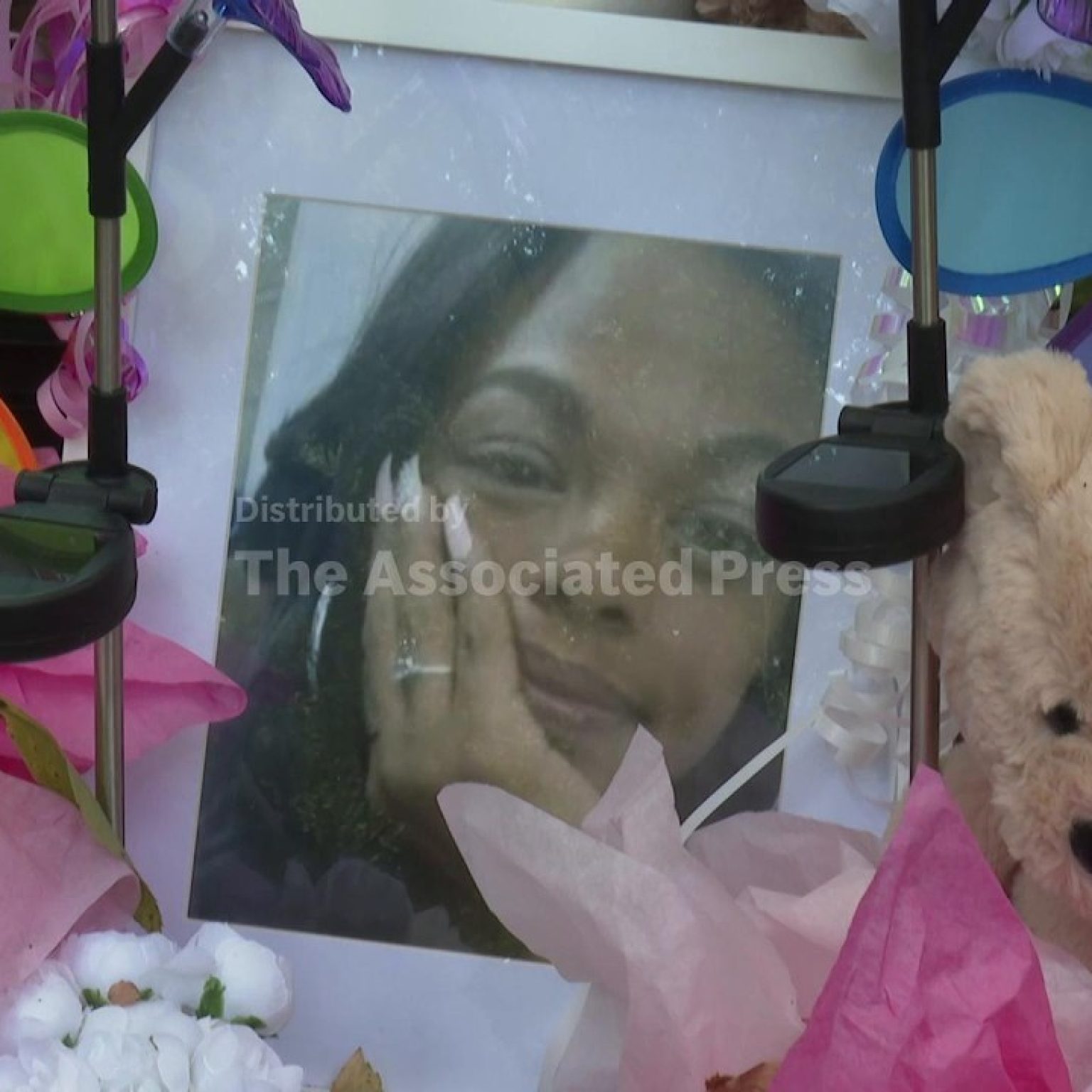
JACKSON, Miss. — Tasia Fortune was already dead before her body was hung from a tree behind an abandoned home in the Mississippi capital this summer, a Jackson police detective testified Friday — the first official account to call the nationally watched death what investigators now believe it was: a Tasia Fortune staged hanging, a murder scene dressed up after the fact rather than the lynching-style killing many feared when her body was found on August 3.
The testimony changes the central question without resolving the case. Investigators are no longer asking whether Fortune died by hanging. They are trying to prove where and how she was killed, who participated, what each person did and why her body was placed in a tree on Road of Remembrance. Two men have been arrested, a third warrant is outstanding and some of the evidence most likely to connect a suspect to Fortune — DNA and items recovered with her body — has not yet completed testing.
What the detective told the court
Jackson Police Department Detective Samuel Dukes testified at a preliminary hearing Friday in Jackson Municipal Court before Judge Lilli Evans Bass. Citing the medical examiner's opinion, Dukes said Fortune was killed at another location, then transported and placed in a hanging position behind a vacant house in the 500 block of Road of Remembrance in West Jackson. He said investigators believe she had been dead for two to three days before she was discovered.
The hearing concerns Jarques Ratliff, 51, the first person arrested in the case. Police arrested Ratliff on September 11. He has pleaded not guilty and is being held without bond in the Hinds County jail. A preliminary hearing does not determine guilt. Its purpose is to decide whether prosecutors have enough evidence to continue toward a grand jury, which could consider an indictment.
Dukes described Ratliff as Fortune's friend and said the two were “intimate with each other.” The detective testified that Ratliff made statements during two interviews that included details “you would only know if you were there.” One detail concerned Fortune's effort to defend herself: “Ms. Fortune fought,” Dukes told the court, attributing the account to Ratliff.
As the testimony unfolded, Ratliff interjected, “She was my friend,” before his attorney quieted him. The exchange may be emotionally striking, but it is not a substitute for forensic proof. Investigators took a DNA sample from Ratliff, and the result remains pending. Dukes also said items recovered from Fortune that investigators believe belonged to Ratliff still require testing. Those results could strengthen the prosecution's theory, undermine it or remain inconclusive.
Judge Bass continued the hearing until September 30. On that date, the court is expected to resume weighing whether the case has enough evidentiary support to move toward a Hinds County grand jury. Ratliff's not-guilty plea remains controlling: he is accused, not convicted, and the assertions made by police at a preliminary hearing have not been tested at trial.
A second arrest, a third warrant
Jackson police arrested Earnest Lloyd Jr., 25, this week on a murder charge in Fortune's death. Police have not publicly detailed Lloyd's alleged role or explained how investigators believe he is connected to Ratliff. It is also unclear from the public record whether Lloyd has entered a plea.
A third arrest warrant remains outstanding. Authorities are working with the U.S. Marshals Service to locate that person, according to reports of the court proceedings. Police have not publicly named the person in the warrant or said whether investigators believe the individual took part in the killing, the movement of Fortune's body, the staging of the scene or some combination of those acts.
The medical examiner has ruled Fortune's death a homicide, but authorities have not disclosed the exact cause of death. That distinction matters. “Homicide” means the death resulted from the act of another person; it does not, by itself, establish the mechanism, criminal charge or identity of the responsible person. The state's eventual case will need evidence that links particular defendants to particular conduct.
The drug-dispute theory
Dukes testified that “missing illegal narcotics” were central to the crime and that there were allegations Fortune had taken them. Investigators therefore appear to be working from a drug-dispute motive: a confrontation over the missing drugs that escalated into a killing, followed by an effort to obscure what happened.
That remains a theory, not an adjudicated fact. Police have not disclosed what narcotics were allegedly missing, their quantity or value, who claimed ownership or what independent evidence supports the allegation against Fortune. They also have not said whether the alleged dispute began where she was killed or whether she was moved before the violence occurred.
Most important, authorities have not explained why they believe the people responsible staged the hanging. The act could have been intended to suggest suicide, redirect suspicion toward racial violence, delay recognition of a different cause of death or exploit public assumptions about a body found in a tree in Mississippi. Each possibility has different implications. Until prosecutors present evidence, motive and staging must remain separate propositions: police allege a drug dispute, and police say the hanging was staged, but the public does not yet know why one led to the other.
The mother who won't let the case go quiet
Christy Spivey, Fortune's mother, has kept attention on the investigation while resisting the certainty that can gather around an arrest. Wearing a black “Justice for Tasia Fortune” shirt at the police department, she told reporters, “I just hope they have the right people.” She said she is waiting to see what additional evidence investigators uncover.
That caution is not a lack of faith in accountability. It is what a family asks when a case changes shape dramatically after weeks of unanswered questions. An arrest can be relief because it signals movement. It can also create a new fear: that investigators, under intense public pressure, may settle too quickly on a theory before the laboratory work is finished.
Fortune was 29. She was from Kentucky and had lived in Jackson for about 10 years. She leaves four children: Davion, 7; Terence Jr., 5; Tristian, 4; and Donte', 1. Those ages convert a homicide statistic into a continuing consequence. Four children will grow up with questions about why their mother died and what was done to her body afterward.
Spivey said her daughter had struggled with homelessness and had talked about starting a cleaning business as she tried to put her life in order. Neither homelessness nor an alleged connection to drugs diminishes a victim's claim to a rigorous investigation. Those circumstances can increase vulnerability by reducing safe housing, stable transportation and access to people who notice quickly when someone disappears. They are context for understanding risk, not a verdict on worth.
Why this matters
The image of a Black woman found hanging from a tree in Mississippi detonated nationally because the place and the tableau carry a documented history of racial violence and actual lynchings. The discovery renewed scrutiny of other recent cases involving Black Mississippians found hanging and revived the question families have asked repeatedly: were authorities too quick to assume suicide, or too slow to investigate another possibility?
Friday's testimony does not erase that horror. It reframes it. If the detective's account is proved, somebody killed a young mother, allegedly amid a dispute over drugs, and then deliberately arranged her body in the visual language of racial terror. That would mean the scene did not merely conceal a homicide. It borrowed the most symbolically loaded image in American racial memory as camouflage.
The calculation is chilling precisely because the image was believable. A staged scene can work only when it activates a story that observers recognize. In Mississippi, a body in a tree invokes a history that is not abstract or remote. If the staging was designed to redirect the investigation, its makers counted on that history to overwhelm other clues. If it was meant as desecration or intimidation, the choice carried its own message regardless of the underlying motive.
For Fortune's family and the wider public, the revelation cuts both ways. It may rule out one nightmare — a racially motivated lynching as the direct method and motive of her death — only to confirm another: a woman killed and her body desecrated for misdirection. That is not a reassuring resolution. It is a different form of violence, and it still requires proof in court.
Context: how we got here
Fortune's body was discovered August 3 behind a vacant home in the 500 block of Road of Remembrance in West Jackson. The visible scene drove the first wave of fear. Without a public cause of death, the image became the dominant fact, and the possibility of a lynching-style killing traveled faster than forensic findings could be completed.
The investigation then moved slowly in public. Ratliff was arrested September 11, more than five weeks after the discovery. Lloyd was arrested this week, and a third warrant remains unserved. Friday's hearing supplied the first detailed official explanation of the medical examiner's role: investigators now say time-of-death evidence and the condition of Fortune's body show she died elsewhere and was placed in the tree later.
The distinction between an actual death by hanging and a body positioned after death rests on forensic evidence, not the photograph of the scene. A medical examiner can assess injuries, tissue changes, circulation and other signs that indicate whether the body showed a vital reaction while a force was applied. Time-of-death estimates can be compared with witness accounts, travel records, communications and surveillance. Those methods are not infallible, but they are the proper foundation for separating appearance from mechanism.
Mississippi's record of real lynchings explains why the initial fear was rational. It also raises the burden on investigators to be precise. Calling a scene “staged” cannot become a shortcut that closes inquiry into racial motive, and invoking the state's history cannot replace the physical evidence. Responsible reporting must hold both truths: the historical alarm was grounded, and the current homicide theory must stand or fall on forensics and admissible evidence.
Two sides, still contested
The prosecution's emerging case has three visible parts. First is the medical-examiner-backed theory that Fortune was dead before her body was placed in the tree. Second is Dukes's testimony that Ratliff made statements containing details a participant would know, including the claim that Fortune fought. Third is physical evidence — Ratliff's DNA sample and items recovered from Fortune — that remains under examination.
The defense begins with the presumption of innocence and the evidence that has not yet been produced. Ratliff pleaded not guilty. Outside court, his stepdaughter Lashuna Jones told reporters, “He didn't do it, and I'm behind him.” His attorney, Toney Baldwin, said he wants “the truth about what happened to come out.” Those statements do not disprove the allegations, but they frame the central defense demand: test the interviews, laboratory results and chain of custody rather than treating a police narrative as a verdict.
Several uncertainties remain explicit. The exact cause of death is undisclosed. The alleged drug motive has not been proved. Authorities have not explained why the hanging was staged. Lloyd's alleged connection has not been detailed, and his plea status is unclear. The third person sought under warrant has not been publicly identified. Ratliff's quoted interview statements have been summarized by a detective, not heard in full by the public.
That evidentiary caution is consistent with other recent justice coverage. Signal Post News reported how a Mississippi grand jury declined charges in the Nolan Wells death investigation, why a holdout-juror dispute could shape a Massachusetts retrial, and what happened when a federal court order collided with executive action in Washington. Different cases demand different proof, but each shows why process matters before a headline hardens into judgment.
What the numbers say
Four children are left without their mother. Two men have been arrested, and one additional warrant is outstanding. Fifty-three days passed from the August 3 discovery to the September 25 testimony that publicly described the scene as staged. Five days separate Friday's hearing from its scheduled September 30 continuation. Investigators believe Fortune had been dead for two to three days before her body was found.
These numbers reveal both movement and incompleteness. Two arrests can look like resolution, but a third warrant shows the alleged group is not yet fully before the court. Fifty-three days can feel long to a family, but forensic death investigation often moves through toxicology, DNA and laboratory queues that do not match the news cycle. The two-to-three-day estimate may prove critical because it narrows the period investigators must reconstruct through phones, vehicles, witnesses and locations.
The case has become the highest-profile of several hanging deaths of Black Mississippians in recent years now receiving renewed scrutiny. That attention can produce better questions and stronger oversight. It can also flatten distinct cases into one narrative. Each death requires its own evidence, and each family deserves findings that are specific rather than borrowed from the symbolism of another scene.
What happens next
The first formal checkpoint is September 30, when Ratliff's preliminary hearing is scheduled to resume. Judge Bass will consider whether the state has presented enough evidence to continue the prosecution toward a grand jury. That threshold is lower than proof beyond a reasonable doubt, and a decision to advance the case would not establish guilt.
The investigation also has immediate unfinished work: locate the person named in the third warrant, complete DNA analysis, test the items recovered from Fortune and disclose enough of the medical basis for the staged-scene conclusion to allow meaningful scrutiny. Prosecutors will need to connect the alleged drug dispute to the homicide and then connect each accused person to an act, not merely to Fortune or to one another.
Jackson faces a larger reckoning. For weeks, a staged crime scene could pass in public understanding as the oldest terror in American history because that history made the image plausible. The city must now show it can investigate the killing without allowing the new theory to minimize the violation of Fortune's body or the fear the scene produced.
Her family still does not know exactly how she died. A conviction supported by forensic evidence would answer who is criminally responsible, though it could never repair the harm to four children. A collapse of the staged-scene theory under laboratory or courtroom scrutiny would force police to explain how an official account became public before it was secure. Either outcome will carry consequences beyond one hearing. The community needs a result that can survive cross-examination, because in a case built around misdirection, the final measure of justice is not how confidently a theory is announced. It is whether the evidence can prove what really happened to Tasia Fortune.
Sources and further reading
- Associated Press via Scripps News Group — Police say Tasia Fortune's hanging was staged after her death in a drug dispute
- CNN — Tasia Fortune homicide investigation in Jackson, Mississippi
- Mississippi Clarion Ledger — Jackson police say Fortune did not die by hanging
- PEOPLE — Detective testifies that the scene was staged after a drug dispute
Reporting basis: Fixed September 25, 2026 snapshot of testimony and public reporting. Ratliff has pleaded not guilty. The exact cause of death, pending forensic results, Lloyd's alleged role and the reason for staging remain undisclosed or unproved.