Taiwan foreign minister Arizona visit
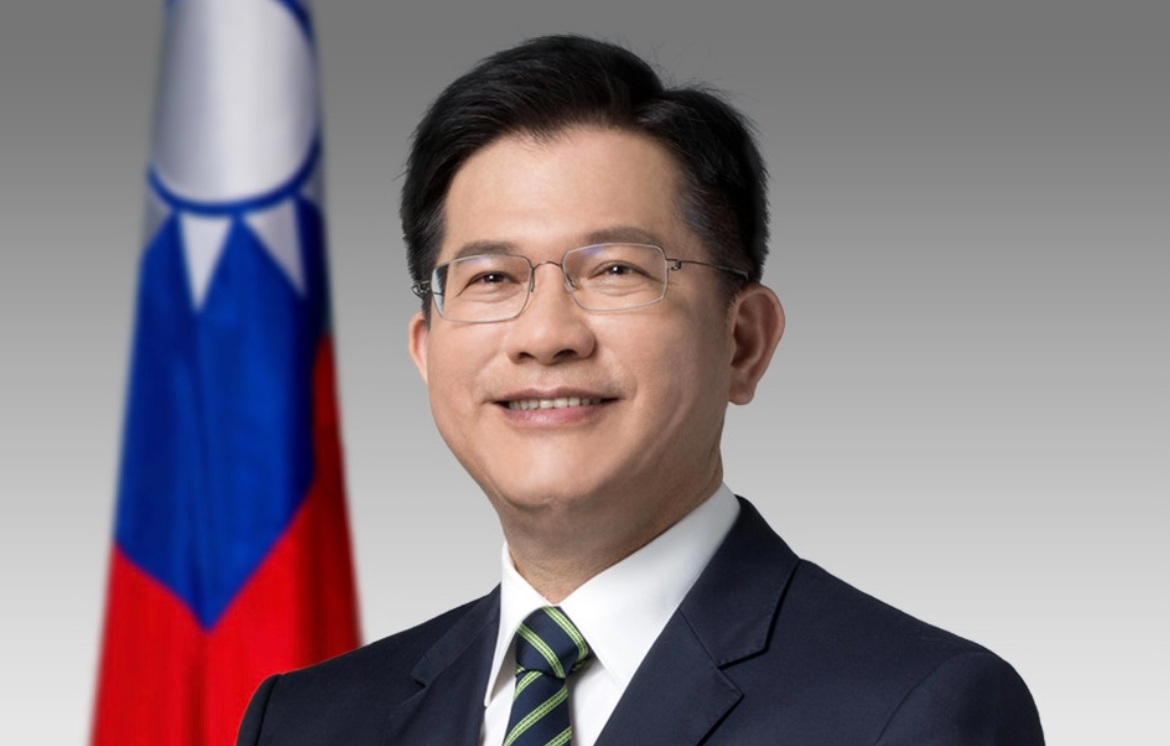
Taiwanese Foreign Minister Lin Chia-lung is visiting the US state of Arizona for the opening of a new de facto consulate in Phoenix, his office said on Sunday, in a trip that crystallizes how thoroughly semiconductors have rewired the US-Taiwan relationship.
The United States is Taiwan's most important international partner and arms supplier, despite the absence of formal diplomatic ties — a contradiction that has defined the relationship for decades. But this visit is not about arms. It is about chips, factories, and the thousands of Taiwanese engineers who have quietly turned a stretch of Arizona desert into the most important piece of Taiwan's overseas footprint.
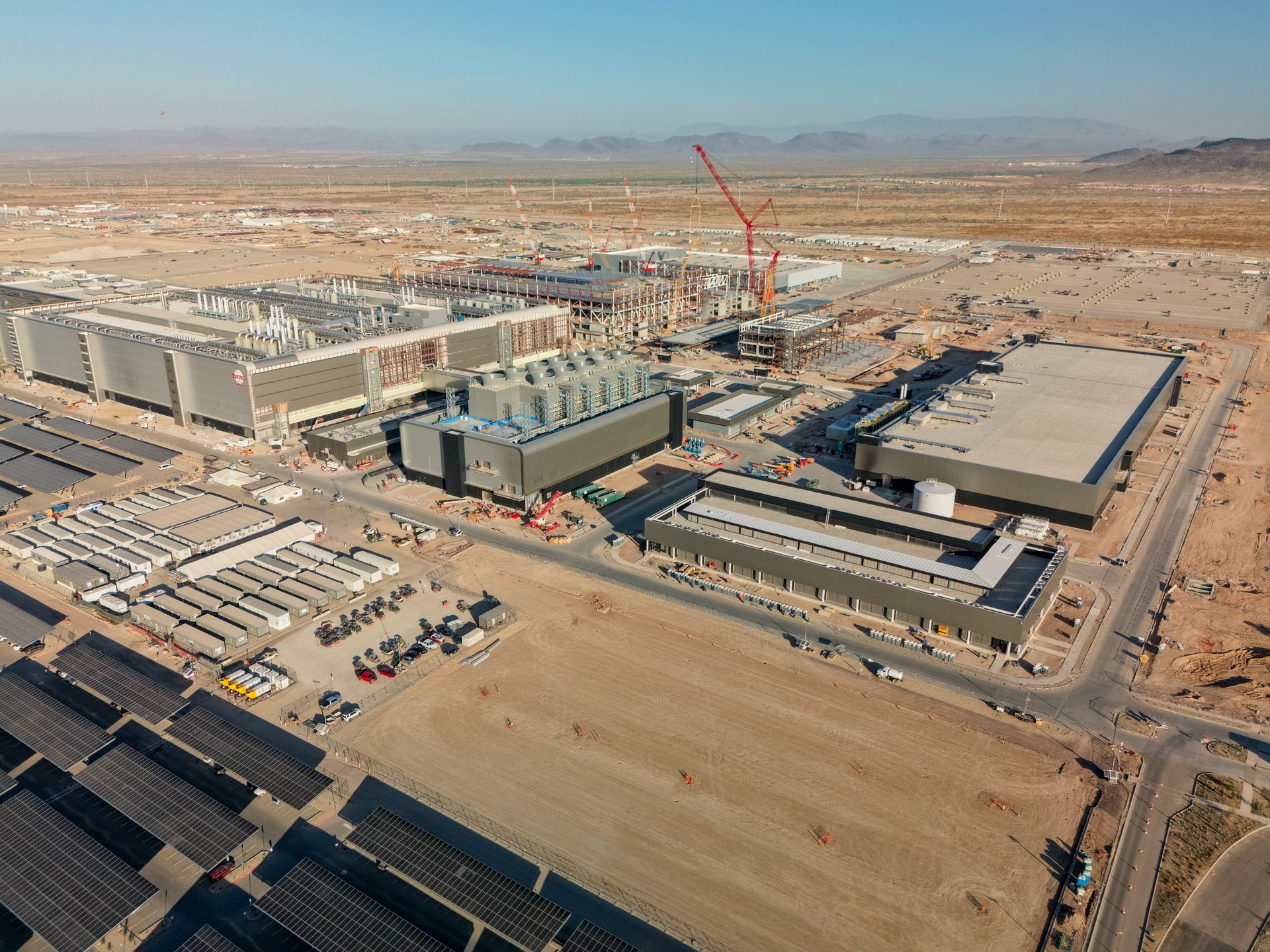
Taiwanese chipmaker TSMC is investing $265 billion in Arizona to make semiconductors, and Taiwan's foreign ministry called the new Phoenix office a "milestone in Taiwan-US economic and trade partnership." In a statement, the ministry said it would continue to link diplomacy, trade, economics and industry, deepening the mutually "beneficial and symbiotic partnership between Taiwan and the United States based on mutual trust."
Why this matters
A consulate opening does not normally merit a foreign minister's personal attendance. That Lin is flying to Phoenix — fresh off a Central America swing through Belize and Guatemala — tells you this is not routine diplomatic housekeeping. It is a statement about where Taiwan believes its future lies.
Consider the context. While senior Taiwanese officials visit the US from time to time, President Lai Ching-te has yet to visit under the second Trump administration. In May, following a visit to Beijing for a meeting with Chinese President Xi Jinping, Trump said he was keeping a new arms sales package for Taiwan on hold, describing it as a good negotiating chip. Trump and Xi met in Washington last month, and China has repeatedly demanded that US arms sales to Taiwan end.
Against that backdrop — arms on hold, the president's travel constrained, Beijing watching every move — the foreign minister showing up in person for an office opening is Taiwan working the relationship through the channel that is actually open: economics. If the security lane is jammed, drive the trade lane harder.
There is a deeper significance too. Diplomatic missions follow people and money. The Phoenix office exists because TSMC's Arizona cluster has created a Taiwanese community large enough to need consular services — and an industrial footprint significant enough to warrant a permanent government presence. Roughly 300 babies have been born to TSMC-related employees in the region over the past five years. That is not a business trip. That is a diaspora.
How we got here: the road to Phoenix
The Phoenix office did not appear overnight. The plan was announced by Lin himself on January 17, 2026, during the inaugural ceremony for a new direct flight route between Taipei and Phoenix — itself a telling piece of infrastructure. Direct air links are the connective tissue of serious economic partnerships; you do not launch them for symbolism.
That same January, Washington and Taipei finalized a sweeping economic package: a $50 billion trade deal, with Taiwan pledging $500 billion in total US tech investment — including $50 billion in direct investment and $50 billion in credit guarantees. The Phoenix office was framed from the start as the institutional scaffolding for that commitment: a place to provide integrated government services for the surge in two-way investment and serve the growing local Taiwanese community.
The Arizona legislature has been laying its own groundwork. Earlier this year, State Representative Tony Rivero read a proclamation on the House floor supporting strengthened US-Taiwan relations, announced a bipartisan Arizona–Taiwan caucus, and noted that Taiwan was Arizona's sixth-largest export market in 2024. Phoenix Mayor Kate Gallego has visited Taiwan to discuss collaboration in AI, aerospace, and biotechnology. This is not a top-down imposition — it is a relationship both sides have been building, layer by layer.
Lin's itinerary reflects that depth. Beyond the office opening, he is touring TSMC's Arizona plants and meeting municipal and state leaders. The core mission, according to officials familiar with the planning, is bolstering backing for Taiwanese businesses operating in the US and building collaborative industrial hubs with American academic institutions and government agencies — with the explicit goal of enticing more domestic chip-supply companies to set up shop stateside.
The timing of the visit is also diplomatically deliberate. Lin arrived in Arizona fresh from a Central America tour that included Belize and Guatemala — two of the small number of countries that still maintain formal diplomatic relations with Taipei. In Guatemala, he met President Bernardo Arévalo to mark 92 years of diplomatic ties and promote cooperation among Taiwanese, American, and Guatemalan companies in technology and healthcare. The sequencing tells its own story: shore up the formal allies first, then tend the informal partnership that matters most. Taiwan's diplomacy has always operated on two tracks — the shrinking list of official recognitions, and the growing web of substantive unofficial ties. The Arizona trip is the second track at full stride, and it is where Taiwan's real diplomatic energy now goes.
The TSMC anchor: why chips come first
It is impossible to overstate how central TSMC is to this story. The company's Arizona commitment — $265 billion for a "gigafab" cluster producing leading-edge semiconductors on American soil — is one of the largest single foreign industrial investments in US history. It is also a geopolitical instrument: the whole point is to put advanced chip manufacturing beyond the reach of a Taiwan Strait crisis.
That logic cuts both ways. For Washington, TSMC Arizona is supply-chain resilience — insurance against the scenario every Pentagon planner loses sleep over. For Taipei, it is leverage: the deeper Taiwan's industrial roots in America, the higher the cost to Washington of abandoning Taiwan, and the stronger the argument that Taiwan's security is America's economic security.
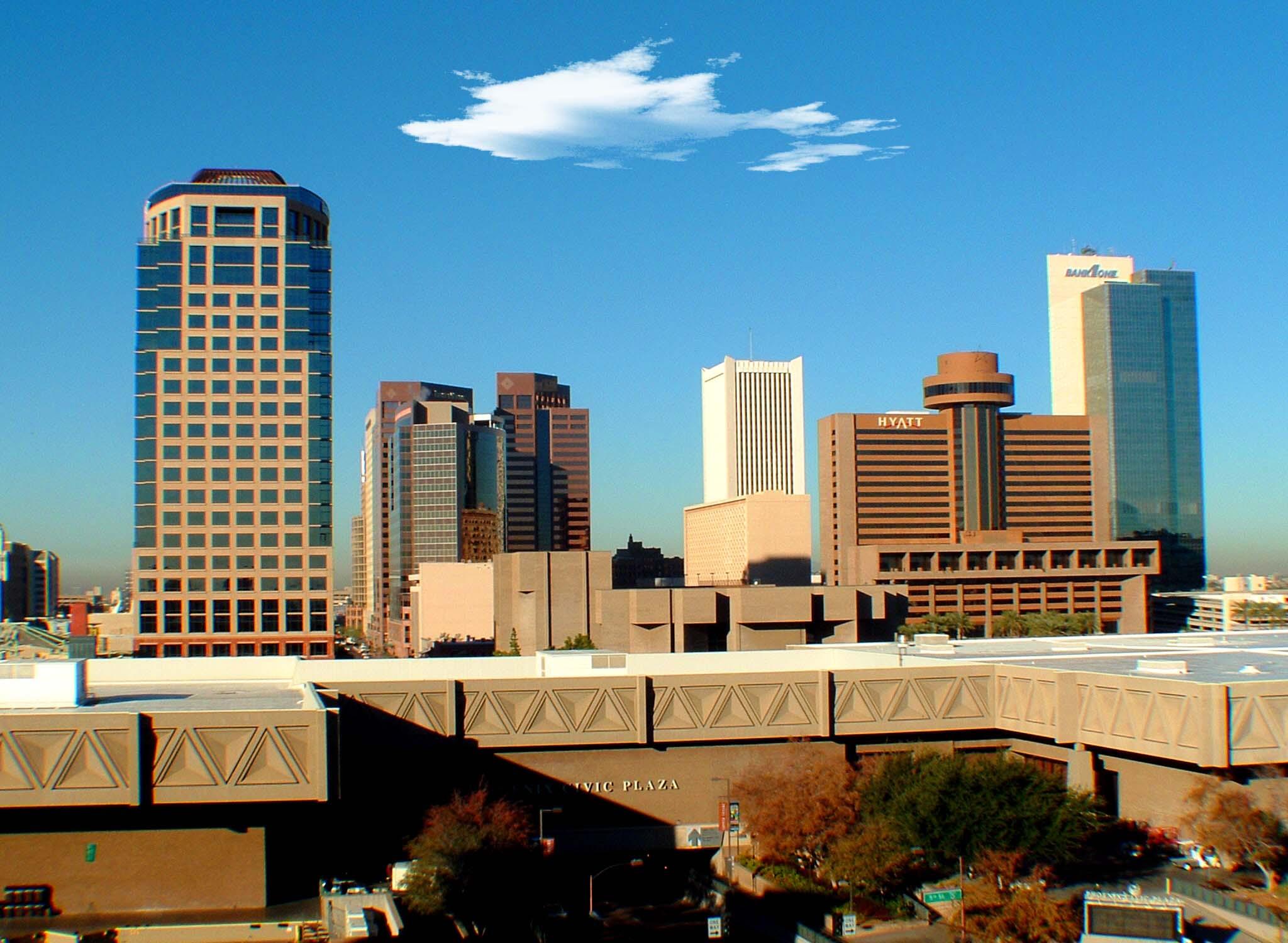
The Phoenix office makes that linkage bureaucratic and permanent. Consulates do visas, trade promotion, and citizen services — but they also do something subtler: they normalize presence. A flag, a plaque, a street address in downtown Phoenix says Taiwan is here to stay, in the most literal sense.
This is also why the "first new mission in nearly 40 years" detail matters so much. Taiwan's US presence has been essentially frozen since Washington switched recognition to Beijing in 1979 — the existing offices operate under the deliberately anodyne "Taipei Economic and Cultural Representative Office" (TECRO) branding. Breaking a four-decade freeze is not something bureaucracies do casually. It signals that both governments consider the economic relationship important enough to spend diplomatic capital on.
Who wins, who loses, what Beijing thinks
The winners are straightforward. Arizona gets jobs, investment, and a direct line to the world's most important chipmaker. Taiwan gets institutionalized influence in a US state that now has skin in the semiconductor game — and a template it is already looking to replicate, with a "Taiwan Tower" reportedly under exploration in Texas. TSMC gets a friendlier operating environment and a government advocate for its thousands of transplanted workers.
The Trump administration gets something too: tangible proof that its pressure campaign for onshoring is producing results. $265 billion in a swing state is the kind of number that shows up in speeches. Never mind that the investment predates and transcends any single administration — in politics, timing is ownership.
Beijing, predictably, will not be pleased — though its response options are limited. China claims Taiwan as its own and opposes any official contact between Taipei and foreign governments. But objecting to a trade office opening is a weak hand: the office is economic, the precedent is decades old, and making a scene would only advertise the very relationship Beijing wants to minimize. Expect the standard foreign ministry complaint, phrased for the record and designed to be forgotten.
The more interesting question is what Beijing actually fears here. It is probably not the office — it is the pattern. Every Taiwanese engineer who settles in Arizona, every supply-chain link that moves to Texas, every joint lab with an American university makes the "reunification" equation harder. Economic entanglement is slow, boring, and extraordinarily difficult to reverse. That is precisely why Taipei is pursuing it.
What happens next
Three things to watch. First, whether the Phoenix office becomes a template. The reported Texas "Taiwan Tower" exploration suggests Taipei sees the Arizona playbook — follow the industrial footprint with diplomatic infrastructure — as repeatable. If it works in Phoenix, expect similar moves wherever Taiwanese investment clusters.
Second, whether the office opening affects the arms-sale question. The optimistic read: demonstrating economic indispensability strengthens Taiwan's hand when the security conversation resumes. The pessimistic read: Trump has shown he treats arms sales as transactional leverage, and no amount of chip investment changes that calculus. The truth is probably that the two tracks run in parallel — economics buys goodwill, not weapons.
Third, whether President Lai himself visits the US. His absence so far under the second Trump administration is conspicuous, and every senior-official visit that isn't the president invites the question of when — or whether — the top-level meeting happens. A foreign minister opening an office is significant. A presidential visit would be transformative. Taipei is clearly building the relationship from the ground up; the question is whether the top floor ever gets built.
For now, the story is simpler: a foreign minister, a new office, and a quarter-trillion dollars' worth of silicon in the desert. Diplomacy used to follow armies and trade routes. In 2026, it follows the fabs.
What makes the Phoenix opening genuinely historic is not the ceremony but the precedent it sets for how middle powers navigate great-power rivalry. Taiwan cannot outspend Beijing or outgun it — but it can make itself economically indispensable to the world's most powerful country, one fab and one consulate at a time. The office in Phoenix is small. The strategy behind it is not.
Related coverage
Sources
- Reuters, October 5, 2026 — Lin Chia-lung's Arizona visit, the Phoenix office opening, TSMC's $265 billion investment, and the Trump administration's Taiwan arms-sale posture.
- Bloomberg News via Devdiscourse, October 3, 2026 — advance reporting on the Arizona visit, meetings with local officials and semiconductor companies.
- Archyde, October 3, 2026 — visit itinerary details: Belize and Guatemala stops, TSMC plant tours, meetings with municipal and state leaders.
Reporting cutoff: October 4, 2026 at 7:30 p.m. PDT. Details of Lin's meetings with Arizona officials were not yet public at publication time. Assessments about Beijing's reaction, the Texas office exploration, and arms-sale dynamics are Signal Post News analysis, not statements of confirmed government intent.