Sverdlovsk 1979 biolab leak
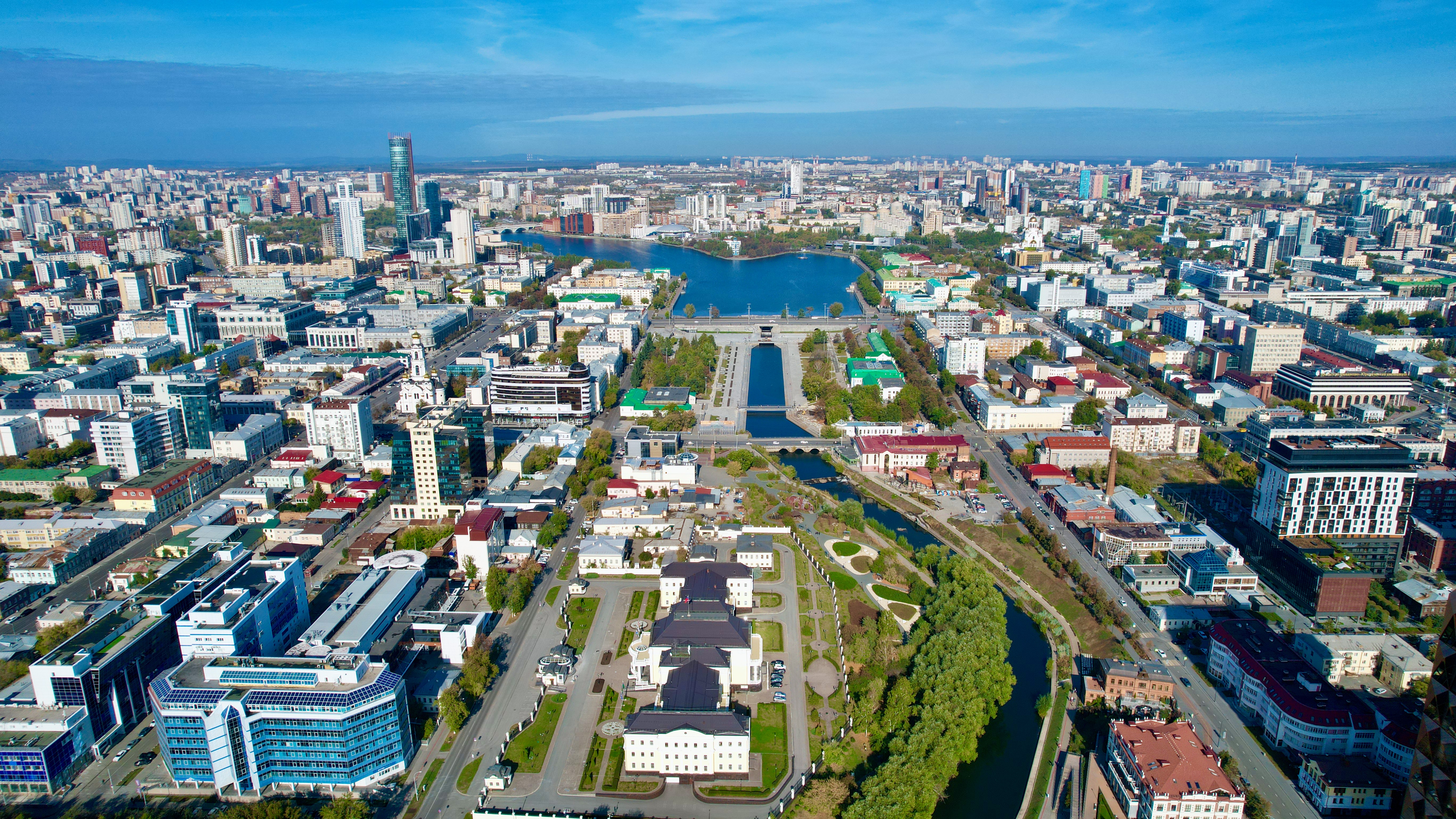
The Sverdlovsk 1979 biolab leak began with a clogged filter. On a night shift in early April 1979, a technician at Military Compound 19 — a secret Soviet bioweapons facility in the Ural Mountains city of Sverdlovsk — removed an exhaust filter and failed to replace it. By the time the error was caught, a plume of dried anthrax spores had drifted over the southern districts of the city. Over the following weeks, at least 68 people died of inhalational anthrax. The Soviet Union's official explanation: they had eaten tainted meat.
A night shift, a missing filter, and a deadly plume
Compound 19 was not an ordinary public-health laboratory. It belonged to the military side of the Soviet biological-weapons system, linked to the larger Biopreparat network that industrialized research and production of weaponized pathogens. Anthrax was especially attractive to weapons planners because hardy spores could be dried, milled and dispersed. That same property turned a routine maintenance failure into an urban emergency.
The critical filter was removed from an exhaust system and not replaced before production resumed. For hours, material vented into the outside air. Prevailing winds carried the release southeast, across a ceramics factory and through residential districts. Victims appeared in a narrow corridor aligned with that wind path. Years later, that geographic pattern became the epidemiological fingerprint of an airborne release: people became ill downwind of the compound, not where supposedly contaminated meat had been sold.
The first deaths came within days. Hospitals faced patients with rapidly worsening respiratory illness, while the KGB moved to seal medical records and control what physicians and families could say. Relatives were told that pneumonia or meat poisoning explained the deaths. The state treated clinical information as a security problem, leaving doctors to manage a lethal outbreak without an honest public account of its source.
Authorities nevertheless acted as if airborne anthrax were the danger. They launched mass vaccination using the Soviet STI anthrax vaccine, distributed antibiotics, disinfected buildings and decontaminated the affected corridor. Those actions helped contain the damage, but they also exposed the contradiction at the center of the official story: the response followed an inhalational hazard while the public explanation insisted on food.
The cover story Moscow held for 13 years
Moscow's official line was that people had contracted intestinal anthrax by eating contaminated black-market meat. It was a politically useful explanation: food-borne disease could be blamed on informal trade, poor handling or local negligence, while a military release would expose a prohibited weapons program. The narrative reduced a national-security breach to a provincial food-safety failure.
The pathology and geography did not cooperate. Inhalational anthrax damages the lungs and mediastinal tissues in ways intestinal disease does not. Cases clustered along a wind corridor extending from the military compound, rather than around a market or a shared food-distribution route. A security cordon around Compound 19 added another visible clue. Each fact was explainable only by stretching the meat story; together they made it untenable.
Western intelligence agencies had concluded by late 1979 that a biological-weapons accident was the likely cause. Western governments raised the incident during review conferences for the Biological Weapons Convention, and Moscow stonewalled. Sverdlovsk became Exhibit A in allegations that the Soviet Union was violating the 1972 convention: not merely conducting forbidden work, but concealing a fatal accident caused by it.
How the truth finally came out
Defectors cracked the sealed account open. Vladimir Pasechnik, who left the Soviet Union in 1989, described the scale and organization of the Biopreparat system. Ken Alibek, a former deputy chief of Biopreparat who defected in 1992, then confirmed Compound 19's role in the anthrax program and supplied an insider's account of the accident.
The decisive political break came from Boris Yeltsin. In 1992, as president of Russia, he acknowledged that the KGB's own investigation had determined the Sverdlovsk deaths came from a military laboratory accident. The admission did not instantly reconstruct every missing record, but it ended 13 years in which the state's official position denied the central fact.
Science then tested what defectors and officials had said. A Harvard-led team headed by Matthew Meselson examined preserved tissue and case records, reconstructed where victims lived or worked, and modeled the weather. Its 1994 study found inhalational anthrax and showed that the case corridor matched the direction of the wind from Compound 19. The map proved what the cover story could not explain: exposure followed air.
The human toll remains uncertain. Sixty-eight deaths are documented in the official record; later estimates put the number at 105 or more. Destroyed, sealed and incomplete records make a final count impossible. That uncertainty is itself part of the legacy. Concealment did not merely delay accountability — it permanently damaged the historical record of who died and why.
Why Irkutsk echoes Sverdlovsk — and where the parallel breaks
The echoes are striking, even if the events are not yet equivalent. A laboratory worker is dead: 28-year-old Daria Shipilova of the Irkutsk Anti-Plague Institute. The official diagnosis — “pneumonia of unknown etiology” — explains the clinical endpoint while leaving the cause unresolved, just as “tainted meat” redirected attention in 1979. Rospotrebnadzor says there was no laboratory accident. Yet five hospitals have reportedly operated under restrictions, around 200 people have been placed under observation, and a travel advisory from Baikalsk was deleted.
The institutional history deepens the reason for scrutiny. The Irkutsk anti-plague institute descends from the Soviet anti-plague system, a network built to track natural plague foci and protect the population. Parts of that infrastructure and some personnel overlapped with the Soviet biological-weapons establishment. That history does not prove that today's institute is running a weapons program or that Shipilova died in a laboratory release. It does mean that biosafety, chain-of-custody and reporting claims deserve evidence rather than deference.
But 2026 is not 1979. Commercial satellites can document activity around facilities. Genomic sequencing can distinguish strains and help identify a source. Social platforms can preserve eyewitness accounts and deleted notices before censors erase them. A 13-year monopoly on evidence is far harder to maintain. At the same time, Russia's domestic information controls are more sophisticated, and the initial account — a broken test tube versus exposure during a field trip — is already contested.
The analytical point is not that Irkutsk must be another Sverdlovsk. It is that cover stories often follow a recognizable sequence: minimize the event, localize it, blame nature or food, and deny the laboratory. Watch for that pattern without forcing the facts to fit it. Our reporting on the Irkutsk plague lab worker's death and contacts under observation lays out what is known, while a separate analysis examines Russia's mystery-pneumonia denial.
How to read Russia's statements about Irkutsk
First, weigh what is admitted against what is denied. Buryatia head Alexei Tsydenov confirmed “an unspecified form of plague” while denying that there was an outbreak. A partial admission is analytically worth more than a blanket denial because it narrows the field of dispute. The central questions become which form, what source, how it was confirmed and whether any transmission occurred.
Second, watch actions over words. Quarantining or restricting five hospitals and placing roughly 200 people under observation is not the response to “nothing.” Precautionary measures do not prove widespread transmission, but their scale reveals what officials consider plausible enough to manage. The gap between reassurance and operational behavior is evidence that the underlying uncertainty remains serious.
Third, identify what could falsify the official story. Genomic sequencing of an isolate could connect or separate the organism from laboratory stocks and natural foci. Notification to the World Health Organization under the International Health Regulations would create a formal record. Independent environmental sampling could test the competing accounts. The Sverdlovsk truth emerged through epidemiology first — the wind-corridor case map — then defectors, then official admission, in that order. For Irkutsk, watch the epidemiology first. Our explainer details when Russia would have to notify the WHO about plague.
The bottom line
Sverdlovsk proves three things. Laboratory accidents happen even inside the most secret facilities. The cover story follows a recognizable script. And the truth comes out — but on a timescale measured in years rather than days. Secrecy can delay the record, distort the death toll and make the eventual reckoning less complete.
For Irkutsk, the practical lesson is not to litigate competing press releases. Watch the case counts, the quarantine footprint, the genomic data and whether Russia notifies the WHO. Those indicators can confirm, narrow or overturn today's claims. The data will tell the story the statements will not.
Sources
This analysis draws on the historical record of the Sverdlovsk incident, including the 1994 epidemiological and pathological study by Matthew Meselson and colleagues, Ken Alibek's account of the Biopreparat program, and contemporary reporting on the Irkutsk situation.