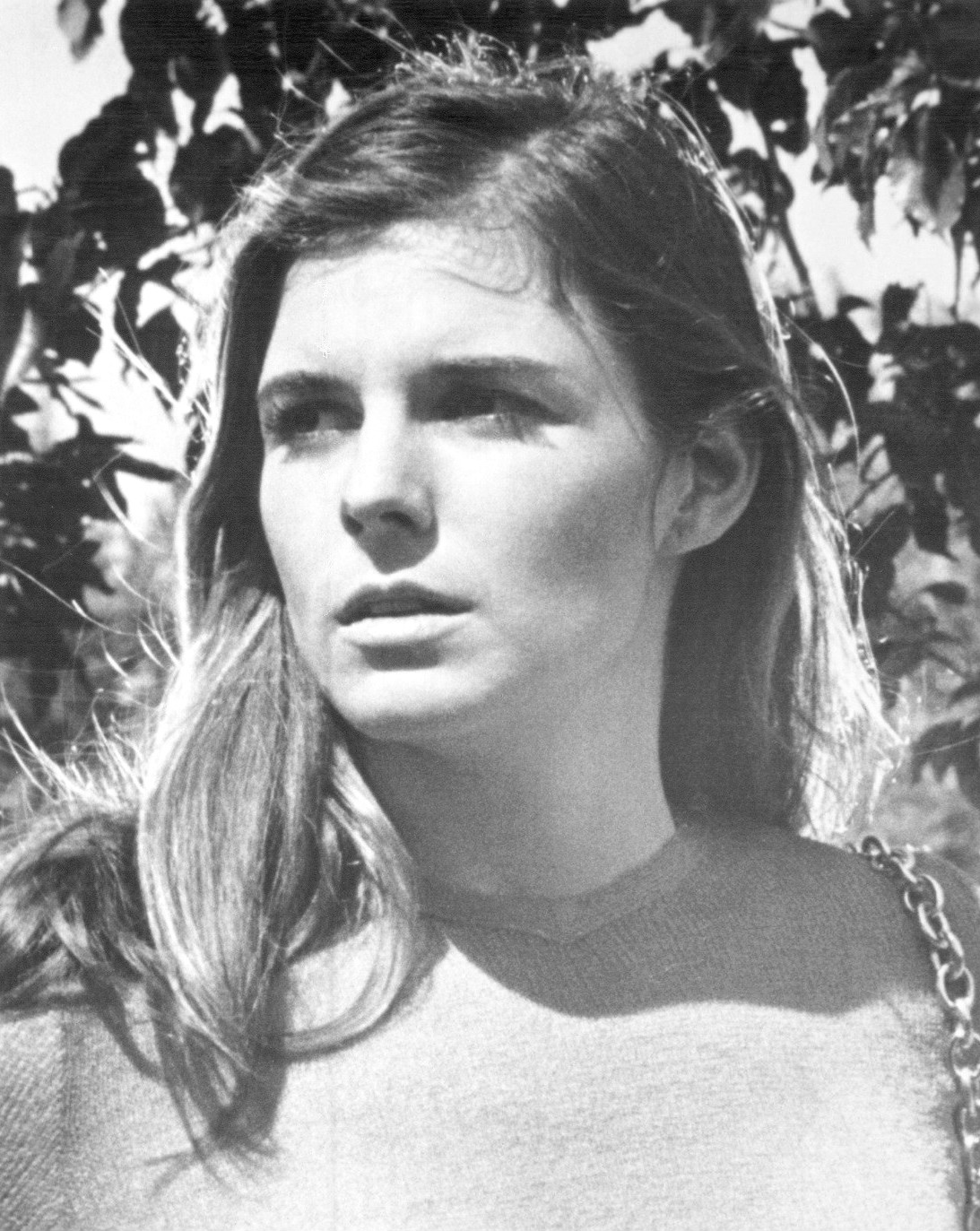
Susan Saint James dies at 80 after a diagnosis of pancreatic cancer, leaving behind one of the defining careers of American network television — three hit series across three decades, an Emmy Award won before her 23rd birthday, and a second act defined less by fame than by family and charity. The actress died on Monday, October 26, 2026. Her representative confirmed the death to People, and her family announced it on Tuesday, October 27. For viewers who grew up with broadcast television, the news closes a chapter that ran from the glossy mystery wheels of the 1970s to the working-mother sitcoms of the 1980s: Saint James was there for both, and she was central to each.
She is survived by her husband of nearly 45 years, the former NBC Sports chairman and Saturday Night Live producer Dick Ebersol; by her children Sunshine Lucas, Harmony Lucas, Charlie Ebersol and Willie Ebersol; by seven grandchildren; by her sister, Mary Mercedes Dewey; and, as the family statement noted with characteristic warmth, by her service dog, Lola. This Susan Saint James obituary is built from the verified record of a career that began when she was a teenager modeling in Paris and ended, on her own terms, at the height of her popularity — a decision almost no star of her era made, and one that now reads as the most Susan Saint James choice of all.
The announcement
Susan Saint James cause of death: pancreatic cancer, confirmed by her representative
The Susan Saint James cause of death was pancreatic cancer, according to the confirmation her representative gave to People as the family announced her death on Tuesday. She died on Monday, October 26, 2026, at 80. She had turned 80 in August. No further medical details were released, and the family asked for privacy while making clear, in their statement, that they wanted the emphasis placed where Saint James herself would have placed it: not on the illness, but on the way she treated people.
The family's words, given to People, describe a woman who was "generous with her time and energy, which she valued more than money, and instinctively drawn to whoever needed lifting up. She taught her children to pause, be kind and look out for other people." A second line from the statement is already the one being quoted back across the entertainment world: "She never met a stranger. Every person she met became the most important person in the room at that moment." Anyone who watched her work will recognize the quality being described. Saint James's screen gift was attention — the sense, in scene after scene, that the person she was talking to was the only person who mattered. Her family is saying that was not acting.
From Rockford to a seven-year contract
She was born Susan Jane Miller on August 14, 1946, in Los Angeles, and raised in Rockford, Illinois — a Midwestern upbringing she credited throughout her life for a lack of pretension that casting directors noticed and audiences trusted. As a teenager she modeled in Paris, an early proof of the camera's affection for her, and at 20 she signed a seven-year contract with Universal Studios, entering the last generation of actors to be built by the old studio contract system. Her television debut came in 1966 in the TV movie Fame Is the Name of the Game — a title that turned out to be a career map.
The contract system was dying, but it gave Saint James what it was designed to give: work, training and exposure in rapid succession. She appeared in the film Where Angels Go, Trouble Follows in 1968, and she learned the grammar of television production at a moment when television itself was becoming the center of American popular culture. What the system could not have predicted was how quickly she would outgrow utility casting. Within two years of her debut, she had the role that would win her an Emmy and attach her name permanently to the history of the medium.
Name of the Game Peggy Maxwell: the role that won the Susan Saint James Emmy
Her breakthrough came on NBC's The Name of the Game (1968–1971), one of the most ambitious series of its era — a rotating, 90-minute drama built around a publishing empire, with three leading men alternating episodes. Saint James played Peggy Maxwell, the editorial and research assistant who moved through every version of the show. On paper, Peggy Maxwell was support staff. On screen, Saint James made her the show's connective tissue: bright, funny, unshowy and indispensable, the person who actually knew where everything was and how everyone felt about it.
The industry noticed. The Susan Saint James Emmy arrived in 1969, when she won the award for supporting actress for her work as Peggy Maxwell — at 22, one of the youngest winners of her generation, and the first of eight Emmy nominations she would collect across her career. The win mattered beyond the trophy. It announced that a performer the audience experienced as natural and unaffected was, in fact, doing something technically difficult: playing competence, warmth and comic timing at the same time, in a format that gave its male stars the plots and its assistant the leftovers. She made the leftovers the meal. Every profile of her since has started in the same place, and it is the right place: Peggy Maxwell is where American television learned her name.
Sally McMillan and the mystery-movie years
The McMillan and Wife cast: Saint James opposite Rock Hudson
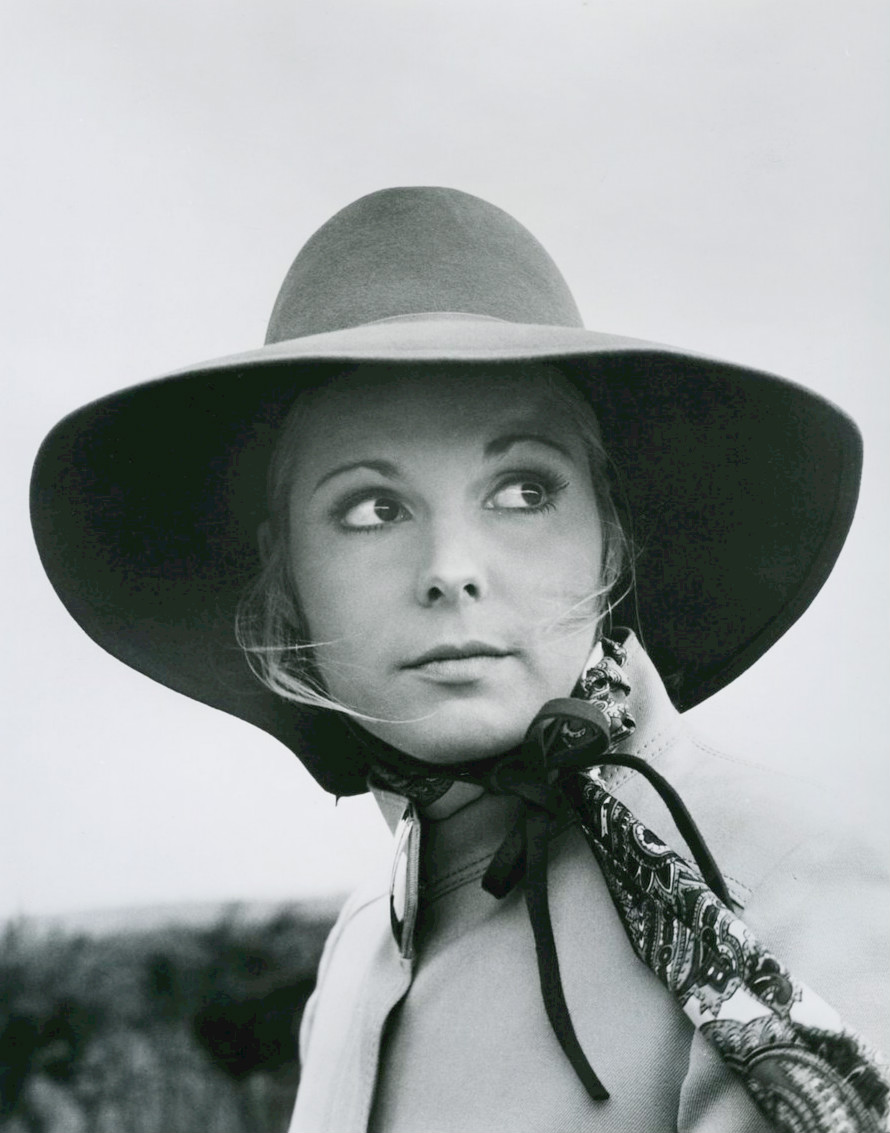
In 1971 she moved from assistant to co-lead. McMillan & Wife (1971–1976) paired her with Rock Hudson — he was San Francisco police commissioner Stewart McMillan; she was his wife, Sally — as one of the rotating pillars of the NBC Mystery Movie wheel, the umbrella format that also carried Columbo and McCloud. The McMillan and Wife cast was anchored by that central marriage, and the show's engine was not really detection. It was chemistry. Hudson, a film star of the previous generation, played authority with a wink; Saint James played curiosity with a spine. Sally was written as the amateur who kept wandering into cases, and Saint James played her as the professional the department happened not to employ.
The series ran five seasons and made her, for a decade's first half, one of the most recognizable women on television anywhere in the world. It also established the template her career kept refining: the wife, the assistant, the partner — roles that lesser writing treated as adjuncts to a man's story, and that Saint James consistently played from the inside out, as people with their own intelligence, humor and agenda. When obituaries call her a star of the 1970s, this is the image most of them will reach for: the trench coat, the banter, the solved case, and a marriage the audience believed because the two people in it visibly enjoyed each other.
Kate & Allie, and the working-mother era
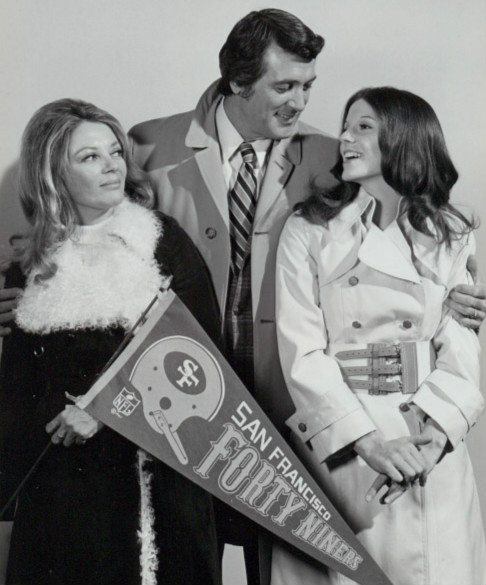
Her third act as a series star was the one that may matter most to television history. On CBS's Kate & Allie (1984–1989), Saint James played Kate McArdle opposite Jane Curtin as Allie Lowell — two divorced mothers sharing a New York brownstone and raising their children together. Searches for "Kate and Allie actress dies" will lead readers to this record, and it deserves the traffic: the show was a quiet landmark. At a time when the American sitcom still largely treated divorce as a premise for jokes about failure, Kate & Allie treated it as a fact of life, and built its comedy around two women solving the logistics of work, money, dating and children with mutual respect as the foundation.
Saint James's Kate was the warmer, more impulsive half of the partnership, and her scenes with Curtin — two expert comic actors playing friendship as a form of household infrastructure — remain the show's claim on posterity. The series ran six seasons. And then, in 1989, at 43, with her name still able to open a series, Saint James did the thing stars are not supposed to do: she largely retired from acting. There was no scandal, no collapse, no comeback tour. She had decided, years earlier and in public, that her family came first, and when Kate & Allie ended she acted on it.
Her film work fills out the record between the series: Outlaw Blues (1977) opposite Peter Fonda, the hit comedy Love at First Bite (1979), How to Beat the High Cost of Living (1980) and Carbon Copy (1981), alongside early-career and guest work that included a 1980 appearance on M*A*S*H — a rite of passage for television actors of her generation. In 2008, the industry gave her its most literal form of permanence: a star on the Hollywood Walk of Fame. She also served on the boards of the Special Olympics and the Telluride Foundation, work that — characteristically — she treated as a responsibility rather than a photo opportunity.
Why this matters
Start with the shape of the career, because there is no modern equivalent. Saint James was a defining face of American network television in the 1970s and again in the 1980s, in two different genres, on two different networks, playing two different kinds of woman — and she did it in the last era when a hit network series could gather a third of the country in front of the same episode on the same night. McMillan & Wife and Kate & Allie are not footnotes to a fragmented streaming age; they are documents of a monoculture, and she was one of its most trusted citizens. When that monoculture's stars die, what is being mourned is not only the person. It is the shared national living room they once held together.
The second reason is what Kate & Allie proved, and when it proved it. The working-mother sitcom is now a standard format; in 1984 it was a wager. CBS bet that audiences would watch two divorced mothers treat each other as family, hold jobs as a necessity rather than a statement, and raise children in a household no 1950s template described. The bet paid off for six seasons, and the template — chosen family, economic realism, comedy drawn from logistics and loyalty rather than humiliation — became part of the permanent grammar of American television comedy. Saint James and Curtin did not just star in that change. Their restraint is why it worked: the show never announced its own importance, and neither did they.
The third reason is the retirement. Saint James walked away at her peak, in 1989, and stayed away — turning the second half of her life into an argument that a person is not required to spend it being famous. In an industry that measures worth in visibility, her absence was itself a statement, and it reframed everything that came before it: the Emmy at 22, the mystery-wheel years, the sitcom — all of it chosen work, done well, and then set down when something else mattered more. That is a rarer legacy than longevity. It is the legacy of someone who got the proportions right, in the correct order, on the record, in public.
The disease that took her
Susan Saint James pancreatic cancer and the problem of late detection
The Susan Saint James pancreatic cancer diagnosis places her death inside one of medicine's bleakest statistics. Pancreatic cancer is among the deadliest common cancers, not because it is untreatable in principle, but because it is so rarely caught while treatment can change the outcome. As the Mayo Clinic explains in its overview of the disease, pancreatic cancer seldom causes symptoms in its early stages — the pancreas sits deep in the abdomen, and the warning signs that do appear, such as abdominal pain, weight loss, jaundice and new or worsening diabetes, typically arrive only after the disease has advanced or spread. There is no standard screening test for average-risk patients, which is why so many diagnoses, even for people with excellent medical care, come late.
That context matters for how her death will be discussed in the days ahead. Pancreatic cancer has taken a long list of public figures, and each high-profile death renews the same two conversations: the research community's push for early-detection blood tests and imaging protocols for high-risk families, and clinicians' insistence that persistent, unexplained symptoms deserve investigation rather than reassurance. Saint James's family released no details about the course of her illness, and none are owed. But the fact attached to her name this week — pancreatic cancer, at 80 — will do what it has done before: send a share of readers to learn the symptoms, check their family histories and ask better questions at their next physical. It is not the legacy she chose. It may still be one she leaves.
Grief, endured in public before
As Dick Ebersol wife and mother: the 2004 crash and Teddy's eulogy
To sports and television audiences she was known for decades as Dick Ebersol wife as much as in her own billing — the couple married in November 1981, joining one of TV's biggest acting careers to one of its biggest producing careers — but the marriage became publicly defined by how it bore the worst day of its life. On November 28, 2004, a charter jet carrying Ebersol and two of their sons crashed on takeoff in Colorado, in snow. Ebersol and their son Charlie survived, pulled from the wreckage. Their youngest son, Teddy, 14, was killed.
What Saint James did next became one of the most retold acts of grace in modern American public life. Weeks after the crash, she delivered Teddy's eulogy — and composed it as a note addressed, one by one, to each of her other children and to her husband: what Teddy had meant to each of them, and what he would want for each of them now. People who were in the room have described it for twenty years as an act of almost impossible composure in service of everyone else's grief — which is, word for word, the quality her family's statement praised this week: the instinct to find whoever needed lifting up, and lift them. Her advocacy and charity work — the Special Olympics and Telluride Foundation boards, and a long record of quieter giving — ran on the same instinct. She had been given, and had lost, more publicly than most people. The family's accounting of her is consistent across forty years: she spent herself on other people first.
The reaction
The family's statement, released through her representative to People on Tuesday, will anchor the first wave of remembrance: the generosity with time and energy valued "more than money," the children taught "to pause, be kind and look out for other people," and the stranger who never stayed one. "Every person she met became the most important person in the room at that moment" is a sentence written by people who watched it happen for decades — and it doubles, whether they intended it or not, as the best short description of her acting ever published. Co-stars, the Television Academy and the institutions she served are expected to add their own tributes through the week; the Special Olympics and the Walk of Fame will be natural gathering points for a public that mostly knew her, with unusual completeness, as she appeared to be.
For more of our entertainment obituaries, see our farewell to Star Trek's Walter Koenig, our obituary of Bugs Bunny voice actor Eric Bauza, and our tribute to Eva Marie Saint, the golden-age star who died at 102.
What happens next
The immediate calendar is private: a family that has always guarded its boundaries will lay her to rest on its own schedule, and the public ceremonies — a likely Television Academy tribute, retrospectives from the networks she enriched, renewed attention to her star on the Hollywood Walk of Fame — will follow in the measured order of these things. The longer calendar belongs to the work. The Name of the Game, McMillan & Wife and Kate & Allie all circulate in reruns and on streaming, and television history has a way of reintroducing its best natural actors to audiences who think they are discovering someone new. A teenager who meets Peggy Maxwell this winter will not experience her as an artifact. She will seem, as she seemed in 1969, like the most alive person in the room.
That is the closing fact of this Susan Saint James obituary, and it is not a consolation so much as a measurement. She was born Susan Jane Miller in Los Angeles in 1946, raised in Rockford, and hired by Universal at 20; she won an Emmy at 22, headlined for two decades, retired at her peak, buried a son with a eulogy strangers still quote, served the causes she believed in, and died at 80 as the matriarch of a large and evidently devoted family — including, the statement made sure to add, her service dog, Lola. The industry gave her a star in the sidewalk in 2008. Her family gave her the better epitaph this week, in the plainest possible terms: she never met a stranger. Television, which introduces strangers to millions for a living, does not produce that sentence often. This week it lost one of the few people it was ever simply true of.
Sources
- People (October 27, 2026): confirmation of the death by Saint James's representative and the family's statement — that she was "generous with her time and energy, which she valued more than money," taught her children "to pause, be kind and look out for other people," and that "she never met a stranger." people.com
- CNN (October 27, 2026): obituary coverage — death on Monday, October 26, 2026, at 80 after a pancreatic cancer diagnosis; career record from The Name of the Game and the 1969 Emmy through McMillan & Wife and Kate & Allie; the 2004 Colorado crash that killed her son Teddy. cnn.com
- USA Today (October 27, 2026): obituary and career chronology — born Susan Jane Miller, August 14, 1946, in Los Angeles and raised in Rockford, Illinois; Universal contract at 20; film credits including Love at First Bite and Carbon Copy; marriage to Dick Ebersol in November 1981; survivors. usatoday.com
- Entertainment Weekly (October 27, 2026): obituary coverage — eight Emmy nominations, the 2008 Hollywood Walk of Fame star, board service with the Special Olympics and the Telluride Foundation, and her retirement from acting after Kate & Allie ended in 1989. ew.com
- Reporting also informed by coverage in The Hollywood Reporter and TheWrap, and by the Mayo Clinic's patient-care overview of pancreatic cancer symptoms, late detection and risk factors. mayoclinic.org