Supreme Court campaign ad rates: the justices on Wednesday stayed a lower court's order that would have forced the Federal Communications Commission to rule before the November 3 midterms on a Democratic challenge to the agency's policy extending discounted broadcast advertising rates to political party committees.
Supreme Court Keeps Cheaper Party Ads Alive: The Price of a TV Spot Just Became a Midterm Weapon
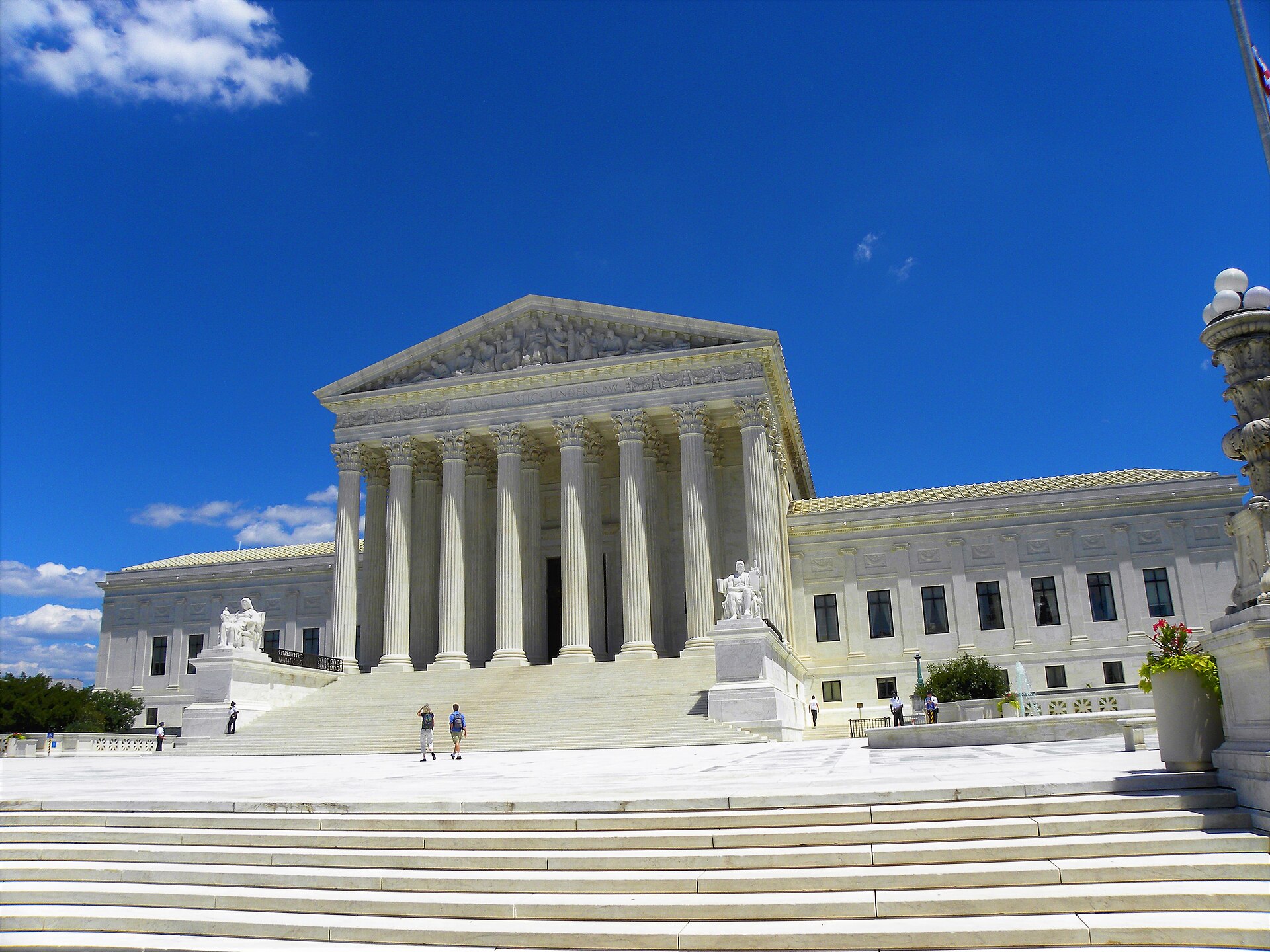
The order, issued Wednesday, is the second time in six weeks that the Supreme Court has intervened in the dispute — and the second time it has ruled in a way that preserves the policy while the underlying legal fight remains unresolved. The justices stayed a ruling by the Richmond-based 4th U.S. Circuit Court of Appeals that had ordered the Federal Communications Commission to decide, promptly, a challenge brought by Democratic candidates against the agency's March guidance. That guidance extended the "lowest unit charge" — the federally mandated discount broadcasters must offer in the run-up to an election — from individual candidates to party committees and joint fundraising committees buying ads coordinated with candidates.
The practical effect is simple: the discount stays. With the 60-day pre-election window having opened on September 4 and Election Day set for November 3, the national party committees — the National Republican Congressional Committee and the National Republican Senatorial Committee on one side, their Democratic counterparts on the other — can keep buying television and radio time at the lowest rates stations charge any advertiser, for the rest of the campaign. The court said the FCC would suffer irreparable harm without a stay. Justices Sonia Sotomayor and Ketanji Brown Jackson indicated they would have denied the request; the order was otherwise unsigned, as emergency orders typically are.
"We are pleased the Supreme Court has granted the FCC's stay request," an FCC spokesperson said. "The court's decision is right on the law and avoids the specter of upending the rules for political ads right in the middle of an ongoing election." The agency, chaired by Brendan Carr, a close ally of President Donald Trump, currently sits with a 2-1 Republican majority. The president's party is defending its control of both the House and the Senate on November 3.
What the "lowest unit charge" actually is
The lowest unit charge is one of the oldest levers in American campaign law. Under the Communications Act, broadcasters must sell time to legally qualified candidates, in the 45 days before a primary and the 60 days before a general election, at the lowest rate the station charges any commercial advertiser for the same class and amount of time. The idea, dating to the 1971 campaign finance reforms, was to stop stations from price-gouging candidates at the exact moment they most need the airwaves — and to keep the cost of reaching voters from being set entirely by the market's most frantic weeks.
For half a century, that entitlement belonged to candidates themselves. What the FCC did in March — through guidance issued by its Media Bureau rather than a full rulemaking — was reinterpret who qualifies: party committees and joint fundraising committees, it said, are also eligible for the lowest unit charge when they buy ads coordinated with a candidate. That reinterpretation landed just months after the Supreme Court, in June, struck down the federal caps on spending coordinated between parties and their candidates, siding with Republican challengers including Vice President JD Vance. The two decisions compound: parties may now spend unlimited coordinated money alongside their candidates, and they may spend it at candidate prices.

A year of legal trench warfare
The fight's timeline explains Wednesday's ruling better than any single argument. In April, a group of Democratic candidates — including Georgia Senator Jon Ossoff and former Ohio Senator Sherrod Brown, both in competitive Senate races — challenged the guidance through the FCC's own in-house proceedings, arguing the Communications Act reserves the discount for candidates and gives neither parties nor joint fundraising committees any statutory claim to it. The agency took no action on the challenge for months. The candidates went to the 4th Circuit, which sided with them in August and set the guidance aside; broadcasters began withdrawing the discounted rates from party committees, and the Republican committees warned the Supreme Court that the ruling was immediately damaging their ability to buy airtime — the NRCC alone, they said, had reserved $10.8 million in television advertising across 23 House contests for September.
On September 4 — the day the discounted-rate window opened — the Supreme Court stepped in for the first time. In an unsigned per curiam order, by 8-1, the justices stayed the 4th Circuit's decision, reasoning that the appeals court had likely acted before the FCC finished reviewing the candidates' own administrative challenge; the candidates, in other words, had to wait for the agency before asking a court to overrule it. Justice Jackson was the lone noted dissenter, writing that she was not convinced the Republican committees were likely to prevail on that jurisdictional argument. The discount was back on.
The 4th Circuit answered on October 7. In a 2-1 ruling, it ordered the FCC to issue a prompt ruling on the Democratic challenge, by then more than five months old, and wrote that its "willingness to tolerate the FCC's delay tactics is at an end." Chief Justice John Roberts initially lifted the October 9 deadline the court had set. Wednesday's full-court order completes the sequence: no deadline, no forced ruling before the election, and a Democratic challenge that will still be sitting at the FCC when the votes are counted.
Both sides, in their own words
The Republican committees' case to the court was about process and disruption. They accused the 4th Circuit of having "short-circuited" the FCC's review, and argued in the most recent round that another court-ordered change to ad rates in the final weeks would scramble advertising contracts already negotiated with stations — that stations themselves have an interest in not seeing prices and bookings reversed again with Election Day three weeks out. The FCC's statement Wednesday echoed that framing: the decision "avoids the specter of upending the rules for political ads right in the middle of an ongoing election."
The Democratic candidates describe the same sequence in opposite terms: "blatant procedural trench warfare to stave off judicial review of an unlawful agency directive until it is too late to matter." Their argument on the merits is textual — Congress wrote the discount for candidates, and an agency bureau cannot rewrite the statute by guidance. The FCC's lone Democratic commissioner, Anna Gomez, criticized the policy and the court's September stay in still sharper terms, saying it "throws the midterm election into chaos," would "unleash a flood of dark money by letting a handful of wealthy donors pool unlimited contributions into political advertising," and would force local broadcasters — many already under financial pressure — to absorb the cost of selling more of their scarcest inventory at discount prices during the most lucrative weeks of their year.
Why this matters: the money gap the discount now multiplies
A discounted rate is worth the most to the side with the most money to spend, and by that measure the ruling lands asymmetrically. The three main national Republican committees ended August with about $233 million in cash on hand. Their Democratic counterparts held roughly $130 million — and carried nearly $18 million in debt. The gap has widened since the court's June decision lifted the coordinated-spending caps: in July and August alone, the Republican committees exceeded the former national limits by more than $48 million, according to Federal Election Commission disclosures, while the Democratic committees eclipsed them by just under $4 million.
Now apply a discount to that asymmetry. Every dollar of the Republican committees' coordinated spending buys airtime at the lowest unit charge rather than at market rates in the most expensive advertising weeks of the cycle — the same weeks when local stations in battleground markets can charge almost what they like to everyone else. "Our dollars can go further than they could before," one Republican official told Reuters of the combined effect of the June ruling and the rate policy. The committees' opponents answer that this is precisely the problem: a discount Congress designed to keep individual candidates from being gouged has been converted, administratively, into a multiplier on the better-funded party's money advantage.
There is a third party absorbing consequences: the broadcasters. Stations must honor the lowest unit charge for a suddenly expanded class of buyers — every party committee and joint fundraising committee coordinating with a candidate — during the window when their inventory is most valuable, and they must do so under a policy whose legality no court has yet finally judged. When the 4th Circuit voided the guidance in August, some stations withdrew the discounts; when the Supreme Court restored them in September, the discounts returned; had the deadline fight gone the other way this week, a third reversal was possible in the campaign's final fortnight. Whatever one's view of the policy, the industry has now priced an entire midterm cycle under rules that have flipped twice and remain formally undecided.
What happens next
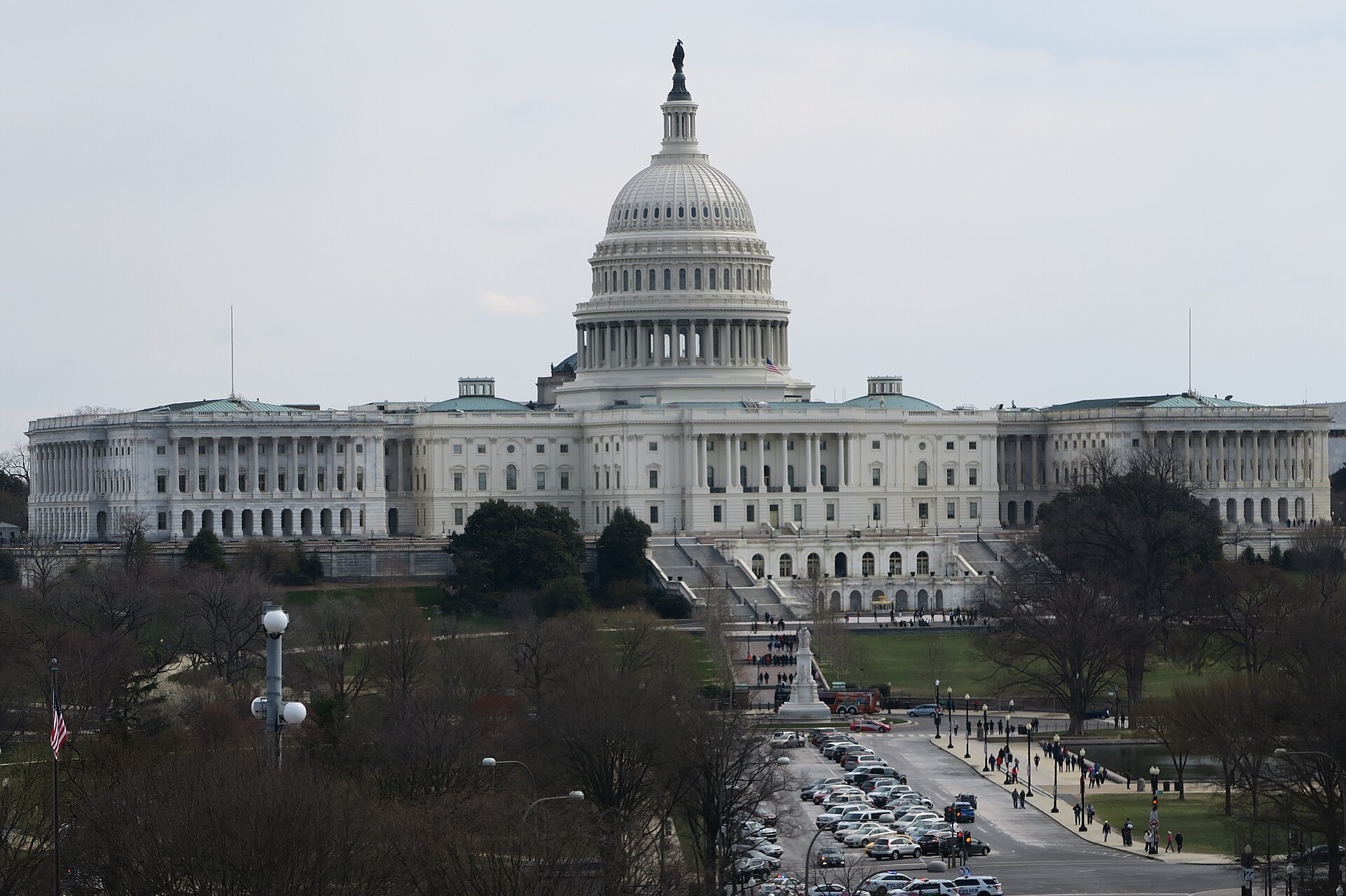
Formally, almost nothing — and that is the point. The Democratic candidates' challenge remains pending before the FCC, which is under no judicial deadline to decide it and is unlikely to rule against its own guidance before November 3 in any event. The Supreme Court has not decided whether the FCC's reading of the Communications Act is lawful; both of its interventions have been procedural, about who must wait for whom. A merits fight — over the statutory phrase "legally qualified candidate," and over how much interpretive room agencies retain — remains available after the election, when its outcome can no longer change a single ad buy in this cycle.
Politically, the consequences are already locked in. Party committees will finish the midterms buying at candidate rates; media buyers in both parties will plan the next cycle on the assumption that coordinated money and discounted airtime now travel together, unless and until a court or a differently composed FCC says otherwise. And the case will stand as the clearest example yet of a pattern this campaign season has repeated — in redistricting, in voter-list disputes, in coordinated-spending limits — in which the rules of the 2026 election are being written, weeks before it, by emergency orders that decide everything about the contest except who wins it.
Related coverage: DOJ gives California 48 hours over alleged noncitizen voters on the Los Angeles rolls · Supreme Court revives expanded SAVE citizenship checks before the midterms
Sources: Reuters (October 14); Reuters (August 31); Bloomberg Law (October 14); Radio Ink and Inside Radio coverage of the September stay and the October deadline fight. Direct quotations are from the FCC's statement, the parties' court filings, and Commissioner Gomez's public statements, as reported by Reuters; the cash-on-hand and coordinated-spending figures are Federal Election Commission disclosures as reported by Reuters.