War · Africa · Sudan
Africa / War — The UN refugee agency UNHCR and the International Organization for Migration (IOM) warned on Friday, November 6, that an estimated 15.4 million people across Sudan urgently need emergency shelter and basic household items, but funding shortages mean aid agencies can prioritise only about one in ten of them. Just 936,000 people have received shelter assistance so far. Speaking from Khartoum to a UN briefing in Geneva, IOM's Sudan chief Mohamed Refaat put the position in one sentence: the agency distributed more than 40,000 tonnes of relief this year, "but our warehouses are completely empty now."
Track it live: Africa Wars — Live Global Trackers · Wars & Conflicts — Live Global Trackers
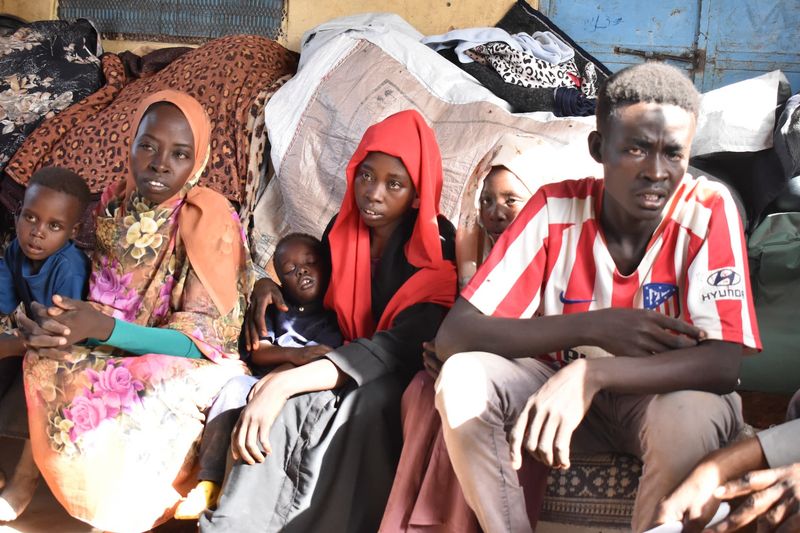
Every war eventually produces a number too large to picture, and Sudan's arrived on Friday in the flat language of a joint UN statement. Fifteen point four million people — roughly one in three Sudanese — urgently need emergency shelter and essential household items: a tent or tarpaulin, a blanket, a sleeping mat, a kitchen set, a lamp. Against that need, the two agencies responsible for much of the response, UNHCR and IOM, said funding constraints mean humanitarian agencies can prioritise assistance for only about 10 percent of those in need. So far, 936,000 people have received assistance. The rest — more than 14 million people — are, in the agencies' own framing, a gap: between what the world's largest displacement crisis requires and what the world has chosen to pay for.
The warning was issued jointly in Geneva and Khartoum on Friday and reported the same day by Reuters and UN News, with the agencies' figures matching across both accounts. It lands more than three and a half years after war broke out in April 2023 between the Sudanese Armed Forces and the paramilitary Rapid Support Forces (RSF), former partners in Sudan's transitional arrangements who turned on each other over issues including how to integrate their forces in a planned transition to civilian rule. The fighting has since spread across most of the country, and the displacement figures the agencies published on Friday describe a nation substantially on the move: around 8.6 million people remain displaced inside Sudan, while more than 4.6 million have fled across its borders.
"We decided to serve only one out of ten"
What made Friday's briefing land harder than the usual funding appeal was the candour of the officials describing the triage. Mohamed Refaat, IOM's chief of mission in Sudan, speaking by video from Khartoum to the UN briefing in Geneva, said the agencies had already cut their ambitions to fit the money available. "We decided to serve only one out of ten. But even within the one out of ten, we could reach only 900,000 people with what we had," he said. His agency's last stocks went out the door this week: "Just yesterday, we had 16 trucks arriving in Darfur, but they were just the last that we had in our stocks. We are facing serious problems. Our supplies are running out." And, in the line that will follow this story: "This year, I was able to distribute more than 40,000 tonnes [of relief assistance]. But our warehouses are completely empty now."
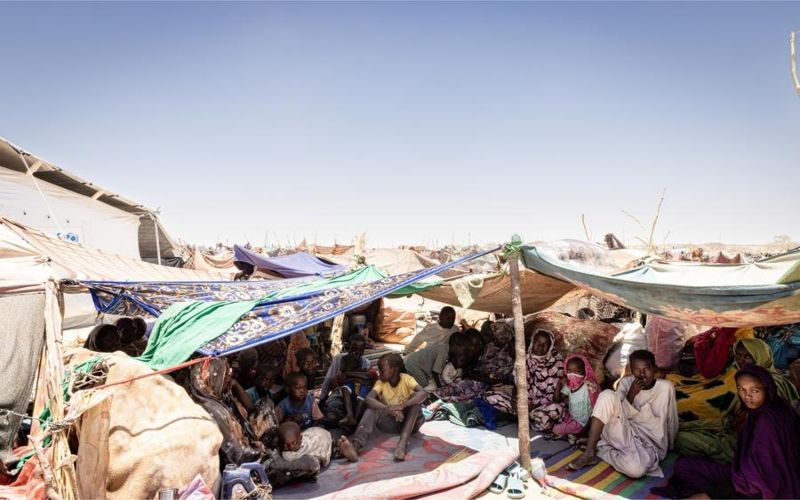
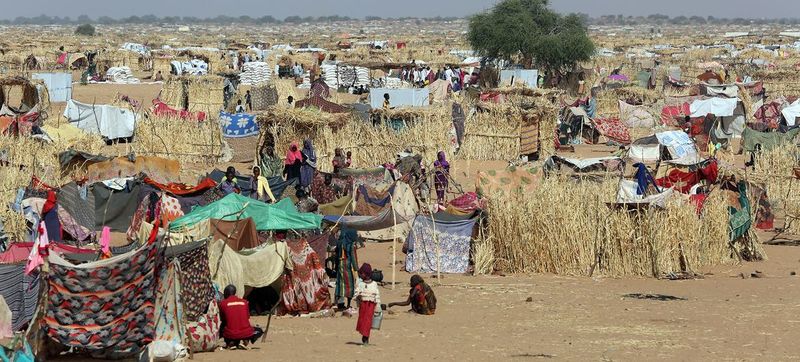
Abubakarr Jalloh, UNHCR's deputy representative in Sudan, also speaking from Khartoum, described what the missing items actually mean on the ground — and why shelter, in this war, is a protection issue before it is a comfort issue. Three in four people displaced inside Sudan are women and children, he said. "For a woman who has lost everything, a tent is more than just a shelter; it means the difference between sleeping in the open, surrounded by strangers and having a space of her own. It means dignity. It is privacy. And it is safety for that woman and family." A solar lamp, he added, "is more than just a source of light, it is safety" — it means a woman can reach a latrine at night without walking in darkness. At the same Geneva briefing, officials added the texture behind the headline figure: in Tawila, in Darfur, heavy rains this summer destroyed hundreds of tents; across displacement sites, two in five displaced families are living under plastic sheets; and in White Nile State, fires in April and July destroyed emergency shelters for more than 1,300 families along with 50 tonnes of blankets, sleeping mats and solar lamps.
The returnees' paradox: 5.2 million went home to rubble
Buried in Friday's figures is the number that complicates every simple account of this crisis. More than 5.2 million people have already returned to their areas of origin — the vast majority of them people who had been displaced inside Sudan, alongside refugees coming back from neighbouring countries. In a war still being fought, that sounds like progress, and in places where front lines have moved on, it is: families are voting with their feet for home over the camps. But the agencies were explicit about what those families are returning to. Many are arriving in communities where homes, infrastructure and essential services have been damaged or destroyed — houses looted or flattened, healthcare, electricity and water largely unavailable — "leaving them with little or nothing to rebuild their lives," in UNHCR's words, and raising the risk that people are forced to leave again, in Refaat's phrase, "without any hope of returning."
That is why shelter sits at the centre of the appeal rather than at its edges. For a returning family, the agencies said, shelter assistance is often the first step towards rebuilding a life — the tarpaulin and timber that make a damaged house habitable while everything else is still missing. It is also why the displacement total may not fall the way the returns figure suggests. Refaat warned that the number of internally displaced people could rise again despite the recent returns, and Friday's briefing pointed to the war's newest geography: fighting has spread this year to a new frontline in the Blue Nile region, where nearly 120,000 people have been displaced since January. Continued fighting, insecurity and drone attacks are driving further displacement and restricting humanitarian operations, the joint statement said, while damaged infrastructure and logistics are hampering efforts to move and pre-position supplies — a pattern readers can follow in our coverage of the drone campaign against Sudan's power grid and the diplomatic rupture in our report on Sudan and Ethiopia closing consulates.
What the numbers actually mean
Put Friday's figures side by side and the structure of the failure becomes clear. Need: 15.4 million people. Reached: 936,000 — about six in every hundred. The overall 2026 Humanitarian Needs and Response Plan for Sudan requires US$2.9 billion to provide life-saving assistance to 20.4 million people, out of 33.7 million in need across the country; only around 47 percent of that money has been received, the agencies said, forcing them to scale back services and prioritise only the most urgent needs. The shelter slice is thinner still: at the Geneva briefing, officials put the collective shelter response requirement at US$179 million for this year, with only about 35 percent of it funded. In other words, the part of the response that puts a roof — or at least a tarpaulin — over a family is funded at roughly a third of its costed need, in the largest displacement crisis on earth, three and a half years in.
Context sharpens the point. Sudan's 8.6 million internally displaced people alone exceed the entire population of many countries the UN system treats as standalone emergencies, and the combined total — 8.6 million displaced inside the country plus more than 4.6 million across its borders — makes Sudan the world's largest displacement crisis by the agencies' own repeated description. Yet the crisis competes for donor attention and money with Ukraine, Gaza and a lengthening list of other wars, at a moment when several major donors have cut humanitarian budgets. Friday's statement did not name donors or assign blame for the shortfall, and neither army nor RSF is accused by the agencies of causing the funding gap; the gap is presented, plainly, as a financing fact. What the belligerents are responsible for, on the agencies' account, is the displacement itself — shifting front lines, drone attacks and insecurity that keep generating new need faster than empty warehouses can be refilled.
Why this matters
It would be easy to file Friday's warning as one more appeal in a war that produces them monthly. That would be a mistake, for three reasons. The first is timing. The agencies are warning now, at the start of the region's cooler months, that without an urgent injection of flexible funding more families will face the coming months without protection from harsh weather, insecurity and the risks of violence and exploitation. Shelter is seasonal in a way that communiqués are not: a tarpaulin not delivered before the weather turns is not a delayed benefit, it is an absent one. The second reason is the returns paradox. Five million people going home is the single most hopeful statistic in Sudan's war — and it is precisely the population most exposed to the shelter gap, because a returnee in a roofless house in a town without water or power is one bad month away from joining the displacement statistics again. If the returns collapse, the crisis does not return to where it was; it compounds.
The third reason reaches beyond Sudan's borders. Refaat noted on Friday that Sudanese nationals now constitute the largest nationality arriving in Europe via the Eastern Mediterranean route, and drew the line explicitly: "If we are not able to provide aid in Sudan at scale, it means neighbouring countries will be impacted, other countries will be impacted." Chad, Egypt, South Sudan and Ethiopia already host millions of Sudanese between them, in some of the poorest border regions in the world. A shelter system that fails inside Sudan does not contain the consequences inside Sudan. Jalloh made the same point from the household end: below-average rainfall linked to El Niño conditions this year has hit harvests in Darfur, Kordofan and other areas devastated by fighting, food prices that would normally ease after harvest remain "painfully high," and "for a family that has lost everything, every Sudanese pound spent on food is money that cannot be spent on a blanket or on materials needed for safe shelter." Hunger and homelessness, in this war, are the same budget line in a family's pocket.
What happens next
The agencies said UNHCR and IOM remain committed to working with local humanitarian organisations and partners to maintain shared supply pipelines, pre-position emergency stocks in priority areas and deliver assistance where needs are greatest — but were blunt that those efforts "cannot be sustained without predictable and flexible funding." Three developments will show whether Friday's warning changed anything. The first is money: whether donor governments respond with the flexible, unearmarked funding the agencies requested, and whether the shelter cluster's roughly US$179 million requirement closes from its current ~35 percent. The second is access and security: whether aid convoys can move through a war in which drone attacks and shifting front lines — including the new Blue Nile front — keep displacing the very people the supplies are meant for. The third is the direction of movement: whether the 5.2 million returnees stay home and rebuild, which would slowly shrink the crisis from within, or are displaced a second time into a system whose warehouses, as of Friday, are empty.
Refaat closed his briefing with the smallest possible unit of this enormous story: "We cannot undo what they have endured, but we can make sure that they have a safe place to sleep tonight." Fifteen point four million people need that safe place. Nine hundred and thirty-six thousand have been reached. The distance between those two numbers is now the central humanitarian fact of Sudan's war — and, after Friday, no one funding, fighting or following this conflict can say they do not know it. "We can reach more people," Refaat said of the improved access his teams now have. "We can listen to the stories of their suffering. We cannot say that we don't know." Signal Post News will update this story as donor responses and any new funding pledges are confirmed.
Sources: UNHCR and IOM joint press release, "UNHCR and IOM warn millions in Sudan risk losing emergency shelter as funding runs out," November 6, 2026; Reuters, "Millions of displaced Sudanese risk losing shelter as funds run low, UN warns," November 6, 2026; UN News, "Sudan's suffering is plain for all to see say aid teams, as brutal war continues," November 6, 2026; UN Geneva press briefing of November 6, 2026 (UNHCR, IOM, UNICEF, WHO), UN Web TV, including Mohamed Refaat (IOM Sudan) and Abubakarr Jalloh (UNHCR Sudan) speaking from Khartoum; IOM UNifeed package of November 6, 2026 (asset d3681783). Follow the conflict on our live Africa wars tracker.