WAR · SUDAN · NORTH KORDOFAN
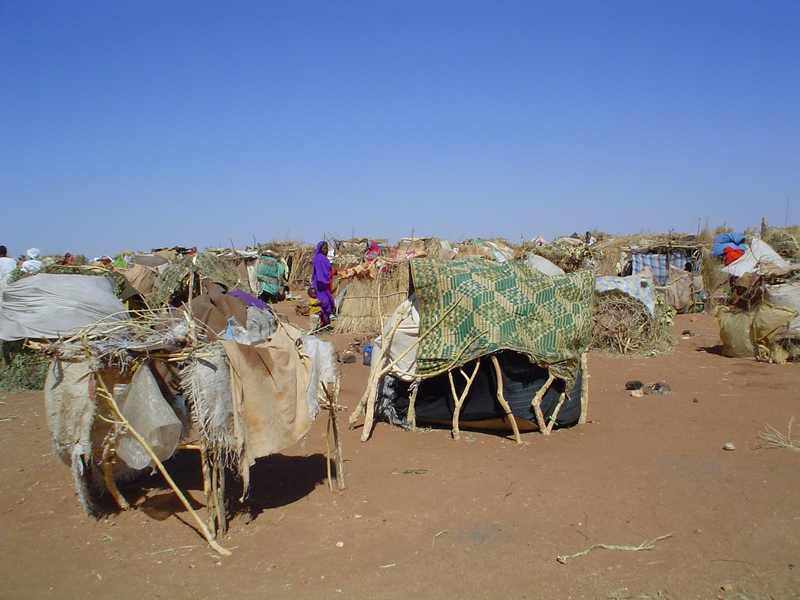
AL-MAZROUB, Sudan — The Sudanese Armed Forces announced on Friday, October 2, 2026, that its troops had captured the town of al-Mazroub in North Kordofan after heavy combat with the Rapid Support Forces, describing the fighting as fierce and claiming the RSF suffered personnel casualties and heavy combat-vehicle losses. The army urged residents of the newly controlled areas to resume normal life.
The announcement is potentially significant because al-Mazroub sits on the connective tissue of the Sudan war: routes that bind North Kordofan to West Kordofan and, beyond it, RSF-held Darfur. But the first discipline in reading a battlefield statement is to separate what one side says from what can be independently established. The capture, casualty and equipment-loss accounts are SAF claims. The RSF had not responded at publication time, and outside reporters had not independently verified the army's description from the ground.
What happened
In its Friday announcement, the army said its forces had prevailed in fierce battles around al-Mazroub. According to the SAF statement, RSF personnel were killed or wounded and the force lost a substantial number of combat vehicles. The statement did not provide independently verifiable evidence for those claims in the reporting available to Signal Post News. It paired the military declaration with an appeal for residents in newly controlled areas to resume ordinary life — a familiar message after a claimed change of control, but one that says little by itself about security, services or the risk of renewed fighting.
An army source told Al Jazeera that al-Mazroub had been the RSF's largest stronghold in North Kordofan. Mohammed Deidan, identified by Anadolu Agency as a Special Forces spokesman, said the town links North Kordofan and West Kordofan and that seizing it advances the army's objective of cutting RSF supply lines. Those descriptions explain the military logic behind the operation, but they come from the army's side of the conflict.
Every casualty and vehicle-loss figure associated with Friday's fighting is therefore an unverified army claim, not an established fact. Signal Post News could not independently confirm the scale of the battle, inspect the alleged losses or verify durable control. The RSF had not responded to the SAF statement by publication time.
Why this matters
Al-Mazroub matters less as a dot on a map than as a choke point in a war organized around movement. The army's core strength lies across Sudan's north, east and center; the RSF's deepest territorial base lies in Darfur to the west. Routes across Kordofan connect fighters, fuel, ammunition, food and political influence between those zones. If the SAF can hold a junction on that corridor and pressure the roads around it, the effect can reach farther than the town limits.
That is especially important against a force whose signature has been mobility. The RSF has repeatedly relied on dispersed columns and rapid concentration rather than a static front. Interdicting cross-Kordofan routes could force longer journeys, raise fuel and maintenance costs, narrow reinforcement options and make movements easier to detect. A single capture does not sever a regional network, however. Roads can be bypassed, positions can be counterattacked, and control announced in a communiqué can prove temporary.
Kordofan has become the war's principal hinge since late 2025, as the center of gravity moved west after successive campaigns around Khartoum and Darfur. The conflict began in April 2023 and is now grinding through its fourth year. In that setting, territorial gains also become negotiating currency. Each side wants to arrive at any ceasefire table holding ground that can be traded, defended or cited as proof of momentum.
Context: how Kordofan became the war's hinge
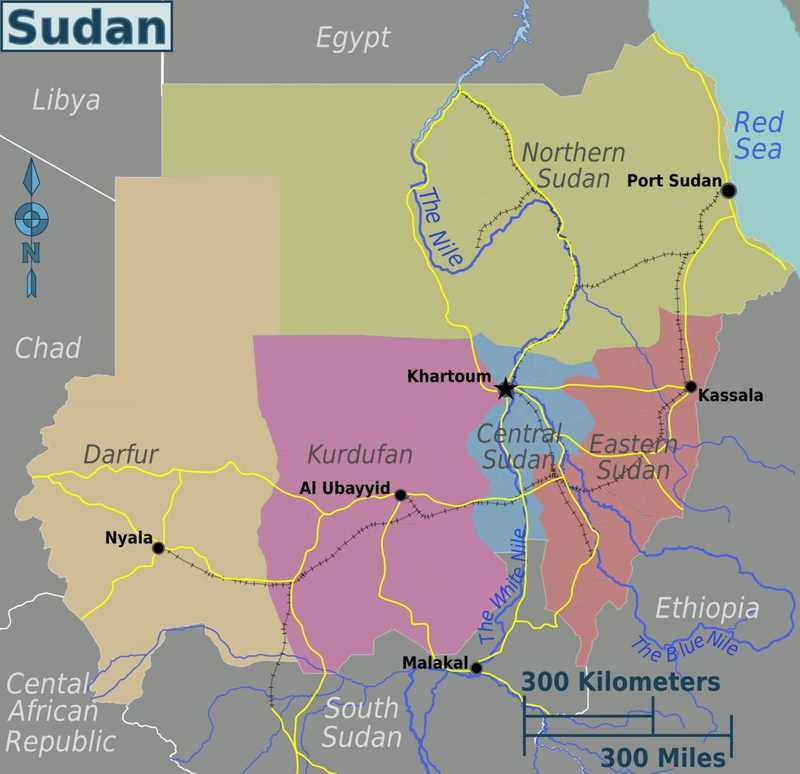
The corridor story begins with a shift in the war's geography. Fighting that once seemed centered on the capital increasingly moved west as the army re-established positions in the north and center and the RSF consolidated its hold in Darfur. Kordofan became the bridge and buffer between them. Roughly one-fifth of all recorded attacks since the conflict began have occurred in Kordofan — an extraordinary concentration for one region in what is effectively a three-theater war spanning the capital and Nile corridor, Darfur, and the Kordofan belt.
The broad map is stark but not tidy: the army holds the north, the RSF holds the west, and South Kordofan remains disputed. Front lines and local allegiances complicate every color block. This site previously named al-Mazroub among the SAF's westward-push targets, alongside Umm Kireidim, Umm Bader and Hamrat al-Sheikh. Friday's announcement is the army's capture claim, not another target list — and it still requires independent confirmation.
The escalation has already reached civilians far from a conventional front. Days earlier, drones struck a dormitory at Kordofan University in El-Obeid. The Sudan Doctors Network reported five people killed and 47 wounded and attributed the attack to the RSF; that attribution was not independently confirmed. Last month, the same medical network attributed an artillery strike in Dilling, South Kordofan, to the RSF-allied SPLM-N faction led by Abdel Aziz al-Hilu, which has aligned with the RSF and joined its parallel-government structure.
These episodes show why the campaign cannot be reduced to who controls a town at the end of a day. The Kordofan struggle is simultaneously a contest over roads, airspace, political administration and the survival of civilian institutions. A route opened for one army can be a route closed to aid; a town declared secure can still be within drone or artillery range.
The numbers in context
One in five recorded attacks means Kordofan is carrying a disproportionate share of violence in a war with several major theaters. It does not mean one-fifth of all Sudanese casualties occurred there, nor does it capture incidents that never entered a verifiable record. It does show sustained operational attention: fighting in the corridor is not a peripheral spillover but part of the conflict's central military logic.
A fourth year of war turns tactical gains into tests of endurance. Since April 2023, both forces have adapted, lost equipment, recruited new fighters and shifted supply routes. A town captured now sits inside a mature war economy in which transport access, local authority and outside support may matter as much as the immediate battlefield result.
Five dead and 47 wounded at El-Obeid, according to the Sudan Doctors Network, give the corridor's abstractions a civilian face. The university dormitory toll was reported days before the al-Mazroub announcement. Even if control of the town changes the military map, it does not by itself protect students, restore hospitals, reopen roads or make return safe.
Who benefits, who loses — and what the skeptics say
The SAF gains momentum, morale and leverage if it can demonstrate that the capture is real and durable. Taking a position the army calls the RSF's largest North Kordofan stronghold would support its narrative of a westward advance, reassure allied communities and give commanders a staging point for further pressure. The value is operational, but also psychological: wars of attrition are fought through perceptions of who is advancing and who is being contained.
The RSF faces a potential logistics setback if al-Mazroub plays the role described by army sources. Losing a hub could complicate resupply between Darfur and central fronts. Even before the military effect is known, the announcement creates an information defeat by forcing the RSF either to rebut it or allow the SAF's account to set the public narrative.
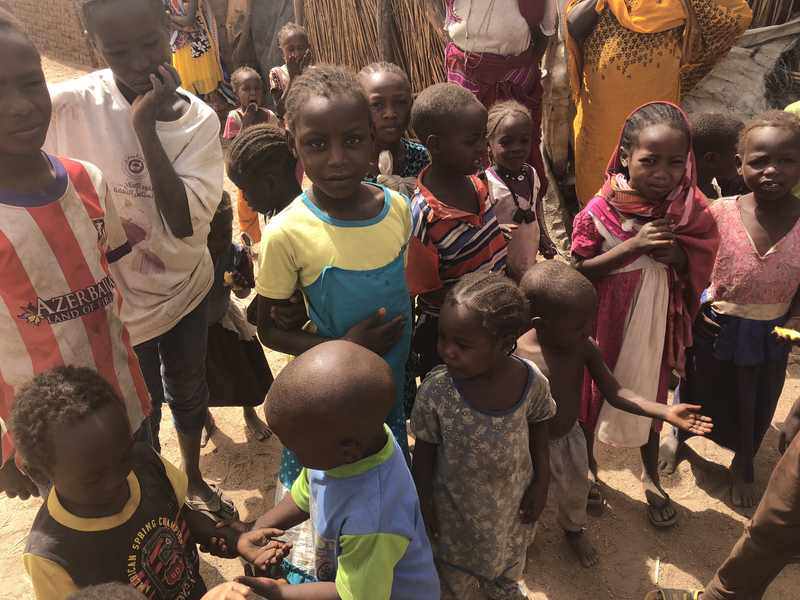
Civilians face the widest gap between announcement and reality. “Resume normal life” is an aspiration, not proof of a livable town. Families need safe roads, water, food, medicine, functioning markets and confidence that the front will not reverse. New fighting around al-Mazroub could push more people from their homes just as funding cuts strip humanitarian services from hundreds of thousands of Sudanese.
The skeptics have a serious case. Both sides have announced captures prematurely or described battlefield losses in ways that could not be independently tested. Communications are fragmented, access is dangerous and outside reporters cannot verify the scene from the ground right now. A photograph of a flag, a statement from a spokesman or silence from an opponent can support a claim; none alone proves stable control.
What happens next: three scenarios
1. The SAF pushes west
If the army consolidates al-Mazroub, clears nearby roads and keeps supply moving, it could press toward West Kordofan and the approaches to Darfur. That would put greater pressure on the RSF's logistics depth and force it to defend more junctions. The decisive evidence would be sustained control over surrounding routes rather than a one-day presence in the town.
2. The RSF counterattacks
Mobility is the RSF's signature, and al-Mazroub could change hands again. A counterattack might aim to retake the town, cut the SAF's own supply line or bypass the position and strike elsewhere. If that happens, Friday's announcement will be remembered less as a turning point than as another temporary swing in a fluid campaign.
3. A grinding stalemate tightens the humanitarian vise
The most damaging outcome for civilians may be neither a clean advance nor a quick reversal, but prolonged fighting around the corridor. Repeated shelling, drone attacks and road closures would shrink aid access while displacing families into areas already short of services. A stalemate can look static on a map while conditions deteriorate rapidly on the ground.
The careful conclusion is therefore narrower than either side's propaganda would prefer. The army says it captured an important North Kordofan stronghold and believes that gain will help cut RSF supply lines. That could matter strategically. But the loss figures and durable-control claim remain unverified, the RSF has not confirmed them, and the next movements on the roads west will tell more than Friday's communiqué.
Sources
- Al Jazeera — reporting on the SAF announcement and an army source's description of al-Mazroub as the RSF's largest North Kordofan stronghold.
- Anadolu Agency — reporting on Mohammed Deidan's account of the town's role between North and West Kordofan and the army's supply-line objective.
Reporting cutoff: October 2, 2026 at 4:03 p.m. PDT. The capture, casualty and combat-vehicle loss descriptions are the Sudanese Armed Forces' claims and had not been independently verified. The RSF had not responded at publication time. Strategic assessments and scenarios are Signal Post News analysis.