The split market / Tech had its worst week since June — the Dow quietly rose anyway
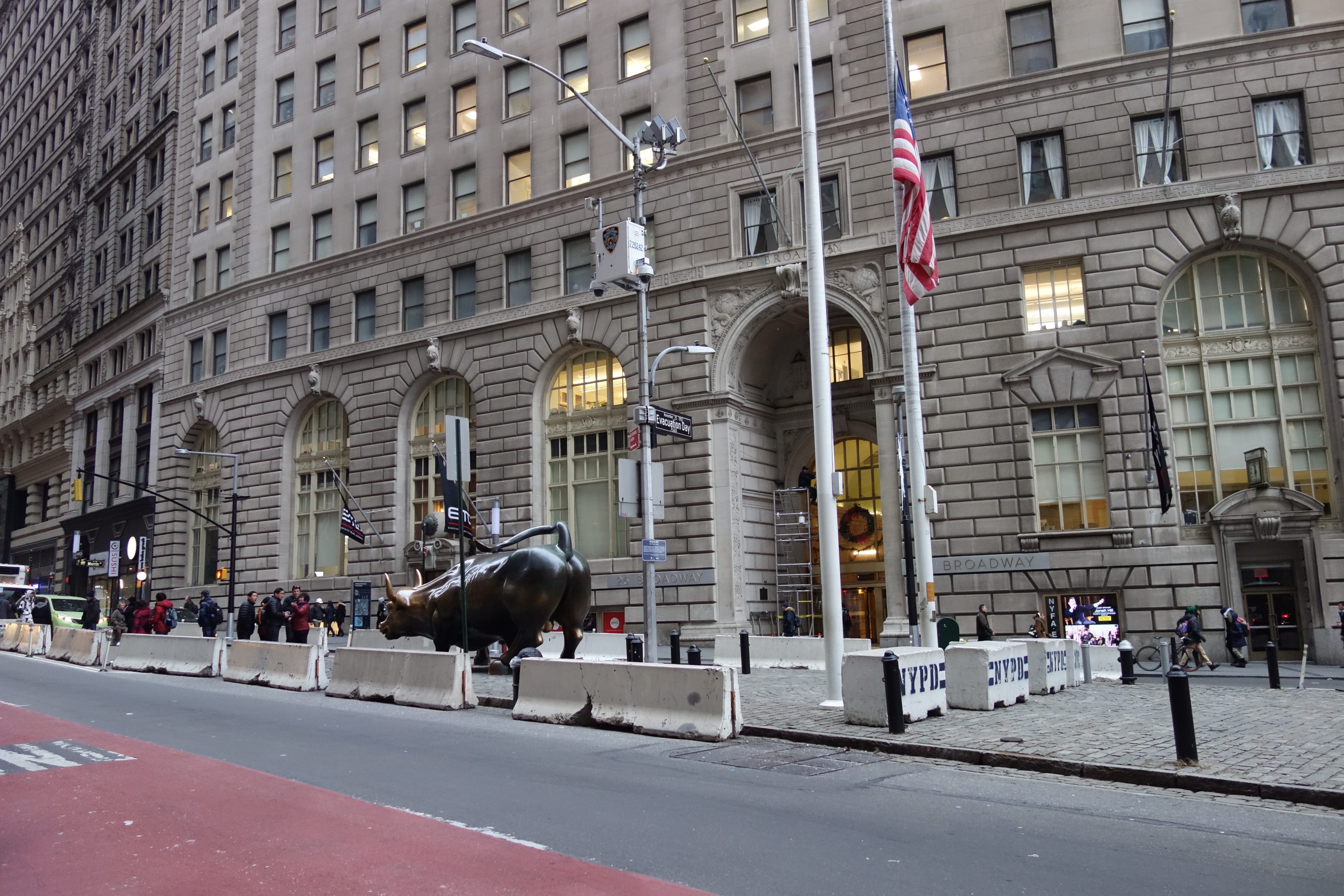
Track it live: Live stock market tracker
The broad market sat between those two stories. The S&P 500 closed Friday at 7,659.44, down 1.09 percent on the day and 1.95 percent on the week from 7,811.54 a week earlier. Small companies fared worse than large ones: the Russell 2000 lost 3.05 percent on the week to 2,721.37. And at the sharp end of the selloff, the PHLX Semiconductor Index fell 11.41 percent in five sessions — a decline that, in a sector accustomed to leading the market up, reads less like profit-taking and more like a repricing. The week's damage snapped a four-week winning streak for the Nasdaq. Yet none of the major indexes gave back the year's gains: the S&P 500 is still up 11.9 percent in 2026, the Nasdaq 12.5 percent and the Dow 8.2 percent. Friday's defensive rotation, in which the Dow had jumped the previous session, was charted in our report on Thursday's market; this review covers what the full week did to that picture.
Nasdaq worst week since June: what actually sold off
The selling was concentrated, named and explainable — three qualities that distinguish a rotation from a panic. A widely followed chip fund fell 4.1 percent on Friday; a software fund fell 4.8 percent on the day and 7.4 percent on the week. Twilio dropped 10.6 percent on Friday, the worst performance in the S&P 500 that day. Oracle fell 5 percent. CrowdStrike and Snowflake each lost roughly 17 percent across the week, and Palo Alto Networks and Cloudflare roughly 18 percent. The common thread was not earnings — most of these companies have not reported yet — but a sudden investor focus on the cost of the artificial-intelligence buildout: how much debt is being raised to build data centres, what that debt costs, and whether the revenue arrives on the schedule the borrowing assumes. The week's emblem was CoreWeave, the AI cloud company that fell about 12 percent on Friday. CoreWeave carries roughly $50 billion of debt, and its credit default swaps — the market price of insuring against it failing to pay — traded above 1,100 basis points. That number deserves translation: at those levels, credit markets are pricing CoreWeave less like a growth company and more like a stressed borrower, and equity investors took the hint.
Where the money went: Coca-Cola, Walmart and the defensive trade
Sold money went somewhere, and where it went explains the Dow's quiet gain. Investors rotated into the classic defensive shelf — Coca-Cola, Walmart and Procter & Gamble among the consumer staples, health care stocks, and the banks and steadier industrials that give the Dow its older-economy tilt. The logic is old and legible: people buy soft drinks, groceries and shampoo in bad weeks too, and those companies pay dividends while investors wait. The bond market told a calmer story than the stock market, which is worth noting. The 10-year Treasury yield fell to 5.098 percent from 5.244 percent — investors bought bonds as a haven, pushing prices up and yields down — and the VIX, Wall Street's main volatility gauge, closed at 19.99, its highest since July 29 but still below the 20 line traders treat as the edge of genuine fear and far below crisis territory. In other words: equity investors repriced one expensive corner of the market, credit investors marked one borrower as risky, and almost nobody priced a recession. That combination is a correction in a theme, not — so far — a verdict on the economy.
Inflation, the Fed and the Warsh question
Running underneath the rotation was the week's other data point: September consumer price inflation, reported Wednesday at 3.7 percent — hotter than the Federal Reserve's 2 percent target allows anyone to relax about, and arriving the same week oil touched $110, as our oil report details. Fed Chair Kevin Warsh, speaking in Bangkok, declined to signal what the central bank will do at its October 27–28 meeting. Futures markets adjusted at the margins rather than in panic: CME FedWatch put the odds of a rate hike this month at 17 percent, down from 28 percent, while the odds of a hike by December stood at 89 percent. Read together, traders expect the Fed to hold in October and to be forced — by inflation, energy or both — to tighten by year-end. Higher-for-longer rates are precisely the environment in which expensive, debt-funded growth stories are re-examined, which is one reason the AI trade and the inflation print cannot be analysed separately: the same 5.098 percent 10-year yield that looks calm as a haven signal is also the discount rate making $50 billion of data-centre debt look heavy.
Why this matters
This week matters because it tested the market's central assumption of 2026 — that artificial-intelligence spending is self-justifying — and found the assumption now has a price limit. For two years, the question investors asked AI companies was how fast they could build. This week, led by credit markets rather than stock analysts, the question became how the building is financed and what happens if revenue lags the debt schedule. That is a healthier question, and healthy questions still cost shareholders money while they are being answered: an 11.41 percent weekly fall in semiconductors and near-20 percent falls in flagship software names are real losses for the retirement accounts that now hold these stocks through index funds. The split with the Dow is the week's second lesson. A market in which the Nasdaq can fall 4.48 percent while the Dow rises is not a broken market; it is a market with somewhere to hide, which 2022 — when stocks and bonds fell together — did not offer. The risk case is equally concrete: if December hike odds near 89 percent are right, financial conditions tighten into the AI sector's heaviest borrowing calendar, and a repricing can become a funding problem. The bull case rests on the year-to-date scoreboard — double-digit gains intact — and on earnings, which is where the argument moves next.
What happens next
The coming week hands the argument to two companies. Tesla and Meta report earnings, and between them they will test both halves of the week's story: Tesla, a richly valued growth stock exposed to consumer demand and energy prices, and Meta, one of the largest AI spenders, whose capital-expenditure guidance will be read as a verdict on the buildout itself. Watch three numbers alongside the headlines: whether the SOX stabilises after an 11.41 percent fall or extends it; whether CoreWeave's credit spreads narrow from above 1,100 basis points, signalling credit markets calming; and whether the 10-year yield holds near 5.098 percent or pushes back toward 5.244 percent, which would tighten the screw on every valuation the market just questioned. The Fed's October 27–28 meeting follows immediately after. For the longer backdrop — banks, inflation and $100 oil colliding — see our week-ahead preview from earlier this month, much of whose risk list arrived on schedule.
Sources: Portfolio Terminal, Oct. 2026 (weekly index, sector, VIX and yield data; CoreWeave and single-stock moves); Investopedia, Oct. 16, 2026 (Friday closes for the Dow, S&P 500 and Nasdaq); The Orbit Post News, Oct. 16, 2026 (closing levels and week performance). Related on Signal Post News: Dow jumps 556 in defensive rotation · Oil touches $110.