The fastest ocean liner ever built in America, a giant that carried presidents and film stars across the Atlantic in record time, is about to begin a second life on the Gulf floor.
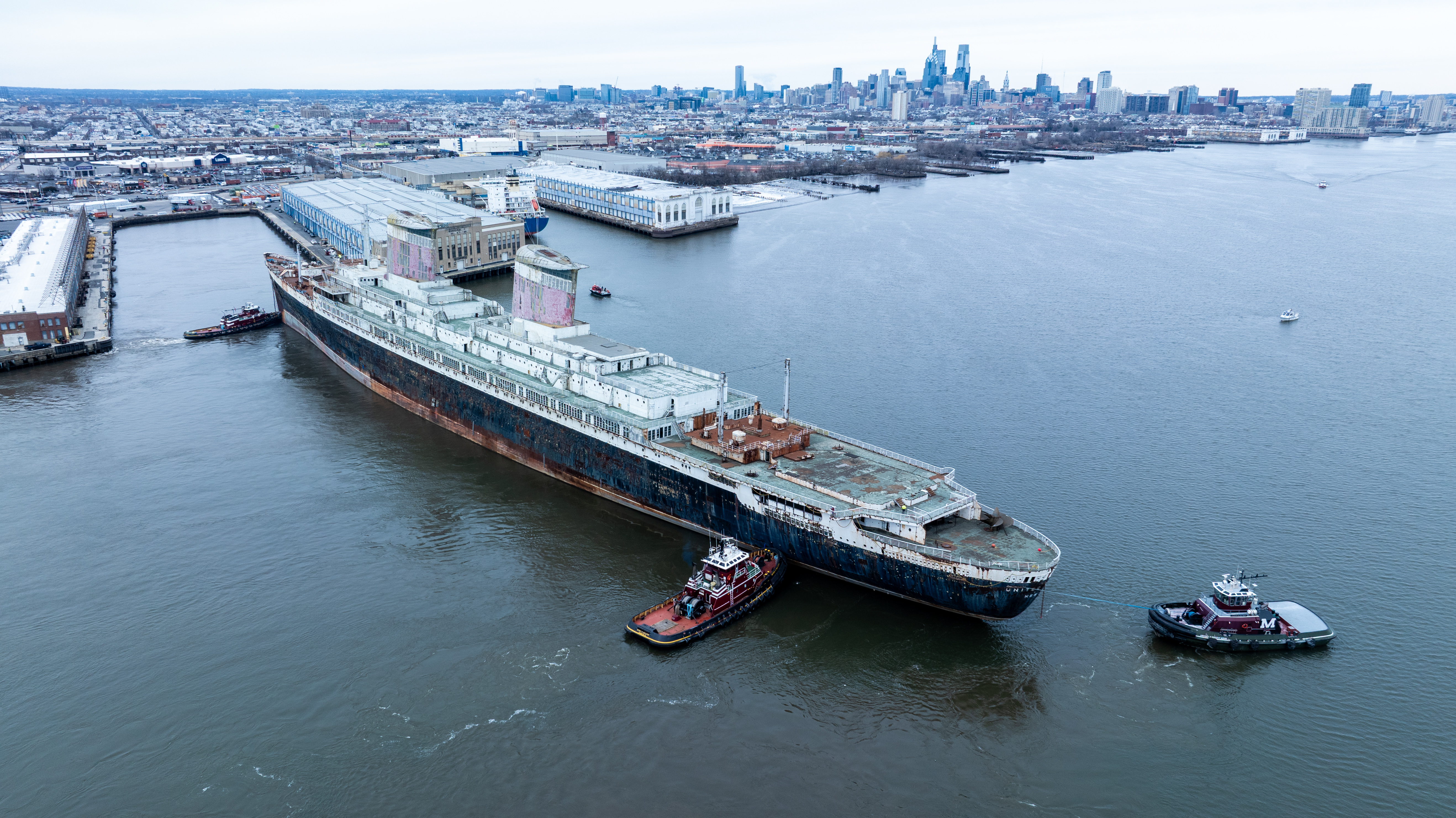
The SS United States artificial reef Destin project reached its final clearance this month. Okaloosa County, Florida, announced on October 9, 2026, that the retired ocean liner will be sunk in the second week of November 2026, weather permitting, about 22 nautical miles — roughly 41 kilometres — southwest of Destin-Fort Walton Beach. There is no exact date yet, and the county has stressed there will be no explosives: the ship will be lowered in a controlled flooding operation and is expected to settle upright in about 180 feet of water.
When she goes down, the nearly 1,000-foot liner will become the world's largest artificial reef, joining more than 500 existing reefs off Okaloosa County. Her designer William Francis Gibbs liked to say: "You can't set her on fire, you can't sink her and you can't catch her." Next month, on purpose and on camera, she will finally be sunk — and, if the plan works, still impossible to catch.
Why this matters
Artificial reefs do three jobs at once, and the SS United States will test all three at the largest scale yet attempted. First, habitat: a cleaned hull this size becomes vertical structure in a Gulf where natural hard bottom is patchy — a surface for corals and sponges, shelter for juvenile fish, and hunting ground for predators. Within a few years it functions less like debris and more like real estate.
Second, tourism. A singular headline wreck — the largest artificial reef on Earth, with a transatlantic record behind it — is an attraction no marketing budget can invent. Okaloosa County said so in its October 9, 2026 announcement, calling the sinking "an exciting move forward to create a one-of-a-kind resource for the environment and for our tourism industry." Charters, hotels and restaurants stand to gain from visitors who travel to dive one famous ship, often repeatedly — a 990-foot wreck cannot be seen in a single dive.
Third, preservation by other means. Her funnels, radar mast and artefacts are not going to the bottom. The SS United States Conservancy plans a land-based museum near the dive-tour departure points, so the ship's story will be told on shore while the hull itself works underwater. That split — icon above water, habitat below — is the compromise that made the project politically possible.
A record that still stands
Launched in 1951 and entering service the following summer, the SS United States was built for speed with government money and national prestige in mind. Sources differ slightly on cost — usually put at about $70 million to $79.4 million, with the United States government covering roughly $50 million, because the liner was designed to convert quickly into a troopship if war required it — but nobody disputes what happened on her maiden voyage.
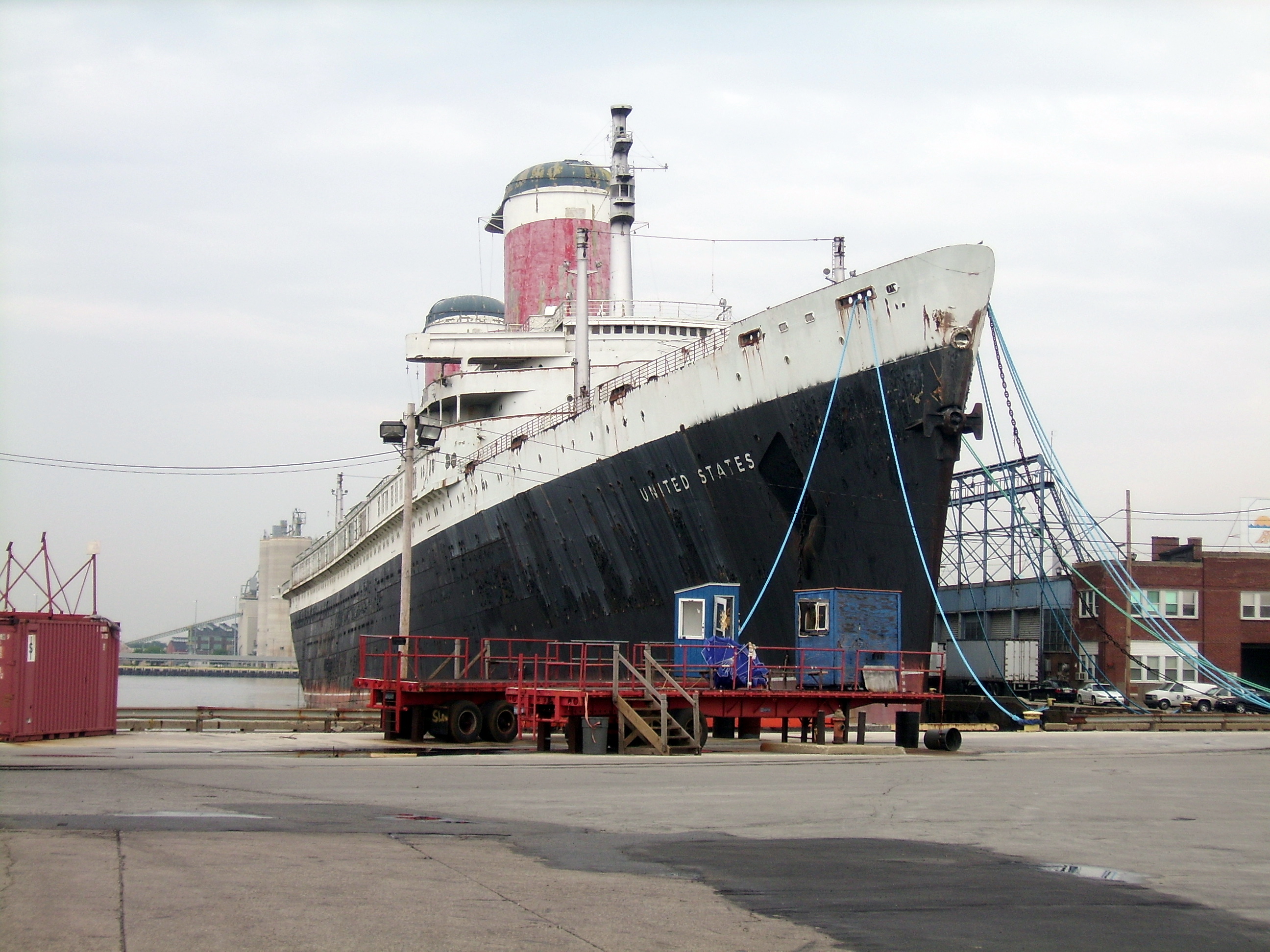
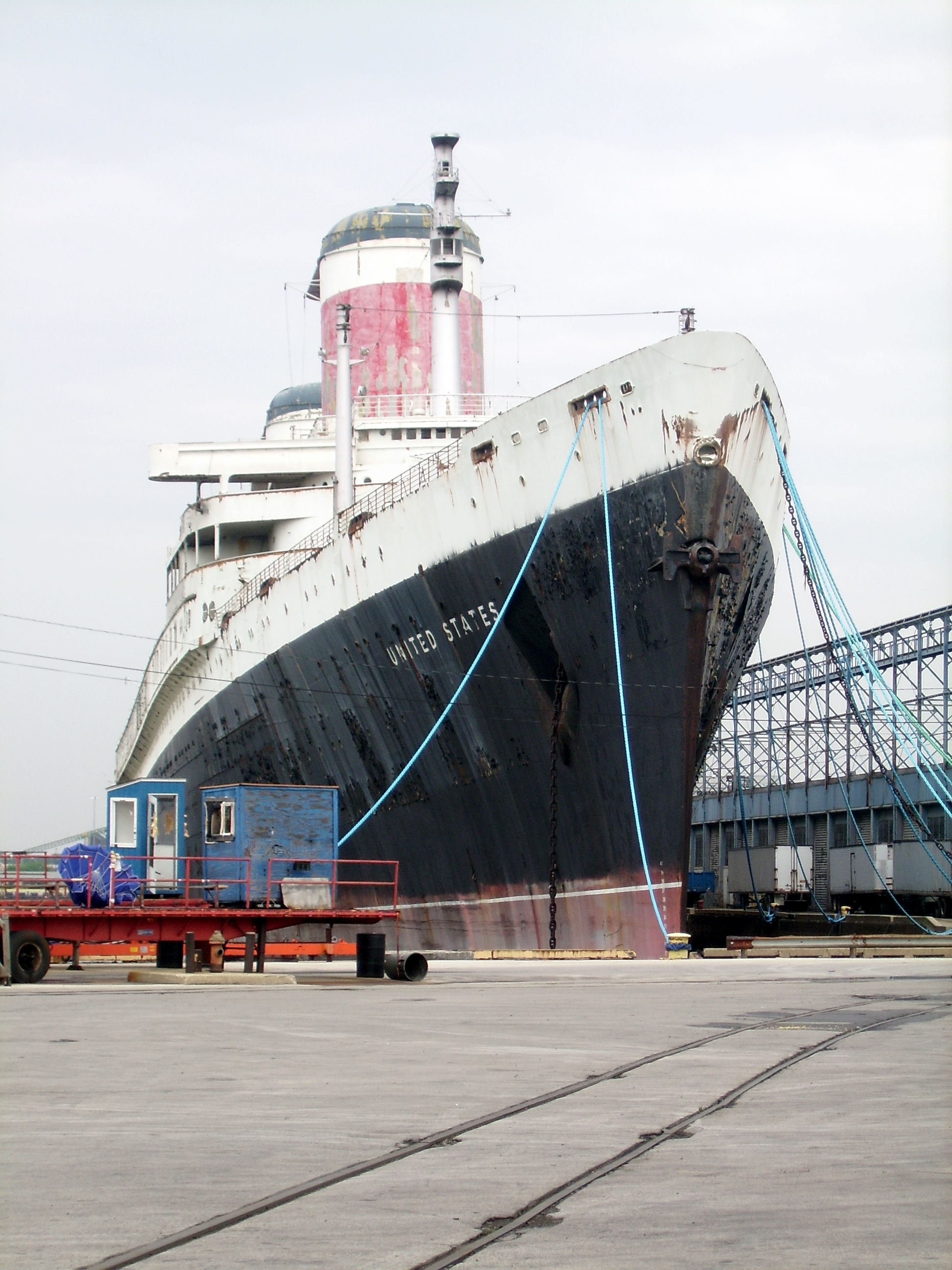
In July 1952 she crossed the Atlantic in 3 days, 10 hours and 40 minutes, averaging 35.59 knots and taking roughly 10 hours off the record held by the Queen Mary. She won the Blue Riband, the prize for the fastest Atlantic crossing — and she still holds it. No passenger liner has beaten that crossing since, largely because the age of competing for it ended: jets took the passengers, and speed stopped being the point of an ocean voyage. Presidents rode her, as did Marilyn Monroe, Cary Grant and Walt Disney, and Duke Ellington performed aboard. At 990 feet — about 305 metres — she carried Gibbs's safety obsession under the glamour: non-flammable materials and compartmentalisation throughout. Retired in 1969, she then endured the familiar second act of famous ships: unfunded plans, changing owners, and decades tied up in Philadelphia.
How a $1 million sale ended a Philadelphia standoff
The endgame was unglamorous. A rent dispute in Philadelphia forced the SS United States Conservancy — the non-profit that had fought for years to save her — to sell. Okaloosa County bought the ship for $1 million. That figure needs context: reporting cited by PhillyVoice put the county's planned total at roughly $10 million across cleaning, sinking and the museum. The purchase price bought the hull; the expensive part was always making a 1950s liner safe to put on the seabed.
On February 19, 2025, she was towed from Philadelphia to Mobile, Alabama, for remediation — removing hazardous materials so sinking her creates habitat rather than pollution. That work is complete. The U.S. Army Corps of Engineers granted final approval, and the Environmental Protection Agency did not oppose the plan. The Conservancy has said the sinking will be live-streamed. Weather will set the exact day — a controlled sinking needs a calm window, not a deadline.
Two honest arguments about sinking a landmark
The preservation case
Preservationists make a point that should not be waved away: sinking ends every other possibility, permanently. In 180 feet of water there is no restoration and no museum ship to walk through as Gibbs built it. A Blue Riband holder is a singular artefact, and some who fought hardest for her experience this as a loss dressed up as a celebration. They are not wrong: a reef is not a saved ship; it is a different thing made from a ship.
The reef case
Supporters answer with the counterfactual. The alternative on offer was not a restored liner gleaming at a pier — years of fundraising never produced that outcome — but continued decay at a berth she had already been ordered away from, with scrapping the likeliest end. Against that, the reef plan offers habitat scientists can monitor, dive tourism local operators estimate in the millions of dollars annually, and a museum that keeps the name, the funnels and the story in public view. On that comparison — reef versus razor blades — county leaders and the Conservancy chose the reef. Both arguments can be true at once: what happens in November is genuinely a creation, and genuinely an ending.
Practical visitor guide: Destin-Fort Walton Beach and the reef
Read this first: the reef is not yet sunk, and it is not yet diveable. Diving on the SS United States will open only after deployment and official clearance — check Okaloosa County and local charters before booking any trip around the wreck itself, and never rely on a promised date.
Best time to visit Destin-Fort Walton Beach
For the sinking, the window is the second week of November 2026, weather-dependent — follow the county and the Conservancy for the confirmed day and live-stream details rather than travelling on a rumour. For diving the area generally, late spring through early autumn brings the warmest water and the longest charter season; autumn offers thinner crowds and often good visibility between weather systems. Hurricane season runs through November, so build flexible days into any dive trip.
How to get there, and what to expect
Destin-Fort Walton Beach sits on Florida's Emerald Coast along U.S. Highway 98. The nearest airport is Destin-Fort Walton Beach Airport (VPS); Pensacola and Panama City Beach are alternatives, each roughly an hour's drive. Most visitors rent a car. Charters for the region's 500-plus reefs, and eventually for the site 22 nautical miles offshore, depart from Destin Harbor and nearby marinas. Expect early starts, a substantial offshore ride, and plans that bend to Gulf weather.
Dive depths and the snorkelling reality
According to SDI's published guide to the site, the ship is planned to rest upright in about 180 feet of water, with her upper deck roughly 55 to 60 feet below the surface. That splits the wreck in two: the upper levels sit within recreational limits, so certified recreational divers with a charter can explore the top of the structure. The deeper sections, down toward 180 feet, are technical-diving only. Snorkellers should set expectations accordingly: this will not be a snorkel site — with the shallowest structure 55-plus feet down, there is nothing meaningful to see from the surface. Target the area's shallow reefs and snorkel-specific sites instead, and enjoy this ship from the museum, the live-stream and the boat.
Safety, etiquette, what to bring, and how long to spend
Never dive beyond your certification, and never enter overhead environments without wreck training — a 990-foot hull will contain penetration routes that demand absolute respect. Book established local charters and obey the captain's briefing on currents and descent lines. On any reef: take nothing, touch nothing, control your buoyancy so fins and gauges do not strike growth, and give fishing boats room at shared sites. Bring certification cards and a logbook, your own mask and computer if you have them, reef-safe sunscreen, seasickness precautions for the offshore run, and warm layers for the boat in November. Allow three to four days: one for the museum and harbour when it opens, two flexible charter days so weather cannot end the trip, and a spare day for the beaches and shallow-reef snorkelling.
What happens next
Watch the weather, and the county's confirmed sinking day. Watch the live-stream. Then watch the slower story: first marine growth, first fish surveys, first full charter season, and the museum opening. The honest measure will not be the splash — it will be the five-year data: species counts against the region's smaller reefs, and visitor numbers against the county's roughly $10 million total investment.
For more on America's changing attractions and Florida's coast, see our reporting on Six Flags closing nine rides across six parks and follow live conditions on the live hurricane tracker.