News · U.S. · South Carolina
The Spartanburg boil water advisory is now the only instruction that matters at nearly every tap in the main Spartanburg Water system: boil it first, or do not drink it. A power blip in the early hours of Wednesday, November 18, sent a surge through the system that damaged both the main distribution line and the backup line built to take over when the main one fails — and by mid-morning the failure had reached hospital wards, school cafeterias and fire hydrants across Spartanburg County.
SPARTANBURG, South Carolina, November 18, 2026 — Spartanburg Water issued a systemwide boil water advisory on Wednesday for all customers in the main Spartanburg Water system — Landrum is the one named exception — after a significant loss of water pressure and service throughout the distribution system. The advisory is in effect until further notice. There is no confirmed contamination: the order is precautionary, issued because a system that loses pressure can no longer guarantee what may have entered its pipes while they were empty or weak. But precautionary is not the same as minor. The utility serves a population of nearly 240,000 people, and on Wednesday it warned all of them to expect widespread water service interruptions while crews work on repairs for which no timeline has been announced.
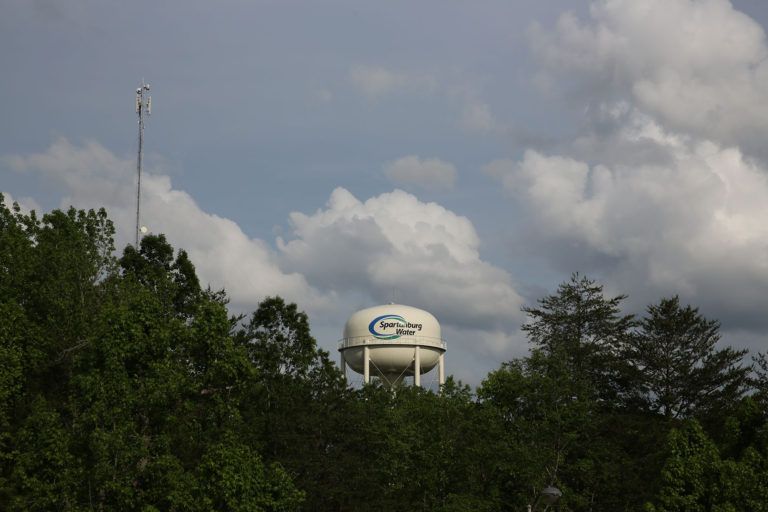
What happened on Wednesday morning
The sequence, as Spartanburg Water itself tells it, is short and brutal. In the early morning hours of Wednesday, November 18, the system experienced what the utility calls a “power blip” — its own wording, and worth keeping, because it describes a momentary electrical disturbance rather than a sustained outage. The blip caused a significant surge of water through the distribution network. That surge, in turn, caused substantial damage to the main water distribution line — and, critically, to the redundant water distribution line as well, the parallel line whose entire purpose is to carry the system when the primary line is out of service.
The Spartanburg Water power blip: how a surge damaged both lines
Redundancy is the water industry’s insurance policy, and Wednesday is the day Spartanburg’s policy did not pay out. A single failure — a burst main, a pump fault, a valve problem — is the kind of event a two-line system is designed to absorb: flow is shifted, pressure is maintained, and customers rarely notice. What happened instead was a common-cause failure. The same surge that broke the first line travelled through the network and broke the second one too, because both lines were exposed to the same water, the same pressure wave and the same moment. The result was the outcome redundancy exists to prevent: a significant loss of pressure and service across the whole distribution system at once, which is why the advisory that followed was systemwide rather than limited to a neighbourhood or a single pressure zone.
One precision belongs here, stated plainly because infrastructure failures attract rumour faster than they attract facts. There is no evidence of any cause beyond the utility’s stated power blip and the surge it produced. Officials have given no indication of a cyberattack, of foreign involvement, or of any deliberate act, and nothing in the utility’s releases points anywhere other than at an electrical disturbance and the hydraulic shock that followed it. “Power blip” is Spartanburg Water’s own description of its own failure, and it is the only cause on the record.
What to do now
Is Spartanburg water safe to drink? Boil it for one full minute
The utility’s advice is unambiguous. Water used for drinking or cooking should be vigorously boiled for at least one full minute first — a rolling, vigorous boil, timed for a complete minute, not a brief simmer. Ice is covered by the same rule: do not use ice made from water that has not been boiled, which in practice means emptying trays and ice makers of anything frozen from tap water drawn after the pressure loss and starting again with boiled water once it has cooled. The reason for the boil order is the pressure loss itself. In a healthy system, water moves outward under pressure and contaminants stay out. When pressure collapses, that one-way guarantee collapses with it, and until sampling proves otherwise, the safe assumption is that tap water is a question, not an answer.

How long will the boil water advisory in Spartanburg last?
Honest answer: nobody has said, because the ending is governed by laboratory results rather than by a clock. The advisory runs until further notice. Under the utility’s own published process, water samples are analysed by its South Carolina DHEC-certified laboratory, and results are typically finalized within about 24 hours — though they may take longer. The advisory is repealed only when sampling shows the water meets state and federal standards, and customers are then notified. Two conditions therefore have to be met in sequence: the physical repairs have to restore a stable, pressurised system, and then the sampling has to prove the restored water is safe. A fast repair followed by a slow or failed sample round still leaves the boil order in place, and residents should plan on the advisory outlasting the sight of water returning to their taps.
Hospitals: the hardest hit
Spartanburg Regional hospital water outage reaches three campuses
The most consequential address in any water failure is a hospital, and Spartanburg Regional said the outage is affecting the water supply at Spartanburg Medical Center, at Spartanburg Medical Center – Mary Black Campus, at Spartanburg Hospital for Restorative Care, and at several Medical Group of the Carolinas offices. Hospitals do not merely drink water; they sterilise with it, dialyse with it, cool equipment with it, scrub into surgery with it and flush sanitation systems with it, which is why a pressure failure that is an inconvenience in a kitchen becomes an operational emergency on a ward. Spartanburg Regional asked visitors to postpone visits until service is restored, and said patients with upcoming appointments at affected offices will be contacted directly by their provider’s office — patients do not need to chase the system for news of their own appointments; the system will come to them.
Help is coming from a neighbour that does not need it itself. SJWD Water District, which is not affected by the failure, is coordinating with Spartanburg County Emergency Management to provide water to hospitals and medical facilities. That detail matters beyond its logistics: it is the mutual-aid layer of American water infrastructure working as designed, one district’s intact capacity underwriting another district’s broken lines, with the county’s emergency management in the middle making the match. It also quietly marks the boundary of the crisis — close enough to truck water in, contained enough that the surrounding systems still have water to give.
Schools out early across the county
Spartanburg schools early dismissal over water, district by district
Four of Spartanburg County’s school districts sent students home early on Wednesday, on staggered schedules that reflect the practical choreography of moving thousands of children — buses, parents, and buildings that cannot responsibly operate without reliable water for drinking, cooking and sanitation. In District 2, elementary schools dismissed at 11:30 a.m., middle schools at 12:30 p.m. and high schools at 1 p.m. District 6 dismissed elementary schools at noon, middle schools at 12:30 p.m. and high schools at 1 p.m., and cancelled afterschool activities. District 7 dismissed elementary schools at noon, middle schools and McCarthy Teszler at 12:30 p.m., and Spartanburg High School and Whitlock Flexible Learning at 1 p.m. District 3 dismissed elementary schools at noon and middle and high schools at 12:30 p.m., with no after-school programs or athletics.
The exception proves the plumbing. District 4 is not impacted and stayed on a normal schedule — because it does not receive Spartanburg Water at all. Its supply comes from the Woodruff-Roebuck Water District, a separate system untouched by Wednesday’s surge. On a map of school dismissal times, in other words, you can read the water map underneath: the districts that closed are the districts on the broken system, and the district that carried on as normal is the one plumbed into somewhere else.
Who is not under the advisory
Boundaries matter in a county stitched together from multiple water systems, and several neighbouring systems are explicitly not under an advisory. Landrum is excluded from Spartanburg Water’s own order. Beyond that, the Inman-Campobello Water District, Greer CPW, the Woodruff-Roebuck Water District and the SJWD Water District are not under a boil water advisory. If your water comes from one of those systems, Wednesday’s order does not apply to you — and if you are not sure which system serves your address, that uncertainty, not the tap, is the first thing to resolve, through your water bill or your provider.
One further warning reached beyond the tap. First responders said fire hydrants throughout Spartanburg County may not work during the water service interruption, as reported by Gray News (WHNS). Hydrants are the distribution system by another name: a network without pressure is a network whose hydrants cannot be counted on, and firefighters planning around that possibility is the unglamorous, essential work of a day when the water fails. It is also the sharpest illustration of what a systemwide pressure loss actually means — not just cloudy glasses of water, but a county re-planning how it would fight a fire.

The system, by the numbers
To understand why one bad morning became a county-wide event, start with the scale of the machine that broke. Spartanburg Water — the Spartanburg Water System together with the Spartanburg Sanitary Sewer District — serves a population of nearly 240,000 in Spartanburg County, South Carolina, and others in parts of Greenville, Union and Cherokee counties. It employs nearly 300 staff. On an average day it produces about 25 million gallons of drinking water and treats over 14 million gallons of wastewater. Those are the numbers of a small city’s circulatory system, and they cut two ways. A utility of that size has the crews, the laboratory and the mutual-aid relationships to respond at scale — all of which were visible on Wednesday. It also has a quarter of a million people downstream of two pipes, and when both pipes break on the same morning, the arithmetic of exposure is the whole story.
Why this matters
Analysis: the Spartanburg failure is a case study in the difference between redundancy and resilience. On paper, the system had both a main line and a redundant line; in practice, both were defeated by a single event that neither was isolated from. Engineers call this a common-mode failure, and it is the recurring plot of infrastructure disasters far beyond water: backup systems that share a power supply, a flood plain, a software stack or — here — a pressure wave are not independent backups at all, merely duplicates waiting for the same accident. The question Wednesday leaves for Spartanburg Water, and for every utility watching, is not whether the two lines can be repaired. It is whether the surge protection, valving and electrical safeguards around them will be rebuilt so that the next blip — and there is always a next blip — breaks one line instead of both.
There is a second lesson in how the day’s institutions sorted themselves. The systems that coped best were the ones with a boundary or a neighbour: District 4’s schools, indifferent to the crisis because a different utility feeds them; the hospitals, supplied through a county-brokered arrangement with an unaffected district; the neighbouring systems able to state clearly that the advisory was not theirs. Resilience, Wednesday suggested, lives at the seams — in interconnections, mutual-aid agreements and diversified supply — as much as in the strength of any single pipe. And there is a third, quieter point about trust. A boil water advisory asks 240,000 people to change how they drink, cook, brush and bathe on the word of a utility that has just told them its backup plan failed. The candour of Wednesday’s releases — naming the blip, admitting both lines were hit, announcing no timeline rather than inventing one — is the currency that buys that compliance. Utilities that level with the public early get boiled water and patience; the sampling results, when they come, will be believed in proportion to how straight the first day’s account was.
What happens next
The immediate work is physical: crews repairing substantial damage to two distribution lines, under a public warning to expect widespread interruptions and with no timeline announced. Residents should treat any timeline offered by rumour as fiction until the utility itself publishes one. The second track is the laboratory. Once pressure is restored and the system is stable, sampling through the DHEC-certified lab governs the endgame — results typically finalized within about 24 hours, possibly longer — and only a clean bill against state and federal standards repeals the advisory, at which point customers will be notified. Until that notification arrives, the rule does not soften: boil vigorously for one full minute, keep unboiled ice out of your glass, and assume the order applies to you if you are a main-system Spartanburg Water customer outside Landrum.
Beyond the repeal, expect the harder questions to arrive on a slower clock. How a momentary power disturbance produced a surge of that size, why it reached both lines, what it cost, and what will be changed so it cannot happen the same way twice — those answers belong to the utility’s after-action account, and they matter to every one of the 240,000 people who learned on Wednesday that their water system’s insurance policy had a shared deductible. Signal Post News will update this story as Spartanburg Water publishes repair progress and sampling results.
Related coverage
Flood Watch Covers Florida’s East Coast With Up to 12 Inches of Rain Forecast
Chase, Bank of America and Wells Fargo Hit by Online Banking Outages on Monday
Sources
- Spartanburg Water, November 18, 2026 — “Spartanburg Water Issues Systemwide Boil Water Advisory” (spartanburgwater.org): the systemwide boil water advisory for all customers in the main Spartanburg Water system, excluding Landrum, in effect until further notice after a significant loss of water pressure and/or service; the instruction to vigorously boil water for at least one full minute before drinking or cooking and not to use ice made from unboiled water.
- Spartanburg Water, November 18, 2026 — “Spartanburg Water Customers Can Expect Widespread Water Service Interruptions” (spartanburgwater.org): a power blip in the early morning hours of Wednesday, November 18 caused a significant surge of water that resulted in substantial damage to both the main water distribution line and the redundant water distribution line; customers should expect widespread water service interruptions while crews work on repairs.
- Spartanburg Water — Emergencies and boil water advisory FAQ (spartanburgwater.org): water samples are analysed by the utility’s South Carolina DHEC-certified laboratory; results are typically finalized within about 24 hours though may take longer; the advisory is repealed when sampling shows the water meets state and federal standards and customers are notified. Utility background: Spartanburg Water (Spartanburg Water System and Spartanburg Sanitary Sewer District) serves a population of nearly 240,000 in Spartanburg County and others in parts of Greenville, Union and Cherokee counties, with nearly 300 staff, producing an average of 25 million gallons of drinking water a day and treating over 14 million gallons of wastewater a day.
- Herald-Journal / GoUpstate, November 18, 2026 (goupstate.com): Spartanburg Regional’s statement that the outage is affecting the water supply at Spartanburg Medical Center, Spartanburg Medical Center – Mary Black Campus, Spartanburg Hospital for Restorative Care and several Medical Group of the Carolinas offices, with visitors asked to postpone visits and affected patients to be contacted by their provider’s office; SJWD Water District coordinating with Spartanburg County Emergency Management to provide water to hospitals and medical facilities; and the early dismissal schedules for Spartanburg County school Districts 2, 3, 6 and 7, with District 4 — served by Woodruff-Roebuck — not impacted and on a normal schedule. Neighbouring systems not under an advisory: Inman-Campobello Water District, Greer CPW, Woodruff-Roebuck Water District and SJWD Water District.
- Gray News (WHNS), via WVLT, November 18, 2026 (wvlt.tv): first responders said fire hydrants throughout Spartanburg County may not work during the water service interruption.
- Photos: file photos — Spartanburg Water tower, Bridgeway Commerce Center; water-main repair crew in a trench, City of Santa Barbara; water boiling in a pot on a stove, SoMonday. None depicts the November 18, 2026 damage or repairs in Spartanburg, and each is captioned as a file photo.