SpaceX Falcon 9 Turns Into a Glowing 'Space Jellyfish' Over the East Coast
The SpaceX launch today began the way hundreds of Falcon 9 flights have begun: a 6:33 a.m. Eastern liftoff from Space Launch Complex 40 at Cape Canaveral Space Force Station in Florida, a Dragon cargo spacecraft riding on top, and a load of more than 6,300 pounds of supplies, equipment and science experiments bound for the International Space Station. The mission, CRS-35, is SpaceX's 35th cargo resupply flight for NASA, and by every operational measure it was routine. What happened next was anything but.
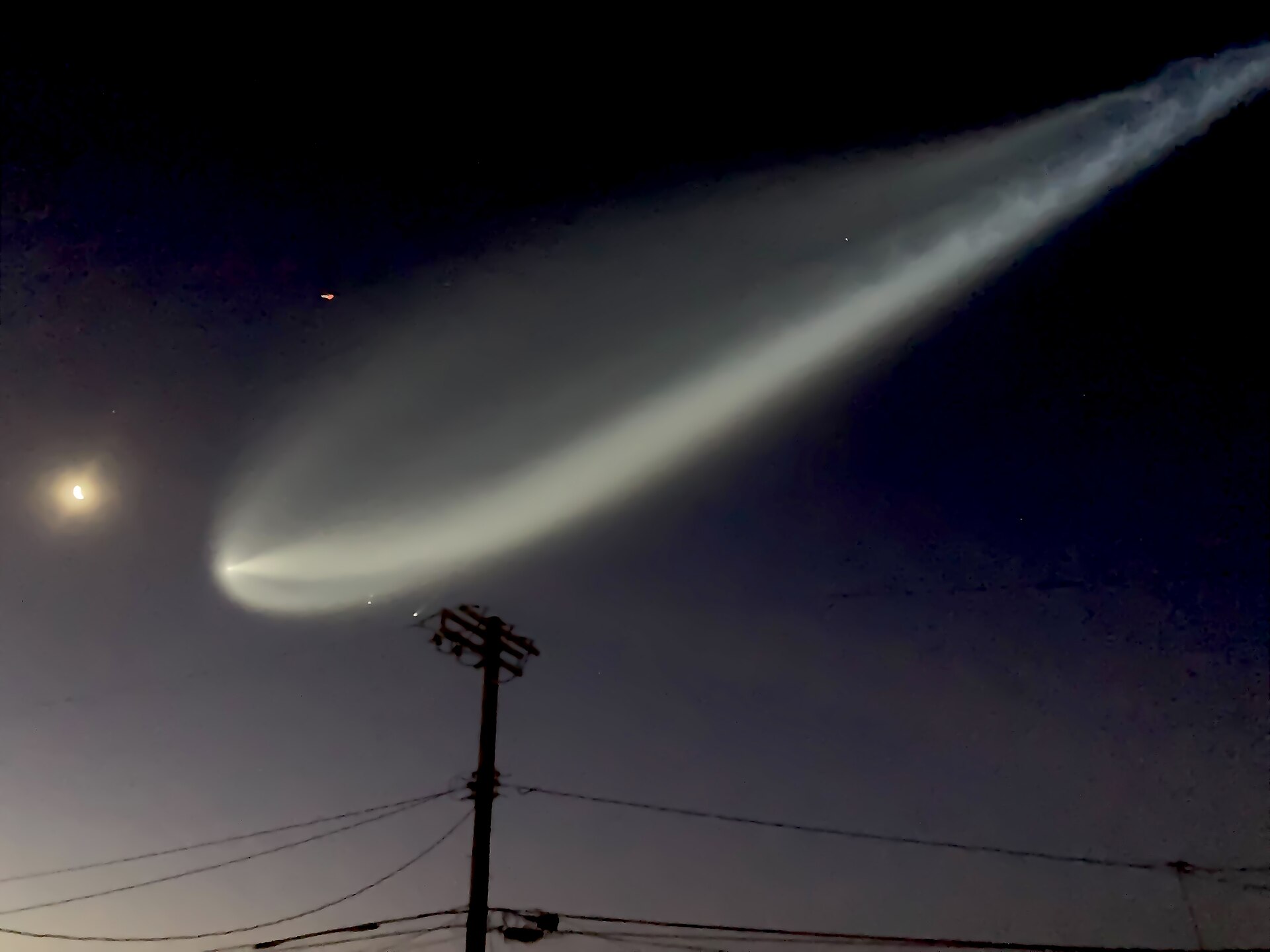
As the rocket arced northeast up the Atlantic coast, still climbing through the thin upper atmosphere, the rising sun caught its expanding exhaust plume while the ground below was still in darkness. The plume bloomed outward into a vast, glowing, translucent cloud — the phenomenon space fans call a “space jellyfish” — and for a few minutes it was visible across an extraordinary stretch of the country. Viewers in Tennessee photographed it over Knoxville and Johnson City. Photos came in from Georgia, North Carolina and Richmond, Virginia. It was captured over lower Manhattan from Hoboken, New Jersey, and spotted in central Pennsylvania. Many of the people watching had the same first thought, and said so on social media: comet. Or meteor. Or something stranger.
Why the jellyfish happens
The effect needs a precise alignment of timing and altitude, which is why it only appears on launches near dawn or dusk. On the ground, the sun has not yet risen — or has just set — so the sky looks dark. But a rocket a hundred kilometres up is already in full sunlight. Its exhaust, instead of the tight bright ribbon seen on a daytime launch, expands rapidly in the near-vacuum of the upper atmosphere, and that sunlit cloud of vapour spreads into the rounded, trailing shape that gives the jellyfish its name. The rocket itself keeps moving, drawing the glowing head of the “jellyfish” forward while the plume trails behind it like tentacles.
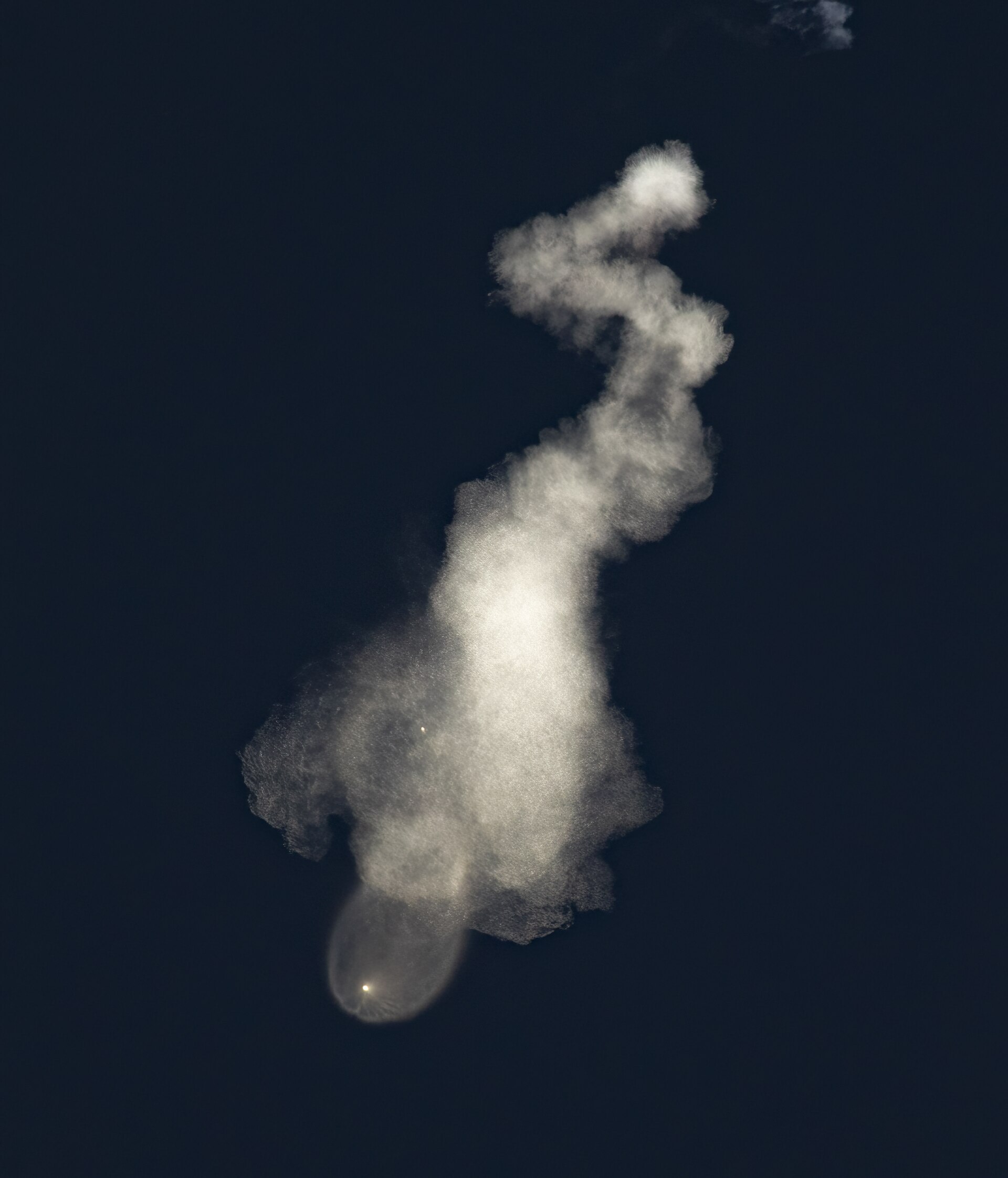
Tuesday's geometry was close to perfect: a pre-sunrise liftoff from Florida, a northeast trajectory that carried the rocket along the coast as dawn broke over state after state, and clear enough skies for the plume to be seen hundreds of miles from the launch pad. Meteorologists along the route spent the morning explaining the sight to viewers who had sent in photos of a mysterious light — the same explanation NASA and launch photographers give every time the phenomenon trends, because a dawn launch up the East Coast puts on this show for millions of people at once, most of whom have never seen it before.
The mission underneath the light show
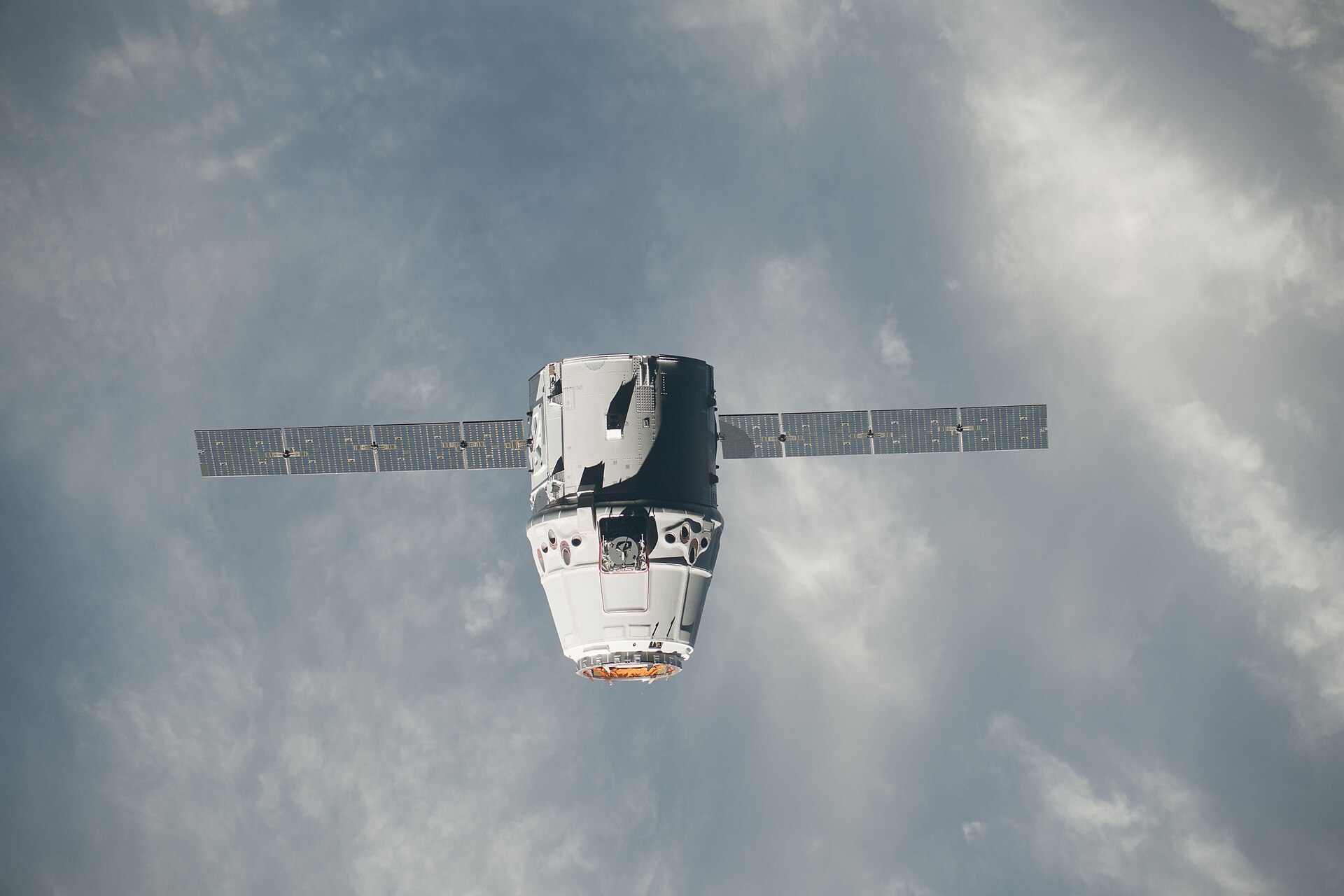
Underneath the spectacle is a working cargo run. Dragon is carrying more than 6,300 pounds of cargo — crew supplies, hardware and scientific investigations — on the 35th flight in SpaceX's Commercial Resupply Services contract with NASA. The spacecraft is expected to dock autonomously with the station on Thursday, around 11 a.m. Eastern, at the space-facing port of the Harmony module, roughly 52 hours after liftoff. Had Tuesday's attempt been scrubbed, a backup opportunity was available Wednesday at 6:08 a.m. Eastern. It was not needed.
The flight is also a reminder of how thoroughly the routine now underpins the spectacular. Resupply missions were headline news a decade ago; today a cargo Dragon launch is close to infrastructure — scheduled, repeated and woven into the station's logistics — and it takes a quirk of sunlight and timing to put it back on front pages and phone screens across half a continent. SpaceX's launch cadence, between Starlink trains, crew rotations and cargo runs, means the East Coast gets these dawn shows several times a year. Each one still stops people on their way to work.
What happens next
Dragon's next milestone is Thursday's docking, after which station crew will unload the cargo — including the student-built and university experiments packed among the supplies — and eventually load the spacecraft for its return splashdown. For sky-watchers, the takeaway is simpler: the next time a glowing cloud spreads silently across a dawn sky and social media fills with comet theories, check the launch schedule first. On Tuesday, the answer was a delivery run to a space station — and for a few minutes, it was also the best light show on the East Coast.
Sources: NASA mission details for CRS-35 as reported by NorthJersey.com (launch time, cargo, docking plan, Oct 12–13, 2026); Knox News (Tennessee sightings, Oct 13, 2026); WVLT / Gray News (Georgia, North Carolina and Virginia sightings, Oct 13, 2026); Men's Journal (New Jersey and Pennsylvania sightings and the twilight-plume explanation, Oct 13, 2026).