Saudi Arabia nuclear weapons

Classified U.S. intelligence assessments sent to Congress say Saudi Arabia “has not ruled out developing a nuclear weapons program,” according to a Washington Post report published September 25. The finding arrived as lawmakers examine a July civil-nuclear cooperation agreement that could eventually permit the kingdom to enrich uranium on its own soil. It sharpens a question that has followed Washington’s nuclear diplomacy with Riyadh for years: can the United States help build a civilian atomic-energy sector without also shortening Saudi Arabia’s route to a military option?
The public evidence does not show that Saudi leaders have decided to build a bomb, that a covert weapons program is underway, or that the July agreement proves such an intention. The Post itself reportedly made that distinction. “Has not ruled out” is an assessment of strategic possibility, not a declaration of active weaponization. But that distinction does not make the warning trivial. Nuclear agreements are designed around what states might choose to do years later, not only what they say they plan to do today.
The State Department told the Post that Washington “does not and will not support a Saudi nuclear weapon program.” Saudi Energy Minister Abdulaziz bin Salman has described the kingdom’s program as peaceful and said it would operate with the highest levels of responsibility and transparency. Those assurances form the core of the administration’s case: a U.S.-anchored partnership can impose limits, monitoring and political leverage that Riyadh might not accept from another supplier.
Critics answer that the proposed limits leave too much room for Saudi enrichment and too little verification. Senators Ed Markey of Massachusetts and Jeff Merkley of Oregon wrote Secretary of State Marco Rubio on September 25 that the agreement was “all but certain to allow Riyadh to acquire the means to enrich uranium and possibly develop nuclear weapons.” Merkley called the deal “bogus as hell.” House Democrats have introduced a Joint Resolution of Disapproval while the agreement moves through a 90-session-day congressional review that began after its August 24 submission.
Why this matters: a civilian deal can reshape a military balance
The immediate dispute is about safeguards, thresholds and congressional procedure. The larger issue is the architecture of security in the Middle East. Saudi Arabia is not an isolated newcomer considering a reactor in a calm region. It is Iran’s principal Arab rival, a major oil exporter, a U.S. security partner and a monarchy now absorbing missile and drone attacks linked to a wider regional war. Choices that appear technical in a nuclear cooperation document can therefore be read by every neighboring capital as strategic signals.
A domestic enrichment capability is not a nuclear weapon. It can produce fuel for power reactors and research. Yet enrichment is also the most demanding part of the fuel cycle, and the same centrifuge infrastructure can be reconfigured or expanded. Once a country has trained personnel, operating cascades, feedstock and an industrial supply chain, the time and uncertainty required to move toward higher enrichment can fall. That is why nonproliferation policy focuses not only on whether a bomb exists, but on how much latent capability a state is allowed to accumulate.
For Washington, the trade-off is real. Refusing cooperation may not stop Saudi Arabia from pursuing nuclear energy; it could push Riyadh toward suppliers offering fewer political conditions. Approving a permissive agreement, however, may establish a precedent other U.S. partners demand. The contest is therefore not between a perfectly controlled U.S. deal and no Saudi nuclear program. It is between competing ways of influencing a program that Riyadh says it intends to build—and competing judgments about how much risk the United States should accept to retain that influence.
The US Saudi nuclear deal and the conditional route to enrichment
The July 2026 agreement was signed by Saudi Energy Minister Abdulaziz bin Salman and U.S. Energy Secretary Chris Wright. As described in reporting on the document, it would initially cap Saudi uranium enrichment below 5%. After a study and a later written decision, the ceiling could rise as high as 20%. That conditional pathway is the provision now drawing the closest scrutiny, because Washington has often sought “gold standard” agreements in which partners renounce enrichment and reprocessing altogether.
Supporters of the Chris Wright Saudi nuclear agreement argue that the conditions matter. A ceiling, formal review and U.S. role may be safer than leaving Riyadh to negotiate a program with a supplier whose technology transfer and transparency standards are weaker. Saudi officials also point to an energy rationale: the kingdom wants to diversify electricity production, preserve more oil and gas for export or higher-value use, and develop technical industries under its broader economic transformation plans.
That case should be judged on the agreement’s enforceable terms rather than dismissed because Saudi Arabia is an oil producer. Electricity demand, desalination and industrial growth create legitimate reasons for a large power system to diversify. The problem is that a credible civilian rationale does not erase the dual-use character of enrichment. A government can pursue energy security and preserve a strategic hedge at the same time.
The other central dispute is verification. Critics say the agreement does not require Saudi Arabia to adopt the International Atomic Energy Agency’s Additional Protocol. The IAEA Additional Protocol gives inspectors broader access to information and locations than a standard safeguards agreement, helping the agency detect undeclared nuclear material or activities. Its absence would not mean there are no safeguards, but it would reduce the depth of assurance available when the political question is whether activity could move beyond declared civilian use.
Saudi uranium enrichment: why 5% and 20% are not equivalent
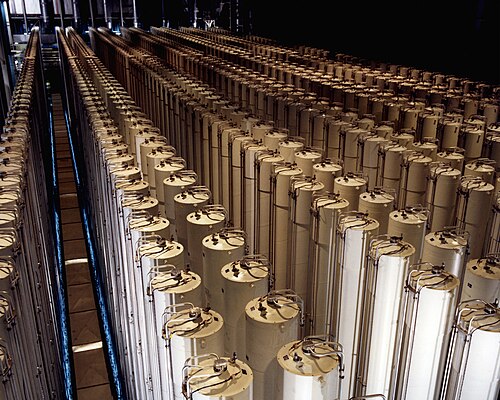

Natural uranium contains about 0.7% of the fissile isotope uranium-235. Commercial reactor fuel is commonly enriched to roughly 3% to 5%. Uranium enriched to 20% is still far below the roughly 90% associated with weapons-grade material, so describing 20% as a bomb-level threshold would be wrong. But enrichment effort is nonlinear: separating isotopes becomes progressively more productive as the concentration rises, meaning much of the work needed to move from natural uranium toward weapons grade has already been completed by the time material reaches 20%.
That is why the difference between “below 5%” and “up to 20%” is strategically meaningful even though neither level is weapons grade. The risk depends on more than a percentage. Inspectors would also examine the quantity of enriched material, the number and efficiency of centrifuges, how quickly cascades can be reconfigured, where material is stored, the frequency of monitoring and whether undeclared facilities could exist. A small, tightly monitored stockpile and a large, opaque one at the same enrichment level present very different problems.
The public versions of the intelligence reporting do not reveal those operational details. Nor do they show the analytic confidence level, competing agency views or the evidence behind the conclusion. That uncertainty should limit how far the headline is taken. The assessment is important because it was delivered to lawmakers considering the agreement, but it is not a substitute for the full safeguards text, technical annexes and classified briefings Congress can demand.
The Mohammed bin Salman nuclear weapons 2018 warning still shapes the debate
Concern about a Saudi military option did not begin with the July deal. In a 2018 television interview, Crown Prince Mohammed bin Salman said: “Without a doubt, if Iran developed a nuclear bomb, we would follow suit as soon as possible.” The statement was conditional, but unusually direct. It established that Saudi nuclear policy cannot be evaluated solely as an electricity plan; it is also bound to Riyadh’s perception of Iran’s capabilities and intentions.
Supporters of engagement can read that history as an argument for keeping Saudi Arabia inside a U.S.-supported framework. If the kingdom’s choices are driven by Iran, they argue, Washington needs visibility and leverage before a crisis. Critics draw the opposite lesson: a leader who publicly tied his country’s nuclear posture to Iran should not receive domestic enrichment rights without the strongest available verification and an explicit prohibition on weaponization-sensitive activity.
Both readings acknowledge the same basic fact. Saudi nuclear decision-making will be relational. Riyadh will watch Tehran, but it will also watch what Washington permits allies elsewhere to do, how Pakistan manages its deterrent, whether Turkey expands its nuclear ambitions and whether U.S. security guarantees look credible under fire. A proliferation cascade rarely begins with several governments announcing bombs at once. It begins when each decides it cannot afford to remain less capable than its neighbor.
The Ed Markey nuclear letter and Congress’s narrowing window
The Markey-Merkley intervention is designed to force those strategic questions into a review process that can otherwise look procedural. The agreement was submitted on August 24 and faces a 90-session-day clock—a measure based on days Congress is in session, not ordinary calendar days. That distinction can stretch the review well beyond three months and gives committees time to seek the classified intelligence, question administration officials and examine whether conditions are binding or politically reversible.
The Joint Resolution of Disapproval Saudi debate creates a formal route to block the agreement, but passage is not automatic. Lawmakers would need to build a coalition around technical safeguards at a time when the administration can argue that rejecting the deal risks losing strategic ground to rival suppliers. The strongest congressional case will therefore turn on specific provisions: whether enrichment authorization can be delayed or revoked, how violations are defined, what inspections are mandatory and what happens to nuclear material and equipment if cooperation ends.
Congress also has options short of an outright rejection. It can press for side commitments, reporting requirements, automatic sanctions, supply-chain controls or an Additional Protocol condition before enrichment begins. But partial fixes can produce false confidence if the underlying enforcement mechanism remains discretionary. The central question is not how many promises the agreement contains; it is whether a future administration could identify a breach quickly and impose costs before Saudi capabilities outrun diplomacy.
The US-Iran war and nuclear-arms-race danger
Markey tied his warning directly to the continuing U.S.-Iran war, arguing that Saudi steps could accelerate a regional nuclear arms race. The conflict has already raised energy prices and left traffic through the Strait of Hormuz largely blocked. Saudi Arabia has faced Houthi missile and drone attacks, including claimed strikes on Riyadh and Aramco facilities at Yanbu. Riyadh has also entered the Mecca Joint Defence Agreement with Turkey and Pakistan, adding a new security framework to an already crowded regional map.
These pressures cut in two directions. They strengthen the Saudi argument that the kingdom needs resilient energy infrastructure, strategic autonomy and dependable partners. They also make nuclear hedging more dangerous. Wartime governments operate under compressed timelines, incomplete intelligence and public pressure to show resolve. A fuel-cycle capability that looks manageable in peacetime can become a source of suspicion during a crisis, especially if inspectors face access limits or if one side believes the other is preparing a breakout.
Tehran is likely to read the agreement through that security lens. Iranian officials may portray any Saudi enrichment permission as proof that Washington applies different nuclear rules to allies and adversaries. That claim would not by itself validate Iran’s nuclear conduct, but it could complicate efforts to restore limits on Tehran. If Iran concludes that Riyadh is building a hedge, it may see more value in preserving its own advanced enrichment capacity. Each side’s insurance policy then becomes evidence for the other side’s worst-case planning.
What happens next: four plausible scenarios
1. Congress blocks the agreement. A successful resolution of disapproval would stop or force renegotiation of the current framework. Saudi Arabia could accept stronger limits, pause the project or seek another supplier. Blocking the deal would reduce immediate U.S. responsibility for enrichment risk, but it would not guarantee that Riyadh abandons its nuclear plans.
2. The deal proceeds with tighter safeguards. Congress and the administration could preserve cooperation while conditioning enrichment on an Additional Protocol, intrusive monitoring, strict stockpile limits and automatic consequences. This is the most credible middle course if Saudi Arabia accepts it. Its weakness is political durability: safeguards are only as strong as access, data and enforcement during a future crisis.
3. The deal proceeds largely as written. Riyadh gains a pathway to domestic enrichment and Washington retains a central role in the program. The near-term result may be a monitored civilian project rather than a weapons sprint. Over time, however, a move toward 20% would reduce the technical distance to higher enrichment and intensify pressure on regional rivals to acquire comparable options.
4. A regional cascade gathers speed. Iran interprets Saudi capability as a strategic threat; Turkey and others reconsider their own fuel-cycle requirements; Pakistan’s role becomes the subject of more speculation; and nuclear latency becomes a marker of status. No state needs to assemble a weapon for the region to become less stable. A cluster of countries with expanding enrichment capacity, weak crisis communication and missile forces would increase the risk of miscalculation long before an actual bomb appeared.
A warning about possibility, not proof of a bomb program
The most responsible reading of the reported assessment is neither complacency nor alarmism. Saudi Arabia has not been publicly shown to be building a nuclear weapon. The intelligence language reported by the Post is deliberately narrower: the option has not been ruled out. That makes the congressional review more important, because agreements governing dual-use technology are precisely where governments convert uncertainty into verifiable rules.
The administration and Riyadh have a straightforward way to strengthen their peaceful-use case: accept safeguards and transparency strong enough that outside observers do not have to rely on assurances alone. Critics, meanwhile, should distinguish the risks of enrichment from evidence of intent. The choice before Congress is not whether to punish Saudi Arabia for a bomb it has not built. It is whether the July agreement leaves enough inspection, leverage and time to prevent a future decision from becoming a fait accompli.
Sources
- Israel Insider / Ynet pickup — report on the classified U.S. assessment and the Washington Post account
- Press TV — report on the U.S. assessment, agreement and official responses
- Dainik News Live — corroboration of the reported assessment and 2018 Mohammed bin Salman statement
- NewsPoint / Times of India — Markey-Merkley letter, congressional review and political response
Reporting basis: Fixed September 26, 2026 snapshot. The central intelligence finding is reported through accounts of the Washington Post’s story; the classified assessments are not public. Signal Post News has not independently reviewed those documents. Technical analysis distinguishes enrichment capability from evidence of weaponization.