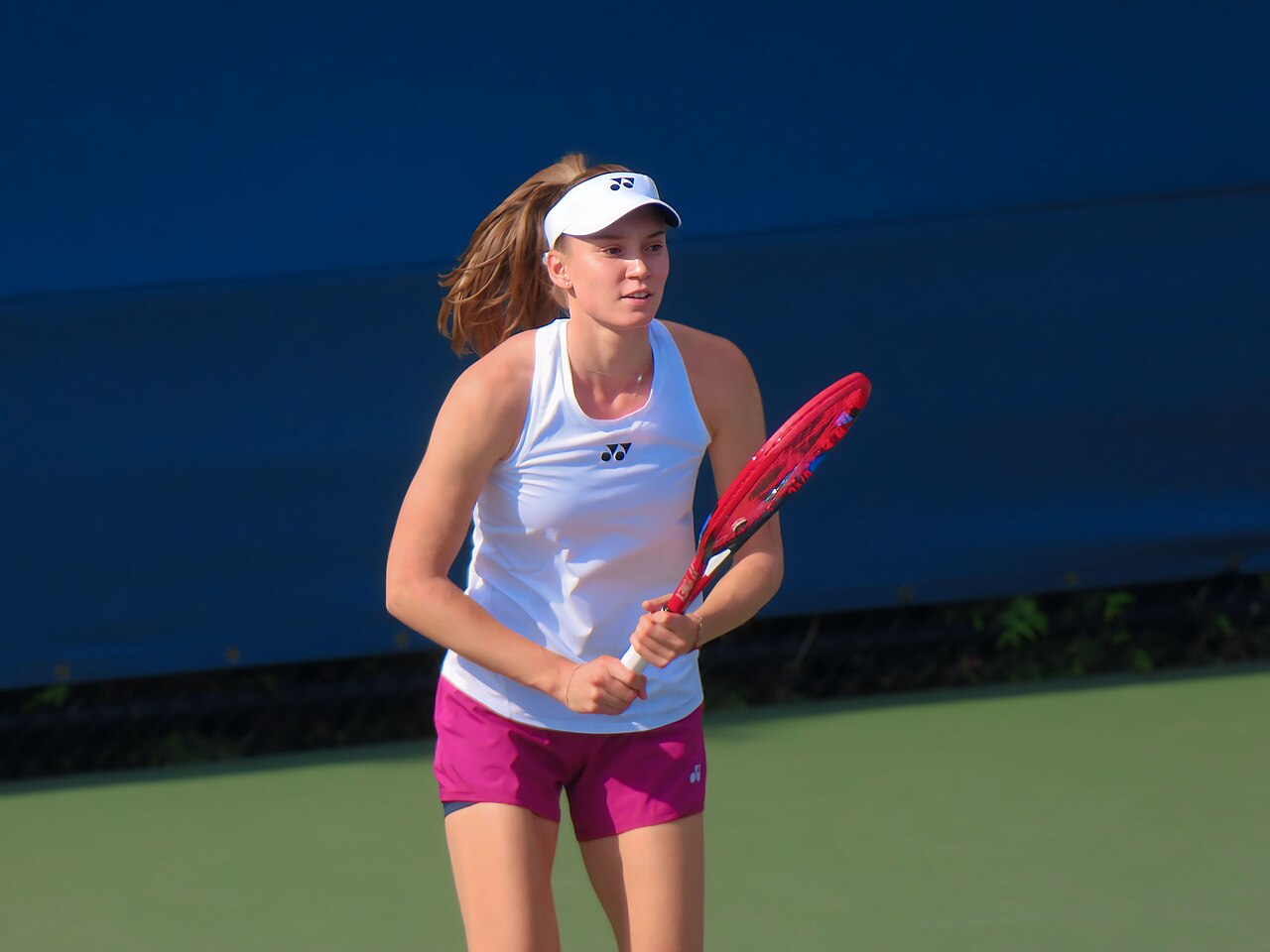
The Rybakina Ningbo Open title defence was over as a contest within about four games. Elena Rybakina, playing her first final since becoming world No. 1, beat Canada's Leylah Fernandez 6-2, 6-2 at the Yinzhou International Tennis Centre on Sunday to retain the Ningbo Open crown she won a year ago — her tour-leading fourth title of 2026, the 15th of her career, and the first she has lifted while sitting on top of the rankings. Fernandez, unseeded and playing the best tennis of her autumn, won the first two points of the second set and almost nothing that mattered after them. This is what the top of women's tennis looks like right now: a champion who arrived in Ningbo off an opening-round loss and a foot injury, and left with the trophy, an 8-0 career record at this tournament, and a year-end No. 1 race that is now close to a formality.
Four games was all she gave away
There was a version of this final that became a contest, and it lasted about twenty minutes. Fernandez, the world No. 30, opened with the energy of a player who had already beaten three higher-ranked opponents this week, and Rybakina needed time to calibrate her returns against a left-hander's serve — the same problem she had described after Saturday's semifinal against Diana Shnaider. Then, in the fifth game, the top seed broke. A game later she uncorked a searing crosscourt backhand winner to move 4-2 ahead, and the opening set was gone in 38 minutes, 6-2.
The second set followed the champion's script rather than the challenger's. Fernandez started it brightly, as she had to, but Rybakina absorbed the pressure, forced an error to break for 2-1, and breezed home from there. The statistics underline how little oxygen the Canadian was given: Rybakina saved all four break points she faced across the match, and she closed the title with a forehand winner on her first match point. Two sets, four games conceded, no tiebreak, no wobble. "It's amazing to play in front of you — it's my second year here and my second win," Rybakina told the crowd. "It's such a special place for me. Thanks so much, Ningbo."
Fernandez's week deserved a closer final — and still showed the gap
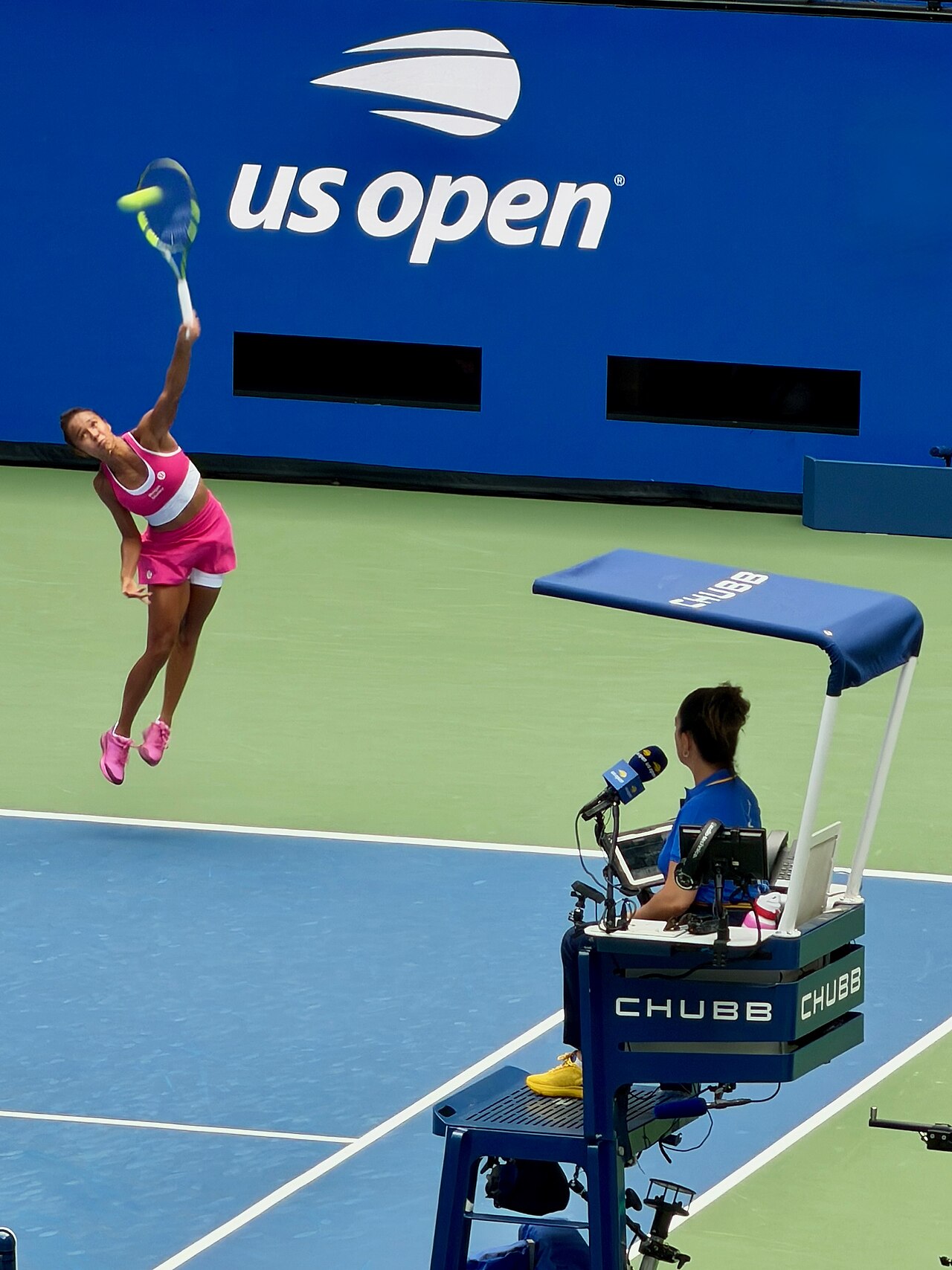
It would be wrong to read 6-2, 6-2 as a Fernandez failure. The 24-year-old from Montreal arrived unseeded and beat, in order, seventh seed Elise Mertens in three sets, qualifier Aliaksandra Sasnovich in three sets, last year's Ningbo finalist Ekaterina Alexandrova from a set down, and Marie Bouzkova 6-3, 7-5 in the semifinal. It was her second final in as many months, after she won the Singapore Open in late September for the first title of her year and the sixth of her career. Against almost anyone else in the draw, this version of Fernandez — the 2021 US Open finalist whose game is built on taking the ball early and refusing to be pushed backwards — wins this tournament.
But Sunday was a measurement, and measurements are unsentimental. Fernandez's strengths are timing and courage; Rybakina's are weight of shot and a serve that turns break points into formalities. The Canadian created four break-point chances and converted none. She congratulated the champion warmly — "I'd like to congratulate Elena for a wonderful week and a wonderful year" — and sounded like a player who knows her own trajectory is bending the right way: "We're having a good end of year. We've just got to keep going and keep working hard." She is right about her trajectory. She is also, on Sunday's evidence, four games in a final away from the very top of the sport, and the distance between those two truths is the story of her season.
Why this matters
The Ningbo Open is a WTA 500, not a major, and in an ordinary October it would be a footnote. This is not an ordinary October. Rybakina took the world No. 1 ranking from Aryna Sabalenka by beating her in the US Open final in September — the second time in 2026 she had beaten Sabalenka in a Grand Slam final, after the Australian Open — and the first question asked of every new No. 1 is whether the ranking is a summit or a hot streak. Her first three weeks with it argued both ways at once: a stunning opening-match loss in Beijing to Alina Charaeva, ranked 118th, then a foot injury that forced her out of Wuhan altogether. Sabalenka's own autumn has been no steadier — she surrendered the ranking in New York, lost early in Beijing, and then lost her opening match in Wuhan, a tournament she has won three times, as we reported in our coverage of the Wuhan Open upsets that felled Sabalenka and Pegula.
Sunday was Rybakina's answer, and its significance is in the manner as much as the result. Champions are not defined by never stumbling in the Asian swing; they are defined by what the stumble produces. Rybakina's response to the worst three weeks of her season was a title defence — the hardest kind of week to win, because every opponent plays free and the champion carries the target — completed without dropping a set in either the semifinal or the final, against two left-handers she had publicly identified as awkward matchups. She is now 8-0 across her two Ningbo appearances. Some courts become a player's property; Yinzhou is becoming hers.
There is a psychological ledger for the rest of the tour, too. The WTA Finals begin on November 8 at Indian Wells, where Rybakina is the defending champion — she swept the 2025 edition without dropping a set and beat Sabalenka in that final as well. Three straight defeats by the same opponent in the biggest matches of the season — Melbourne, New York, and now the shadow of a title defence at the Finals — is the kind of pattern that stops being about tactics. Ningbo adds a fourth data point to Sabalenka's problem: the woman she must beat to reclaim No. 1 is not fading at the end of a long year. She is accelerating.
The year-end No. 1 race, in numbers
The arithmetic now heavily favours Rybakina. On the Race standings published as the WTA Finals field was completed last week, she led Sabalenka 7,503 points to 6,560 — a cushion of more than 900 — built on a 49-14 season that includes the Australian Open and US Open titles, the Stuttgart crown, and further finals at Indian Wells in March and the Canadian Open. A WTA 500 title is worth 500 points, so Sunday's win stretches that lead to roughly 1,400 points with only this week's Pan Pacific Open in Tokyo and the Finals themselves left to play.
Run the scenarios and the race narrows to a single corridor. An undefeated WTA Finals champion earns a maximum of 1,500 points. For Sabalenka to finish the year at No. 1, she would need essentially that maximum in Indian Wells — win every match, including, almost certainly, a fourth straight showdown with Rybakina — while Rybakina simultaneously failed to win enough round-robin matches to add meaningfully to her total. It is not impossible; the round-robin format that protects a slow starter can also strand one, and Rybakina's Beijing loss to the world No. 118 is a standing reminder that her floor, when the first serve deserts her, is lower than her ceiling suggests. But it is a corridor, not a race. Sunday's 500 points are the reason: without them, one bad week in Tokyo would have left the year-end ranking hostage to the Finals draw. With them, Rybakina holds her fate in her own racket.
The one crack in the armour
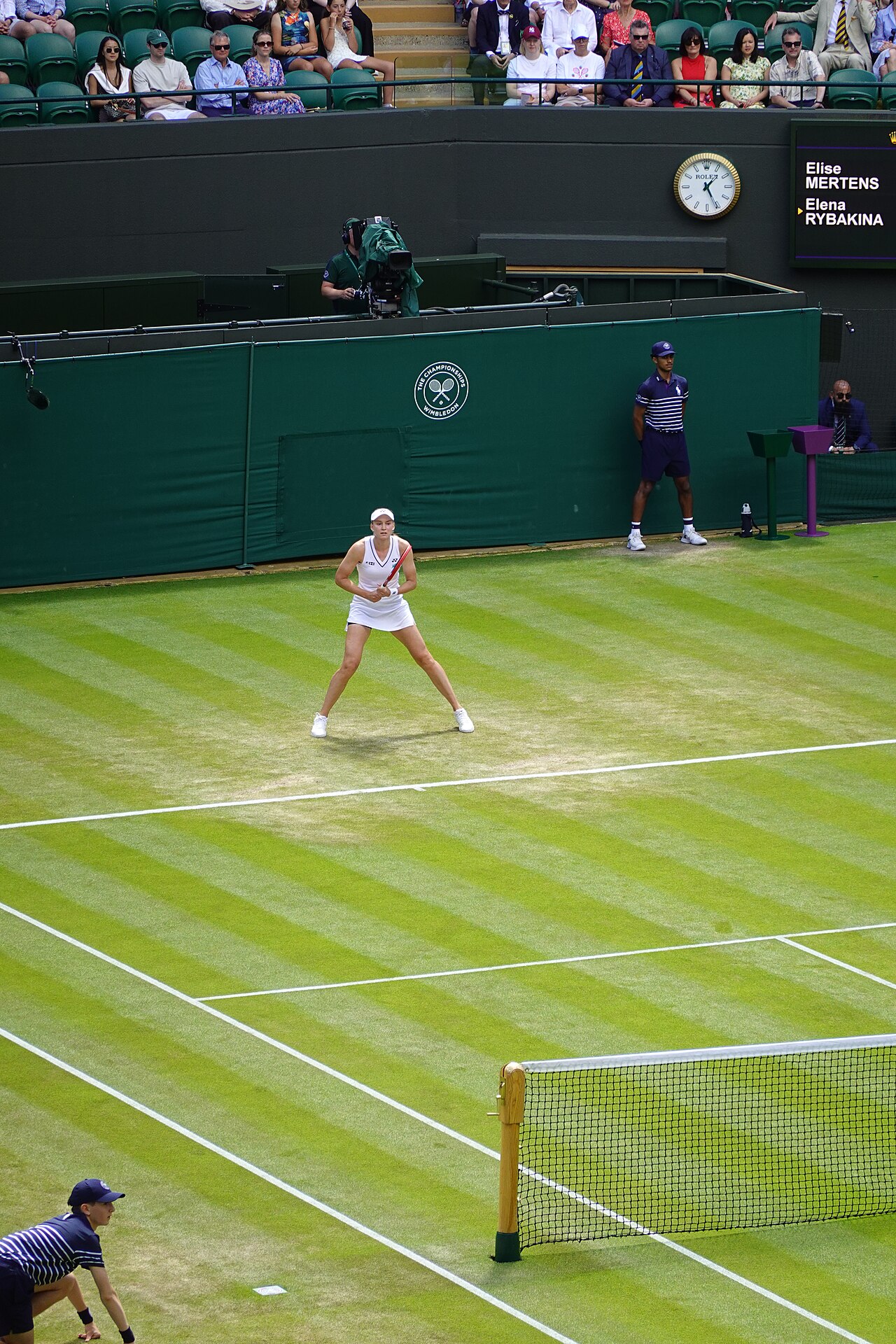
Honesty requires a paragraph the scoreline does not suggest. Rybakina's week in Ningbo was not flawless: her quarterfinal against qualifier Katarzyna Kawa went three sets, and in Saturday's semifinal against Shnaider she needed eleven set points to close the first set, in a match littered with double faults and erratic serving from both players. "It was on my serve and it was a struggle," she admitted afterwards. "I was playing the first balls really well but I couldn't close the game." Against Fernandez, the serve held whenever it had to — four break points, four saves — but the Finals field she faces in a fortnight includes Mirra Andreeva, Coco Gauff and Jessica Pegula, returners who will not let eleven set points happen. The Beijing defeat, too, was not an aberration so much as a recurring feature: when Rybakina's first-strike tennis misfires, she can look ordinary against players she should routine. It is the one argument Sabalenka's camp can still make — that the No. 1 is a front-runner whose game has a variance problem — and Sunday both refuted it (another final, another rout) and left it technically alive (the semifinal's serving numbers). The next fortnight will settle which reading is true.
What happens next
The tour moves to Tokyo this week for the Pan Pacific Open, where Rybakina plays her final regular-season event before the title defence that defines her year: the WTA Finals at the Indian Wells Tennis Garden from November 8, where she arrives as No. 1 seed, defending champion and, on the evidence of Ningbo, the player the other seven must solve. She beat Sabalenka in both Grand Slam finals of 2026 and in the 2025 Finals title match; a fourth straight win in a season-defining match would close the year-end No. 1 argument entirely. Fernandez, meanwhile, leaves Ningbo with her second final in two months, a head-to-head against Rybakina that now stands at 4-2 against her, and the more interesting long-term question of whether her late-season surge is a hot month or a level change. For the Asian swing's other storyline — how the men's game is reshaping itself in the same weeks — see our report on Novak Djokovic's 102nd career title at the China Open.
For one Sunday in Ningbo, though, none of the caveats were visible from the stands. The world No. 1 won her first final wearing the ranking the way she was supposed to: quickly, coldly, and by a margin that tells the rest of the tour exactly where the bar sits heading into the last fortnight of the season.
Sources
Reuters, "Rybakina brushes aside Fernandez to retain Ningbo crown," October 25, 2026 (final score 6-2, 6-2; first set in 38 minutes; break in the fifth game and crosscourt backhand winner for 4-2; second-set break for 2-1; first trophy as world No. 1; tour-leading fourth title of the season and 15th of her career; 8-0 career record at Ningbo; on-court quotes from both players); Sky Sports, "Elena Rybakina beats Leylah Fernandez in straight sets to defend Ningbo Open title," October 25, 2026 (saved all four break points faced; forehand winner on first match point; Australian Open, Stuttgart and US Open titles in 2026; Beijing opening-match loss to 118th-ranked Alina Charaeva); Reuters, "Holder Rybakina sets up Fernandez clash in Ningbo final," October 24, 2026 (semifinals: Rybakina d. Diana Shnaider 6-3, 7-5, Fernandez d. Marie Bouzkova 6-3, 7-5; foot injury forced Wuhan withdrawal; eleven set points in the first set of the semifinal; Rybakina quotes); SportsNet with the Associated Press, "Canada's Fernandez to face top-ranked Rybakina in Ningbo Open final," October 24, 2026 (Fernandez won the Singapore Open in late September, her first title of the year and sixth of her career; head-to-head 3-2 to Rybakina before the final; Rybakina's 28th career final); 2026 Ningbo Open singles draw, WTA 500, Yinzhou International Tennis Centre (round-by-round scores as cited, including Fernandez d. Mertens, Sasnovich and Alexandrova, and Rybakina d. Kawa in three sets); WTA Finals 2026 race guides, October 2026 (published Race standings of 7,503 points for Rybakina and 6,560 for Sabalenka; 49-14 season record; 2025 WTA Finals won undefeated, final d. Sabalenka 6-3, 7-6(0); Finals at Indian Wells from November 8, undefeated champion earning up to 1,500 points).