Two Russian Tu-95MS strategic bombers were still parked at Da Nang airport on Wednesday, at the end of a flight south from Russia’s Far East that alarmed the air forces of Taiwan and Japan — and one day before Vladimir Putin sits down with Donald Trump and Xi Jinping in Shenzhen.
Track it live: Live wars tracker
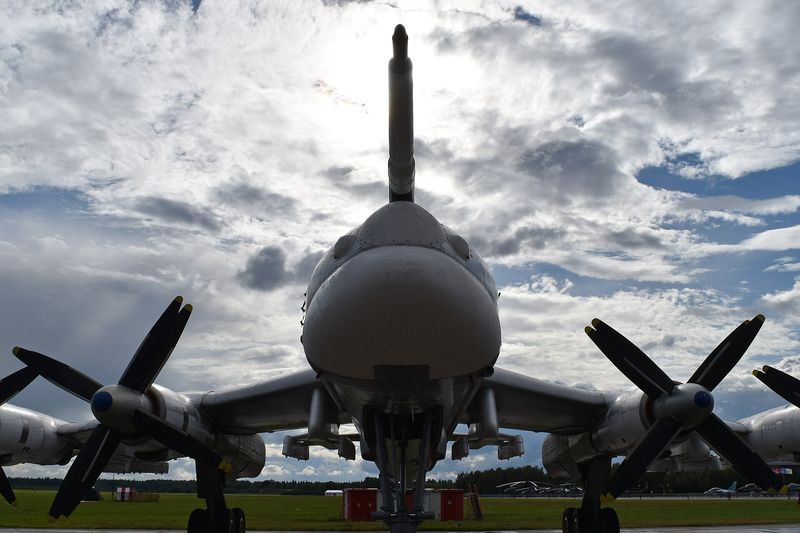
DA NANG, Vietnam, November 18, 2026 — Two Russian Tu-95 strategic bombers were still on the tarmac at Da Nang airport on Wednesday, flanked by two Russian support aircraft, at the end of a flight south from Russia’s Far East that had alarmed the air forces of Taiwan and Japan a day earlier. The Russia Tu-95 bombers Vietnam deployment is, in the assessment of a Reuters analysis published on Wednesday, Russia’s most significant deployment of military aircraft across East Asia in possibly more than a decade. It has also landed, in every sense, on the eve of the Shenzhen summit: President Vladimir Putin is in Shenzhen for APEC, and on Thursday he is due to meet President Donald Trump and President Xi Jinping in the first Trump–Xi–Putin trilateral. Two nuclear-capable bombers on a Vietnamese runway are the backdrop Moscow has chosen for that meeting — whether by design or by coincidence is the argument now running through the region’s capitals.
What happened
The sequence, as it can be established from the reporting published so far, runs over three days. The bombers came from Ukrainka Air Base in Russia’s Amur region, in the Russian Far East, according to Defence Blog’s account of satellite imagery shared by the open-source analyst AviVector. Additional attributed reporting of the same imagery and of Japanese defence announcements says five Tu-95MS bombers departed Ukrainka on Monday, November 16. That figure comes from analyst and secondary reporting rather than from any official statement, and it is presented here as such: what is independently visible is what happened at the other end of the route.
In the early hours of Tuesday, November 17, Russian military aircraft flying south from the Far East alarmed the air forces of Taiwan and Japan, Reuters reported. Japan’s Ministry of Defence confirmed that two separate aircraft believed to be Russian entered airspace northwest of Okinoshima, in Fukuoka prefecture, early on Tuesday, according to reporting of the ministry’s announcement. Neither Japan nor Taiwan officially identified the aircraft types in their alerts — a precision worth keeping, because the identification of the aircraft as Tu-95s rests on the satellite imagery and analyst reporting at Da Nang, not on anything Tokyo or Taipei has said.
That imagery is specific. Satellite images shared by AviVector and taken at 03:16 UTC on Tuesday, November 17, show two Tu-95MS bombers on the ground at Da Nang Airport together with two Russian support aircraft, Defence Blog reported on Tuesday. The bombers were identified in that reporting as RF-94202 and RF-94188, redeployed from Ukrainka. By Wednesday, November 18, the two Tu-95s — NATO reporting name “Bear” — remained on the tarmac at Danang airport, Reuters reported, still accompanied by the two support aircraft. Da Nang is a civilian international airport in central Vietnam as well as a Vietnamese air force station, which is part of what makes the deployment so visible: strategic bombers do not hide there, and were never going to.
Tankers or transports? The support-aircraft question, stated honestly
One detail in the record does not agree with itself, and this article is not going to pretend otherwise. Reuters describes the two aircraft that accompanied the bombers as long-range tankers. Defence Blog, reporting the AviVector satellite imagery, identifies the two support aircraft as Il-76MD transports. Those are different aircraft with different implications: tankers alongside the bombers would point to an air-to-air refuelling arrangement of the kind Russia used at Da Nang in 2014, while heavy transports would point to a ground-support and logistics footprint — crews, equipment and spares flown in to sustain the deployment. Neither account has been confirmed by Russia or Vietnam, no official manifest has been published, and the satellite imagery itself has not been released by any government. Readers should hold the point exactly where the sources leave it: two bombers are established; what precisely is parked beside them is reported two different ways by two credible sources, and it is not yet settled.
Why this matters
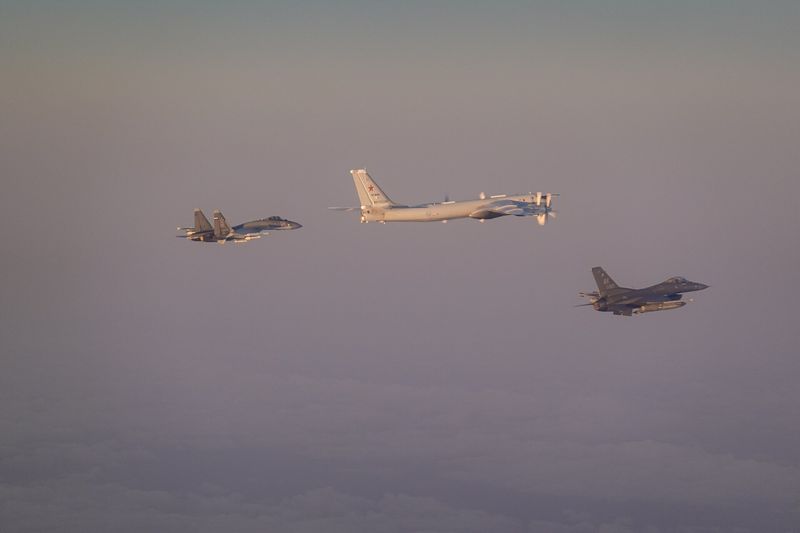
Analysis: a pair of ageing turboprop bombers on a friendly runway is not, by itself, a military event of the first order. What makes this deployment matter is the combination of the aircraft type, the place, the gap since it last happened, and the week in which it happened — and on each of those four points, the analysts who spoke to Reuters were unusually direct.
A reminder of reach
“The deployment is clearly intended to remind regional states that, despite ongoing war in Ukraine, Moscow can still project power into Southeast Asia,” Ian Storey, a senior fellow at the ISEAS–Yusof Ishak Institute in Singapore, told Reuters. The sentence carries the deployment’s whole logic. Russia’s long-range aviation has been consumed for years by the war against Ukraine; a flight that puts strategic bombers into Southeast Asia, on a route that brushes the air-defence zones of Taiwan and Japan, is a demonstration that the fleet — and the state behind it — still has reach to spare. Signals of that kind are addressed to more than one audience at once, and the rest of this article takes them in turn.
The timing: Shenzhen, Thursday
The deployment comes just ahead of Putin’s arrival in Shenzhen for APEC and the Thursday, November 19 trilateral with Trump and Xi — the meeting this newsroom has covered as Trump and Putin shook hands in Shenzhen as Xi looked on, following Putin’s arrival in Shenzhen for the Trump–Xi trilateral and the moment Xi Jinping broke precedent to greet Trump on the tarmac in Shenzhen. A Russian president flying into a three-way summit with the American and Chinese presidents, in the same week his strategic bombers fly a politically charged route down the East Asian seaboard and park in Vietnam, does not arrive as a supplicant. Whatever is negotiated in Shenzhen on Thursday will be negotiated in the shadow of a demonstration that Russia can still move nuclear-capable aircraft across the region at will — and analysts in Taipei, quoted below, read the flight in exactly that frame.
What the aircraft can do
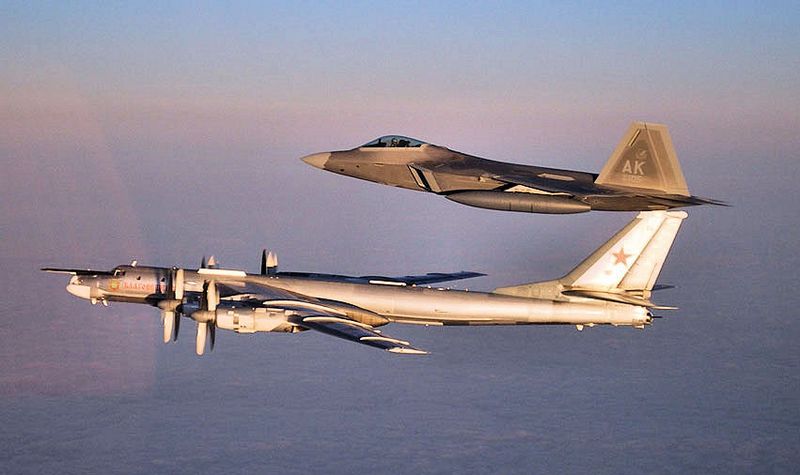
The Tu-95MS is not a museum piece flown for nostalgia. The type can carry nuclear-armed cruise missiles, and Russia has used Tu-95s to launch cruise missiles at Ukrainian cities during the war, Defence Blog noted. Some Tu-95s are nuclear-capable and are sometimes used for intelligence and surveillance flights, military attachés told Reuters. The two aircraft at Da Nang are not reported to have been armed, and nothing in the published reporting suggests any weapons were displayed or loaded in Vietnam. But the type’s role is the message: states do not send missile carriers on courtesy calls, and every air force in the region logs a Tu-95 flight as a strategic event, not a transport movement.
Context: 2014, Cam Ranh and Ukrainka
The last known deployment of Russian strategic airpower to Vietnam was in 2014, Storey told Reuters: on that occasion, Russian tankers operated from Danang in support of Tu-95 flights near Guam. The arrangement may have been suspended after the Obama administration complained to Hanoi about it, Storey said. That precedent explains both halves of this week’s story. It explains why a return was available to be made — the route, the airfield and the refuelling concept all exist in both countries’ institutional memory — and it explains why the return is significant: a practice that lapsed under American pressure more than a decade ago has now been revived, in public, in a week when American attention is fixed on Shenzhen.
The deeper background is older still. Vietnam’s coast hosted one of the Soviet Union’s most important overseas naval and air facilities at Cam Ranh Bay during the Cold War, and Russian access arrangements there outlasted the Soviet collapse before winding down in the early 2000s. Post-Cold War Vietnam has never again hosted a foreign base, and nothing in this week’s reporting suggests one is being created: two bombers on a visit, however pointed, are not a base. But the geography is not incidental. A Russian bomber at Da Nang sits on the South China Sea’s western shore, within range of nearly everything in Southeast Asia — which is why the 2014 arrangement drew a complaint from Washington, and why its apparent revival draws analysis now.
At the other end of the route sits Ukrainka, the Amur region base from which the bombers were redeployed, according to Defence Blog’s reporting of the AviVector imagery. Ukrainka is one of the principal homes of Russia’s Tu-95MS fleet, positioned in the Far East for Pacific-facing operations. A redeployment from Ukrainka to Da Nang is a flight across the whole of East Asia — down past Japan, past Taiwan, and into the South China Sea’s neighbourhood. The route is the statement as much as the destination is.
The angles
Moscow’s signal
From Moscow’s side, the deployment costs little and says much. It says that the Ukraine war has not consumed Russia’s strategic aviation; that Russia retains partners in Southeast Asia willing to receive its most sensitive aircraft; and that, on the eve of a summit at which Russia’s president meets the American and Chinese presidents as an equal, Russian power is present in the region in its own right and not merely as an appendage of China’s. Storey’s reading — a reminder to regional states that Moscow can still project power into Southeast Asia — is the interpretation the flight seems built to produce, and no Russian official has offered any other. Russia’s defence ministry did not respond to Reuters’ request for comment, and neither did its embassy in Hanoi.
Hanoi’s balancing act
For Vietnam, the decision to receive the bombers is the more delicate one, and the reporting suggests it was not taken quickly. Moscow asked last year to revive the arrangement, and Hanoi was initially hesitant, Nguyen The Phuong, a Vietnam security expert at the University of New South Wales, told Reuters. This deployment, ostensibly for refuelling, signals a change that could herald further deployments, Phuong said. What might Hanoi gain? Procurement is the first answer the reporting offers: Russia is Vietnam’s main arms supplier, and although Hanoi has diversified its purchases since 2022, it remains dependent on Russian parts for much of its existing arsenal — a dependence that gives cooperation with Moscow a practical value no communiqué needs to state. The second answer points at Beijing. Phuong suggested Hanoi may also be signalling to China, after Beijing’s late-September announcement about helping to build a new military airfield in Laos, and against the background of Vietnam and China being at odds over the South China Sea. A Vietnamese government that hosts Russian bombers is reminding every capital, including China’s, that it has other partners. Vietnam’s foreign ministry did not respond to Reuters’ request for comment.
Alarm in Taipei and Tokyo
The flight’s northern audiences reacted as the route seemed designed to make them react. Chieh Chung, a researcher at Taiwan’s Institute for National Defense and Security Research, told Reuters this was not the first time Russian aircraft had approached Taiwan — there were precedents in 1986 and in 2010 — but that Russia had chosen to make this politically charged flight before Thursday’s US–China–Russia leaders’ summit, and that it could serve to project tight China–Russia cooperation. In Taipei on Wednesday, Huang Chih-wei, vice chief of Taiwan’s General Staff, said the Russian flights “posed a threat to the peaceful and stable status quo in the Asia-Pacific region.” Japan’s confirmed part in the sequence is narrower — two aircraft believed Russian, northwest of Okinoshima, early on Tuesday — and, as noted above, neither Tokyo nor Taipei has officially named the aircraft type. The alarm, on the public record, is about the fact and the timing of the flights, stated by officials who have been careful not to claim more than they have confirmed.
Washington’s silence, so far
The remaining angle is an absence. The US State Department did not respond to Reuters’ request for comment on the deployment. In 2014, on Storey’s account, Washington complained to Hanoi and the arrangement lapsed; in 2026, with the American president in Shenzhen for a trilateral at which Russia’s cooperation is part of the agenda, the public response so far is silence. Whether that silence is tactical — a decision not to complicate Thursday’s summit — or simply the first draft of a response still being written is not something the published record yet answers. It is, however, the contrast every regional analyst will measure the week against.
The numbers in context
The deployment’s arithmetic is small, and its scale is the point. Two bombers: Tu-95MS aircraft identified in the satellite reporting as RF-94202 and RF-94188. Two support aircraft: described by Reuters as long-range tankers and by Defence Blog’s imagery reporting as Il-76MD transports, a discrepancy set out above and unresolved on the public record. One satellite pass fixes the scene in time: 03:16 UTC on Tuesday, November 17, with the bombers already on the ground at Da Nang. Five bombers departed Ukrainka on Monday, on the attributed analyst reporting — a figure that, if accurate, would mean the Da Nang pair were the visible end of a larger Far East sortie, though only the two at Da Nang are corroborated by imagery reporting. And one gap frames all of it: the last known Russian strategic airpower deployment to Vietnam was in 2014, twelve years ago. Reuters’ formulation — the most significant Russian military aircraft deployment across East Asia in possibly more than a decade — is a judgement about significance, not size, and it is attributed here to Reuters because that is what it is: an assessment, by the news agency that assembled the record, of a deployment whose importance lies in its timing, its route and its rarity rather than in the number of aircraft involved.
What happens next
Analysis and scenarios, not predictions. The first question is whether Da Nang becomes a pattern. Phuong’s assessment — that a deployment Moscow requested last year, and Hanoi hesitated over, could herald further deployments — sets the test: a second visit, a regular refuelling arrangement, or a quiet return to the post-2014 absence will each say something different about what was agreed. The second fixed point is Thursday’s Shenzhen trilateral itself, where the deployment will hang over the room whether or not it is on the agenda; this newsroom’s coverage of the summit, linked above, will follow what the three leaders say and do not say. The third is procurement: if Hanoi’s cooperation is connected to the arms relationship on which Vietnam still depends for parts and support, the evidence will appear in contracts and deliveries rather than in statements. And the fourth is the regional geometry that made the flight resonate — China’s announced role in a new military airfield in Laos, and the unresolved South China Sea disputes between Beijing and Hanoi, which give Vietnam its reasons to be seen with more than one partner. For now, the established record of the week is short enough to state in full. Two Russian Tu-95MS bombers, RF-94202 and RF-94188, flew south from the Russian Far East, were photographed on the ground at Da Nang at 03:16 UTC on Tuesday beside two Russian support aircraft, and were still there on Wednesday. Taiwan called the flights a threat to the regional status quo; analysts in Singapore and Taipei read them as a signal timed for Thursday’s summit; and Moscow, Hanoi and Washington have, between them, said nothing at all.
Related coverage: Trump and Putin Shake Hands in Shenzhen as Xi Looks On, the Three Leaders Pictured Together for the First Time · Xi Jinping Breaks Precedent to Greet Trump on the Tarmac in Shenzhen · Putin Arrives in Shenzhen for Trump-Xi Trilateral
Sources
Sources: Reuters, November 18, 2026 — analysis of the Russian military aircraft deployment in Asia (reuters.com): the assessment that Russia staged its most significant deployment of military aircraft across East Asia in possibly more than a decade; the two Tu-95 bombers and the two support aircraft Reuters describes as long-range tankers remaining on the tarmac at Danang airport on Wednesday, November 18; the alarm in the air forces of Taiwan and Japan on Tuesday, November 17; Ian Storey of the ISEAS–Yusof Ishak Institute on the deployment’s purpose and on the 2014 Danang tanker precedent and its possible suspension after the Obama administration complained to Hanoi; Nguyen The Phuong of the University of New South Wales on Moscow’s request last year, Hanoi’s initial hesitation, procurement and the China and Laos dimensions; Chieh Chung of Taiwan’s Institute for National Defense and Security Research on the 1986 and 2010 precedents and the summit timing; Huang Chih-wei, vice chief of Taiwan’s General Staff, in Taipei on Wednesday; military attachés on the Tu-95’s nuclear capability and intelligence role; and the non-responses of Vietnam’s foreign ministry, Russia’s defence ministry and Hanoi embassy, and the US State Department. Defence Blog, November 17, 2026 — “Russia deploys Tu-95MS bombers to Vietnam” (defence-blog.com): the AviVector satellite images taken at 03:16 UTC on November 17 showing two Tu-95MS bombers and two Il-76MD transports at Da Nang Airport; the identifications RF-94202 and RF-94188 and the redeployment from Ukrainka Air Base; and the Tu-95MS’s nuclear-armed cruise missiles and its use launching cruise missiles at Ukrainian cities. MiGFlug, November 18, 2026 — “Russian Tu-95MS Bombers Land in Da Nang, Vietnam” (migflug.com). Additional attributed reporting cited in the text: analyst reporting that five Tu-95MS departed Ukrainka on November 16, and Japan’s Ministry of Defence confirmation, as reported, that two aircraft believed Russian entered airspace northwest of Okinoshima, Fukuoka, early on November 17; neither Japan nor Taiwan officially identified aircraft types in their alerts. Photographs: file photographs by Alan Wilson (CC BY-SA 2.0) and the US Air Force (public domain) via Wikimedia Commons, credited in the captions; none depicts the aircraft at Da Nang this week. The AviVector satellite imagery described in this article is not reproduced.