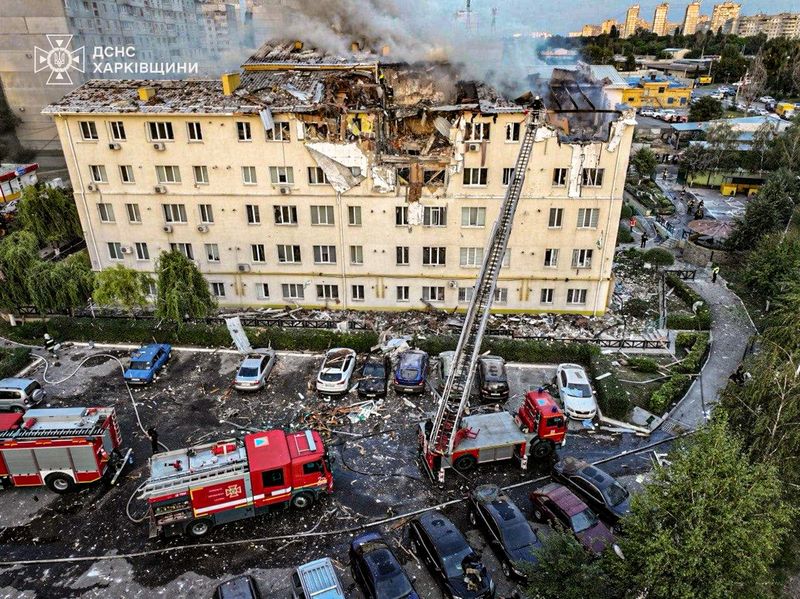
ZLATOPIL, Kharkiv region — The Zlatopil market strike injured at least 11 people, including an 11-year-old boy, when Russian forces hit the market in Zlatopil on the morning of Wednesday, November 18, 2026, Kharkiv regional head Oleh Syniehubov said on Telegram, in reporting carried by h.ua and by the Italian news agency LaPresse. Trading stalls caught fire in the strike. A later count put the total at 12 people affected: 11 injured plus one person treated for an acute stress reaction. Syniehubov said one woman was in serious condition and the others were in moderate condition, and that the injured were taken to hospital. All casualty figures in this report come from Syniehubov and Ukrainian officials via the cited sources; they had not been independently confirmed at publication.
Track it live: Ukraine war map — live tracker · Live wars tracker
What happened: a morning strike on a working market
Syniehubov Zlatopil: stalls ablaze, a child among the wounded
The essential facts are short and stark. The strike landed in the morning, as the market in Zlatopil — also spelled Zlatopol in some wire renderings — was open for business. At least 11 people were injured, among them an 11-year-old boy: the child injured Kharkiv market strike detail that has anchored the day’s coverage. Trading stalls caught fire, which in a market of timber, canvas and stored goods means the blast was followed by a second, slower emergency as firefighters worked among the wreckage of the stalls. Syniehubov’s account, reported by h.ua at 08:47 UTC, is the primary source for the toll, the fire and the condition of the wounded.
11 injured, 12 affected: reading the count precisely
The numbers need care, because two versions circulated within hours. LaPresse’s Milan wire, citing Syniehubov’s Telegram message, put the figure at at least 12 people injured. The later, fuller count reported by h.ua separated the categories: 12 people affected in total, of whom 11 were injured and one suffered an acute stress reaction. This article follows the more precise later count — at least 11 injured, 12 affected in total — and flags the difference rather than rounding it away, because in strike reporting the gap between “injured” and “affected” is exactly where early wire copy most often overstates a toll. What both sources agree on is the core of the event: the market was hit, a child was among the casualties, one woman was seriously hurt, and the rest of the wounded were in moderate condition in hospital.
Part of a 141-drone night
Zlatopil was not struck in isolation. On the night of November 17–18, Russia launched 141 strike drones at Ukraine, 73 of them reactive, jet-powered types, according to Ukraine’s Air Force as reported by Interfax-Ukraine via h.ua. By 08:00 on November 18, Ukrainian air defences had shot down or suppressed 126 of the drones, with hits recorded at seven locations. The Russia 141 drones overnight Ukraine figures matter to the Zlatopil story for a simple reason: a market in a small Kharkiv-region city was hit in the same operational window in which Ukraine’s defences were absorbing one of the larger drone waves of the month, and the morning strike followed the overnight barrage rather than arriving alone.
Context: Kharkiv region lives inside the strike envelope
Kharkiv region borders Russia, and that geography has defined its war. The regional capital sits roughly 30 kilometres from the border, close enough that glide bombs, missiles and drones launched from Russian territory arrive with minutes of warning or less, and the region’s smaller cities and towns — Zlatopil among them, south of Kharkiv city — share the exposure without sharing the capital’s density of air defence. Ukrainian officials have reported strikes across Kharkiv and its settlements on a near-daily rhythm through the autumn: on November 17, the day before the market strike, h.ua reported Russian attacks across the region injuring 17 people and damaging residential, commercial, industrial, transport, postal and electrical infrastructure, with Kharkiv city and 17 settlements attacked. Zlatopil’s market was, in that sense, hit inside a standing pattern of regional pressure, not as an anomaly.
Why markets keep appearing in the strike diary
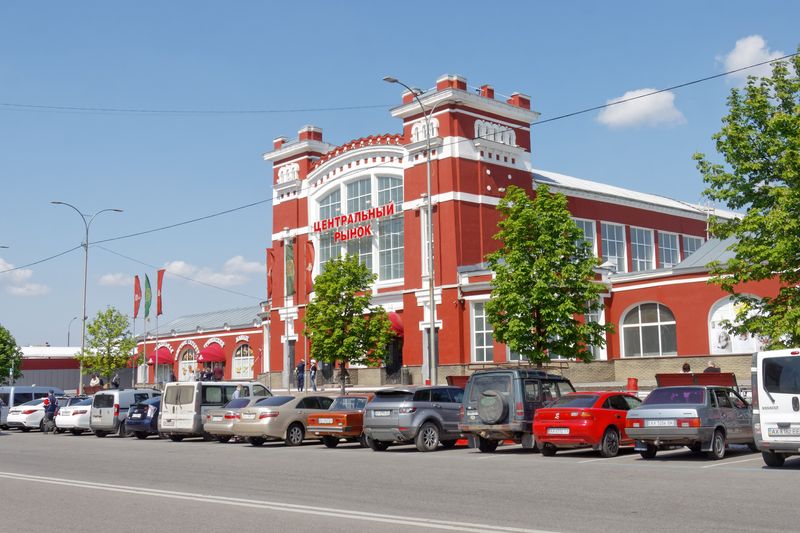
A market is the most civilian place in a Ukrainian town: unhardened, open-air, crowded at predictable hours, and economically central to the people who use it. That is also what makes market strikes recur in this war’s record — from the February 2026 drone strike on a market in Kharkiv city’s Slobidsky district, investigated by prosecutors as a war crime, to Wednesday’s attack in Zlatopil. Whether any individual strike was aimed at the market itself, at something near it, or missed another target entirely is a question the available reporting does not answer for Zlatopil, and this article does not pretend otherwise. What the record does show is an outcome pattern: when strikes land in or near markets, the casualties are shoppers, stallholders and, as on Wednesday, children.
Why this matters
Wednesday’s strike matters first for the simplest reason: of the 11 injured market Ukraine counts from Zlatopil, one is 11 years old, and he was hurt at a market on a weekday morning. But the deeper significance sits in three layers. The first is the pattern. Strikes on markets and civilian gathering places — markets, squares, aid points, transport hubs — have become one of the defining categories of this war’s civilian toll, because they combine dense crowds with zero military hardening. The second layer is scale. The UN human rights monitoring mission’s figures for October 2026, as cited in coverage of Ukraine’s civilian toll, put the month at 372 civilians killed and 1,981 injured across Ukraine — the context in which a single morning’s 11 injured in Zlatopil is both one incident and a measurable fraction of a continuing monthly count. Signal Post News has covered that UN toll separately: Ukraine’s civilian casualties in October: the UN report. The third layer is timing: the Zlatopil drone strike November 2026 landed hours before the November 19 Trump–Xi–Putin trilateral in Shenzhen, where the war’s trajectory is on the table — which guarantees that Wednesday’s strike diary, Zlatopil and Odesa together, forms part of the factual backdrop to that meeting.
Who benefits, who loses — and what critics on each side argue
Stated plainly, the losses are not symmetric. Zlatopil’s traders lose stock, stalls and income in a single morning; the region loses a piece of the ordinary economic life that keeps a frontline-adjacent city functioning; and Ukraine’s air-defence command loses interceptors and attention to a 141-drone night in which a small city’s market still got hit. Kyiv’s supporters argue that strikes on markets are intended to make daily life untenable in border regions and to push populations westward — a characterisation of intent that Ukrainian officials state as fact and that remains, for any single strike, an attribution rather than a proven order. Russia’s position, in its general form across the war, is that its forces strike military targets and that Ukrainian air-defence fire and debris account for civilian damage; no specific Russian comment on the Zlatopil strike was present in the h.ua or LaPresse reporting at publication, and that absence is recorded here rather than filled in. Critics of Kyiv’s framing, for their part, note that early casualty counts in this war are official, fast-moving and rarely independently verified in the first hours — which is precisely why this report separates “injured” from “affected” and attributes every figure to Syniehubov via the cited sources.
The data underneath the day
The arithmetic of November 17–18 is worth laying out, because it disciplines the analysis. Russia launched 141 drones; 126 were shot down or suppressed — an interception rate of roughly 89 percent — yet hits were still recorded at seven locations, and by morning a market in Zlatopil was burning with 11 people injured. That is the structural fact of Ukraine’s air war in late 2026: even a successful defensive night leaks, and what leaks lands somewhere, often in places with no defences of their own. Set against October’s UN-cited toll of 372 killed and 1,981 injured, Zlatopil’s 11 injured are about half of one percent of a single month’s wounded — small in the aggregate, and, for the town itself, the whole story. Both things are true at once, and honest coverage has to hold both.
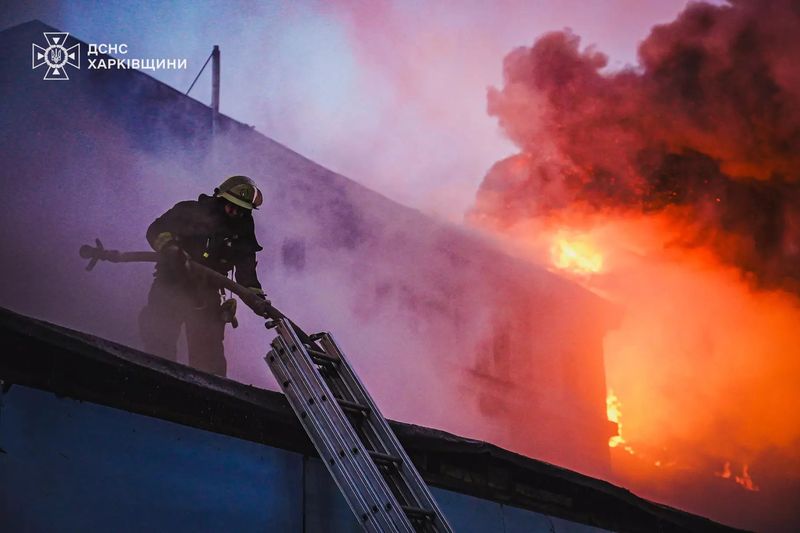
The same day, 500 kilometres south: Odesa
Zlatopil was one entry in a countrywide day. In Odesa, Russian strikes on the historic city centre killed four people and injured at least seven on Wednesday, in three waves that damaged homes, cafes, shops and an educational institution — covered in full by Signal Post News as a separate event: Russian strikes hit Odesa city centre in three waves, killing four. The two attacks should not be merged: different cities, different weapons pictures, different tolls. But read together, they describe the shape of November 18 — a 141-drone night, a market hit in the northeast in the morning, and a Black Sea city centre struck in waves — and that shape, more than any single incident, is what Ukrainian officials carried into the diplomatic week.
What happens next
The hospital count, and the investigation file
The immediate watch is medical and forensic: whether the woman in serious condition stabilises, whether the toll of 11 injured market Ukraine officials reported from Zlatopil is revised as hospitals complete their counts, and whether prosecutors open the war-crimes investigation file that has followed comparable market strikes elsewhere in Kharkiv region. Ukrainian authorities opened war-crimes investigations over the previous day’s regional attacks, according to h.ua’s reporting; a Zlatopil filing would put the market strike into the same evidentiary track.
Scenario one: the pattern holds through winter
The base case, on the evidence of November so far, is repetition: mass drone nights in the low hundreds, interception rates near ninety percent, and a steady residue of hits on the border regions’ towns — their markets, energy nodes and housing — as temperatures fall. In that scenario, Zlatopil is remembered the way Slobidsky district’s market is: as one dated entry in a documented pattern, and the policy argument stays fixed on interceptor supply and on air-defence coverage for smaller cities that currently have little.
Scenario two: Shenzhen moves the argument
The alternative runs through diplomacy. If the November 19 trilateral produces any understanding touching strikes on cities and civilian infrastructure, Wednesday’s paired images — a burning market in Zlatopil and a struck city centre in Odesa, both from the day before the leaders meet — become the obvious first test of whether it means anything. If it produces nothing, Kyiv’s supporters will cite November 18 as the day’s evidence that pressure remains Moscow’s language. Either way, the verified residue of Wednesday is narrower and harder than the argument around it: at least 11 injured, 12 affected in total, an 11-year-old boy in hospital, and a market in Zlatopil that burned in the morning.
Read next: Russian strikes hit Odesa city centre in three waves, killing four · Ukraine’s civilian casualties in October: the UN report · Ukraine war map — live tracker
Sources
Sources: h.ua, “Russian strike on market in Zlatopil injures at least 11, including 11-year-old boy,” November 18, 2026 (published 08:47 UTC; reporting Kharkiv regional head Oleh Syniehubov on Telegram: at least 11 injured including an 11-year-old boy, trading stalls on fire, a later count of 12 people affected in total — 11 injured and one person with an acute stress reaction — one woman in serious condition, the others in moderate condition, the injured taken to hospital); LaPresse, Milan, “Ukraine: Russian attack on a market in Kharkiv,” November 18, 2026 (wire report of the strike on the market in Zlatopol, Kharkiv region, citing Syniehubov on Telegram; its initial figure of at least 12 injured is reported in the body above alongside the later, more precise count); h.ua, “Russia launches 141 drones at Ukraine overnight; air defenses neutralize 126,” November 18, 2026 (07:43 UTC; Interfax-Ukraine reporting Ukraine’s Air Force: 141 strike drones launched overnight November 17–18, 73 of them reactive, 126 shot down or suppressed by 08:00, hits at seven locations); Oleh Syniehubov, head of the Kharkiv regional military administration, statements on Telegram, November 18, 2026. Casualty figures are as reported by Ukrainian officials via the cited sources and had not been independently confirmed at publication; no Russian comment on the Zlatopil strike was present in the cited reporting at publication time.