War / World
Track it live: Ukraine War Map — Live Global Trackers
Russia strikes Nova Poshta hub — that was Moscow’s own headline claim on Thursday morning, as its defence ministry said Russian drones had hit a terminal of Ukraine’s largest private delivery company in Novyi Korotych, just outside Kharkiv, in an overnight wave that also targeted railway locomotives, a power substation and a cargo ship off Odesa. Ukraine’s account of the same night was measured in people rather than targets: Kharkiv’s regional governor said the city and 17 settlements had been attacked with more than 80 drones over the past day, injuring six people including a child, and officials in Donetsk region said four civilians were killed on Wednesday. Two of the three flagship Russian claims — the postal terminal and the ship — had not been confirmed by Ukrainian officials as of Thursday morning, and Reuters said it could not independently verify the reports. That gap between claim and confirmation is where this story has to be read.

What Moscow says
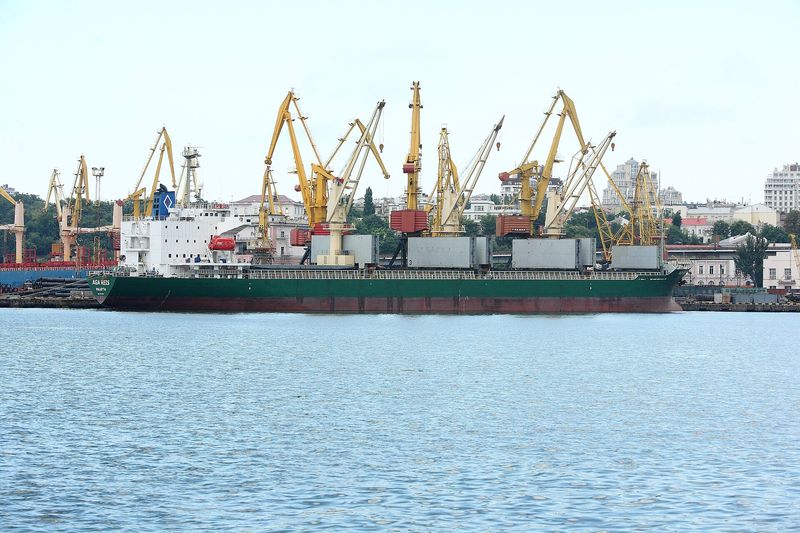
The Russian Defence Ministry’s Thursday briefing described a deliberate logistics strike package, and its list was specific. It said Russian drones had hit a Nova Poshta terminal in Novyi Korotych, outside Kharkiv — the Nova Poshta strike Novyi Korotych that leads Moscow’s account — and, in the same region, railway locomotives and an industrial building at Thermal Power Plant 2, according to Reuters’ summary of the briefing. Further south, the ministry said its forces had struck a 330-kilovolt substation in Dnipropetrovsk region — a high-voltage node of the kind that moves power between regions — and a dry-cargo ship that Moscow said was carrying military equipment, hit 52 kilometres (32 miles) southwest of Odesa in the Black Sea.
Moscow’s rationale was stated as plainly as its target list: it said the Nova Poshta hub was used by the Ukrainian military to assemble drones, and that the logistics sites it struck serve the military. That framing matters because it is the whole of Russia’s legal and public argument for treating a civilian parcel network as a target — the claim that the infrastructure is dual-use. Nova Poshta is Ukraine’s largest private delivery company, the service ordinary Ukrainians use to send everything from documents to generators; it is also, unavoidably in a country at war, part of the logistics fabric the state itself moves through. Whether this particular terminal assembled drones is a claim only Moscow has made, and it is one of the claims Reuters could not verify.
What Kyiv says
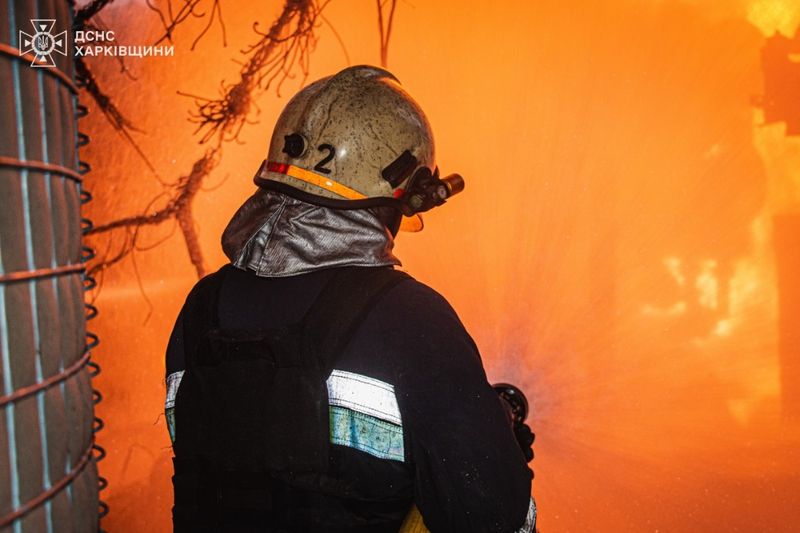
Ukraine’s overnight reporting, as usual, came from its regional governors rather than its general staff, and it described the night in terms of places and casualties. Kharkiv governor Oleh Syniehubov said Kharkiv city and 17 settlements across the region had come under attack over the past day, with more than 80 drones among the weapons used; six people were injured, including a child — the Kharkiv drone attack injured count that anchors Ukraine’s version of the night. Syniehubov’s statement did not, in the reporting available Thursday morning, confirm the postal-terminal strike at Novyi Korotych or the damage at Thermal Power Plant 2.
In Donetsk region, governor Vadym Filashkin said Russian attacks on Wednesday killed four civilians and injured five — two people killed in Serhiivka and two in Yasnohirka. The Ukrainian outlet Novosti Donbasu added detail to the Yasnohirka strike, reporting that the two killed there were women and that glide bombs were used. And closer to the capital, officials in the Bucha district outside Kyiv said Russian drones caused large fires, that a logistics centre was targeted, and that one person was injured — a reminder that the night’s geography ran the length of the country, from Kharkiv and Donetsk in the east to the Kyiv suburbs in the north and Odesa in the south.
What is confirmed — and what is not
The verified core of this story is narrower than either capital’s telling, and it is worth drawing the line precisely. Confirmed by Ukrainian officials: a heavy drone assault on Kharkiv region — 80-plus drones across the city and 17 settlements, six injured including a child; four civilians killed and five injured in Donetsk region on Wednesday; fires and a targeted logistics centre in Bucha district, with one injured. Claimed by Russia and not independently confirmed: the destruction of the Nova Poshta terminal at Novyi Korotych, the locomotives and the Thermal Power Plant 2 building, the 330kV Ukraine power substation strike in Dnipropetrovsk region, and the hit on a dry-cargo ship southwest of Odesa — including Moscow’s assertion that the ship carried military equipment and the terminal assembled drones. Ukrainian officials did not immediately confirm the postal-terminal or vessel strikes, and Reuters stated plainly that it could not independently verify the reports of the overnight attacks. Readers should hold those two columns separate until imagery, company statements or Ukrainian confirmation move items from one to the other.
Why this matters
Postal networks are war infrastructure now
The most consequential claim of the night is the one aimed at a parcel company. In a long war, a national delivery network is not a convenience; it is the circulatory system of both the civilian economy and the war effort — moving medicine, documents and spare parts to civilians, and, as every belligerent knows, available to move military supplies too. That is exactly why Russia Ukraine logistics strikes have widened from railways and depots to the courier networks in between: Nova Poshta has been hit repeatedly, including an August attack on a Kyiv sorting centre that killed three people. Each strike forces the same question with higher stakes — whether a system that serves everyone can be treated as belonging to the army — and each answer, in targeting practice rather than in law, makes the next civilian-logistics strike easier to justify. For Ukrainians, the practical effect is simpler and crueller: the network that delivers winter supplies to front-line towns is itself a front line.
A 330kV substation is a winter weapon
The claimed substation strike belongs to a campaign whose timing is the strategy. A 330-kilovolt substation is not a neighbourhood transformer; it is a trunk node of the national grid, and damaging one degrades power across whole regions at the moment heating demand rises. Russia has intensified its attacks on Ukraine’s power grid through the autumn, and Kyiv has lived under rolling blackouts since mid-October, with some residents going without power and water for days. The cruellest detail is thermal: central heating in Kyiv is only switched on after temperatures fall below −5°C for five straight days, and temperatures are hovering near zero — meaning the grid campaign is biting in exactly the window when homes are coldest relative to the help available. A substation claimed destroyed in Dnipropetrovsk region is one night’s entry in that ledger; the ledger itself is the story.
A cargo ship attacked in the Black Sea reopens the shipping front
The third claim reaches beyond Ukraine’s borders. A cargo ship attacked Black Sea Odesa waters — a dry-cargo vessel hit 52 kilometres southwest of the port, if Moscow’s account is accurate — is a signal to every insurer, charterer and crew working the Ukrainian coast: the sea corridor that carries Ukraine’s grain and goods to the world can be struck at distance, not only in port. Russia has struck Odesa’s ports before, and each attack prices itself into freight rates and war-risk premiums far beyond the single vessel involved. Moscow’s statement that the ship carried military equipment is, at this point, an assertion attached to an unconfirmed strike; but even the assertion does work, because it tells shipping companies that Russia regards vessels near Odesa as potential targets and will say so publicly. Confirmation or denial of the strike itself — from Ukraine, from the vessel’s owners, from maritime tracking — is now one of the most important open facts in the story.
The arithmetic of 80 drones a day
Finally, the number Syniehubov put on Kharkiv region alone — more than 80 drones in a day, against one region, alongside glide bombs in Donetsk and drones over Bucha — describes a tempo that has become the war’s background condition. Eighty drones a day against a single oblast is not a barrage in the old sense; it is a standing rate of fire that air defences must meet every night, that repair crews must answer every morning, and that slowly converts infrastructure damage from an event into a climate. Combined with strikes claimed the same night on a postal hub, a substation and a ship, the pattern is a coherent one: pressure on the systems — parcels, power, ports — that let a country function while it fights.
The wider night, and the war answering back
None of this happened in isolation, and balance requires the other direction of fire to be on the record: the same night, Ukraine struck back at Russian energy targets, including in its campaign against the Ryazan refinery — a strike we covered separately and do not re-report here. Kyiv’s long campaign against Russian refining is the mirror image of Moscow’s campaign against Ukraine’s grid: each side is attacking the energy and logistics systems that sustain the other’s war, and each describes its own targets as military and the other’s as terror. The civilian experience underneath both campaigns — blackouts in Kyiv, fires in Bucha, casualties in Serhiivka and Yasnohirka — is not symmetrical in scale as reported by the two sides’ own officials, and the claims each capital makes about the other’s targets should be weighed with the verification gap this article has flagged throughout.
Who gains, who loses, what critics say
If the claimed strikes are confirmed, Russia gains demonstration effect on three fronts at once: it shows it can reach Ukraine’s parcel network, its high-voltage grid and its sea trade in a single night, at drone prices. Ukraine loses, in the first instance, exactly what the target list enumerates — sorting capacity near Kharkiv, electrical headroom in Dnipropetrovsk region, and confidence on the Odesa sea lanes — on top of the night’s confirmed human cost: four dead in Donetsk region, six injured in Kharkiv region including a child, one more injured near Kyiv. Kyiv’s counter-claim is informational as well as military: by declining to confirm the flagship strikes, Ukrainian officials leave Moscow’s briefing unverified in the international record, a small but real cost to a claim-based announcement strategy.
Critics of Russia’s account make two arguments. The first is evidentiary: a defence ministry that announces a destroyed postal hub and a sunken-or-struck cargo ship without imagery invites the discount Reuters applied by labelling the reports unverifiable. The second is legal and moral: a parcel terminal is civilian infrastructure, and Moscow’s drone-assembly claim, even if it were substantiated, would not by itself settle the proportionality question of striking the country’s main civilian courier. Supporters of Moscow’s position answer that dual-use logistics are lawful targets and that Ukraine’s own strikes on Russian refineries rest on the same logic. Both arguments are now live, and both will be sharpened or blunted by the evidence that emerges over the next day.
What happens next
The next facts to watch are confirmations. Nova Poshta routinely reports attacks on its network; a company statement, or geolocated imagery from Novyi Korotych, would settle the night’s lead claim one way or the other. The ship claim will be tested by maritime reporting — vessel-tracking data, owner or insurer statements, and any Ukrainian naval response — and the substation claim by the outage maps of Dnipropetrovsk region: a destroyed 330kV node is hard to hide from a grid. Beyond verification, the structural questions persist into winter. Can Ukraine’s grid crews keep pace with a strike tempo measured in dozens of drones a night? Does the Black Sea corridor keep sailing if vessel strikes move from ports to open water? And does the targeting of the parcel network expand — the August Kyiv sorting-centre attack and Thursday’s claimed Novyi Korotych strike suggest a pattern rather than an episode. Ukraine war latest news today will keep returning to those three questions, because Russia’s target list already has.
Related coverage
Ukraine Strikes Ryazan Refinery as Energy Ceasefire Ends
Sources
Reuters, “Russia says it struck logistics, transport targets in Ukraine overnight,” November 5, 2026 — https://www.reuters.com/world/russia-says-it-struck-logistics-transport-targets-ukraine-overnight-2026-11-05/ · Al Jazeera, November 5, 2026, coverage of the overnight strikes and regional casualty reports · Russian Defence Ministry briefing, November 5, 2026, via Reuters · Kharkiv regional governor Oleh Syniehubov and Donetsk regional governor Vadym Filashkin, statements via Reuters and Al Jazeera, November 5, 2026 · Novosti Donbasu, November 2026, on the Yasnohirka strike.