U.S. · Politics · Economy
The chairman of the Senate Budget Committee has put his name to a report calling Social Security a legal Ponzi scheme, projected a $511 billion shortfall in 2032, and then — hours before his own hearing — said on television that the program cannot be fixed and should be shut down. By the afternoon, he was calling that an “imprecise statement.” Underneath the rhetoric sits a real deadline the trustees have now moved inside the next Senate’s term.

WASHINGTON, November 18, 2026 — The Social Security legal Ponzi scheme argument now carries the signature of the senator who controls the Senate’s budget agenda. Ron Johnson of Wisconsin, the Republican chairman of the Senate Budget Committee, released a self-written report on Tuesday arguing that Americans have been misled for decades about what happens to the Social Security taxes taken from their pay — and on Wednesday morning, hours before chairing a hearing on the program, he went further on television, saying there is “really no way to fix Social Security,” that “you just shut it down,” and that he hoped people could recover some of their money. By Wednesday afternoon, facing furious Democrats in his own committee room, Johnson was describing those words as an “imprecise statement” and insisting he is not proposing to shut the program down. The collision — report, television remark, walk-back — is the sharpest eruption yet in a fight that is really about a date: 2032, when the retirement trust fund is projected to run dry and benefits would be cut automatically by about a fifth if Congress does nothing.
The report: ‘That’s my money’ — ‘Actually, it’s not’
The document at the centre of the week is a report Johnson wrote himself, titled “Social Security: The Reality… a Legal Ponzi Scheme,” first obtained by Fox News Digital ahead of its release on Tuesday, November 17. Its argument is not, at its core, about the 2032 date. It is about what Johnson presents as a foundational deception: the belief, held by generations of workers, that the FICA payroll taxes deducted from every paycheck are set aside in something like a personal retirement account, held in their name and growing until they retire. No such account exists, and Johnson’s report walks through the mechanics bluntly. The 6.2 percent payroll tax employees pay — matched by employers — is not saved. It is spent immediately, paying benefits to current retirees or, in the years when the program ran surpluses, funding other government programs, with the trust funds credited special Treasury securities in return.
“People often say, ‘Don’t touch Social Security, that’s my money.’ Actually, it’s not,” Johnson writes. “Your money was spent to pay current beneficiaries or fund other government programs as soon as it was collected from your paycheck.” The benefits today’s workers will one day receive, he argues, depend entirely on workers who have not yet paid in: they “will be paid with the money collected from your sons and daughters working at that time, plus money borrowed from the public.” That pay-as-you-go structure — current workers funding current retirees — is not a secret and never has been; it is the program’s design since 1935, described in every trustees’ report. Johnson’s provocation is to name it with the vocabulary of fraud, and to argue that the naming is the honest part.
The Social Security $511 billion shortfall at the centre of the report
The report’s headline number is a projection of the hole that opens when the reserves run out. Johnson projects a roughly $511 billion Social Security shortfall in 2032 — the gap, in that year, between what payroll taxes bring in and what scheduled benefits cost — and notes that it amounts to about 21 percent of the projected $2.4 trillion federal deficit that year. In other words, on his accounting, a single program’s shortfall would account for roughly a fifth of the entire federal government’s red ink. From there the report’s language hardens into its conclusion: “once a Ponzi scheme begins to collapse, it can’t be fixed,” Johnson writes. “It can only be liquidated, with late investors often receiving only pennies on the dollar.” The “late investors,” in this framing, are today’s younger workers — the people paying in now against benefits the current financing path cannot fully deliver.
‘You just shut it down’: the Wednesday morning interviews
Whatever discipline the written report maintained, Wednesday morning’s television round abandoned it. Appearing on Fox Business hours before he was due to chair the Budget Committee hearing titled “Social Security: The Reality,” Johnson was asked about the program’s future and answered in terms his own report had stopped short of. “At this point, there’s really no way to fix Social Security. It’s a Ponzi scheme,” he said. “You can’t fix it, you just shut it down and hope that you can recover some of your money.” The clip travelled instantly, for an obvious reason: the speaker was not a backbencher or a talk-show guest but the sitting chairman of the Senate Budget Committee, on the morning of his own Social Security hearing.
Johnson made a companion argument on Newsmax, aimed squarely at younger Americans, whom he said should be “enraged.” His evidence was definitional: he cited the Securities and Exchange Commission’s description of a Ponzi scheme as a fraudulent investment arrangement that pays returns to earlier investors using money taken from newer ones. Map that definition onto a system in which today’s retirees are paid from today’s workers’ taxes, Johnson argued, and the resemblance is the story. It is a line of attack with a long personal history. Johnson has used the “legal Ponzi scheme” label since his first Senate campaign in 2010, and he repeated it as recently as an August 5, 2026 Senate Finance Committee hearing. What changed this week was not the phrase but the verb attached to it: shut it down.
The walk-back: ‘throwing in the towel’
The hearing that followed — the Social Security hearing November 2026 will be remembered for — became a referendum on the morning’s television hit rather than on the report. Sen. Ron Wyden of Oregon, the Finance Committee’s ranking Democrat, set the tone: “this is the first time in decades that a senior senator, the chairman of the Budget Committee, said he would rather shut down Social Security than fix it,” Wyden said, accusing Johnson of “throwing in the towel.” Sen. Mark Warner of Virginia also erupted at the remarks, and Sen. Catherine Cortez Masto of Nevada said she would not let Senate Republicans “gut the benefits seniors have earned.” Outside the room, the advocacy group Social Security Works and Senate Democrats more broadly attacked the comments in the same terms — as a governing party’s budget chief proposing, however briefly, to end the country’s largest social program rather than repair it.
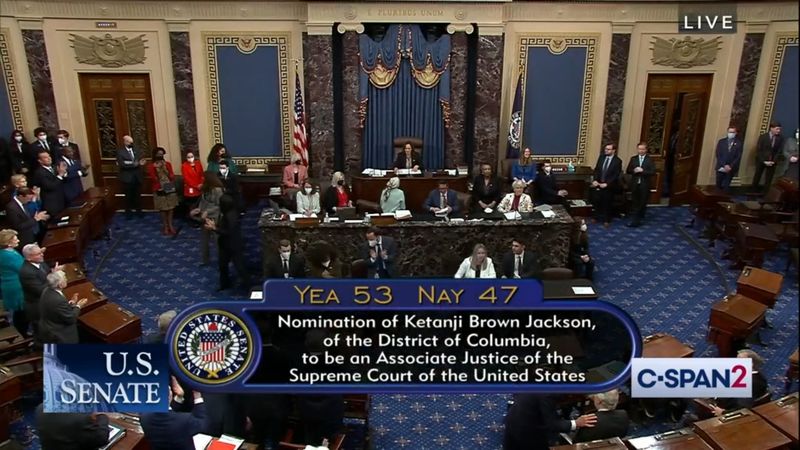
Johnson’s retreat was explicit. His television remark, he told the committee, had been an “imprecise statement,” and “clearly I’m not proposing shutting down Social Security.” To be precise about the record, because the clip will outlive the correction: no, Ron Johnson did not shut down Social Security, and by the afternoon he was insisting he had never proposed to. Bloomberg Government reported that members of both parties at the hearing agreed action on the program is needed while disagreeing sharply on what that action should be, and that Johnson promised Congress would never reduce benefits. The politics around him, meanwhile, have a clock of their own. Johnson is up for reelection in 2028. His Budget Committee chairmanship has about two months to run: Democrats will take the Senate in January by 56 seats to 44 — the majority completed by Mary Peltola’s win in Alaska, which gave Democrats their 56 seats — and with the gavel goes Johnson’s control of the fiscal agenda he is using this report to set.
Johnson’s stated fix: repeal the cut, then face the debt
Johnson’s report does contain a stated solution, and it is worth separating from the television remark, because the two point in opposite directions. The written prescription is: “repeal that portion of the law that reduces Social Security benefits and quit scaring seniors,” and then “roll up our sleeves and begin seriously addressing the main problem — our massive debt and deficits.” The Washington Examiner reports that Johnson has also introduced legislation to prevent benefits from being reduced when the trust fund is depleted — in effect, striking the automatic cut from the statute and letting the difference fall on general revenues and borrowing. That is a consequential policy choice dressed as a reassurance: the $511 billion does not disappear; it moves, from beneficiaries’ checks to the deficit Johnson identifies as the real problem.
Underneath it sits a concession that complicates his own metaphor. “Social Security cannot be fundamentally fixed as a retirement investment fund because it never was one,” Johnson acknowledges — which is precisely the point his critics make about the Ponzi comparison. His blame, in the report, lands on Congress itself across decades: for failing to invest the program’s surpluses in stocks, where they might have compounded, and for repeatedly promising richer benefits even as the ratio of workers paying in to beneficiaries drawing out steadily fell. On that history, at least, there is little daylight between Johnson and the trustees whose numbers he is citing. The argument is over what the history obliges the present to do.
The numbers underneath: Social Security insolvency 2032
Strip away the metaphor and the underlying arithmetic is official, recent and worsening on schedule. The 2026 Social Security Trustees Report, released June 9, 2026, projects that the Old-Age and Survivors Insurance (OASI) trust fund — the fund that pays retirement and survivors’ benefits — will be depleted in the fourth quarter of 2032. That is one quarter earlier than the trustees projected last year: the deadline is not receding as Congress waits; it is advancing. Social Security trust fund depletion 2032 does not mean the money stops. Continuing payroll-tax income at that point would cover about 78 percent of scheduled benefits, which translates, if Congress does nothing, into an automatic, across-the-board cut of roughly 22 percent for every beneficiary — the Social Security benefit cut 22 percent scenario that Johnson’s bill would repeal and that no major figure in either party says they want.
Will Social Security benefits be cut in 2032? What the figures say
So, will Social Security benefits be cut in 2032? Under current law and current projections, yes — automatically, unless Congress acts first, which is the single most important fact in this story. The scale, in household terms, is not abstract. The average retired-worker benefit was about $2,071 a month in January 2026; a 22 percent cut is roughly $455 a month, every month, for the rest of a retiree’s life. The Committee for a Responsible Federal Budget estimates that a typical newly retired couple could lose about $16,900 a year, and that checks could be cut by roughly $500 a month by 2032. Other official estimates are steeper still: the Congressional Budget Office projects a 26 percent cut at depletion, rising to 40 percent by 2100. The combined retirement and disability funds, measured together, reach depletion in 2034, at which point about 83 percent of benefits would be payable; the Disability Insurance fund on its own is projected to remain solvent through 2100. And the baseline against which any cut lands keeps growing: the program paid benefits to about 70 million people in December 2025, spent nearly $1.6 trillion on benefits last year, and has just set the cost-of-living adjustment that will shape next year’s checks — the backdrop to Signal Post News’s coverage of the Social Security COLA increase projected for 2027.
Insolvency is not bankruptcy — and the checks do not go to zero
One distinction matters more than any metaphor in this debate, and readers deserve it stated plainly: insolvency is not bankruptcy. If the OASI fund is depleted in late 2032, Social Security does not end, checks do not stop, and benefits do not fall to zero. Payroll taxes keep arriving with every paycheck in America, and they keep being paid out — at about 78 cents on the scheduled dollar. A Ponzi scheme, when it collapses, pays nothing, because there is nothing: no taxing power, no ongoing revenue, no statute. Social Security in 2032, on the worst official projection, pays more than three-quarters of what it promised, indefinitely, with the shortfall fixable by any combination of revenue and benefit adjustments Congress chooses. That is a serious fiscal problem. It is also a categorically different thing from a fraud collapsing — which is why the word Johnson chose, rather than the date he cited, consumed his own hearing.
Is Social Security a Ponzi scheme? The case against the label
The rebuttal, made by retirement experts and stated most crisply by MarketWatch’s Quentin Fottrell, is that the comparison fails on its defining element: deception. A Ponzi scheme is a fraud. It depends on lying to new investors about where their returns come from, concealing the books, and recruiting each new cohort under false pretences until the inflow can no longer cover the outflow and the operator’s story collapses. Social Security inverts every element of that. It is a law, not a pitch. Its pay-as-you-go structure is printed in statute and explained in an annual trustees’ report that has published the depletion date, in public, for decades — the very document Johnson’s figures come from. Nobody is promised an investment return, nobody’s balance is fabricated, and the shortfall has demographic and structural causes that are measured openly: fewer workers supporting each retiree as the population ages, and a shrinking share of the nation’s payroll subject to the tax, because earnings above the taxable maximum — $184,500 in 2026, rising to $192,300 in 2027 — escape it entirely.
That diagnosis drives the opposing prescription. Democrats’ preferred fix follows directly from it: make high earners pay more, by raising or eliminating the taxable maximum, so that the payroll base grows back toward the share of earnings it once covered. The wider menu debated at the hearing and around it is familiar, because it has been the menu for forty years: raise the payroll-tax rate, raise the cap, raise the full retirement age, means-test benefits for affluent retirees, or fill part of the gap with general-revenue transfers — the last of which is, in substance, what Johnson’s repeal-the-cut bill does by default. Every option imposes its cost on someone identifiable, which is why Congress has spent decades choosing none of them. The hearing, per Bloomberg Government’s account, ended where those hearings usually end: agreement that action is needed, disagreement on everything else, and a chairman’s promise that benefits would never be reduced — a promise that, under current law, only legislation can keep.
How we got here: 1935, 1983 and the ‘lock box’
The structure Johnson calls a scam is the structure Franklin Roosevelt’s designers chose deliberately in 1935: a social insurance system in which each generation of workers funds the retirement of the generation before it, on the political theory that a program everyone pays into and everyone draws from would prove indestructible. For its first decades the arithmetic was easy — many workers, few beneficiaries, short retirements. The last great repair, the 1983 reforms, raised taxes and the retirement age and deliberately built up surpluses meant to pre-fund the baby boomers’ retirement. Those surpluses were real, and they were also, by law, invested in special Treasury securities — which is to say, lent to the rest of the federal government and spent as general revenue. That single mechanism is the seed of both sides of this week’s argument. To Johnson, it is the proof of the deception: the “savings” were spent, and the trust fund holds IOUs from a government already deep in debt. To defenders, it is ordinary public finance: the securities are backed by the full faith and credit of the United States, like every Treasury bond held by every pension fund on earth. The “lock box” debate of the 2000 presidential campaign was this same argument, a quarter-century early. What has changed is the calendar. The 2032 depletion date now falls within the Senate terms of the senators elected this month — which is why a lame-duck session, of all moments, is having this fight: for the first time, the people voting cannot assume the deadline belongs to somebody else’s Congress.
Why this matters
It would be a mistake to file Wednesday under rhetoric. Johnson’s words matter for three concrete reasons. First, agenda power: for about two more months, the Senate Budget Committee’s chairman decides which fiscal questions the Senate formally takes up, and he has used that power to frame Social Security not as a benefit to be balanced but as a deception to be exposed — a framing that shifts what an eventual compromise is even allowed to look like. Second, the audience for the “enraged” appeal is the cohort with the most at stake in the design of any fix: workers now in their twenties and thirties, who will pay for the 2032 gap in some combination of higher taxes, later retirement or reduced benefits, and whose support for the program’s basic structure cannot be taken for granted if its own budget chairman describes it as a fraud. Third, the walk-back itself is information. A chairman who says “shut it down” in the morning and “imprecise statement” in the afternoon has mapped, in a single day, the exact distance between the argument his party’s fiscal wing wants to have and the one it can survive having in public — with a midterm-fresh Democratic majority about to take the chamber and a 2028 reelection ahead of him.
There is also a quieter stakes question, and it belongs to the 70 million people already receiving benefits. Every “collapse” headline lands in households that budget by the month, and the history of past depletion scares is that frightened near-retirees make frightened decisions. The trustees’ projection is a reason for Congress to legislate in the next six years. It is not a reason for any individual to panic this week — a point the final section returns to, because it is the most practically important one in this article.
What happens next
Three paths lead out of the lame-duck session, and they are not equally likely. The first is Johnson’s own: a bill repealing the automatic benefit reduction before it can ever take effect, converting a scheduled cut into general-revenue cost. It is the only proposal on the table this week with an author, and it answers the scariest headline — but it does so by adding the $511 billion, and its successors, to the debt its author calls the main problem. The second is process: a bipartisan fiscal commission charged with producing a package Congress must vote up or down — an idea House Republicans were already road-testing this autumn in the push Signal Post News covered as the House Republicans’ Social Security fiscal commission plan aired in Dallas. Commissions exist to share blame, and blame-sharing is what every real fix requires. The third path is the historical default: nothing — another Congress deferring the choice, on the well-founded calculation that acting early is punished and acting late is forgiven. Its cost is written into the trustees’ tables: every year of delay makes the eventual adjustment larger, because the fixes work by compounding small changes over long periods, and 2032 is no longer a long period.
For readers, the actionable guidance is narrower and, this week, more valuable than the politics. Do not panic-claim. Filing for benefits at 62, years early, out of fear of the 2032 cut locks in a permanent reduction of roughly 30 percent — larger than the projected 22 percent cut, certain rather than projected, and irreversible in a way the trustees’ scenario is not, since Congress has never yet allowed an across-the-board cut to take effect and both parties’ leaders spent Wednesday promising it never will. The deadline is real, the shortfall is real, and the chairman’s metaphor will echo into January, when a new majority inherits both. But the checks, on every official projection, keep coming — and the fight that decides their size is just beginning.
Related coverage
Social Security COLA Increase for 2027: What the Projection Means for Next Year’s Checks
House Republicans Float a Social Security Fiscal Commission in Dallas
Mary Peltola Wins Alaska Senate Race as Democrats Reach 56 Seats
Sources
- Fox News, November 2026 — reporting on Johnson’s self-written report, “Social Security: The Reality… a Legal Ponzi Scheme,” first obtained by Fox News Digital: the “that’s my money” argument, the $511 billion 2032 shortfall projection and its share of the projected $2.4 trillion deficit, and the “liquidated” warning (foxnews.com).
- Washington Examiner, November 18, 2026 — coverage of the criticism of Johnson’s “no way to fix Social Security” remarks, the hearing exchanges, and his legislation to prevent benefits being reduced when the trust fund is depleted (washingtonexaminer.com).
- Morningstar / MarketWatch, November 18, 2026 — “Social Security should be shut down, this Republican senator says”: the Fox Business remarks and the immediate reaction (morningstar.com).
- Morningstar / MarketWatch, November 18, 2026 — Quentin Fottrell, “Is Social Security a Ponzi scheme? No — but fear is fueling such talk”: the expert case against the Ponzi comparison and the program’s demographic and taxable-payroll drivers (morningstar.com).
- 2026 Social Security Trustees Report, released June 9, 2026, and Congressional Budget Office and Committee for a Responsible Federal Budget estimates, as reported in the coverage above: OASI depletion in the fourth quarter of 2032, about 78 percent of scheduled benefits payable from continuing payroll taxes, the combined-funds 2034 date, Disability Insurance solvency through 2100, roughly 70 million beneficiaries in December 2025, nearly $1.6 trillion in benefits last year, and the average retired-worker benefit of about $2,071 in January 2026. Photographs: Sen. Ron Johnson official portrait, 117th Congress — U.S. Senate via Wikimedia Commons; a U.S. Social Security card (specimen) — Getty Images via Forbes (file photo); the U.S. Senate chamber during a vote, April 2022 — U.S. Senate via Wikimedia Commons (file photo). All credited in place.