The MLB lockout salary cap fight stopped being a bargaining rumour on Wednesday and became a stated condition. Commissioner Rob Manfred, speaking on the second day of the owners’ meetings in New York, said the owners will not agree to a new collective bargaining agreement with the players’ union that does not replace baseball’s economic system with a salary cap and a salary floor. The union’s answer, delivered within hours, was that a cap remains a nonstarter. The current agreement expires at 11:59 p.m. ET on December 1. What follows is what was actually said, what the league is actually proposing, what the union says it would do to players, and what a December lockout would mean for the 2027 season.
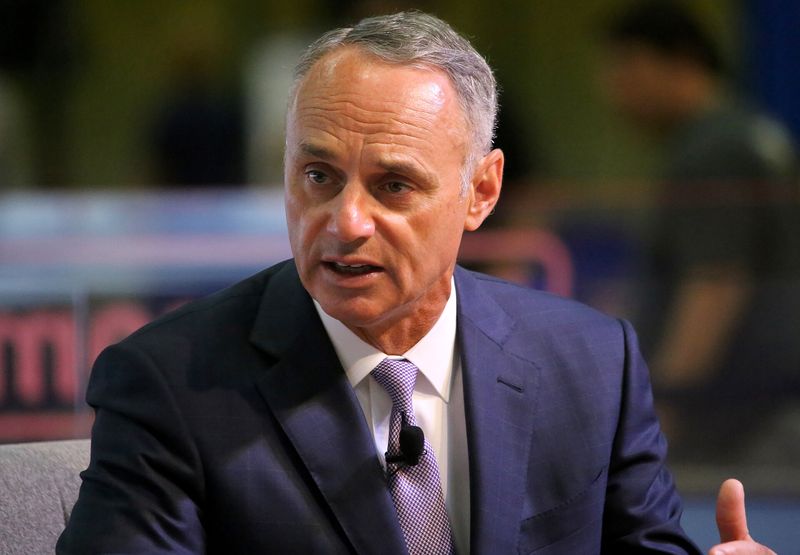
November 18, 2026 — The MLB lockout salary cap confrontation that has been building since the league first tabled its economic proposal in May moved into the open on Wednesday, when Commissioner Rob Manfred used the second day of the owners’ meetings in New York — a day described as devoted almost exclusively to labour — to draw the line the owners intend to hold. Manfred said the owners will not agree to a collective bargaining agreement with the Major League Baseball Players Association that does not overhaul the sport’s economic framework with a salary cap and a salary floor. It was not framed as an opening position or a preference. It was framed as a condition of ratification.
“There’s plenty of room for compromise,” Manfred said. “But there’s one thing I will not compromise, and that’s the issue that we’re hearing from the vast majority of our fans: They want salary cap and floor, and on that, we will not compromise.” He added: “I can’t imagine the owners ratifying a deal that does not include a cap and floor.” And when he was asked about the union’s position — that a salary cap has been a nonstarter since the league put its proposal forward in May — he turned the word back on the players’ side: “Another word for ‘nonstarter’ over months is a refusal to bargain.”
A line drawn in public, two weeks before the deadline
Commissioners choose their words at owners’ meetings carefully, and the setting matters. Manfred was not responding to a leak or a hypothetical; he was addressing reporters with the owners assembled behind him, on a day given over almost entirely to the labour question, a fortnight before the current basic agreement expires. The public character of the statement is part of its function. By saying, on the record, that he cannot imagine the owners ratifying any deal without a cap and floor, Manfred has narrowed his own side’s room to retreat: any eventual settlement that keeps the present system would now require the commissioner to explain a reversal, not merely a compromise. That is a deliberate commitment device, and the union will read it as one.
It is also, on its face, a claim about fans. Manfred grounded the owners’ position not in club finances but in what he described as the demand of “the vast majority of our fans” for a cap and floor, and he returned to the polling behind that claim more than once. The league’s argument, in other words, is being made over the heads of the bargaining table as much as across it — to the public whose tolerance will decide how costly a winter shutdown feels to each side. The union’s response, set out below, was aimed at exactly the same audience, and it disputed both the owners’ motives and their arithmetic.
The proposal, by the numbers
The league’s proposal, presented to the media by executive vice president Morgan Sword alongside Manfred’s remarks, would replace the current luxury-tax system with a hard cap and a hard floor on club spending, phased in over the next two seasons. Its headline figures, and the questions they raise, are these.
A $258.2 million cap and a $180.2 million floor, from 2028
Under the proposal, spending on 40-man roster payrolls and benefits would be capped at $258.2 million and floored at $180.2 million, with the new structure taking effect in the 2028 season; the current system would continue through 2027. The transition contains a concession to clubs at the bottom: in 2028 a team could carry a payroll as low as 90 per cent of the floor — $162.18 million — provided it spends the full floor amount across a three-year period. Even with that flexibility, the floor would represent a large, mandated increase in spending for the lowest-payroll clubs, and the cap a large, mandated decrease for the highest. Five teams, on the league’s own reckoning as reported, would have been over the proposed $258.2 million cap in 2026.
Contract limits, and the end of the Soto contract
The proposal reaches beyond team payrolls to individual deals. USA TODAY reports that the league has proposed capping individual contracts, including a five-year limit on free-agent contracts. Combined with a hard team cap, that would make contracts on the scale of Juan Soto’s 15-year, $765 million deal with the New York Mets structurally impossible — not merely expensive, but prohibited in both length and, in practical effect, total value. For the union, that is the point on which the argument about “fundamental rights” turns: guaranteed, long-term contracts are the mechanism by which star players convert a short earning window into lifetime security, and a system that caps both the team total and the individual term attacks that mechanism from both ends.
The 50-50 revenue split the two sides count differently
MLB says its plan includes a 50-50 split of revenue with the players. The union disputes that the league’s figures produce anything of the kind. On the players’ account, the league’s definitions of revenue and expenses exclude roughly $400 million in amateur signing bonuses, and the system as proposed would immediately cut overall player compensation. Both claims cannot be assessed from the headline numbers alone, because they rest on definitions — what counts as revenue, what counts as a baseball cost — that are themselves part of the negotiation. Readers should treat “50-50” as a contested description of the proposal, not an agreed fact about it.
Media money, blackouts and the owners’ structural case
Manfred’s structural argument is that a cap-and-floor system is the best route to sharing local media revenue equally among the 30 clubs and to ending local blackouts, at a moment when regional sports network revenue — for years the financial engine of mid- and small-market clubs — is collapsing. On that telling, the cap is not primarily about suppressing salaries; it is the precondition for pooling the local media money that currently separates the richest clubs from the rest. The union’s answer is that blackouts are a problem of the league’s own making, embedded in rights deals MLB chose to sign, and that the league can fix them without a cap. That dispute is genuine and separable from the salary question: how local media revenue is shared is a problem the sport has to solve under any economic system, and each side is using it as leverage for the system it prefers.
The polling, and the push-poll critique
The league’s public case leans heavily on fan polling. Manfred cited a Morning Consult poll from November 2025 in which 79 per cent of avid MLB fans and 69 per cent of casual fans supported a salary cap system, and he framed the owners’ stance as a refusal to tell roughly 70 per cent of fans that they are wrong. That framing deserves a fair hearing and a fair caveat. The hearing: fan frustration with payroll disparity is real, longstanding and easy to find in any ballpark in a small market. The caveat, as USA TODAY characterised the league’s internal data push, is that a campaign built around selected polling can amount to a political push poll — an exercise in manufacturing the appearance of a mandate rather than measuring one. Polling that asks fans whether they would like competitive balance, without asking whether they would accept a lost season to get it, measures the easy half of the question. Both things can be true at once: the sentiment is genuine, and its use this week is tactical.
Will there be an MLB lockout?
On the evidence of Wednesday, yes — unless the sides find, in the next thirteen days, a basis for negotiation that neither has yet described. The owners are expected to impose a lockout when the current agreement lapses. A lockout is the owners’ instrument, distinct from a strike: it is initiated by the clubs, it freezes the business of the sport, and it can be lifted when a deal is reached. Manfred declined to pre-commit to the timing. “A decision on a lockout is one that we’re going to make at the last possible moment,” he said, adding: “I’m not that big on Thanksgiving as a holiday. We’ll make ourselves available whenever and wherever to bargain.” The sides are expected to meet around the union’s annual meetings in Arizona at the end of November.
When does the MLB lockout start?
The current collective bargaining agreement expires at 11:59 p.m. ET on December 1, 2026. A lockout imposed on its expiry would begin on December 2. It would be Major League Baseball’s tenth work stoppage since 1972. From the moment it begins, all contact between clubs and players on 40-man rosters would cease, as would all trades and free-agent signings, and players would be barred from team facilities. The off-season would stop mid-stream — which is itself a form of pressure, since the winter is when rosters, and players’ next contracts, are made.
The union’s answer: a cap is a pay cut with a new name
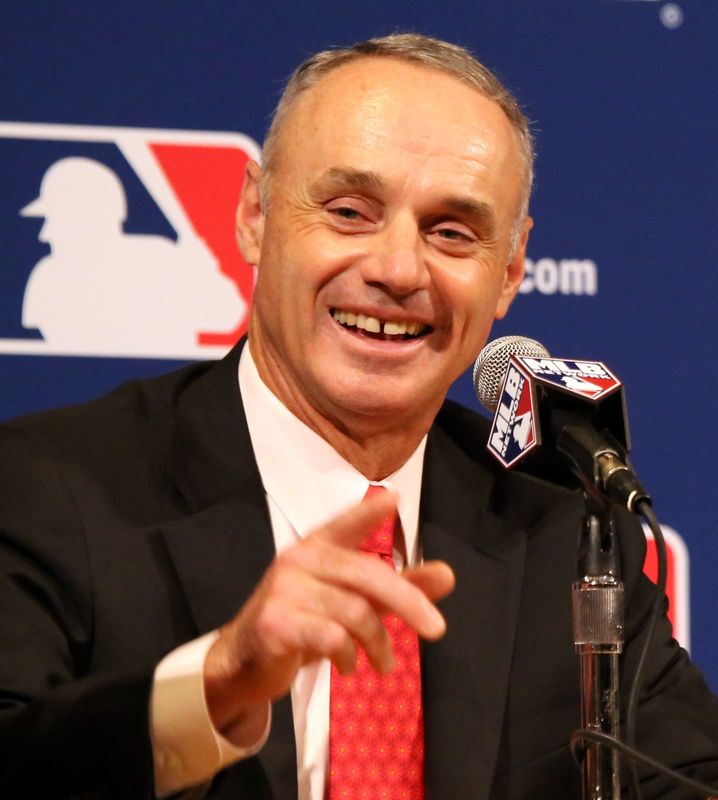
The Major League Baseball Players Association responded through its interim executive director, Bruce Meyer, who restated the position the union has held since May: a salary cap is a “nonstarter.” In a statement issued after Manfred’s news conference, Meyer said: “There can be no clearer example of the league’s lack of seriousness than their insistence that they will not negotiate over the economics outside of a radical change to the system that would dramatically reduce overall player compensation for all categories of players and strip fundamental rights from players like the ability to have truly guaranteed contracts.”
He went on to attribute the owners’ position directly to profit: “There should be no illusions about the owners’ true motivation in pushing for this system. They want to make more money in profits and franchise values by artificially suppressing player salaries.” The two statements, read together, define the argument the public will hear all winter. The league says the issue is competitive balance and what fans want. The union says the issue is a transfer — of money, from the players who generate the product to the owners whose franchise values a cost-controlled system would inflate. Note that these are not, strictly, contradictory claims. A cap could improve the distribution of spending between clubs and simultaneously reduce the players’ aggregate share. Much of the coming fight will consist of each side answering the other’s strongest point with its own, rather than engaging it.
The stakes, in current numbers, show why neither side treats this as an ordinary round. The present system’s luxury-tax threshold sits at $244 million, and the Los Angeles Dodgers’ 2026 luxury-tax payroll was about $397 million — roughly $139 million above the proposed cap. A hard cap at $258.2 million would not trim the top of the sport; it would restructure it, forcing the biggest spenders to shed tens of millions in commitments while forcing the smallest spenders to add comparable sums. Major League Baseball is, as both sides note for opposite reasons, the only major North American professional league without a salary cap. The owners present that as an anomaly to be corrected. The players present it as the last system in which their compensation is set by a market rather than by a formula their employers control.
Why this matters
Start with what a cap-and-floor system actually is, because the vocabulary conceals the mechanics. A hard cap does not merely limit the richest clubs; it converts player compensation from a competitive market into an administered share of revenue. Once total spending is fixed by formula, every dollar one player gains is a dollar another loses, and the negotiation that matters shifts from club-versus-player to player-versus-player. That is why unions in capped leagues bargain so fiercely over the definition of revenue and the percentage split — and why the dispute here over roughly $400 million in amateur signing bonuses and the meaning of “50-50” is not an accounting footnote. It is the whole ballgame, conducted in definitions.
The floor deserves equal attention, because it is the part of the proposal aimed at fans of low-spending clubs, and it is not nothing. A mandated $180.2 million floor, even with the 90-per-cent transition allowance, would end the era in which a club can field a roster for a fraction of the sport’s going rate while collecting shared revenue. If the owners’ case has a strongest plank, it is this one: a system in which some clubs do not try is a genuine competitive problem, and the current luxury-tax regime has plainly failed to solve it. The union’s counter is not a defence of cheap owners; it is that a floor can be negotiated without a cap, and that pairing the two is a choice — the floor is the popular half of a package whose other half does the financial work for ownership.
Then there is the question of who bears the risk of a shutdown. A December lockout costs players nothing immediately in salary — they are not paid in December under any system — but it freezes their market at the moment many of them are seeking contracts, and it starts a clock whose pressure builds toward spring. Owners, for their part, hold appreciating assets and can wait longer in any given winter, but a fight that reaches the regular season damages the product both sides sell. Manfred pointed to his own record on Wednesday: five collective bargaining negotiations without missed games. That record is the best evidence for an eventual settlement, and both sides know it — which is precisely why each is investing now in the public argument about who would be to blame if the record breaks. Our coverage of this autumn’s World Series — the Milwaukee Brewers’ first title, sealed against the Tampa Bay Rays — and of the walk-off that swung that series sits at the centre of the argument each side is about to make, as the next section explains.
The history both sides are carrying into the room
The last time the owners formally proposed a salary cap, the result was the defining catastrophe of the modern labour era. In 1994 the players struck for more than seven months — 232 days — and the World Series was cancelled for the first time in 90 years. Manfred was there: a junior lawyer on the owners’ bargaining team, in ESPN’s account; outside counsel to the owners, in USA TODAY’s. No one in the current negotiation has a longer personal memory of what a cap fight costs, and it is worth holding two readings of that fact together. It may make the commissioner cautious, determined not to repeat 1994. Or it may make him confident that he understands exactly how much pain each side can absorb. The record since supports the cautious reading: no regular-season games have been lost to a work stoppage since 1995, and the most recent confrontation, the owners’ 99-day lockout of 2021-22, delayed the start of the 2022 season without consuming any of it.
This autumn’s World Series will be cited by both sides, honestly and incompletely, all winter. The Milwaukee Brewers — by market size, the smallest club in the sport — beat the Tampa Bay Rays, themselves a perennial low-payroll contender. The owners’ reading writes itself: if the smallest market in baseball can win the World Series under the current system, the system cannot be as broken as the union’s defenders claim, and a cap is about predictability rather than survival. The players’ reading is the mirror image: if Milwaukee and Tampa Bay can reach the World Series without a cap, then the competitive-balance emergency used to justify the most radical economic change in a generation does not exist. Analysis, honestly offered: a single October proves little either way. Small-market clubs reaching the Series has never been impossible; the structural question is about the distribution of chances across decades, the cost of contention, and whether the same handful of payroll giants begin every season with a margin for error no one else can buy. One Fall Classic, however joyful, settles none of that — and readers should be suspicious of anyone on either side who says it settles everything.
What happens next: three scenarios for the winter
The short lockout. The precedent is 2021-22: a 99-day shutdown, acrimonious throughout, that nevertheless ended in time to play a full season. A version of that path here would see the December lockout used as a focusing device, the Arizona meetings and a January bargaining grind producing either a modified cap system with a higher ceiling and softer mechanics, or a strengthened tax-and-floor arrangement both sides can describe as victory. This remains, on Manfred’s no-missed-games record, the single most likely outcome — but Wednesday’s language was chosen to make retreat expensive, and the union’s was chosen to match.
The long fight. If neither side moves, the calendar becomes the story. Spring training would be delayed first; then the regular season itself comes into view, with Opening Day scheduled for March 25, 2027, and an early game on March 24. Every week of February without a deal converts a labour dispute into a consumer story, and history — 1994 above all — says the public’s sympathy is a wasting asset for both parties. A fight that threatens games would also test the owners’ unity: clubs that have just committed to $397 million payrolls and clubs that cannot reach a $180 million floor do not have identical interests, and a long winter exposes that.
The game after the deal. Whenever a settlement comes, its shape will govern a decade. A cap with contract limits would remake free agency: shorter deals, value concentrated in a player’s twenties, and the Soto contract standing permanently as the high-water mark of the uncapped era. A floor without a cap would instead push money toward the bottom of the market and the middle of rosters. And either way, franchise values — the figure Meyer named as the owners’ true motive — will be repriced by cost certainty, which is why sophisticated observers on both sides treat this negotiation as a transaction about the value of the 30 clubs as much as about next season’s payrolls. For how the wider business of sport and media is moving underneath this fight, see our market coverage from November 17.
For now, the facts are narrower than the rhetoric. A commissioner has said, in public, that there is one thing he will not compromise. A union has answered, in public, that the thing itself is a nonstarter. The agreement that governs the sport expires at 11:59 p.m. ET on December 1, and the next scheduled encounter between the two positions is in Arizona at the end of the month. Everything else — the cap, the floor, the season — waits on whether “will not compromise” and “nonstarter” turn out to be opening bids or final words.
Sources
Sources: ESPN, November 18, 2026, Jorge Castillo — “Rob Manfred says MLB owners won’t compromise on salary cap” (espn.ph): Manfred’s statements at the owners’ meetings in New York, including the “will not compromise,” ratification and “refusal to bargain” remarks; the owners’ meetings’ labour focus; Manfred’s role as a junior lawyer on the owners’ bargaining team in 1994 and his record of five CBA negotiations without missed games. USA TODAY, November 18, 2026 (usatoday.com): the proposal’s cap of $258.2 million and floor of $180.2 million on 40-man roster payrolls and benefits from 2028, the 90-per-cent transition allowance and three-year spending requirement, the proposed limits on individual and free-agent contracts, the disputed 50-50 revenue split and the roughly $400 million in amateur signing bonuses, Morgan Sword’s presentation, the Morning Consult polling figures, the push-poll characterisation, Bruce Meyer’s statements for the MLBPA, the five teams over the proposed cap in 2026, the $244 million luxury-tax threshold and the Dodgers’ roughly $397 million luxury-tax payroll, the December 1 expiry and expected December 2 lockout mechanics, and the March 2027 Opening Day dates. New York Post / Associated Press, November 18, 2026 (nypost.com): corroborating reporting of Manfred’s news conference and the lockout outlook. Internal links are to Signal Post News coverage verified in this site’s archive on November 18, 2026.