US / A single shot on the upper level of the world's busiest bridge, in the tail of the Tuesday evening rush, killed a Con Edison worker driving home to his wife and two children. On Wednesday, the man police say fired it — a retired NYPD detective once called a hero for surviving a Brooklyn gun battle — surrendered and was charged with murder.
The George Washington Bridge shooting ended two homeward journeys that began, by cruel coincidence, just a few miles apart. Victor Romero, 62, of Haverstraw, was arrested on Wednesday and charged with murder in the death of Koran Irvine, 46, of Valley Cottage — a Con Edison employee and father of two who was found unconscious in the driver's seat of his car on the New Jersey-bound upper level of the bridge shortly after 7 p.m. on Tuesday, October 20, with a gunshot wound to the rear of his right shoulder. Irvine was taken to Englewood Hospital in New Jersey, where he was pronounced dead. Police say the killing appears to have grown out of a road-rage encounter between two Rockland County commuters heading home in the same direction, on the same span, at the end of the same working day.
What happened on the bridge on Tuesday night
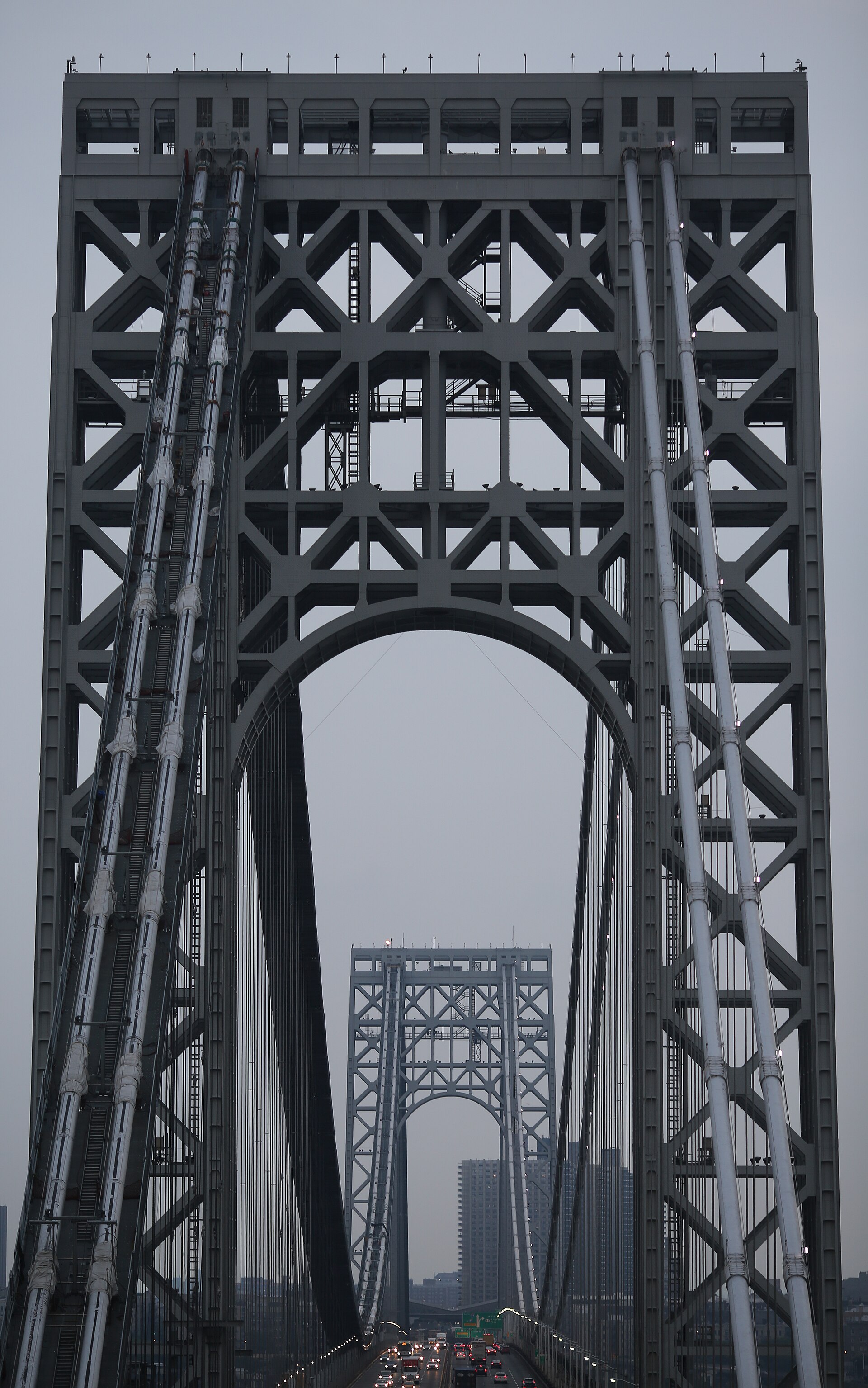
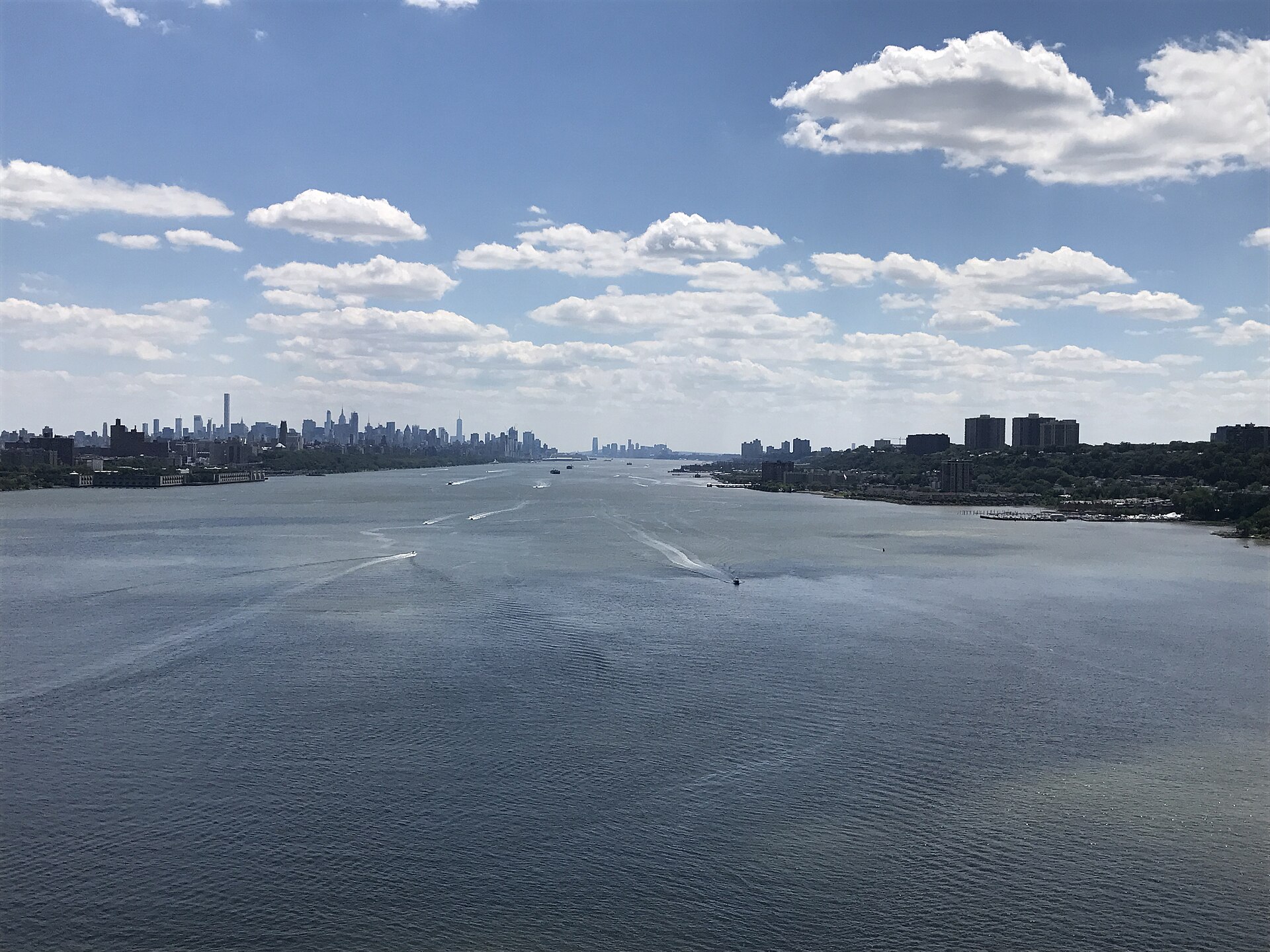
The George Washington Bridge at 7 p.m. on a weekday is not so much a road as a river of brake lights — fourteen lanes across two decks carrying commuters out of Manhattan toward New Jersey and, beyond it, the suburbs of Rockland County. Shortly after 7 p.m. on Tuesday, the NYPD received a 911 call reporting a man shot on the outbound, upper-level roadway, the department told People. Officers found Irvine unconscious and unresponsive in the driver's seat of his vehicle. He had been shot in the rear of the right shoulder. The New York Post, citing law-enforcement sources, reported that the shooting happened at about 7:15 p.m. and that investigators believe a single shot was fired: it pierced the car's back window, grazed a headrest, entered Irvine's right shoulder and exited the left side of his neck. His car rolled into the median and stopped, around midspan by the Journal News's account, while the other vehicle drove away.
What set the encounter off is still, officially, a matter for investigators. The NYPD told People that the shooting "appears to be" connected to a road-rage incident, but that this would "be determined by investigators." The Journal News, citing published reports, wrote that Irvine's Volkswagen Golf may have cut off Romero's car on the ramp from the Henry Hudson Parkway up to the bridge's upper level, minutes before the shot. The Post's sources described footage reviewed by investigators that shows Irvine's car suddenly jerking as the other vehicle pulled up alongside its rear passenger side — likely, they said, the moment of the shooting. None of that sequence has been confirmed in a public charging document, and it should be read for what it is: the preliminary reconstruction of detectives working from the bridge's dense camera coverage, not yet tested in court.
The human consequences arrived faster than the facts. Irvine was rushed across the river to Englewood Hospital and Medical Center, where he died. The shooting, near the end of the evening rush, snarled traffic for hours on the Hudson River span between Manhattan and Fort Lee, New Jersey; the Port Authority of New York and New Jersey, which operates the bridge, said the closed lanes reopened about five hours later.
The arrest: a surrender, a sealed home, a gun handed over
By Wednesday, the search had a name. Police identified the suspect as Victor Romero, 62, of Haverstraw, and he surrendered to New York City police — the Journal News reported he turned himself in at the 33rd Precinct in Upper Manhattan — and was charged with murder; the Journal News specified second-degree murder. He was awaiting arraignment on Wednesday night, the NYPD said. A telephone number listed for Romero in public records rang unanswered, the Associated Press reported, and information on a lawyer who could speak for him was not immediately available.
The Post, citing sources, reported that Romero admitted to investigators that he was the shooter and handed over the gun, that his Haverstraw home was sealed on Wednesday evening while investigators awaited a search warrant, and that his car was in NYPD custody. Those details come from the Post's sourcing and have not been confirmed on the record by the department; they are the kind of facts that will either harden into the prosecution's narrative at arraignment or be contested by a defence lawyer who, as of Wednesday night, had not yet publicly appeared in the case. What is not in dispute is the outline: a retired detective, off the force for a quarter of a century, walked into a precinct and was booked for murdering a stranger on a bridge.
The man who died: Koran Irvine
Koran Irvine was 46, a Con Edison employee — off duty at the time, the Journal News reported — and a married father of two from Valley Cottage, in the same Rockland County commuter belt as the man accused of killing him; their homes are 7.5 miles apart. Con Edison confirmed his employment and, in a statement carried by the AP and PIX 11, called the shooting a "senseless act of violence": "We are heartbroken by the tragic loss of a member of the Con Edison family in this senseless act of violence. Our deepest condolences go out to his family, friends, colleagues, and everyone who knew and loved him."
The portrait from his family is of a man whose life was pointed entirely at home. He was married to Patricia; their children are Lea and Hiro. A GoFundMe appeal for the family — which had raised nearly $110,000 by 9 p.m. on Wednesday, according to the Journal News — remembered "Koran's jokes, his infectious smile, his laughter, and his zest for life," and described "a man full of life, love and dedication to the people who meant the most to him." A cousin told the Post that Irvine "lived his life 100% for his family," that he was a "jokester" who "just always wanted to make people laugh and feel good" — and, in the detail that makes the loss feel specific rather than statistical, that the only thing he loved nearly as much as his family was the Jets. "I am in disbelief at this point in time," the cousin said.
Rockland County Executive Ed Day captured the disbelief in official language. The community, he said, is saddened by the loss of life: "If the reports are accurate, it is unthinkable that such a senseless act could stem from something as trivial as roadway frustration. No destination, delay, or inconvenience is ever worth more than a human life."
A hero in 2000, a defendant in 2026
The reason this case will be followed far beyond Rockland County is the biography of the accused. Romero retired from the NYPD in 2001, after roughly six years as a Brooklyn narcotics detective — and, more precisely, about a year after the night that made his reputation. In June 2000, off duty at his family's Brooklyn laundromat — King's Laundromat on Kings Highway in East Flatbush, in the Post's account — he confronted armed robbers who had burst in. One, as the Post reported at the time, snarled: "Give us all the money or we'll blow your heads off!" Romero at first said he would comply and begged the men not to shoot; when one of them shoved a gun into a customer's cheek, Romero opened fire with his service weapon. In the melee he was shot in the hand and chest, and he wounded two of the suspects. "He's lucky to be alive. That bullet could have easily ripped through his heart," an officer at the scene said at the time. "He's a true hero — he prevented a potential bloodbath." Romero retired the following year, in late July 2001, a result of the wounds from that gun battle.
Twenty-five years later, the same man stands accused of the opposite act: not interposing himself between gunmen and strangers, but — police say — firing into a stranger's car over a traffic grievance. That arc is not evidence, and it decides nothing about guilt or innocence, which a court has yet to address. But it explains the shock running through the early coverage, and it will frame every hearing to come: the department that once decorated his survival now processes his surrender, and the legal question before the court is narrow and terrible — what happened between two cars on a bridge ramp on Tuesday night, and whether a single shot was fired in anger at a man whose only connection to the shooter was a lane of traffic.
Why this matters
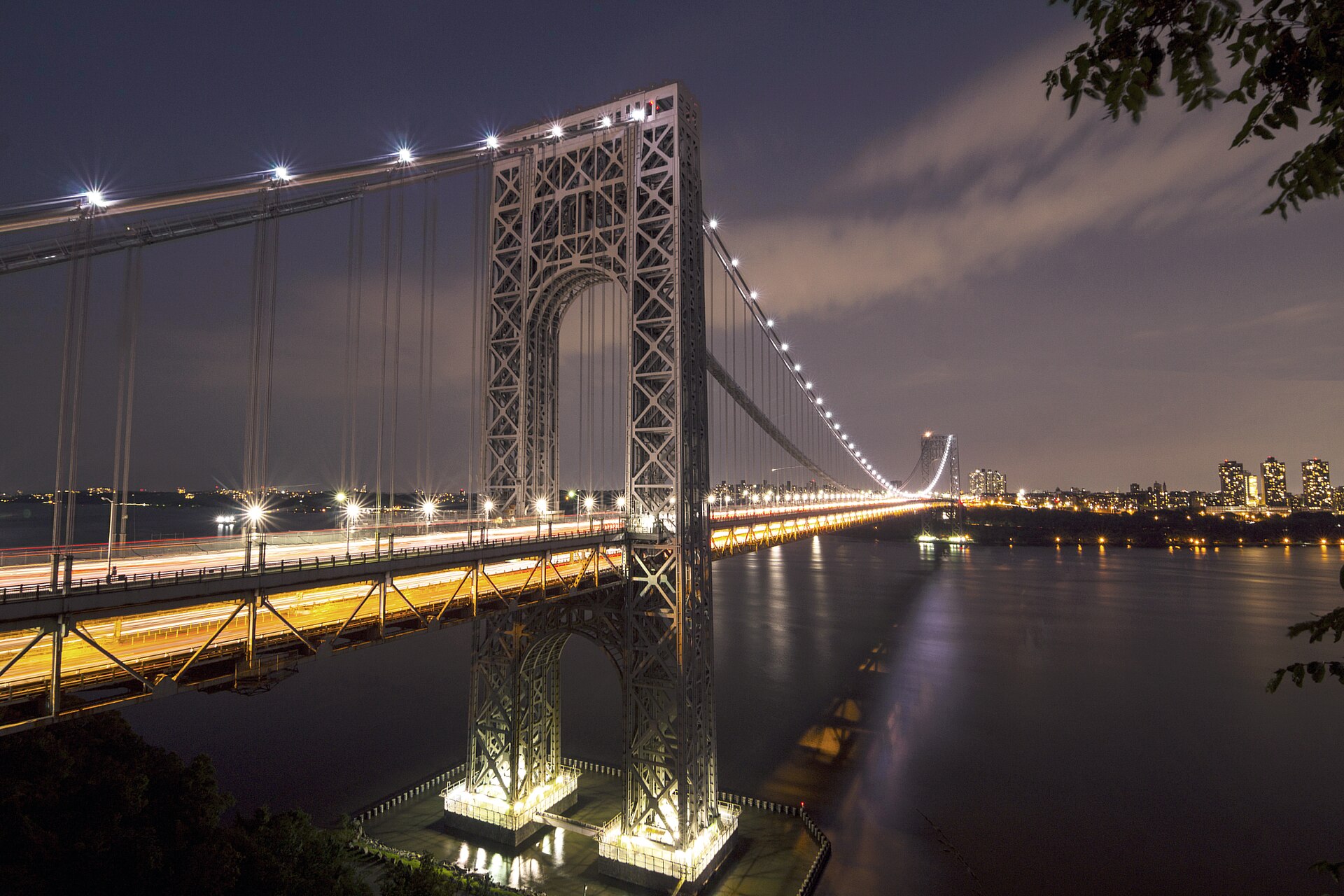
Road rage occupies a peculiar place in American public safety: everyone has witnessed it, almost no one expects it to end in gunfire, and yet the ingredients — congestion, anonymity, grievance, and a firearm within reach — combine with grim regularity. This case concentrates every one of those ingredients on the single most concentrated piece of road in the country. The George Washington Bridge, opened in 1931, is the world's busiest motor-vehicle bridge, carrying around 100 million vehicles a year, according to the Port Authority. Its approaches are, as the AP drily noted, "difficult to navigate, as drivers often veer across packed lanes, causing heavy traffic even under normal circumstances." A cut-off at the Henry Hudson Parkway ramp is, on that span, an hourly occurrence multiplied by thousands. What turned this one into a homicide charge is the question the prosecution will have to answer with the bridge's own cameras — and the answer will matter beyond this defendant, because it speaks to how thin the membrane is between the everyday friction of the commute and irreversible violence.
There is a second, quieter significance. The accused is not a career criminal but a retired detective who once took bullets protecting customers in his family's shop. Cases like this unsettle the easy categories — the assumption that training and a law-enforcement past immunise a person against the worst version of a bad moment, and the equally easy assumption that a violent charge erases a brave one. Both things can be true of the same life: the heroism of 2000, which is documented, and the allegation of 2026, which is not yet proven. A justice system that works will hold both facts at once — honouring neither as an excuse nor treating the earlier act as irrelevant colour — and will decide this case on Tuesday's evidence alone. Irvine's family, meanwhile, does not get the luxury of abstraction: a husband and father drove home from work and did not arrive, and nearly $110,000 in small donations by Wednesday night is the measure of how many strangers understood that instantly.
What happens next
Romero was awaiting arraignment on Wednesday night, the first formal step at which the charge, the prosecution's initial account and any bail argument become public record. From there, the case will turn on evidence that is unusually concrete for a road-rage killing: the bridge and its entrances are, in the AP's phrase, "teeming with cameras," investigators have already reviewed footage of the moments around the shot, and the alleged weapon is — if the Post's sourcing holds — already in police hands. The defence, once a lawyer appears, will have its own account to offer; nothing Romero is reported to have told investigators has been heard in open court, and he is entitled to the presumption of innocence that attaches to every defendant, decorated past or not.
For the Irvine family, the calendar is different and crueller: a funeral to plan, two children to raise on the contents of a fundraiser, and a trial measured in months or years. For the hundred million drivers who will cross that bridge this year, the story lands as a warning that needs no embellishment — the next cut-off is coming at the next ramp, and the only decision that matters is the boring one. Let it go, and drive home.
Sources: Associated Press; New York Post; People (NYPD statement); Rockland/Westchester Journal News. Related coverage: Two charged with murder in Delaware State homecoming shooting; Capitol Hill shooting coverage.