plague incubation period

The plague incubation period is the single most important number in the Siberia outbreak right now. After a 28-year-old laboratory worker died of suspected plague at the Irkutsk Anti-Plague Institute, Russian health authorities placed roughly 200 of her contacts under medical observation. None of them is sick — yet. The question hanging over every one of them is the same: how long after exposure to plague do symptoms appear?
The answer depends on which form of the disease you're talking about, and the range is startlingly wide. Bubonic plague — the flea-bite form — typically declares itself in 2 to 6 days. Pneumonic plague — the lung form, the one that spreads between people — can strike in as little as 1 to 3 days, among the shortest incubation periods of any serious infectious disease. Septicemic plague falls somewhere in between. The World Health Organization summarizes the whole range as 1 to 7 days, and that single span is why health authorities worldwide use a 7-day monitoring window for plague contacts.
This guide breaks down the plague incubation period by type, explains why the same bacterium moves at different speeds, walks through exactly what happens during the waiting period, and applies the math to the 200 people currently under observation in Irkutsk — including when they can be told they're in the clear.
What "incubation period" actually means
Before the numbers, the concept. The incubation period is the time between the moment a pathogen enters your body and the moment you feel the first symptom. It is not the time you're contagious, and it is not the time you're sick — it's the silent phase, when the bacteria are multiplying but your body hasn't mounted a response you can feel yet.
During the plague incubation period, an exposed person feels completely normal. No fever, no pain, no warning. That silence is precisely what makes the interval so important for public health: the people under observation in Siberia right now feel fine, and most of them will stay fine. But the medical teams watching them can't know that on day one. They have to wait out the full incubation window — the maximum time the disease could plausibly take to show itself — before declaring anyone clear.
Two related terms get confused with incubation, so let's separate them. The latent period is the time from exposure until a person becomes infectious to others — relevant mainly for pneumonic plague, where a patient becomes contagious once symptoms (especially cough) begin. The observation or monitoring period is the public-health response: the span during which contacts are watched, which is deliberately set a little longer than the longest plausible incubation period as a safety margin. When you hear "7-day monitoring," that's the observation period, built on top of the 1-to-7-day incubation range.
Bubonic plague: 2 to 6 days from flea bite to bubo
Bubonic plague is the classic form — the one behind the Black Death — and it has the most studied incubation period. The U.S. Centers for Disease Control and Prevention puts it at 2 to 6 days after the bite of an infected flea, with some clinical references extending the outer edge to 8 days in rare cases.
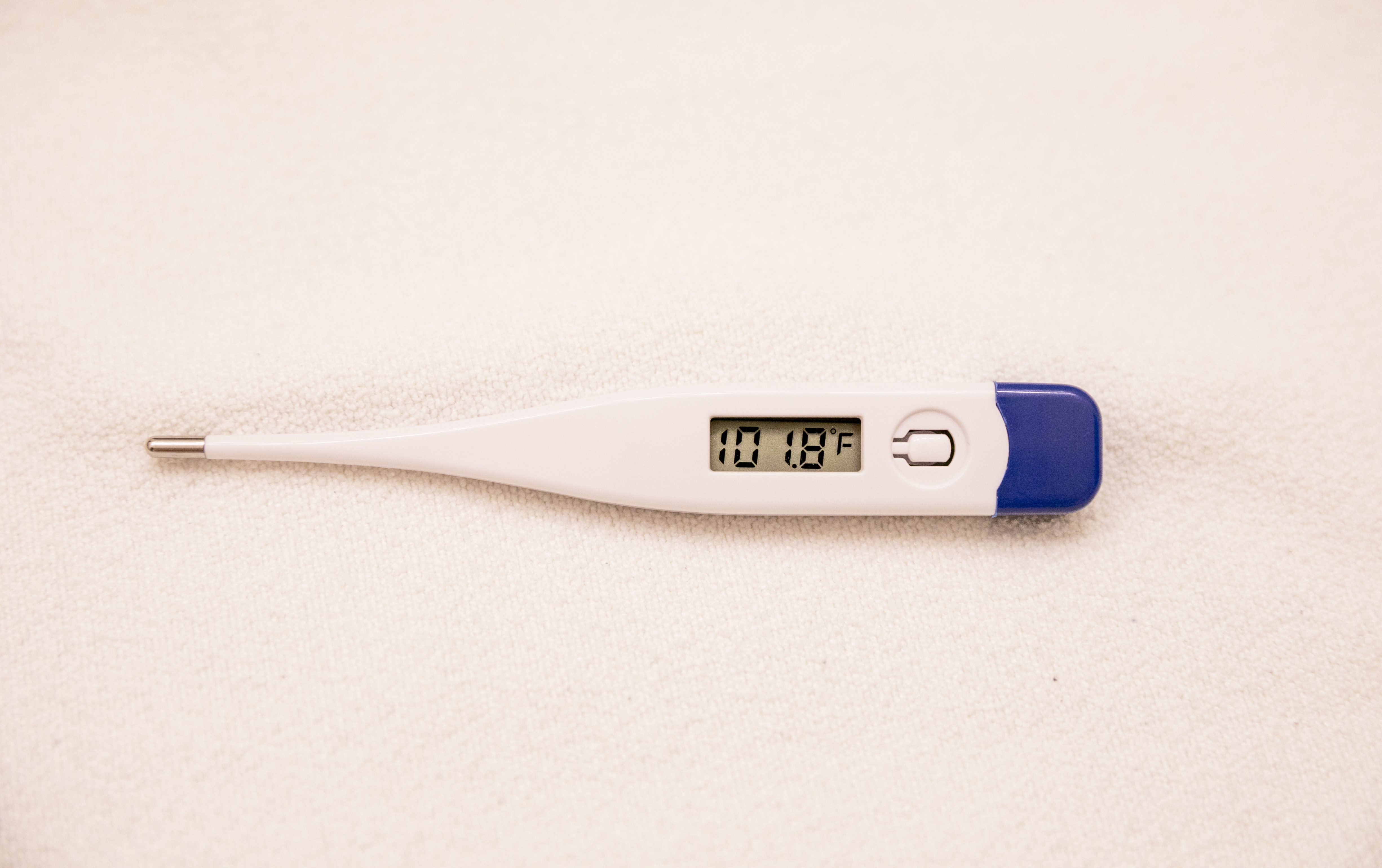
Here's what's happening during those days. The flea regurgitates Yersinia pestis bacteria into the skin. The bacteria are picked up by immune cells and carried to the nearest lymph node, where they begin multiplying furiously. For the first couple of days, nothing is perceptible. Then, usually between day 2 and day 6, the lymph node swells into the exquisitely painful mass called a bubo — typically in the groin, armpit, or neck, depending on where the bite occurred — and the fever spikes, often to 101°F (38.3°C) or higher, accompanied by chills, headache, and profound weakness.
The bubo itself is the signature that the incubation period has ended. Its appearance is abrupt: patients often describe going from feeling vaguely unwell to being unable to walk within hours as the node swells and the surrounding tissue becomes inflamed. That suddenness is characteristic — bubonic plague doesn't creep in; it arrives.
One reassuring fact for the Siberia contacts: bubonic plague is not the form anyone is worried about spreading. A person with bubonic plague cannot pass it to another person through casual contact — it requires the flea vector. The incubation math matters for bubonic cases mainly for the exposed individual, not for their household.
Pneumonic plague: 1 to 3 days — the shortest fuse in infectious disease
Pneumonic plague is the form driving the Siberia response, and its incubation period is dramatically shorter. The WHO and CDC place it at 1 to 3 days after exposure, with some sources noting onset can occur within a matter of hours after a heavy exposure, and the outer limit reaching about 6 days.
To put that in perspective: influenza's incubation is typically 1 to 4 days, COVID-19's was 2 to 14 days in the early variants. Pneumonic plague sits at the very fast end of the respiratory-disease spectrum. A person exposed on Monday morning can be coughing blood by Wednesday — and, untreated, dead by Friday. That compression is what makes pneumonic plague the most feared form of the disease and the reason a suspected pneumonic case triggers the kind of large-scale contact tracing now underway in Irkutsk.
The biology explains the speed. In pneumonic plague, the bacteria are inhaled directly into the lungs — there's no slow journey through the lymphatic system. Yersinia pestis lands in the alveoli and begins destroying lung tissue almost immediately, triggering an overwhelming inflammatory response. The first symptoms — fever, headache, weakness, rapidly developing pneumonia with shortness of breath, chest pain, and cough producing bloody or watery sputum — can escalate from mild to life-threatening within 24 hours of onset.
This is also the form where the incubation period has direct contagion implications. A person with pneumonic plague becomes infectious when symptoms begin — particularly once coughing starts, which aerosolizes the bacteria in droplets. That's why the 200 contacts in Siberia are being monitored so closely: if any one of them develops pneumonic symptoms, the clock resets for their contacts, and the response escalates immediately.
Septicemic plague: the hardest timeline to pin down
Septicemic plague — where the bacteria multiply directly in the bloodstream — has the least precisely defined incubation period, generally cited as 1 to 6 days, broadly similar to the bubonic range. The uncertainty exists because septicemic plague often develops as a complication of untreated bubonic or pneumonic plague rather than as a primary infection, which blurs where "exposure" ends and "disease" begins.
When septicemic plague does occur as the primary form — from a flea bite or from handling infected animal tissue where bacteria enter through a cut — the onset looks like the bubonic timeline without the bubo: sudden fever, chills, extreme weakness, abdominal pain, and then the disease's gruesome signature — bleeding into the skin and organs, tissue turning black from necrosis (the origin of the "Black Death" name), and rapidly progressing shock.
For contact-monitoring purposes, septicemic plague doesn't change the math: the 7-day window covers it. And like bubonic plague, primary septicemic plague doesn't spread person to person — it's the pneumonic form that drives transmission concern.
Why one bacterium has three different clocks
It's worth pausing on a puzzle: how can the same organism, Yersinia pestis, take anywhere from 1 to 8 days to make you sick? The answer lies in three variables: route of entry, infectious dose, and host factors.
Route of entry is the biggest driver. Inhaled bacteria hit the lungs — a vast, delicate, blood-rich surface — and the disease explodes quickly. Bacteria deposited in the skin by a flea must travel through lymphatic channels first, buying the body a few extra days. It's the difference between a fire starting in a paper warehouse versus one starting in a stone corridor; same spark, very different timelines.
Infectious dose matters too. A laboratory accident — the suspected scenario in Irkutsk — can involve a far larger bacterial dose than a flea bite, and higher doses generally mean shorter incubation periods. This is one reason health authorities treat lab exposures with particular urgency: the timeline may compress toward the fast end of every range.
Host factors — age, immune status, underlying health — add individual variation around those averages. Two people exposed to the same dose by the same route can still differ by a day or two in onset. Public-health timelines are built on population ranges, not individual predictions, which is why the monitoring window is set to cover the maximum, not the average.
The 7-day rule: why contacts are watched for a full week
Now the key public-health number: 7 days. The CDC's guidance for plague contact management calls for monitoring exposed persons for 7 days after the last exposure, with daily temperature checks and symptom screening. The WHO's 1-to-7-day incubation range is the direct basis — 7 days covers the longest plausible incubation for every form of the disease, with a margin of safety.
This isn't arbitrary. Set the window at 3 days and you'd catch most pneumonic cases but miss a bubonic case incubating toward day 6. Set it at 14 days and you're imposing two weeks of disruption for no additional safety — no credible source extends plague's incubation beyond about 8 days, and the overwhelming majority of cases declare themselves well within a week. Seven days is the evidence-based sweet spot: long enough to be safe, short enough to be sustainable.
During those 7 days, monitoring is active, not passive. Contacts typically check their temperature once or twice daily, report any symptoms — fever, chills, cough, swollen lymph nodes, unusual weakness — to the health team immediately, and may be asked to limit travel or avoid crowded settings depending on the exposure type. For close contacts of a pneumonic case, health authorities may also offer post-exposure preventive antibiotics (usually doxycycline), which can prevent the disease from developing at all if started during the incubation period — one more reason the waiting window is a working medical intervention, not just watching.
It's worth noting what the 7-day rule is not: it is not a quarantine in the locked-door sense for most contacts. The people under observation in Irkutsk are described by Russian authorities as under "medical observation" — monitored, checked, and instructed — rather than forcibly confined. True quarantine (restricted movement) is generally reserved for the highest-risk close contacts of confirmed pneumonic cases.
What to do during the waiting period
If you were ever told you'd been exposed to plague — in Siberia or anywhere else — the waiting period has a clear protocol, and it starts with not panicking. The overwhelming likelihood, statistically, is that you will not get sick: even among close contacts of plague cases, the attack rate is low, and preventive antibiotics drive it near zero.
Days 1–3: establish the baseline. Take your temperature twice daily and write it down. Note how you feel — energy level, any aches, any cough. Avoid self-medicating with fever reducers unless told to, since masking a fever defeats the purpose of monitoring. If you were offered preventive antibiotics, take them exactly as prescribed; doxycycline prophylaxis is typically a 7-day course.
Days 3–6: the peak watch window. This is when bubonic cases would declare themselves (days 2–6) and when any late pneumonic case would appear. Be strict about the temperature checks. Any fever of 100.4°F (38°C) or higher, any new cough — especially with chest pain or bloody sputum — any suddenly swollen, painful lymph node, or any severe unexplained weakness means calling the health team immediately, day or night. Do not "wait and see" with these symptoms; plague's treatment window is measured in hours once symptoms start.
Day 7 and beyond: the all-clear approaches. If you've completed 7 full days from the last exposure with no symptoms — and no new exposures occurred in the meantime — the standard guidance says you're clear. More on exactly what "clear" means below.
Throughout: keep a list of your own close contacts, in case the health team needs it. And understand that developing symptoms during monitoring is not a failure — it's the system working. Caught on day one of fever, plague is highly treatable with modern antibiotics.
When you're officially in the clear
"In the clear" has a precise epidemiological meaning: you have passed the maximum incubation period since your last exposure without developing symptoms. For plague, that means 7 full days with no fever, no bubo, no cough, no warning signs of any kind.
The emphasis on "last exposure" matters. If during your monitoring week you had contact with someone who then became sick, your clock resets — your 7 days are counted from that new exposure, not the original one. This is why contact tracing is iterative: each new case generates a new ring of contacts with fresh clocks. In a well-run response like the one described in Irkutsk, the health team tracks every individual's personal day-zero.
There's no blood test that declares you "clear" of an infection that never developed — clearance is clinical and temporal, not laboratory. If you took preventive antibiotics for the full course and never developed symptoms, that combination (completed prophylaxis plus a symptom-free observation period) is considered definitive. You don't need follow-up testing, and you can't develop plague weeks later from that exposure — the bacterium doesn't hide dormant in the body the way some viruses do. Once the window closes without illness, that exposure is over.
The Irkutsk clock: doing the math on 200 people
Apply all of this to Siberia. Roughly 200 contacts of the deceased lab worker are under medical observation. The exposure is believed to have been a laboratory accident — possibly involving pneumonic plague, given the worker's rapid death, though Russian authorities have not confirmed the form publicly.
Here's how the timeline math works for them. If the exposure was pneumonic: the danger window is days 1–3, stretching to day 6 at the outer edge. By day 7 with no symptoms, those contacts are clear — and because pneumonic plague announces itself fast and dramatically, a silent week is genuinely reassuring. If the exposure was bubonic (less likely in a lab accident, but possible): the window runs days 2–6, occasionally 8. The 7-day monitoring covers it, with the outer edge just barely inside the margin — one reason some protocols extend observation to 8 or even 10 days for high-risk lab exposures, though 7 remains the standard.
The scale — 200 people — is what makes this a major public-health operation rather than a routine follow-up. Each contact needs daily check-ins for a week: that's roughly 1,400 person-days of monitoring, plus laboratory capacity on standby, plus the contact-tracing infrastructure to reset clocks if anyone becomes symptomatic. It's the kind of response that looks like overreaction until you remember the alternative: pneumonic plague, untreated, kills in days, and every hour of delay in treatment raises the fatality rate.
The White House has said it is monitoring the situation, according to Axios reporting — a sign of how seriously even distant governments take a potential pneumonic plague event. But the most important monitoring is the quiet, daily kind: thermometers, phone check-ins, and 200 people watching their own bodies for a week.
The bottom line
The plague incubation period is 1 to 7 days depending on the form — 2 to 6 for bubonic, 1 to 3 for pneumonic, roughly 1 to 6 for septicemic. That range is the entire logic behind the 7-day monitoring window: watch every contact for a full week, check temperatures daily, treat the first fever as an emergency, and anyone still healthy on day 8 was never going to get sick from that exposure.
For the 200 people under observation in Siberia, the clock is both a source of anxiety and a source of certainty. Anxiety, because the waiting is the hardest part. Certainty, because unlike so many diseases, plague's timeline is short, well-studied, and finite. The hourglass runs out — and when it does, the all-clear is real.
If you want the practical companion to this guide — masks, exposure rules, exactly who to call and what to do if symptoms start — read our plague prevention guide. For the full picture of the outbreak that started all of this, see Siberia Plague Outbreak: Lab Worker's Death Puts 200 Under Observation and Plague Quarantine: What Happens If You're Exposed.
Sources
- World Health Organization: Plague fact sheet (incubation period 1–7 days)
- U.S. Centers for Disease Control and Prevention: Plague symptoms and incubation
- U.S. Centers for Disease Control and Prevention: Plague information for healthcare providers (contact monitoring)
- Signal Post News: Siberia Plague Outbreak — Lab Worker's Death Puts 200 Under Observation
- Political Wire / Axios: White House monitors plague outbreak in Russia