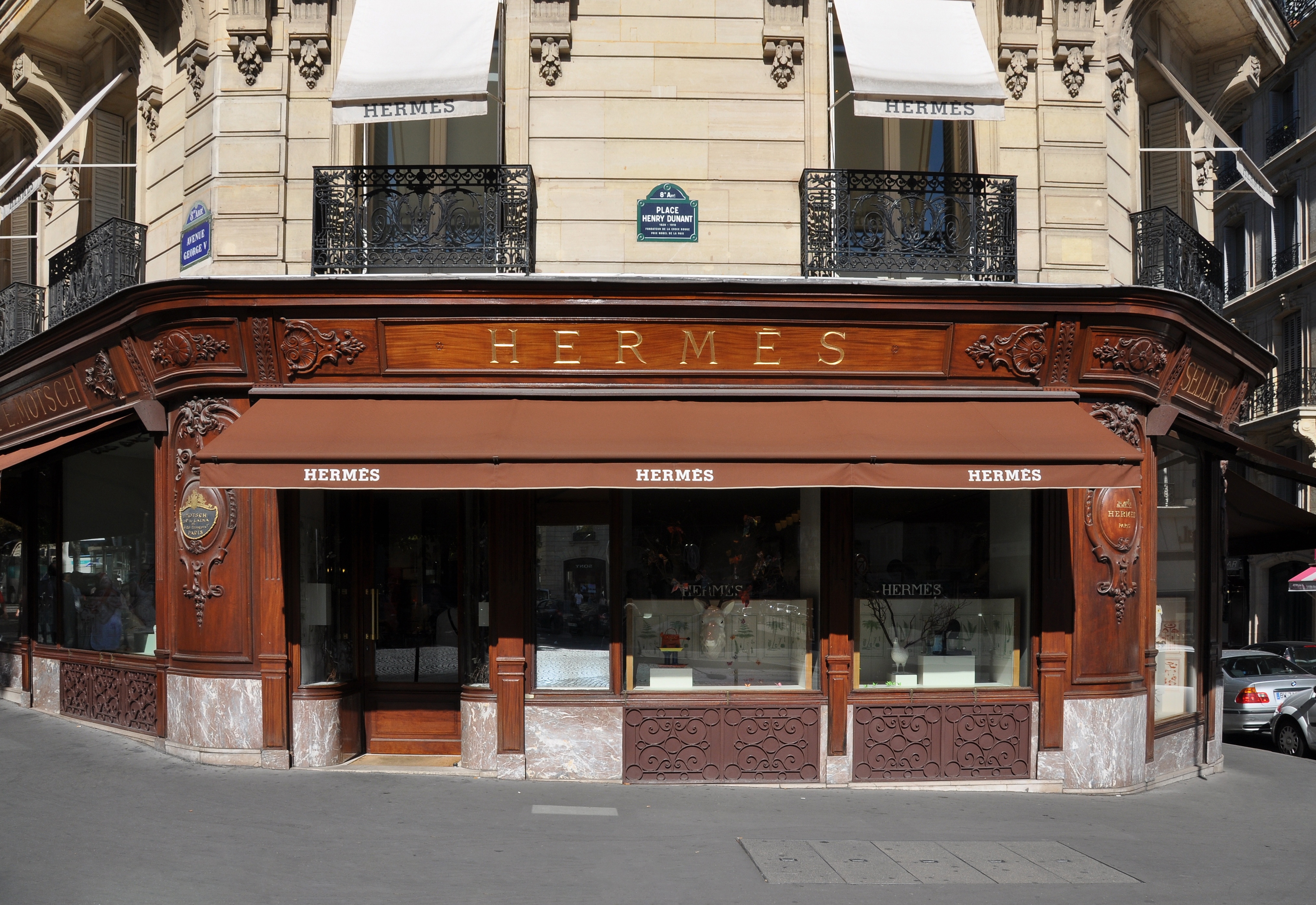
Hermès brought the breeze to Paris Fashion Week on Saturday. Creative director Nadège Vanhée presented an airy spring/summer 2027 collection built on gauzy fabrics and open construction, per Reuters reporting from the October 3 show: loose-knit brown and black tops and dresses revealing bandeau tops underneath, mesh dresses embroidered with panels of fine leather strips, and midi-length leather dresses and skirts sliced into thigh-high strips. Trousers had side zips left open for ventilation. In a bright white show space inside the Garde Républicaine — the sprawling barracks of Paris's mounted gendarmes — guests including Sofia Vergara and Emmy Rossum fanned themselves on an unusually warm, sunny October day.
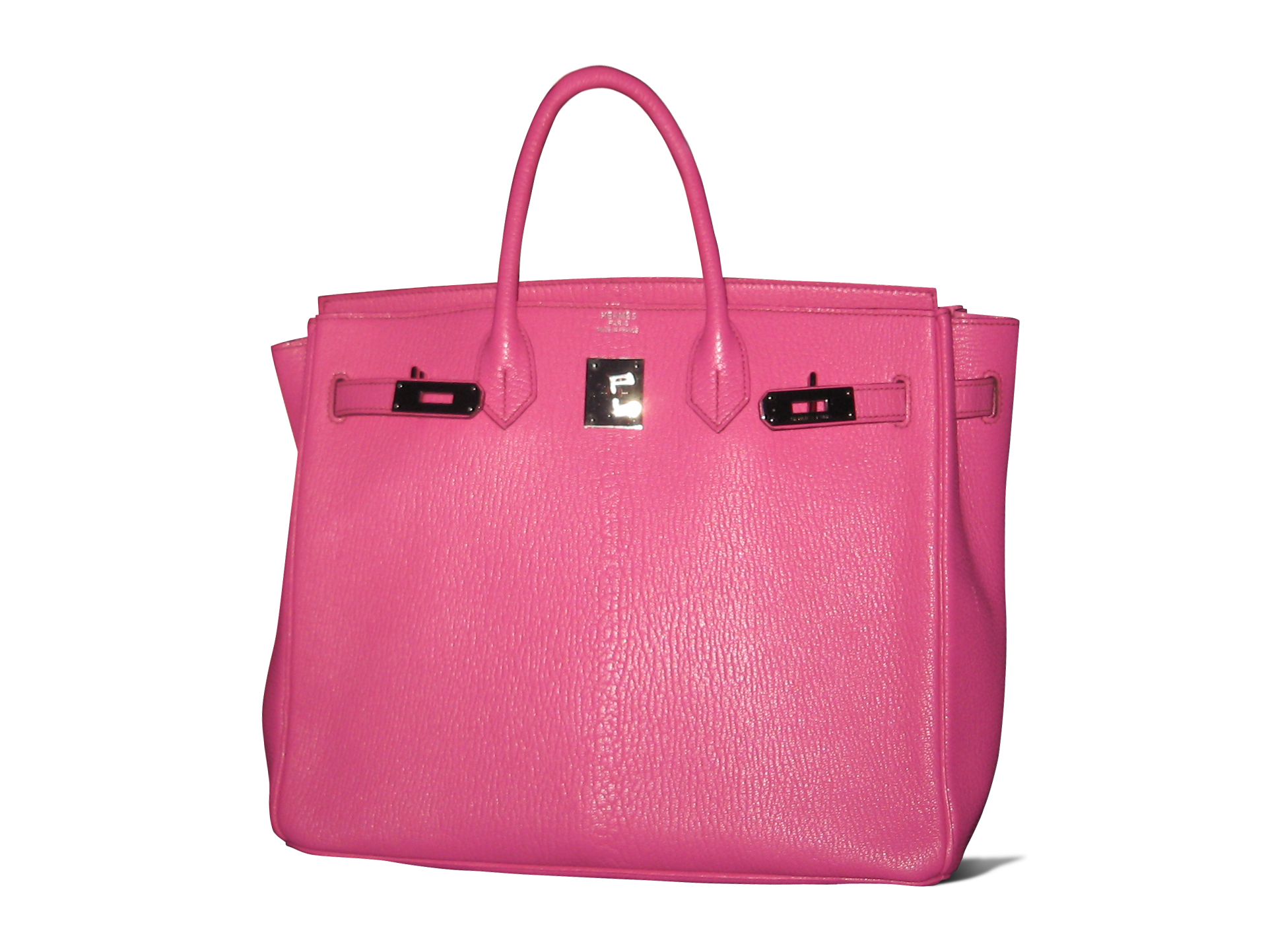
The palette stayed close to the house's earthy register — browns, blacks, creams — with calculated jolts of color: a billowing bright-orange parka worn over a knit mini dress, and a zipped skirt in what Vanhée herself called sunflower yellow, paired with a matching high-collared jacket. Accessories leaned into the latticework theme, including open-lattice cream leather bucket handbags, and the footwear was resolutely flat and minimalist — mostly leather sandals, with the occasional knee-high leather boot. This was Hermès at its most elemental: craft as the message, the body unencumbered.
Why this matters: craft-first messaging meets a -39% share price
Here is the tension that makes this show the week's most interesting business story. Hermès — the house that caters to the ultra-wealthy and tightly controls access to its products, with years-long waiting lists for its most exclusive handbags — is, per Reuters, grappling with a slowdown in demand for luxury handbags and clothes, and its shares are down 39% since the start of the year. A 39% drawdown at a maison whose entire equity story is immunity to cycles is not a blip; it is a verdict on the luxury slowdown that has also been grinding through the rest of the sector.
And yet the collection Vanhée showed was not a commercial panic — it was the opposite. Airy knits, flat sandals, sliced leather: this is quiet luxury's core thesis, the idea that supreme craft and restraint will outlast trend cycles. The question the market is asking, and that the collection implicitly answers, is whether the thesis still holds when the ultra-wealthy themselves pull back. Vanhée's bet is that it does — that a customer who has waited years for a handbag does not abandon the house because of a quarter or two of softness. The risk is that a 39% slide is telling her the slowdown has reached the very top of the pyramid. If Hermès can't hold the line, nobody in luxury can.
Vanhée, womenswear creative director since 2014, has one more card to play: she will present the first Hermès haute couture collection in January. That is a margin play as much as an artistic one — couture is where a house converts cultural authority into its highest-ticket storytelling, feeding the desirability of everything below it. Read Saturday's show as the runway prologue to that January debut.
Victoria Beckham's profitable season
Friday belonged to Victoria Beckham, who unveiled slinky dresses, wide-legged trousers and roomy handbags in her spring/summer 2027 show at the Conciergerie — the former prison where Marie Antoinette was held. Models wore oversized suits in green and blue tones with broad, padded shoulders, paired with fluid trousers spilling over their heels; short parkas cinched at the waist were worn over sheer, side-slit dresses hemmed in pom-poms; giant handbags were held under the arm. Review coverage noted a tightly edited 44-look lineup balancing tailoring with soft edges — slim trousers and fine-gauge knits alongside taffeta raincoats and pleated, draped dresses.
The real headline, though, is financial. Beckham's fashion and beauty business made an operating profit of £7.3 million ($9.66 million) in 2025 — its first profit since the label was founded in 2008. Revenue across fashion, leather goods, make-up and perfume rose 15% to £129.8 million. The brand has a London flagship and opened its first New York store last month. After 17 years of losses, this Paris show was a victory lap — and a data point that profitable, mid-scale luxury is possible while the giants stumble. It is the mirror image of the Hermès story: one house proving the slowdown is survivable from below, the other trying to prove it is survivable from above.
The show's front row supplied its own narrative. David Beckham attended with three of the couple's children — Romeo, Cruz and Harper — plus family friend Eva Longoria, in candlelit rows inside the Conciergerie. Absent: eldest son Brooklyn, who is also in Paris for fashion week but spent Thursday front row at Balenciaga with his wife Nicola Peltz, and who went public in January with accusations about his parents' "controlling" behavior. Fashion weeks have always staged family sagas alongside clothes; this one played out in seating charts.

The front-row economy: a Klum debut and a Hilton headline
Saturday's other two moments had nothing to do with runways and everything to do with distribution — which, in 2026 fashion, is the same thing. Heidi Klum brought her rarely seen daughter Lou, 16, to the Andreas Kronthaler for Vivienne Westwood SS27 show for the teenager's fashion-week debut. The pair coordinated in peplum silhouettes and towering platforms: Klum in a plunging white silk blazer with a floor-length column skirt and a pavé diamond "Chaos" choker, Lou in a light pink acid-wash denim minidress with a structured peplum bodice. They sat front row alongside Jaden Smith and Paris Jackson. Hours later, mother and daughter reappeared at the BoF 500 Gala at the Shangri-La Paris — the Business of Fashion's annual power-list party — with Klum switching into a red leather sculptural minidress.
Paris Hilton, 45, commanded the BoF 500 red carpet in a floor-length sheer black lace gown with a high neckline and intricate sheer panels, finished with sparkling black heels and angular sunglasses. Her sister Nicky Hilton Rothschild countered in an embellished black mini with red and gold floral embroidery. The gala — which adds 100 new names to the BoF 500's designers, models, entrepreneurs and creatives each year — is one of the week's most exclusive rooms, and the Hilton sisters' coordinated-but-opposed dressing was a masterclass in the modern celebrity economy: the clothes get the headlines, the headlines are the marketing, and the marketing is the product.
What SS27 is signaling about luxury's direction
Put the week's signals together and a coherent picture emerges. Hermès: restraint, craft, the body freed — a house doubling down on its founding thesis under market pressure. Beckham: padded-shoulder power suits, an unmistakable 80s revival note, landing at the exact moment her business proves commercial discipline works. The silhouette conversation is genuinely split: fluid, unfussy ease (Beckham's slinky dresses, Hermès's gauze) against structured, shoulder-forward authority (Beckham's broad-shouldered suits). In a slowdown, both are defensive postures — one says "buy less, buy better," the other says "dress for the fight."
The deeper signal is about where luxury's growth story now lives. It is not in handbags at the very top (Hermès, -39%) and not in hype — it is in mid-scale houses with real customers (Beckham, +15% revenue, first profit), in cultural distribution through celebrity front rows, and in the January couture calendar where houses will try to re-enchant the top end. The week runs through October 6, with Chanel showing October 5 and Louis Vuitton closing the official program — and both will be read, inevitably, against the standard Hermès just set.
What happens next
Chanel (October 5) and Louis Vuitton (October 6) close the week, and the industry will be watching whether either house acknowledges the slowdown as directly as Hermès's numbers force it to. Beyond the calendar: Vanhée's January haute couture debut is now the highest-stakes date in the house's near future — the moment Hermès either reasserts its immunity or confirms the slowdown has breached the citadel. And Beckham's New York store, opened last month, gets its first real test: converting a profitable Paris moment into American retail momentum.
Related coverage
Sources
- Reuters (Helen Reid): Hermès shows airy knits and slit skirts in spring/summer 2027 collection (October 3, 2026)
- Reuters (Helen Reid): Victoria Beckham presents sheer dresses and oversized suits for spring/summer 2027 (October 2, 2026)
- InStyle: Heidi Klum's daughter Lou, 16, makes fashion week debut (October 3, 2026)
- InStyle: Heidi Klum and Lou at the BoF 500 Gala (October 3, 2026)
- Daily Mail via EuropeSays: Paris Hilton in sheer black lace at the BoF 500 Gala (October 3, 2026)
- BusinessWorld: Paris Fashion Week: airy knits, sheer dresses, oversized suits (October 4, 2026)
Reporting basis: Reuters reporting by Helen Reid on the Hermès and Victoria Beckham shows; InStyle and Getty-credited coverage of the Klum and Hilton appearances; BoF 500 Gala reporting.