
The confirmation that two Ole Miss students were found dead in Oxford on Tuesday has left a university community confronting two losses while investigators are still at the beginning of their work. Lafayette County Coroner Glenn Coleman told the Clarion Ledger that the students were males ages 18 and 20. One was found in a campus dormitory; the other was found at his off-campus home. Their identities had not been released by the reporting cutoff.
Those are the core facts. They do not establish why either student died, whether the deaths were connected, or whether a product found during both investigations played any role. Autopsies and toxicology testing were scheduled, Coleman said, and results were expected in two to three weeks. Until those examinations are complete, the responsible account is necessarily limited.
The phrase Ole Miss students dead kratom began circulating because Lafayette County Metro Narcotics said packaged kratom sold by a retail store was recovered during both investigations. That is a confirmed scene detail, not a cause-of-death finding. The agency described the cases as two separate investigations and said there was “no confirmed evidence indicating that the two deaths are connected.”
What happened Tuesday: university, coroner and narcotics-team chronology
At 1:50 p.m. Central time on Tuesday, September 22, University of Mississippi Vice Chancellor Shawnboda Mead issued a statement confirming that two students had died. The university acknowledged the losses and the impact on the campus community while the law-enforcement and medical inquiries remained active. The statement did not identify the students or announce a cause.
Coleman then supplied the limited demographic and location details reported by the Clarion Ledger: an 18-year-old and a 20-year-old, one discovered in a campus dorm and one at an off-campus residence. The coroner’s office is the authority that will determine cause and manner after the examinations. A police scene assessment, a family notification and a medical-legal conclusion are different stages; none should be collapsed into another.
Lafayette County Metro Narcotics later addressed the discovery of packaged retail kratom. Its statement matters because it both disclosed the common item and narrowed what the public can responsibly infer from it. The agency did not identify a brand, seller, package formulation, quantity or laboratory result. It also did not say the same product lot was present in both places.
“We do not have confirmed information indicating that kratom or any other substance was a contributing factor in either death. We ask the public to avoid speculation regarding the circumstances or cause of either death while these investigations remain ongoing.”
That caution is the central evidentiary boundary in the kratom found in Ole Miss death investigations story. Investigators routinely document items that may later prove important, incidental or unrelated. Finding two commercially packaged products does not show that either student consumed them, that the products contained only what their labels claimed, that the packages shared a source, or that any constituent was present in either student’s body.
Officials also urged people to avoid kratom and substances that were not prescribed or obtained from a trusted source. That public-health warning can stand alongside the investigative caution. A general risk message is not a declaration that kratom caused these deaths, and it should not be reported as one.

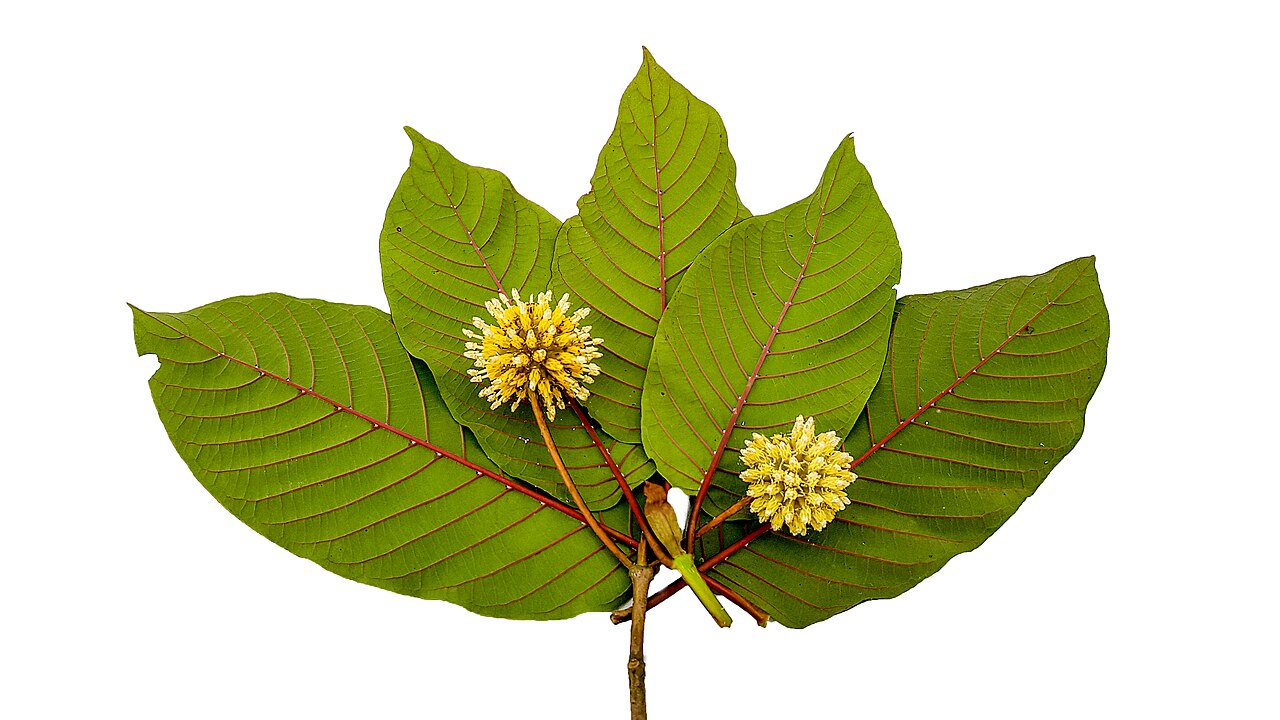
What is kratom? Substance, effects and reported uses
Kratom commonly refers to material from Mitragyna speciosa, a tree native to Southeast Asia. The National Institute on Drug Abuse describes it as an herbal substance that can produce opioid-like and stimulant-like effects. People report using it for pain, fatigue, mental-health concerns, and to manage opioid withdrawal or cravings. Those reports help explain demand; they are not the same as an FDA finding that a treatment is safe or effective.
The what is kratom substance effects question resists a one-word answer because products and patterns of use vary. Leaves may be processed into powders, capsules, extracts or drinks. Strength can differ, and concentrated or altered products may not resemble traditional leaf preparations. Effects can also depend on dose, other substances, health conditions and product composition. NIDA says researchers are still working to understand short- and long-term health effects and the substance’s therapeutic potential.
Federal regulators draw a bright distinction between availability and approval. The Food and Drug Administration says there are no legally marketed prescription or over-the-counter drugs containing kratom or its known alkaloids. It continues to warn against using kratom as a medical treatment. The fact that a product can be bought online or at a brick-and-mortar store does not mean it has passed the approval process applied to medicines.
Why this matters beyond one campus tragedy
First, two young people are dead. For families, roommates, classmates and faculty, the immediate reality is grief rather than a policy debate. The students’ names were withheld, and that restraint should not become an invitation for online crowds to identify them through rumor, residence-hall chatter or social posts. Premature naming can reach relatives before official notification and can attach an unsupported cause to a person permanently.
Second, the deaths expose an information vacuum that expands faster than toxicology can close it. The Ole Miss campus death investigation is moving on a medical timetable measured in weeks, while social media turns two scene details into a theory in minutes. That mismatch creates risk for everyone: families can see speculation presented as fact; investigators can receive contaminated tips; students can make health decisions based on incomplete claims; and a commercial product can be either condemned or defended before anyone knows whether it was consumed.
Third, the case reaches a national market built around products that are broadly available but do not have FDA-approved drug status. The search phrase kratom legal status unregulated captures public confusion, but it is too blunt as a legal description. Kratom is not simply governed by one nationwide retail rule. Federal agencies oversee different aspects of drugs, foods and imports, while states and localities have adopted bans, age limits, labeling standards or product restrictions. Mississippi law restricts sales to people under 21 and regulates certain product characteristics, even as retail availability remains visible.
A legal gray zone, not a legal vacuum
The FDA’s position is that no kratom drug is legally marketed for prescription or over-the-counter use, and the agency warns against using it to treat medical conditions. Yet retail products continue to be sold online and in shops. That gap between marketplace presence and medicine approval is one reason consumers can misunderstand what oversight has occurred.
States have responded unevenly. Some prohibit kratom; others allow sales with age, labeling, concentration or manufacturing rules; still others have no kratom-specific statewide framework. Mississippi’s approach is regulation rather than a complete statewide ban, with a 21-year minimum age and additional retail provisions. Local restrictions can add another layer. The result is a patchwork in which “legal” may depend on location, product type and buyer age.
The phrase packaged kratom retail store deaths therefore needs careful unpacking. Packaging and a store purchase can imply ordinary commerce, but neither guarantees pharmaceutical-grade consistency. Conversely, a product’s presence at a death scene does not prove contamination, misuse or causation. Laboratory testing of the product and toxicology from the deceased answer different questions, and both may be needed before investigators can say whether the evidence intersects.
Critics and access defenders are arguing about different risks
Kratom critics point to uncertain potency, variable manufacturing standards, the possibility of adulteration, interactions with other substances, dependence and the absence of an FDA-approved medical use. Their strongest argument is not that every kratom product is identical or that every reported death is caused by kratom. It is that consumers may encounter products with inconsistent composition while interpreting retail availability as a safety endorsement.
Access defenders emphasize that some adults report using kratom to manage pain or reduce their reliance on opioids, and they warn that broad bans could push people toward a more dangerous illicit supply. Their strongest case is for regulated access, accurate labeling, contaminant testing and research rather than assumption. Self-reported benefit, however, does not resolve questions about dose, interactions or safety for any particular person.
Both sides can agree on a principle that applies in Oxford now: evidence should come before causal claims. A critic should not use two unopened or untested packages as proof of a lethal mechanism. An advocate should not insist the products were irrelevant before toxicology and laboratory work are complete. The deaths should not become raw material for a national argument that outruns the facts.
The numbers decoded: two people, two cases, weeks of waiting
- Two students: The shared date and the discovery of a similar retail product make the cases newsworthy together, but investigators have not confirmed a connection.
- Ages 18 and 20: Both were young adults. Age heightens the campus impact; it does not establish a common cause or pattern.
- Two separate investigations: This is the narcotics team’s description and the most important limit on treating the cases as one event.
- Two to three weeks: That is the expected toxicology wait reported by the coroner. It is an estimate for results, not a promise that every investigative question will be resolved at once.
For the Lafayette County coroner student deaths inquiry, toxicology is one part of a broader medical-legal examination. Results can identify substances and concentrations, but interpretation depends on the autopsy, medical history, circumstances and known interactions. A detected substance is not automatically the cause; an absent substance can rule out one theory without explaining what did happen.
Three scenarios for what comes next
Scenario one: toxicology clears kratom from the central theory. Tests may find no kratom-related alkaloids, or investigators may determine that the packaged products were not consumed or were otherwise unrelated. In that case, attention would shift to other medical or circumstantial evidence. The public record should then be corrected as prominently as the initial kratom detail was reported.
Scenario two: toxicology identifies a substance. Tests could detect kratom alkaloids, another substance, multiple substances or a combination that requires expert interpretation. Detection alone would not prove that the retail product caused a death. Investigators would still need to consider concentration, timing, interactions, underlying conditions and whether product testing matches what was found in the body.
Scenario three: regulators act regardless of the toxicology result. The publicity may prompt inspections, retailer reviews, campus education, product testing or proposals for tighter sales rules. Such action could be justified as precautionary policy, but officials should distinguish it from a conclusion about these two deaths. Regulation based on general market risk is not the same as adjudicating a specific case.
Dated timeline
- Tuesday, September 22, 2026, by 1:50 p.m. CDT: University Vice Chancellor Shawnboda Mead issues a statement confirming the deaths of two students.
- Tuesday afternoon: Coroner Glenn Coleman tells the Clarion Ledger the students were males ages 18 and 20; one was found in a campus dorm and the other at an off-campus home.
- Tuesday: Lafayette County Metro Narcotics says the cases are separate, reports packaged retail kratom was found during both investigations and says there is no confirmed evidence connecting the deaths.
- Wednesday, September 23: Autopsy and toxicology work remains pending. Coleman’s reported estimate is two to three weeks for results.
Reporting basis and limits
This report is based on the University of Mississippi statement as described in contemporaneous coverage; Coroner Glenn Coleman’s comments to the Clarion Ledger; the Lafayette County Metro Narcotics statement quoted by the Clarion Ledger, USA Today and KCAU; and federal background from NIDA and the FDA. Signal Post News has not independently inspected either scene, the packages or laboratory evidence. No cause or manner of death had been released by the reporting cutoff.
- Clarion Ledger: coroner, university statement and investigation details
- USA Today: packaged kratom disclosure and official caution
- KCAU: narcotics-team statement and separate-investigations language
- National Institute on Drug Abuse: kratom research overview
- Food and Drug Administration: federal kratom status and warnings
What remains unknown: the students’ identities; the medical causes and manners of death; whether either student consumed kratom; whether the recovered packages contained only their labeled ingredients; whether the products shared a brand, lot or seller; and whether any substance connected the cases. This article will require an update when the coroner releases findings.
The University of Mississippi student deaths September 2026 will be remembered first by the people who knew the two students, not by the label attached to an evidence bag. The university and Oxford communities deserve answers, but speed is not a substitute for accuracy. The next meaningful development should come from the coroner, toxicology laboratory or investigating agencies—not from a rumor filling the silence.
For now, the factual ending is also the restrained one: two students died, two investigations are underway, and no official has connected the deaths to each other or to kratom. Respect for the families requires keeping that line visible until evidence moves it.