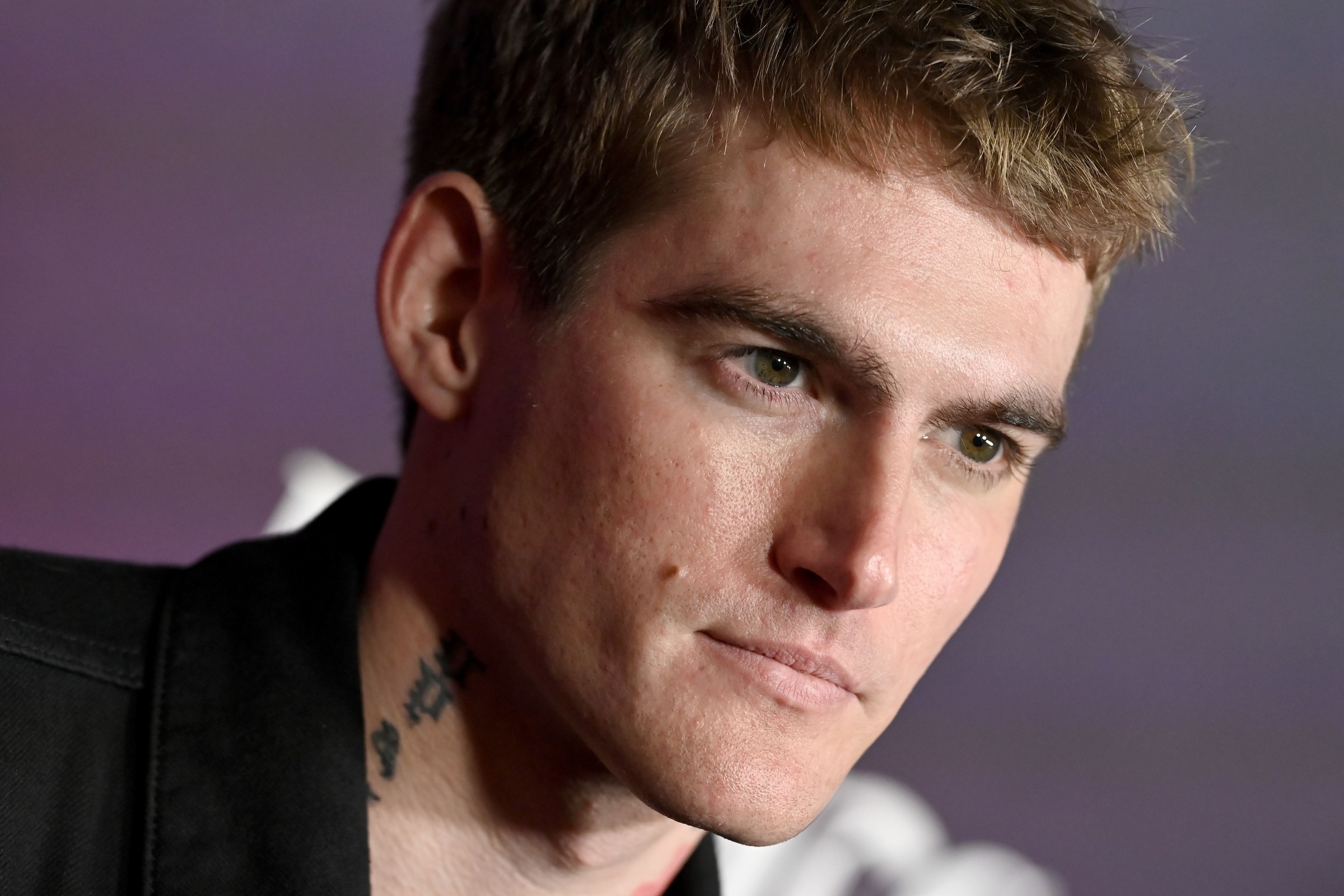
Santa Monica police said officers were sent at about 9:35 a.m. on Sunday, September 20, to the 1000 block of Berkeley Street after a report of a possible overdose. Paramedics pronounced Gerber dead at 9:45 a.m. Detectives are investigating what police described as a “suspected overdose,” and police said there was no indication of foul play.
Those details establish the circumstances of the response, not the official cause of death. The Los Angeles County Department of Medical Examiner said an examination was performed Monday, September 21, but listed both cause and manner as deferred while additional testing and studies continue. The department said deferred cases may take several months. Gerber’s family has not confirmed that an overdose caused his death.
“The family is asking for privacy during this very difficult and painful time,” the family said in a statement carried by multiple news organizations. Gerber was 27. He was Crawford and Rande Gerber’s only son and the older brother of model and actor Kaia Gerber.
What is confirmed—and what is not
Confirmed: Gerber died at a rehabilitation facility in Santa Monica on September 20; emergency personnel were dispatched after a possible-overdose report; he was pronounced dead at 9:45 a.m.; police opened a suspected-overdose investigation; and the medical examiner has deferred its determinations.
Not confirmed: the substance or substances involved, whether an overdose occurred, whether any medication was prescribed or obtained elsewhere, how long Gerber had been at the facility, what level of care it provided, and whether any act or omission at the facility contributed to his death. “Suspected overdose” is the police investigation’s current description. It is not a medical finding.
That distinction matters because early celebrity-death coverage can turn one attributed phrase into a settled narrative. Toxicology, medical history, scene evidence and witness accounts may support the initial suspicion, complicate it or point elsewhere. Until the medical examiner completes the case, headlines and social posts cannot substitute for an official conclusion.


A fashion career that began in adolescence
Born in California in 1999, Gerber entered a business that already knew his family name. He signed with IMG Models at 15 and, according to CNN, made his runway debut for Moschino at 16. He later walked for Burberry, Dolce & Gabbana, Bottega Veneta, Tommy Hilfiger and Ralph Lauren. His campaign work included Calvin Klein, Celine, Pepsi and Omega, and he appeared in GQ Style and The New York Times Style Magazine. He also pursued work as an investor and entrepreneur.
His access was plainly shaped by being the son of one of the most recognizable models of the modern era. That is the foundation of the “nepo baby” criticism: family name, networks and cultural capital can open doors that remain closed to equally ambitious unknowns. It is fair to examine that inequality. It is not fair to reduce a person’s illness, treatment or death to a punchline about privilege.
The fashion industry should treat the story as more than family celebrity news. Gerber began professional modeling while still an adolescent, in a culture built around scrutiny of bodies, faces, status and performance. That fact does not establish a cause for later addiction or mental-health difficulties. It does show why agencies, brands and publications need safeguards that follow young talent beyond a booking: confidential care, clear boundaries, responsible workloads and support that does not vanish when public interest turns harsh.
The public record of distress and disclosure
Gerber’s troubles were not entirely private. In 2019, he pleaded no contest in a California misdemeanor DUI case and received three years of informal probation, community service and a DUI program. In February 2020, the word “MISUNDERSTOOD” tattooed beneath his right eye became a spectacle across entertainment media. The reaction ranged from concern to ridicule. In March, he used an Instagram filter to show a second face tattoo and made clear it was not real, an episode documented by Entertainment Tonight.

In later years, Gerber spoke publicly about addiction and mental health. He hosted “Mental Health Mondays” on social media and worked with A Sense of Home, a Los Angeles organization helping young people who have aged out of foster care. Disclosure can help remove stigma, but it can also invite an audience to mistake access to selected posts for knowledge of someone’s condition.
That is the central parasocial hazard in this case. Followers saw runway photographs, family events, tattoos and first-person reflections. They did not see a complete medical chart or the day-to-day reality of recovery. Public openness should not be converted into retrospective diagnosis, and family silence during bereavement should not be treated as evidence of concealment.
Kaia Gerber’s words—and the family’s grief
Only weeks before her brother’s death, Kaia Gerber discussed how addiction had affected the family in a September cover interview with Vogue, published August 11. “When something like that happens in a family, it kind of levels everyone,” she said, according to CNN’s account of the interview. She described her brother as an “absolute teacher” who had chosen to be “very human for everyone.”
Those remarks now carry an obvious emotional weight, but they should not be mined as clues to an unconfirmed cause of death. They describe the experience of a family living with addiction: roles change, attention is redistributed, and the person struggling can become both loved relative and public symbol. The proper starting point is grief, not forensic interpretation of a sister’s earlier words.
The family’s fame makes privacy harder but does not make it less legitimate. It also complicates how the story is consumed. Admirers may feel they grew up alongside the Crawford-Gerber family; critics may see proof that wealth cannot insulate anyone from addiction. Both reactions can contain emotional truth. Neither gives strangers a claim on medical details the family has not released.
The painful treatment-setting question
Gerber’s death in a rehabilitation setting creates a painful contradiction: a place associated with safety and recovery is now part of a death investigation. That does not, by itself, establish negligence. Treatment facilities care for people at elevated medical risk, and a death on the premises can occur even when staff follow required protocols. It can also expose failures in supervision, medication controls, emergency response or continuity of care. Evidence must determine which, if any, applies here.
California’s oversight system makes the category of the facility important. The state Department of Health Care Services says it licenses residential facilities that provide alcohol- or other-drug treatment services, including detoxification, treatment planning, counseling or incidental medical services. By contrast, sober-living or transitional homes that provide housing without treatment do not require DHCS licensure; the department says it does not license, certify or investigate complaints against those homes.
The public record reviewed for this article does not establish the legal classification or licensing status of the Santa Monica facility where Gerber died. “Rehab,” “treatment facility” and “sober living” are often used loosely in news and marketing, but they can trigger different duties and regulators. Investigators will need to identify what services were actually offered, what the facility represented itself to be, and which agency—if any—had jurisdiction.
This is where one death can create a broader policy question. If a facility provides clinically significant services while operating under a housing-only model, the licensing distinction becomes a possible accountability gap. If it was properly licensed, the questions shift to compliance, staffing, emergency procedures and whether existing standards are adequate. Neither path can be assumed before records are reviewed.
California’s overdose data: progress, but no room for complacency
Preliminary California Department of Public Health data show monthly overdose deaths falling over the span covered by the agency’s May 14, 2026 extraction. The state recorded 841 all-drug overdose deaths in March 2025, including 533 involving opioids and 462 involving fentanyl. By December 2025, the preliminary counts were 613 all-drug, 346 opioid and 279 fentanyl deaths. January 2026 rose to 657 all-drug deaths, including 386 opioid and 349 fentanyl; February’s preliminary counts were 442, 242 and 204, respectively.
Those monthly figures are provisional, not final annual totals, and later reporting can change them. They suggest improvement from the exceptionally high levels of the preceding period, but hundreds of deaths in a single month remain a severe public-health burden. A downward line is not the same as a solved crisis.
A separate 2026 CDPH report examined 4,559 drug-related overdose cases across 24 counties. It found that 84.3% had a documented history of substance use or misuse, 25% had a current mental-health diagnosis and about 10% had ever received substance-use-disorder treatment. Only 2.9% were in treatment at the time. The report identified at least one potential intervention opportunity in 68.8% of cases; about 6% had been released from an institution, including a treatment center, within 30 days.
These figures do not describe Gerber’s case and should not be used to infer what happened to him. They do show why transitions into, within and out of treatment deserve scrutiny. Risk is shaped by tolerance changes, co-occurring mental illness, medication access, continuity of care and whether people can obtain evidence-based treatment when they are ready—not simply by whether a bed is labeled “rehab.”
What investigators must determine
- Medical cause and manner. The medical examiner’s toxicology and other studies must determine whether drugs, medication, an underlying condition or another factor caused or contributed to death.
- The timeline. Investigators will need to establish when Gerber was last seen responsive, who discovered the emergency, when staff called 911, and what lifesaving measures were attempted before paramedics arrived.
- Access and safeguards. If toxicology identifies a substance, the inquiry should establish how it reached the setting, whether it was prescribed, and what storage, screening or monitoring procedures applied.
- The level of care. Officials must determine whether the location was a licensed treatment facility, a sober-living residence or another kind of program, and then compare its services with the rules governing that category.
- Broader patterns. Regulators should examine any documented complaints, inspection findings or prior incidents rather than assuming that one death proves a systemic failure—or that an absence of public records proves safety.
The case may intensify scrutiny of treatment and recovery residences because it combines celebrity visibility with a death inside a setting expected to reduce risk. Useful scrutiny would focus on verifiable standards: licensing status, staffing, naloxone access, medication practices, emergency response, evidence-based care and continuity after discharge. Unfocused outrage risks turning a complex system into a search for one convenient villain.
What happens next
The next definitive development should come from the medical examiner, not anonymous speculation. A completed cause-and-manner determination will narrow the factual questions. Police may then close the case, continue a criminal inquiry or refer regulatory concerns, depending on what the evidence shows. The facility’s legal status and any responsible oversight body must also be established publicly.
For fashion, the harder question is whether attention outlasts the news cycle. Agencies and brands can treat mental-health and substance-use support as professional infrastructure rather than reputation management. Editors and audiences can acknowledge the advantage of a famous name without turning “nepo baby” into a total biography. And coverage can be candid about addiction while refusing to present an unconfirmed overdose as fact.
Gerber’s death is news because a young public figure died in a place meant to support recovery. Its larger significance will depend on whether that fact produces better information and better safeguards—or only a burst of scrutiny around a famous family. For now, the most responsible conclusion is also the least dramatic: the cause remains undetermined, the investigation is active, and the family is entitled to grieve while the evidence is completed.
Help is available: In the United States, call or text 988 for the Suicide & Crisis Lifeline. For treatment referrals and substance-use information, call the SAMHSA National Helpline at 1-800-662-HELP (4357). If there is an immediate medical emergency or suspected overdose, call 911.
Sources and reporting notes
- CNN: death, family statement, modeling career, public mental-health advocacy and Kaia Gerber’s Vogue remarks
- Reuters: death, family statement and career background
- Santa Monica Police Department: dispatch time, location and suspected-overdose investigation
- Los Angeles County Medical Examiner: examination date and deferred cause and manner
- USA TODAY: initial death report and family response
- USA TODAY: police investigation update and medical-examiner status
- USA TODAY: analysis of treatment-facility safety and accountability questions
- California DHCS: complaints, licensed treatment facilities and the sober-living distinction
- California DHCS: facility licensing and certification
- California DHCS FAQ: state oversight of sober-living and recovery residences
- California Department of Public Health: preliminary monthly overdose-death data, extracted May 14, 2026
- California Department of Public Health: 2026 overdose-surveillance report across 24 counties
- Entertainment Tonight: March 18, 2020 report on Gerber’s face tattoos and public reaction
- Vogue: official publication homepage; the September 2026 cover interview is discussed through CNN’s sourced account above
Reporting cutoff: September 22, 2026. “Suspected overdose” is attributed to Santa Monica police. Cause and manner of death remain deferred, and the family has not confirmed an overdose. Analysis of fashion, treatment oversight and parasocial response is identified as analysis; no finding of fault has been made against the facility.