Oktoberfest 2026 Munich guide
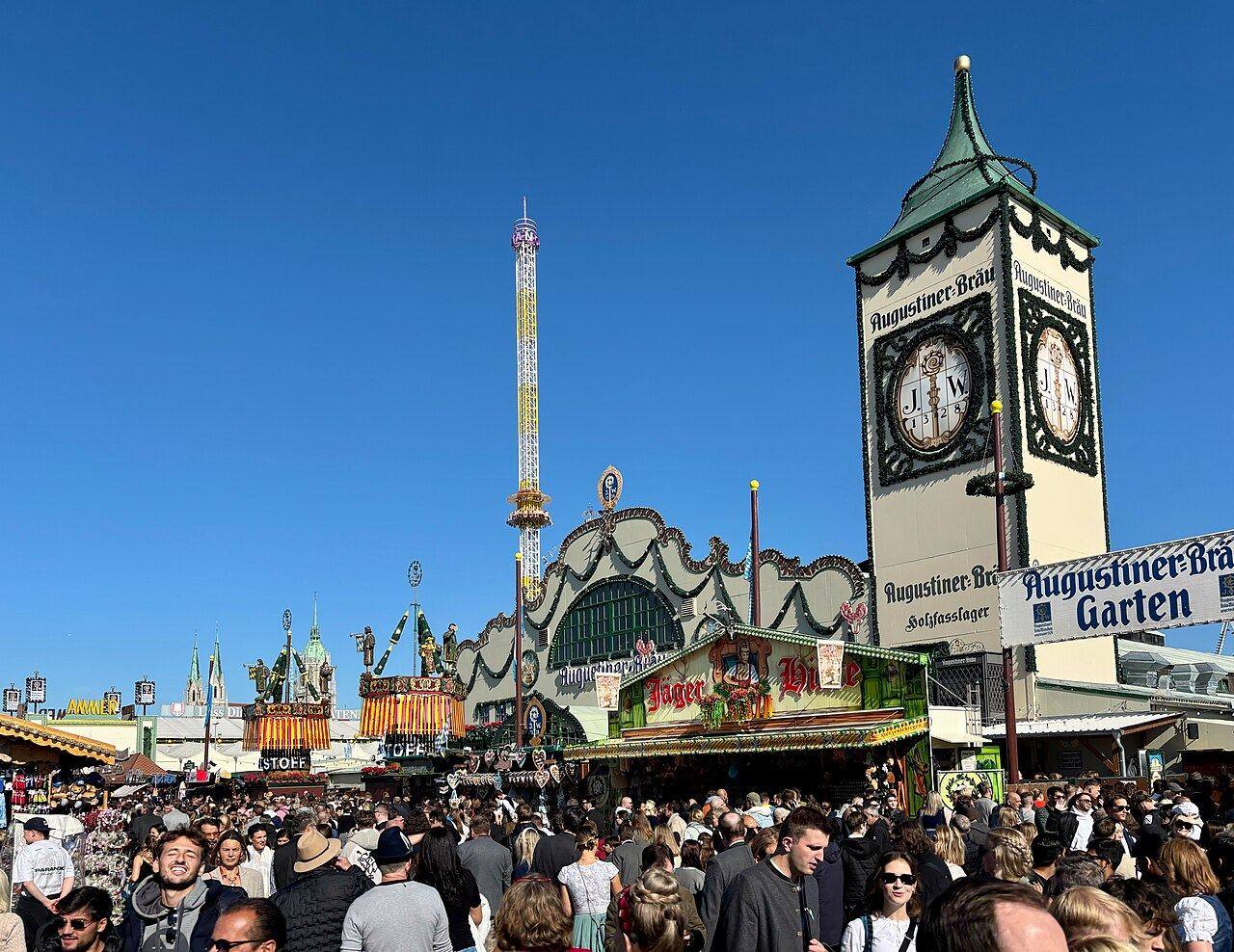
Oktoberfest 2026 Munich guide — if you are reading this on September 26, you are exactly one week into the world’s largest folk festival, and there are still nine days to go. The 191st Oktoberfest opened on September 19 with the traditional O’zapft is! keg tap at Schottenhamel, and it runs through October 4 at Munich’s Theresienwiese. More than six million visitors are expected across 16 days on grounds covering some 34.5 hectares. This guide is the practical version: the dates and hours that matter, what everything costs, how to get there, the stricter 2026 security rules, and the crowd-timing strategy that separates a great day from a miserable one.
Dates and hours: when the Wiesn is open
The festival runs September 19 to October 4, 2026. The grounds themselves are open 10 a.m. to 11:30 p.m. Monday through Thursday; 10 a.m. to midnight on Fridays and on October 2; 9 a.m. to midnight on Saturdays; and 9 a.m. to 11:30 p.m. on Sundays. Beer tents keep slightly different hours: on opening day they pour from 9 a.m. — non-alcoholic only until the noon O’zapft is! — then generally 10 a.m. to 11:30 p.m. Monday to Friday, and 9 a.m. to 11:30 p.m. on Saturdays, Sundays and October 3. Large tents stop beer service at 10:30 p.m.; small tents serve until 11 p.m. The late-night exceptions are the Käfer Wies’n-Schänke and Kufflers Weinzelt, which run until around 12:30–1 a.m.
Tickets: the grounds are free — and so are the tents
The single most misunderstood fact about Oktoberfest: there is no entrance ticket. Admission to the grounds and to every main beer tent is free. The exception is the Oide Wiesn, the historic section with its traditional rides, music tents and old-fashioned stalls, which costs €4 — free for children up to 14, and free for everyone after 9 p.m. What costs money inside the tents are table reservations, which are limited, mostly relevant for evenings and weekends or large groups, and sold separately by the individual tents.
Beer prices 2026: the Maß at €14.80–€15.90
A one-liter Maß — the standard unit of Oktoberfest — costs €14.80 to €15.90 in 2026, depending on the tent, averaging about €15.61 across the grounds. That is roughly 2.38 percent more than 2025’s ~€15.35 average. Some tents are cash-only, so the small-bills advice below is not optional. For calibration: one Maß is a full liter — roughly the alcohol of three or more standard 12-ounce beers — which is both the value proposition and the pacing problem.
Getting there: U4/U5 to Theresienwiese, and don’t drive
The dedicated station is Theresienwiese on the U4 and U5 — it surfaces practically at the gates. Less congested alternatives are Goetheplatz and Hackerbrücke, both short walks. Do not drive: there is no parking to speak of, and alcohol and driving do not mix. Buy your transit ticket in advance, keep it on your phone or in a pocket, and plan your return route before the first Maß — stations clog badly after the tents empty.
Security and bag rules 2026: stricter than last year
After 2025’s overcrowding, Munich has stepped up the security posture for 2026: AI-assisted crowd cameras, a coordination center, and around 600 police deployed. The rule that catches visitors out is the bag policy. Bags are limited to 3 liters — about 20×15×10 cm. Backpacks and large bags are strictly prohibited; small handbags are checked at every entrance. Also banned: knives, drones, glass bottles, and cannabis; bicycles, scooters and skateboards are not allowed on the grounds; animals are barred except service dogs. Turn up with a backpack and you will be turned away at the gate — there is no bag-check workaround worth counting on.
Best times and crowd tips: beat the Saturday crush
The golden rule: weekday mornings and lunch. Arrive between 10 a.m. and noon on a weekday and a small group can walk into most tents without a reservation. Evenings, weekends, and October 3 — German Unity Day, a public holiday — are the crush periods; Saturday afternoons are the single worst time to attempt a walk-in. Small groups have far better odds than large ones, and reservations matter most precisely when walk-ins fail. If you must go on a weekend, go early, pick a smaller tent, and have a backup plan. The Oide Wiesn, with its quieter traditional atmosphere, is also the pressure valve when the main tents overflow.
Tent etiquette: how not to embarrass yourself
Tent culture has rules, and the locals notice. Don’t stand on tables or benches unless that tent’s tradition allows it. Tip your servers — they carry impossible loads and remember faces. Pace yourself: a Maß is a liter, and the Wiesn is a marathon, not a sprint. Keep the aisles clear for the servers. Respect the quieter Oide Wiesn — it is the traditional heart of the festival, not the overflow lot. And learn the two words that matter most: “Prost!” with eye contact, and a nod to your bench neighbors, because Oktoberfest runs on Gemütlichkeit and you are a guest in it.
What to bring, how long to stay, and the scale of it all
Pack light but right: cash in small bills, a compact permitted bag, weather layers (late September in Munich swings), comfortable closed shoes, a charged phone, your transit ticket, and ID. Budget four to six hours for a first visit — a full day if you add the rides and the Oide Wiesn. The scale is hard to overstate: 6M+ visitors, 34.5 hectares, and the Hofbräu tent alone holds around 10,000 people. New for 2026 on the rides side: Else Schäfer’s Shake and Roll, Franz Xaver Kollmann’s Fisherman’s attraction, and the Chaos Pendel.
Key events: the dates worth planning around
The opening parade and the O’zapft is! keg tap (September 19) are done; the traditional costume parade followed on September 20. Still ahead: family days on September 20 and 29, the Italian weekend on September 27–28, and the gun salute with the closing ceremony on October 4. One 2026 novelty worth a line: the Munich city council has issued hundreds of formal accreditations to influencers earning money from Oktoberfest content — a sign of how the festival’s media scene has changed, and why you will see more tripods than ever on the Wiesn.
Why this matters: nine days left on a high-intent window
Oktoberfest is not a news story you read — it is a trip you can still take. With the festival running through October 4, this guide lands inside the booking window, not after it: trains, hotels in Munich’s suburbs, and weekday tent strategies are all still actionable. The 2.38 percent beer-price increase, the stricter bag rules, and the Saturday-crush dynamics are the difference between a €50 afternoon and a €50 afternoon spent queuing outside a full tent.
Who wins, who loses
Winners: Munich’s hotels, breweries and vendors, riding 6M+ visitors. Prepared visitors — free entry, weekday mornings, small bills, a 3-liter bag. The Oide Wiesn’s traditional vendors, as overflow crowds discover the €4 historic section.
Losers: Unprepared visitors — turned away at security with a backpack, or staring at a €15.90 Maß with only a card in a cash-only tent. Anyone arriving Saturday afternoon expecting a walk-in table. And the influencers, perhaps, now formally accredited and competing with hundreds of peers for the same shot.
What happens next: the final week
The festival’s back half is the sweet spot: the opening-weekend chaos has passed, the Italian weekend (September 27–28) brings its own crowd, and October 3’s public holiday will be the busiest single day remaining. If you go, go on a weekday morning, ride the new attractions before noon, eat in the Oide Wiesn, and be in a tent by early afternoon. Prost — and leave the backpack at the hotel.
Sources
- Associated Press, “Munich’s Oktoberfest roars to life as the mayor taps the first keg” (Sept. 19, 2026)
- Travel + Leisure Asia, “Oktoberfest returns to Munich for its 191st edition in 2026” (Sept. 20, 2026)
- EU Today, Oktoberfest 2026 Munich security and crowd technology (Sept. 19, 2026)
- U.S. Army, “Oktoberfest 2026 in Munich: an updated traveler’s guide” (Sept. 2026)