Beijing's turn to license ideas / 40 technologies, one draft list

A ministry spokesperson described the move as "necessary," citing national security, and exporters were told they must register covered technology transfers abroad immediately. That registration instruction matters as much as the draft list itself: it signals that Beijing wants visibility over transfers happening now, while the catalog is still in consultation, rather than waiting for the final rules to take effect. The proposal is a draft, not settled law, and the details could change. But drafts of this kind, from these ministries, rarely disappear — they are how China tests reaction before the controls harden.
The AI threshold: 2 trillion parameters, 10^26 FLOPs
The provision drawing the most attention in the AI industry sets two bright lines. Under the draft, a new large open-weight AI model would need an export license from the Ministry of Commerce, known as MOFCOM, before it could be open-sourced if it exceeds 2 trillion parameters, or if it was trained using more than 10^26 floating-point operations of compute. Models already released are exempt, which grandfathers in the current generation of Chinese open models that researchers and companies around the world already download, fine-tune and build products on.
The thresholds are not abstract. They land directly on the roadmaps of China's leading labs. Moonshot AI released Kimi K3 in July 2026 at a reported 2.8 trillion parameters — above the line — and its unreleased successor, referred to as K3.1, would plainly need a license before an open release under the draft. Alibaba's Qwen3.8-Max, released in August 2026 at a reported 2.4 trillion parameters, also sits above the threshold, and Alibaba's planned Qwen 4.5 and Qwen 5.0 generations, discussed at 4 to 10 trillion parameters, would be covered several times over. Baidu's Ernie 5.0, at roughly 2.4 trillion parameters, is proprietary rather than open-weight, which illustrates an important distinction: the draft's sharpest edge is aimed at open releases, not at models a company keeps behind its own API.
MOFCOM says a streamlined, partly automatic licensing pipeline is planned, which suggests Beijing does not intend every release to wait months for a stamp. Even so, a license is a license: it can be delayed, conditioned or denied, and the possibility changes the calculation for any lab deciding whether its next flagship should be open at all.
Solar and biomedicine: the other 17 entries
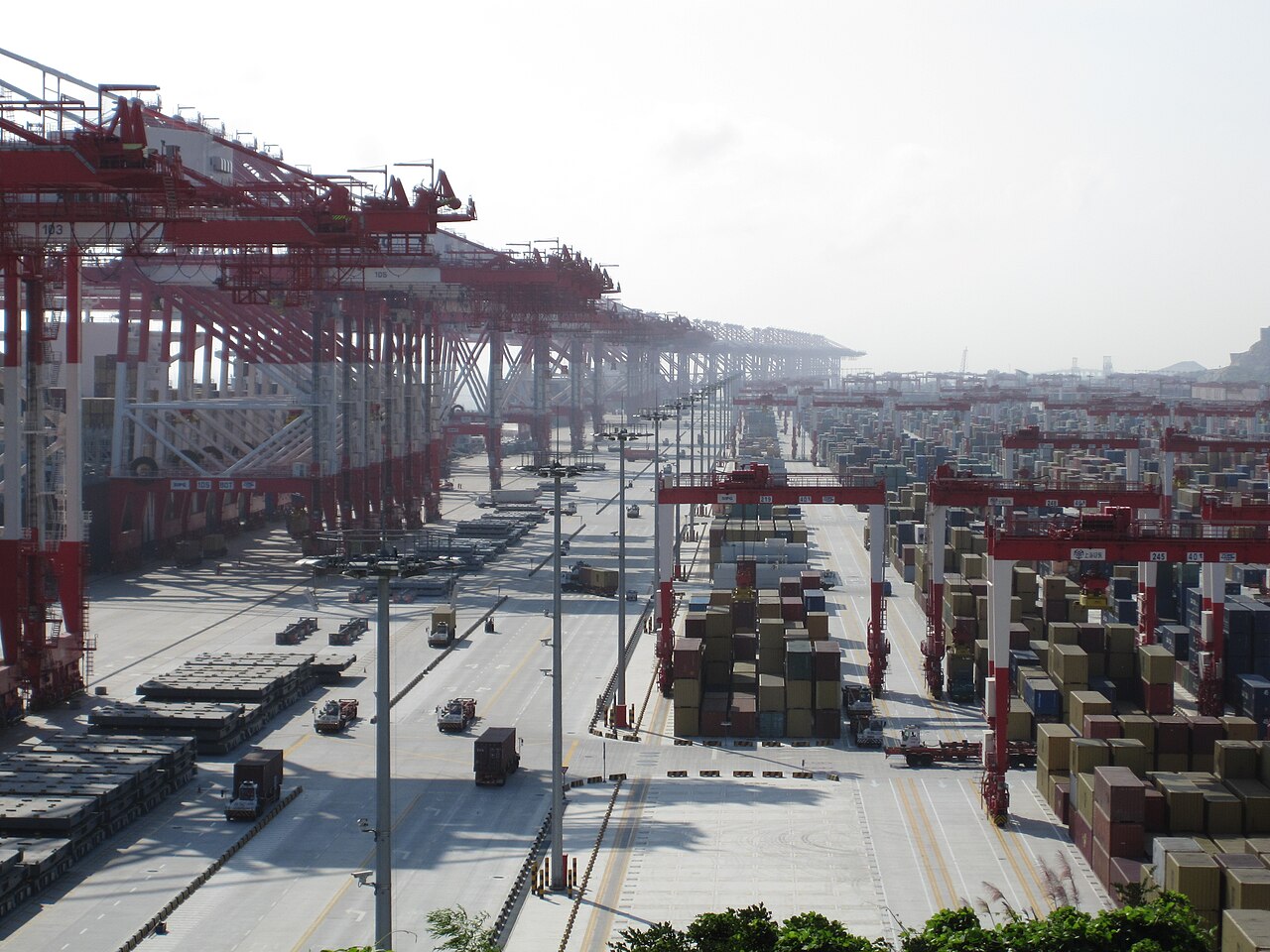
Artificial intelligence accounts for 23 of the 40 entries, but the remaining 17 may matter just as much to global supply chains. The 12 solar entries cover areas including solar manufacturing equipment — the machines and processes behind China's dominant position in photovoltaic production. China manufactures the overwhelming majority of the world's solar panels and much of the equipment used to make them elsewhere; licensing that equipment would give Beijing a say in how quickly rival manufacturing capacity can be built in India, the United States or Europe.
The 5 biomedicine entries include gene therapies, an area where Chinese research groups and companies have moved quickly and where the underlying know-how is difficult to recreate from published papers alone. Chip designs also appear among the covered items described in reporting on the draft, underlining that the catalog is about knowledge — designs, processes, weights and methods — rather than finished products in shipping containers.
A mirror image of the American playbook
The structure will be familiar to anyone who has followed Washington's controls. Since 2022, the United States has built an expanding licensing regime around advanced semiconductors and the equipment used to make them, with compute thresholds used to define which AI chips can be sold to China without permission. The American system uses FLOPs and performance density to draw its lines; the Chinese draft now uses parameters and training compute to draw its own. The symmetry is the story: both governments have converged on the same theory, that frontier AI capability is a strategic asset whose movement across borders should be a licensed, revocable privilege rather than a default freedom.
There are differences, and they matter. The US rules primarily control physical goods and the foreign use of American technology, enforced through customs, supplier contracts and allied governments — a system whose effects on chip demand are visible in results such as TSMC's record third-quarter profit on AI chip demand. The Chinese draft reaches further into intangibles: publishing model weights to the open internet would become a controlled export. No major government has previously tried to license open-source release itself at this scale, and enforcement questions — mirrors, forks, fine-tuned derivatives hosted abroad — are unresolved in the draft as published.
Critics of the proposal, including researchers outside China who depend on Chinese open models, argue that openness has been China's competitive weapon: Qwen and Kimi models gained global adoption precisely because they could be downloaded freely while leading American models stayed closed. Restricting that flow, they say, could hand the open ecosystem to whoever releases next. Supporters of Beijing's approach answer that a technology valuable enough for Washington to control cannot sensibly be given away without conditions, and that licensing — especially streamlined licensing — preserves release while adding a checkpoint. Both arguments can be true at once, for different models and different moments.
Why this matters
This matters because the open-weight ecosystem is now load-bearing infrastructure for thousands of companies, universities and startups that cannot train frontier models themselves. A licensing gate at 2 trillion parameters does not affect today's downloads — existing models are exempt — but it shapes every release decision from 2027 onward. If licenses are routine, the practical effect may be a registry and a delay. If they are not, the world's largest source of competitive open models could slow, fragment by jurisdiction, or shift toward proprietary releases that keep the weights inside China while selling access abroad.
The solar and biomedicine entries widen the significance beyond AI. Export controls have historically been most effective where a country holds a chokepoint, and China's chokepoints are exactly manufacturing equipment, solar supply chains and increasingly biotech process knowledge. Used sparingly, the catalog is leverage in trade negotiations — and its publication amid reported progress in US-China trade talks is unlikely to be coincidence. Used aggressively, it invites the same spiral of retaliation that followed earlier rounds of controls, in which each side's list grows longer and the shared technology stack splits further apart. The parallel legal fight over AI in the United States, where eight states are suing OpenAI over ChatGPT child safety, shows the same pattern from another direction: governments everywhere are moving from observing AI to licensing, suing and gating it.
What happens next
The catalog is in consultation, so the next developments are procedural but consequential: whether the parameter and compute thresholds survive revision, how the promised streamlined licensing pipeline is defined, and whether registration of transfers begins producing visible enforcement while the draft is pending. Watch the labs. Moonshot's handling of its next Kimi release, and Alibaba's choices for the Qwen generations planned at 4 to 10 trillion parameters, will be the first real-world test of whether Beijing intends a checkpoint or a wall. Watch also for an American response, because a licensing regime for open models gives Washington a precedent it may cite in its own debates. Signal Post News will follow the consultation and the final catalog as they are published.
Sources: Reuters reporting via ChinaPulse, Oct. 16, 2026 (draft catalog, 40 technologies, thresholds and ministry statement); Asia Daily, Oct. 16, 2026; Wccftech, Oct. 16, 2026 (affected labs and model parameters). Related on Signal Post News: TSMC posts record Q3 profit on AI chip demand · Eight states sue OpenAI over ChatGPT child safety.