The NSA classified network outage that took NSANet offline at Fort Meade on Tuesday was, on the official account, an accident of self-defence: a patch applied to close a serious software vulnerability, after which some systems simply did not come back up. By Tuesday night the campus was closed to all but essential personnel, and the most secretive agency in American government was explaining itself in public — insisting there was no cyberattack, no loss of mission capability, and no reason to believe anything classified was breached.
FORT MEADE, Maryland, November 18, 2026 — NSANet, the highly classified network the National Security Agency uses for its internal classified communications, went down on Tuesday, November 17, at the agency’s Fort Meade headquarters, according to CNN, which cited six people familiar with the matter. The failure unfolded in public through an unlikely instrument — the recorded voicemail message the agency uses to tell its workforce whether to come in — which moved from “code yellow” on Tuesday morning to “code green” on Tuesday evening and then, later that night, to “code orange,” closing the Fort Meade NSA campus to most employees, with essential personnel only, until further notice.
The NSA itself described what happened in deliberately narrow terms. In a statement on Tuesday afternoon, the agency said it “experienced temporary degradation during scheduled routine maintenance,” that “some internal systems were affected” but that “mission-critical capabilities remain fully operational,” pointing to the multiple layers of redundancy built into its systems. A source told CNN that restoration work was ongoing but not yet complete, and no full restoration has been officially confirmed. The outage was also reported by the Wall Street Journal, the Associated Press, Politico, The Record and The Register.
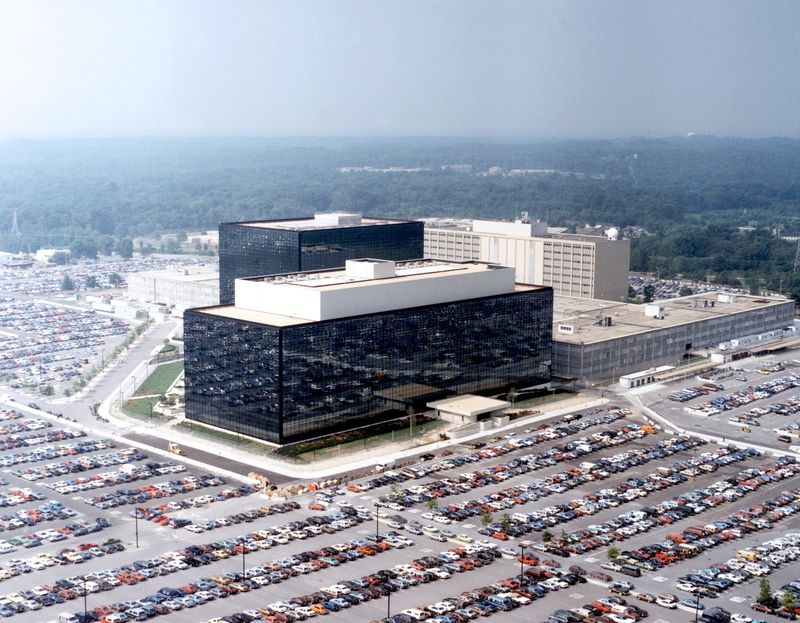
A day told in colour codes: yellow, green, then orange
The clearest public record of the NSANet outage Fort Meade experienced on Tuesday is the sequence of status codes the agency pushed to its own employees — a sequence that raised as many questions as it answered, because it moved in the wrong direction.
Tuesday morning: “code yellow”
On Tuesday morning, an employee voicemail described conditions as “code yellow” — the second-highest of the system’s three levels. Non-emergency staff were told to arrive in a staggered manner, while emergency staff were told to report as usual. The detail was first reported by The New York Times. A staggered arrival is the kind of instruction an organisation issues when it expects disruption but not paralysis: the campus was open, the work was expected to continue, and the problem, whatever it was, was already serious enough to manage the workforce around it.
Tuesday afternoon: “temporary degradation” during routine maintenance
By Tuesday afternoon, the agency had put its account on the record. The NSA said it “experienced temporary degradation during scheduled routine maintenance,” acknowledged that “some internal systems were affected,” and stated that “mission-critical capabilities remain fully operational,” citing the multiple layers of redundancy in its architecture. Every word of that statement is doing work. “Degradation” is not “outage”; “some internal systems” is not the whole network; and the emphasis on redundancy was a direct answer to the obvious question of how a single maintenance event could touch a classified network at all. What the statement did not do was explain the mechanism — that account came from elsewhere in the administration, and the distinction matters, as set out below.
Tuesday evening and night: green, then orange
On Tuesday evening, the employee voicemail briefly returned to “code green” — report as scheduled — suggesting the agency believed the episode was ending. Then, later on Tuesday night, the status moved to “code orange,” closing the campus to most employees and admitting essential personnel only, until further notice. The reversal was not explained. An agency that tells its workforce at dusk to come in as normal and then, hours later, tells most of them to stay away has either discovered something new, reassessed something old, or decided that the work of restoration is easier with an emptier campus — and as of publication, officials have not said which. What is established is narrower: a source told CNN restoration was ongoing but not yet complete, and no official confirmation of full restoration has been issued.
The official explanation: a security patch that would not restart
The most specific account of the cause came not from the NSA but from the Director of National Intelligence, Jay Clayton, speaking on Fox Business. Clayton said the outage followed the application of a software patch for major vulnerabilities in PHP that had been discovered last month. PHP is the programming language that powers about 70% of the world’s websites, and the flaws at issue were serious: they could allow hackers to read memory containing sensitive information such as passwords. AI tools had helped researchers exploit the flaws, setting off a global patching scramble among the organisations that run PHP — a scramble the NSA itself had joined from the other side, urging organisations to patch.
Clayton’s account of what then happened inside the agency was strikingly plain: “some of these systems [did] not come back up when you patch them as expected.” On that telling, the Jay Clayton NSA patch explanation is a story about remediation, not intrusion — the fix was applied, and part of the estate failed to restart.
Two distinctions belong on the record. First, this is the account given by the Director of National Intelligence in a television interview; the NSA itself has not confirmed the patch link beyond its own maintenance statement, which says only that the degradation occurred during scheduled routine maintenance. Second, nothing in any official account suggests the PHP flaws were exploited at the NSA — the patching scramble is the context for why the patch was applied, not evidence that the vulnerability was used against the agency. Signal Post News reports the PHP vulnerability NSA outage link as what it is: the explanation offered by the nation’s top intelligence official, not yet confirmed by the agency whose network failed.
“We are not under attack”: was the NSA hacked?
Because the question “was the NSA hacked” is the first one every reader asks, it is worth setting out the answer with the precision the sourcing allows. CNN’s sources said there was no evidence of a cyberattack. Clayton said the same. Homeland Security Secretary Markwayne Mullin said there was “complete certainty… we are not under attack.” White House spokesperson Lauren Bis likewise said there was no evidence of a cyberattack. No official, at any point on Tuesday, described the event as hostile action, and no source has reported that classified data was breached.
Former senior intelligence official Beth Sanner explained why specialists found the attack theory unpersuasive: the system is firewalled and is run by “the most competent cyber agency in the world,” making a cyberattack, in her assessment, “the least likely scenario.” That is an expert judgement, not a forensic finding, and this article treats it as such. But the alignment behind it is notable: the people with access to the classified picture, the cabinet secretary responsible for homeland security, the White House, and a former senior official with no institutional reason to protect the agency’s reputation all pointed the same way — at an accident, not an adversary.
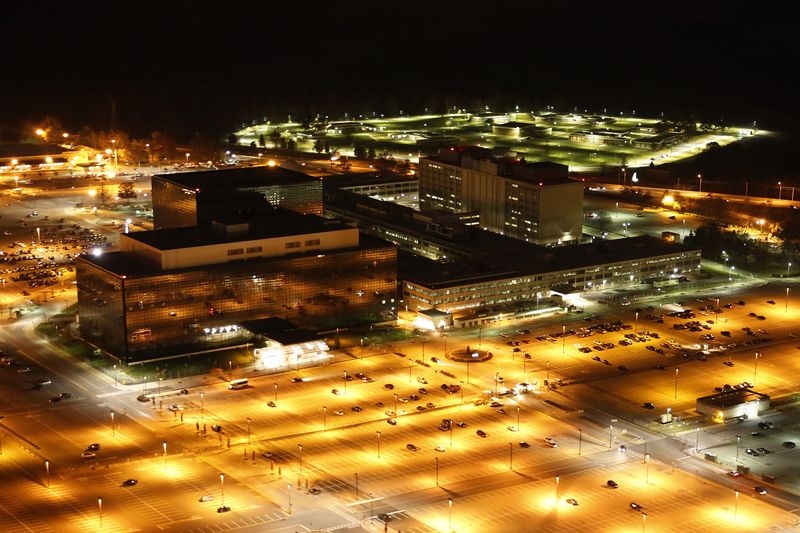
What kept working while NSANet was down
The outage landed at a diplomatically loaded moment. President Donald Trump was travelling in Asia — in the Philippines, and heading to China on Wednesday for talks with Xi Jinping and Vladimir Putin — and the first operational question in any intelligence failure is whether the president’s flow of urgent intelligence is interrupted. On that point, a current and a former US official said urgent intelligence to the president was not affected. Intelligence sharing with the Five Eyes partners was likewise not impacted, officials said.
A former senior NSA official offered the most useful technical frame for the whole episode: NSANet is “more of a network of networks,” and a full outage is unlikely given its redundancies. The realistic cost, on that account, is friction rather than blindness — an outage of this kind could slow analysis and reporting, and is, in the former official’s words, “alarming, but likely not crippling.” That assessment lines up with the NSA’s own statement that mission-critical capabilities remained fully operational, and it is the correct calibration for the event: a serious internal failure at the world’s largest signals-intelligence agency, absorbed by design features built for exactly this contingency, with the visible symptoms — a closed campus and a workforce told to stay home — falling on the administrative rather than the operational side of the house.
Why this matters
Analysis, clearly labelled as such. The NSA classified network outage matters less for what stopped working than for what it revealed about how the most hardened network in the US government can still be brought low: not by an enemy, but by a patch.
Start with the paradox. The PHP vulnerabilities were the kind of flaw that security professionals lose sleep over — memory disclosure that can expose passwords, accelerated by AI-assisted exploitation, serious enough to trigger a worldwide remediation effort that the NSA itself publicly encouraged. Patching was not optional; it was the responsible act, urged on everyone else by the very agency that then stumbled applying it. The lesson is uncomfortable for every large organisation, not just this one: the maintenance window is itself a moment of maximum fragility, because the act of fixing a system requires taking parts of it down and trusting that they will come back. On Tuesday, at Fort Meade, some of them did not.
Second, the episode is a live demonstration of the difference between redundancy on paper and redundancy in practice. The redundancy worked where it was designed to matter most — mission-critical capabilities, the president’s intelligence flow, Five Eyes sharing all continued — while the failure surfaced in internal systems and in the mundane machinery of a working campus. That is roughly what resilient architecture is supposed to look like. But the unexplained green-to-orange reversal cuts the other way: an organisation confident in its picture does not usually relax its posture at dusk and tighten it again before morning without saying why. Until officials explain that sequence, it remains the loose thread of the official account.
Third, there is the matter of trust in official wording. “Temporary degradation” and “campus closed until further notice” are both true on the record as given, and they sit in obvious tension. Readers do not need to assume bad faith to notice the gap; agencies write statements to describe the narrowest defensible version of events, and intelligence agencies write them narrower than most. The facts that would close the gap — which systems, for how long, restored when — are precisely the facts not yet provided.
The latest failure in a week of them
Context matters here, because the NSA outage did not happen in isolation. It was the latest in a string of technology failures between November 12 and 17 that has tested the patience of anyone who relies on large systems: the Microsoft 365 outage that took Outlook and Teams down in 74 countries; an FAA failure that produced a nationwide ground stop on Friday, traced to a single router in Arkansas; the online banking outages that hit Chase, Bank of America and Wells Fargo customers on Monday; and failures affecting United Airlines and Apple. Officials insist each failure has a separate technical cause and that none of them was a cyberattack.
That insistence is itself part of the story. A week in which the world’s biggest software platform, its aviation regulator, its largest banks, a major airline and its most secretive intelligence agency all fail within six days — each, officials say, for unrelated reasons — is a week that teaches the public two lessons at once. The first is about fragility: complex systems fail in ordinary ways, constantly, and the failures only become news when they cluster. The second is about credibility: the more often “no evidence of a cyberattack” has to be said, the more work the sentence has to do. One further report belongs in this section with its attribution attached: some reporting, by The New York Times and carried via other outlets, said the network had been unstable for weeks before Tuesday. That claim has not been confirmed by the NSA, and Signal Post News reports it as an attributed report, not an established fact — but if it is borne out, it would reframe Tuesday from a single bad maintenance window into the visible peak of a longer problem.
Fort Meade has been here before: the outage of 2000
There is a precedent, and it is not reassuring about timescales. In 2000, a technology failure downed NSA computers for nearly three days and interrupted intelligence processing at Fort Meade. The comparison cuts in two directions. On one hand, the 2000 episode is the standing proof that the agency can lose its internal computing for days without the sky falling — intelligence work degraded, improvised and recovered. On the other hand, it is a reminder that “temporary” at Fort Meade has historically been measured in days, not hours, and that the distance between an agency statement and a restored network can be longer than the statement implies. Tuesday’s event differs in cause and context — a patch that failed to restart, in the middle of a global patching emergency, rather than the technology failure of a quarter-century ago — but the institutional memory of 2000 is part of why a closed campus and a code orange draw such attention.
What happens next
Four things will decide how this story is remembered. The first is restoration: a source told CNN the work was ongoing but not complete, and until the NSA confirms full restoration — and the campus status line returns to green and stays there — the event is not over, whatever the statements say. The second is explanation: the green-to-orange reversal on Tuesday night remains unexplained, and a fuller account of the timeline is owed, if only because the agency’s own workforce learned the day’s plot twists from a voicemail. The third is confirmation: whether the NSA itself ever confirms the patch mechanism that the Director of National Intelligence described on television, or whether the maintenance statement remains the agency’s whole public account. The fourth is scrutiny: a failure that begins with a vulnerability the NSA urged the world to patch, and ends with the NSA’s own systems failing to restart, invites obvious questions about patch testing and rollback planning inside classified environments — questions that oversight committees exist to ask, and that the answers to the first three items will either satisfy or sharpen.
For now, the disciplined summary is the narrow one the record supports. NSANet went down at Fort Meade on Tuesday, November 17, during what the NSA calls scheduled routine maintenance. Some internal systems were affected; mission-critical capabilities, by the agency’s account and the accounts of current and former officials, remained operational, and neither the president’s intelligence flow nor Five Eyes sharing was interrupted. Senior officials across the administration say, uniformly and on the record, that there is no evidence of a cyberattack, and the cause publicly offered by the Director of National Intelligence is a security patch after which some systems did not come back up as expected. The campus closed to most employees on Tuesday night, until further notice. Everything beyond that — the full timeline, the reason for the overnight reversal, the moment of confirmed restoration — is still to come, and Signal Post News will update this story as officials provide it. If you find our reporting useful, like this story, follow Signal Post News for continuing coverage, and share your view in the comments.
Sources
- CNN — Highly classified national security communications network goes down: NSANet went down at Fort Meade on Tuesday, November 17, 2026, per six people familiar with the matter; the code yellow, code green and code orange employee voicemail sequence and the campus closure to all but essential personnel; no evidence of a cyberattack per CNN’s sources; urgent intelligence to President Trump and Five Eyes sharing unaffected; a source said restoration was ongoing but not yet complete; the former senior NSA official’s “network of networks” and “alarming, but likely not crippling” assessment; Beth Sanner’s assessment that a cyberattack was “the least likely scenario.”
- The Wall Street Journal — Classified U.S. intelligence system is down for now, U.S. officials say: the classified system outage as described by US officials.
- National Security Agency statement, Tuesday, November 17, 2026: the agency “experienced temporary degradation during scheduled routine maintenance”; “some internal systems were affected” but “mission-critical capabilities remain fully operational,” citing multiple layers of redundancy.
- Director of National Intelligence Jay Clayton, on Fox Business: the outage followed applying a software patch for major PHP vulnerabilities discovered last month; “some of these systems [did] not come back up when you patch them as expected.” Homeland Security Secretary Markwayne Mullin: “complete certainty… we are not under attack.” White House spokesperson Lauren Bis: no evidence of a cyberattack.
- Associated Press, Politico, The Record and The Register, November 17, 2026: corroborating coverage of the NSANet outage. The New York Times, via other outlets: first report of the Tuesday-morning code yellow voicemail detail, and reporting that the network had been unstable for weeks — the latter attributed and not confirmed by the NSA.