War · Ukraine–Russia · North Korea
North Korea workers in Russia are being recruited through a commercial website, priced per head, and delivered to Russian companies in groups of fifty or more — on student visas, under North Korean embassy supervision, and in at least one case to a company that makes food for the military. That is the central finding of a nine-month investigation released on Thursday by Global Rights Compliance, a Hague-based rights group, and reported by Reuters and South Korea’s Aju Business Daily. The men at the centre of it are, on paper, students. Almost everything about how they are sold says otherwise.
Track it live: Ukraine war map · Live war tracker
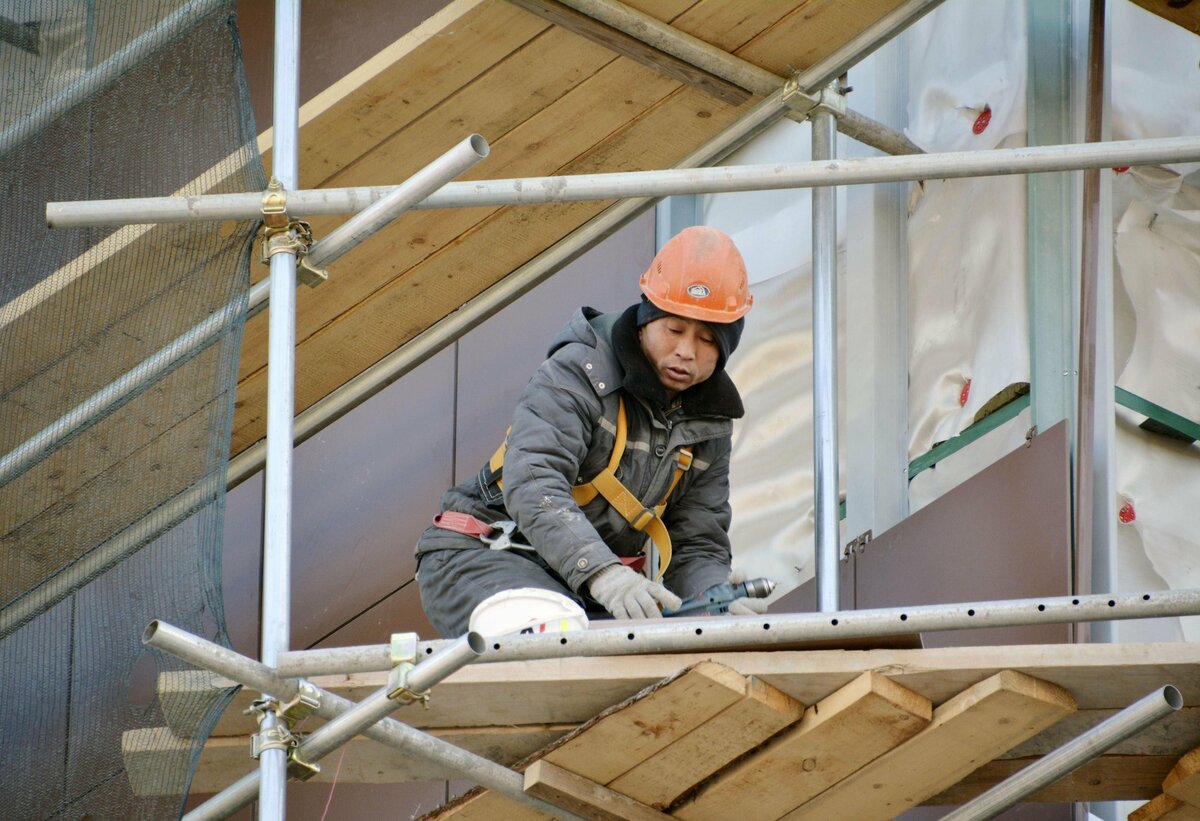
The investigation, published on October 29, describes a broker network — sponsored, the group says, by Pyongyang — that has moved North Korean workers into Russian factories and workplaces in breach of United Nations sanctions, including factories that turn out goods Moscow uses in its war in Ukraine. It is the most detailed public account yet of the labour half of the Russia–North Korea partnership: quieter than the 10,000-plus North Korean troops South Korea’s intelligence agency says have fought alongside Russian forces since 2024, and, on the numbers in this report, considerably larger. The troop deployments have already drawn warnings from Seoul, where President Lee Jae Myung has threatened action over North Korean prisoners of war held in Ukraine.
A website, a broker and a price per worker
The storefront, according to the report, is a website: KNDR.su, named for the Russian abbreviation for North Korea. Aju Business Daily, summarising the investigation, identifies its operator as Vladimir Sokolov, a Moscow businessman who has run the Black Horse Group, an importer of machinery from China and Europe, since 2007. Global Rights Compliance investigators posed as prospective employers and spoke to Ruslan Zhukov, described in the report as the network’s operational head. What they were told reads like a sales pitch, because it was one. Orders are taken in groups of at least fifty workers. The commission runs to 100,000–150,000 rubles per worker — roughly $900 to $1,350 — which puts the broker’s fee for a single minimum order at some $45,000 to $67,500 before a single shift is worked. The site advertises twelve-hour days with two days off a month. And when the undercover buyers raised labour law, Zhukov’s answer, as the report renders it, was the whole scheme in one sentence: the men are students, so there is no employment relationship, and labour laws do not apply. Zhukov has denied any connection to the Black Horse network and insists the North Koreans are students, not workers. Of the two men the group identified as key figures and approached, one replied to deny the accusation; Russia’s foreign ministry and North Korea’s embassy in Moscow did not respond to Reuters’ requests for comment.
The student-visa pipeline, in numbers
The visa statistics are the investigation’s hardest evidence, because they come from Russia’s own issuance figures. Last year Russia issued 36,413 visas to North Korean nationals — nearly four times the number in 2024 — and more than 98 percent of them were student visas. The workers, the report says, are enrolled at Russian universities on paper while doing what the scheme calls “practical training” at the companies that bought them. Set that against the legal position: in 2017, after North Korea’s missile and nuclear tests, the UN Security Council banned new work authorisations for North Korean nationals outright and ordered every member state to send the workers already abroad home by the end of 2019. A flow of thirty-six thousand “students” in a single year is what a banned labour programme looks like after it has been re-labelled. The conditions at the end of the pipeline, per the report, are up to eighteen hours of work a day, six or seven days a week, with about ninety percent of earnings remitted to the North Korean authorities. Global Rights Compliance’s earlier work this year, based on interviews with North Korean workers on Russian construction sites, fills in what that remittance means in practice: a mandatory monthly quota owed to the state, wages around $800 a month, and — after the quota, travel debts and living costs — as little as ten dollars a month left in the worker’s hands. The missile programme that prompted the 2017 ban has not paused in the meantime: this month North Korea fired multiple ballistic missiles on a trajectory of some 900 kilometres.
Embassy inspectors and the factories the report names
What lifts this investigation above a story about visa abuse is the degree of state involvement it documents on both sides. Companies that want North Korean workers must first pass an on-site inspection by the North Korean embassy, the website itself states; the investigators say they confirmed, using facial-recognition technology, that embassy officials carried out such inspections at Russian factories. The report identified nine workplaces. At one, KPP Ruscon, a producer of military food and canned goods in Moscow Oblast, about thirty North Korean workers were visually confirmed. Another, Agrisovgas, a metal-processing company in Kaluga Oblast that is already under US sanctions, received an embassy inspection as a potential employer. A food supplier to the armed forces and a sanctioned metal processor are not random employers: they sit inside the war economy, which is precisely where the investigators say the labour is going. Kyodo News reported on September 21, 2025, under the headline “Ukraine analysis finds North Korean migrant workers entering Russian military,” that an analysis by Ukrainian authorities, cited by a defence intelligence official, found North Korean labourers sent to Russia’s Far East for temporary work had enlisted in the Russian military, with hundreds of them deployed to Russia’s western Kursk region since around July 2025 — a different source, from the opposing side of the war, pointing the same way as the investigators about where the labour pipeline can lead, though it is a Ukrainian analysis rather than independent proof. “This investigation exposes a dangerous convergence between two states’ military ambitions,” said Elise Lauriot Prevost, the group’s legal adviser — “North Korea’s use of overseas forced labour to finance its weapons programme, and Russia’s growing reliance on labour to sustain its war economy.” Her colleague Dylan Carter, the lead investigator, put the mechanics more bluntly: “In Russia, slave labor has become a commodity that can be accessed with just a few clicks. Under the thin guise of educational exchange, groups of North Korean workers are openly advertised online and sold like products.”
Why this matters
Start with scale. The soldier pipeline — more than ten thousand North Korean troops in the Ukraine war since 2024, on South Korean intelligence estimates — drew the world’s attention, and rightly. But the Multinational Sanctions Monitoring Team estimated in September that North Korea’s overseas workforce numbers between 35,600 and 101,280 people and earned between $450 million and $800 million last year. Even the bottom of that range is serious money for a sanctioned state funding weapons programmes; the top of it rivals the value analysts put on Pyongyang’s arms transfers. Then consider Russia’s side of the bargain. Four years of full-scale war have drained its labour market through mobilisation, battlefield losses and emigration, while its defence plants run around the clock. A workforce that can be ordered in batches, works eighteen-hour days, cannot legally quit, cannot organise and is policed by its own embassy is, from a plant manager’s desk, a solution — and from the investigators’ account, that is exactly how it is being marketed. The third point is about sanctions themselves. The ban on North Korean labour is not obscure or contested; it is a Security Council mandate with a repatriation deadline six years past. The European Union sanctioned Sokolov himself on October 12, freezing his assets over industrial cooperation with North Korea — and the website at the centre of this report was still openly describing its terms to undercover buyers. Enforcement, in other words, is naming the network faster than it is dismantling it. Who loses is equally clear: the workers themselves, who keep a sliver of their pay under threat of retribution against them and their families; Russian workers undercut by labour that never has to be bargained with; and a sanctions regime whose credibility thins every time a prohibited trade is conducted through a public price list.
What is claimed, what is denied, and what is not yet proven
Signal Post News is reporting an investigation’s findings, and they should be held at that level. Global Rights Compliance has described its methods — open-source records, facial recognition, undercover approaches — and named names, companies and prices, which makes its claims checkable in a way anonymous allegations are not. But no court has tested them, the two governments most involved have not answered them, and the one named operator who did respond denies the central characterisation: students, he says, not workers; no connection, he says, to the network. The visa figures, the EU’s October 12 designation of Sokolov, and the existence of the KNDR.su platform are independently documented facts. The individual placements, the embassy-inspection account and the war-goods link rest, for now, on the investigators’ work as reported by Reuters and Aju Business Daily. Readers should weigh the story in exactly those layers.
What happens next
Watch four things. First, whether the United States or Britain follows the EU in designating the network — and whether designations reach the named employers, Ruscon and Agrisovgas, rather than only the broker. Second, Russia’s 2026 visa-issuance data: if student visas to North Koreans hold at last year’s level, the pipeline is policy, not oversight. Third, whether KNDR.su stays online and keeps quoting prices — the simplest public test of whether anything has changed. Fourth, the sanctions monitors’ next report, which will show whether the overseas-workforce estimate is still climbing. All of it unfolds while the war’s diplomatic track runs in parallel — President Volodymyr Zelenskyy is pressing for a new round of peace talks in Abu Dhabi as early as this Sunday, even as he warns of Ukraine’s interceptor shortage. The partnership between Moscow and Pyongyang began, in its current form, with a 2023 summit and a 2024 treaty containing a mutual-defence pact. This investigation suggests its most durable product may not be shells or soldiers, but a labour market — one in which people are the export, a website is the shopfront, and a student visa is the receipt.
Sources: Reuters (October 29, 2026, Seoul, by Jack Kim), reporting the Global Rights Compliance investigation into the network sending North Korean workers to Russian factories; Aju Press / Aju Business Daily (October 29, 2026, by Park Seungho), carrying additional named detail from the same report, including the KNDR.su platform, Vladimir Sokolov, Ruslan Zhukov, the per-worker commission, the visa figures and the EU designation; Kyodo News (September 21, 2025), “Ukraine analysis finds North Korean migrant workers entering Russian military,” reporting an analysis by Ukrainian authorities, cited by a defence intelligence official, that North Korean labourers sent to Russia’s Far East for temporary work had enlisted in the Russian military and that hundreds had been deployed to the Kursk region since around July 2025; and the Kyodo file photograph above, taken on December 23, 2019, near Vladivostok; Global Rights Compliance, investigation published October 29, 2026, and its earlier June 2026 report based on testimony from North Korean workers on Russian construction sites, which described a mandatory monthly state quota, wages of roughly $800 a month reduced by quota and deductions to as little as about $10 kept, confiscated passports, and work of 12–16 hours a day for up to 364 days a year.