Economy / Milan — Norges opposes Monte dei Paschi bids for Banco BPM and Banca Generali, setting up a decisive shareholder test of the bank's defence against Intesa Sanpaolo.
Track it live: Live markets tracker
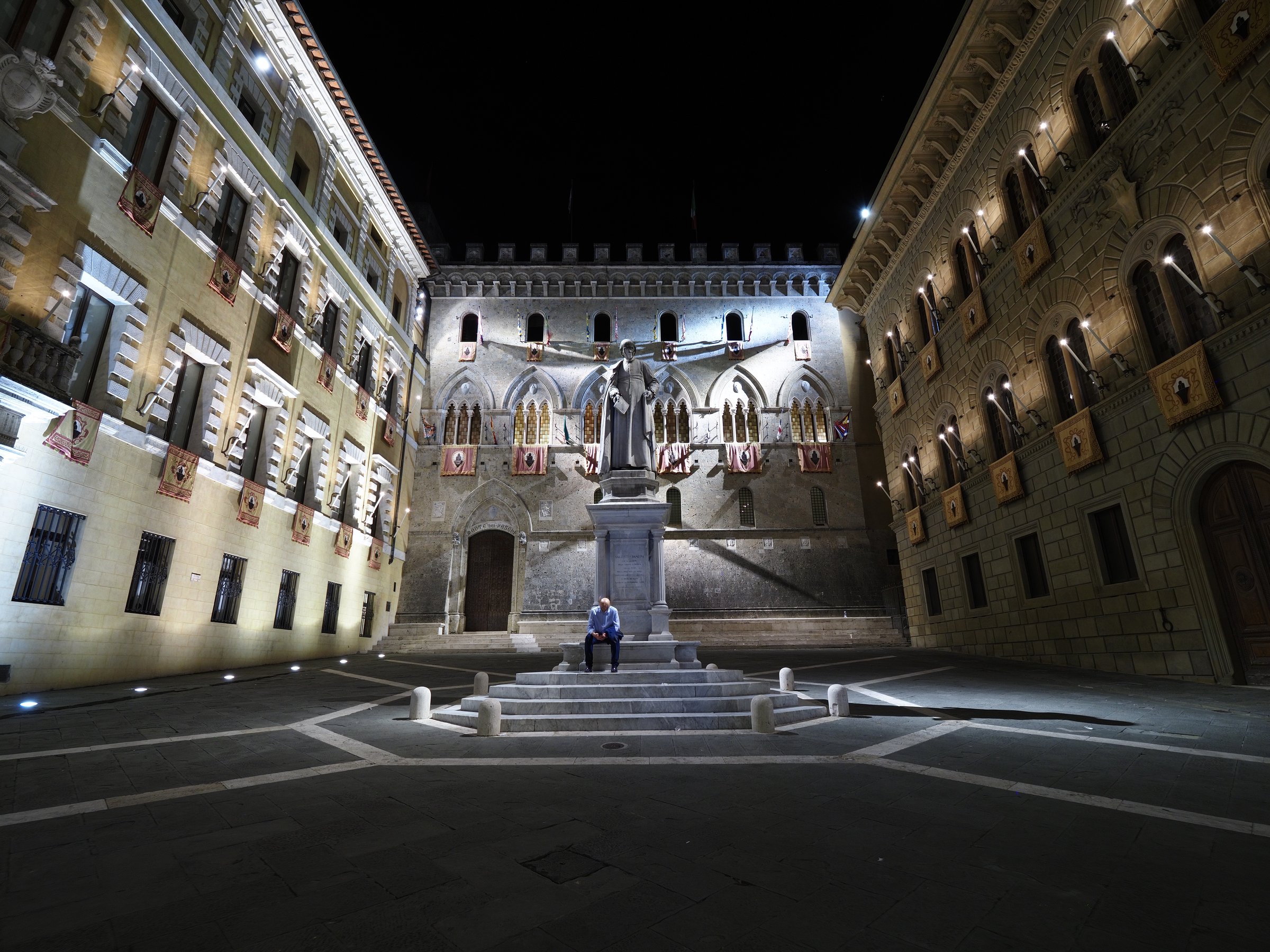
Norges opposes Monte dei Paschi bids for two rival lenders and a merger at the heart of its defence plan, the Norwegian sovereign wealth fund's manager said ahead of a shareholder meeting that may decide the future shape of Italian banking. Reuters reported on Saturday, October 24, that Norges Bank Investment Management will vote against Monte dei Paschi di Siena's proposed bids to buy Banco BPM and Banca Generali, and against the proposed merger of merchant bank Mediobanca into Monte dei Paschi. The announcement lands five days before Monte dei Paschi shareholders meet on Thursday, October 29, to vote on chief executive Luigi Lovaglio's defence plan against a takeover offer from Intesa Sanpaolo, Italy's largest bank.
Norges is not a marginal holder speaking for effect. The fund, which manages Norway's oil wealth and is the world's largest sovereign wealth fund, held a 2.98 percent stake in Monte dei Paschi at the end of December 2025, according to Reuters on October 24. Its voting intentions are watched far beyond its percentage, because Norges publishes its reasoning, applies a consistent set of principles across thousands of holdings, and is frequently treated by other institutional investors as a governance signal. When Norges says no in advance, undecided shareholders are given both cover and a rationale to say no as well — which is why a statement from a holder of under three percent can move the expectations around a meeting of this size.
What Norges will oppose — and what it will support
The detail of the fund's position, reported by Reuters on October 24, is more surgical than a blanket rejection. Norges will vote against the proposed acquisitions of Banco BPM and Banca Generali, against folding Mediobanca into Monte dei Paschi, and against an extraordinary dividend to be paid from reserves. At the same meeting, however, it will approve the share buyback programme and the buyout of the Generali shares that Mediobanca holds in insurer Generali. That distinction matters. Norges is not voting against returning capital or against tidying a cross-holding; it is voting against the expansion strategy that sits at the centre of Lovaglio's defence, while supporting items it evidently judges compatible with shareholder returns on their own merits.
The fund's stated reasoning was brief and principled. Norges said its decisions follow its voting principles, including the position that "mergers, acquisitions and other corporate transactions should maximise shareholder returns," Reuters reported on October 24. Read plainly, the fund is signalling that it does not believe the Banco BPM, Banca Generali, and Mediobanca transactions clear that bar — whether because of price, strategic fit, execution risk, or some combination that Norges has not itemised publicly. Large index-style investors rarely campaign like activists; they state a principle, vote it, and let the arithmetic speak. The absence of a detailed public critique should not be mistaken for an absence of analysis behind it.
The defence plan and the Intesa offer behind it
None of these votes makes sense without the bid in the background. Intesa Sanpaolo's takeover offer for Monte dei Paschi forced the Siena bank's board to choose between recommending surrender to a larger, stronger rival or presenting shareholders with an alternative future ambitious enough to justify independence. Lovaglio's answer is the defence plan on the October 29 agenda: grow by acquiring Banco BPM and Banca Generali, absorb Mediobanca, and thereby become a combined group large enough, management argues, that shareholders need not accept Intesa's terms. Defence-by-acquisition is a recognised playbook in banking takeovers, but it asks shareholders to take two risks at once — the risk of the original bid being lost, and the risk of the acquisitions themselves.
Background explains both the ambition and the sensitivity. Monte dei Paschi, founded in the fifteenth century and often described as the world's oldest surviving bank, was rescued by the Italian state in 2017 after years of losses and a derivatives scandal, a history that is generally known and that shaped a decade of restructuring, job cuts, and gradual state exit. That a bank once kept alive by taxpayers is now bidding for rivals is, depending on the observer, either a remarkable rehabilitation story or a warning about how quickly rescued institutions return to empire-building. Both readings will be present, in different languages, in the room on October 29. Italy's wider banking consolidation wave supplies the third layer of context: years of mergers have been redrawing the sector, regulators have generally favoured stronger, larger groups, and each transaction now alters the balance among the remaining players, which is why a vote in Siena draws a statement from Oslo.
Why this matters
Why this matters goes beyond one meeting. First, it is a live test of whether Europe's largest passive-style investor will underwrite bank consolidation at the prices boards propose, or insist that consolidation prove itself deal by deal. Norges' principle — that transactions should maximise shareholder returns, as quoted by Reuters on October 24 — sounds unobjectionable, but applying it against a flagship defence plan converts it from boilerplate into a threshold other boards must now expect to meet. Second, the vote arithmetic is genuinely uncertain. A 2.98 percent stake held at the end of December 2025, per Reuters, does not decide a meeting alone, yet in a contested vote where retail holders, domestic institutions, and foreign funds split along different lines, a public no from the world's largest sovereign fund can shift the margin by legitimising dissent.
Third, the outcome sets prices elsewhere. If Monte dei Paschi's plan survives, its bids for Banco BPM and Banca Generali proceed from a position of shareholder endorsement, and Intesa must decide whether to raise its offer, walk away, or wait for execution risk to do its work. If the plan fails, Intesa's offer becomes the default future, and the boards of Banco BPM and Banca Generali must recalculate their own independence. Either way, Italian bank shares, and the spreads investors charge for Italian financial risk, will reprice — the kind of move best followed alongside the broader market context in the Federal Reserve's latest rate decision and oil price moves, and alongside other valuation tests such as Daytona's $1 billion agent-cloud valuation, where investors are likewise being asked to pay today for a structure that does not yet exist.
Both sides of the argument
Supporters of Lovaglio's plan argue that scale is survival in modern European banking: technology costs, capital requirements, and competition from larger groups punish mid-sized lenders, and a combined Monte dei Paschi, Banco BPM, Banca Generali, and Mediobanca would hold stronger positions in wealth management and insurance distribution than any of them holds alone. They argue, too, that Intesa's offer undervalues the bank's recovery since the 2017 rescue, and that an extraordinary strategic expansion, even a risky one, preserves an independent centre of Italian finance outside Milan's largest group. On this view, Norges is applying a formula to a situation that requires judgement about national banking structure as well as spreadsheet returns.
Critics answer that defence plans have a long record of destroying the value they claim to protect, because a target that buys rivals to escape a bidder usually pays full prices with its own undervalued shares, under time pressure, with integration risk layered on top. They note that Norges still approved the buyback and the Generali stake buyout reported by Reuters on October 24, which undercuts any claim that the fund is simply hostile to management: it distinguished between actions it judged return-enhancing and a merger programme it did not. The extraordinary dividend from reserves, which Norges will also oppose, fits the same logic — paying out reserves while simultaneously asking shareholders to fund expansion bids points in two directions at once, and at least one large shareholder has now said so before the vote rather than after it.

What happens next
What happens next is concentrated in a single day and its aftermath. On Thursday, October 29, Monte dei Paschi shareholders vote on each element: the Banco BPM and Banca Generali bids, the Mediobanca merger, the extraordinary dividend, the buyback, and the Generali buyout. A split verdict is entirely possible — Norges' own ballot, as reported by Reuters on October 24, is split — and a split verdict would leave Lovaglio with a partial mandate and difficult choices about which parts of the defence can proceed without the rest. If the core acquisitions are rejected, expect Intesa Sanpaolo's offer to dominate the following weeks, with attention turning to price and to any conditions regulators attach. If the plan passes despite Norges, expect the fund's dissent to be cited in every subsequent debate about valuation as the bids move toward completion. Either way, October 29 will show whether the world's largest wealth fund merely comments on European banking consolidation, or helps to decide it.