Primary topic: California No Robo Bosses Act
What California changed
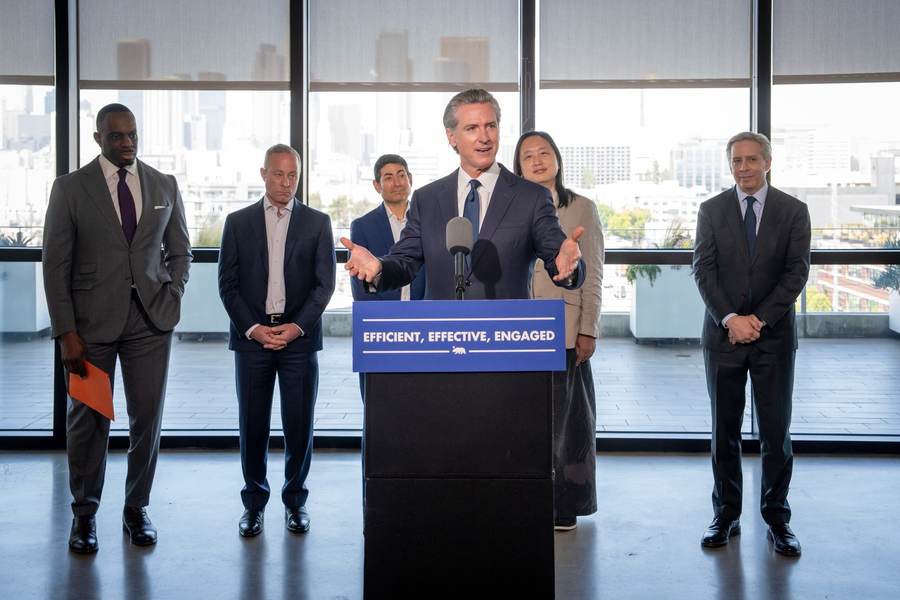
The California No Robo Bosses Act draws a bright line around one of the most consequential workplace decisions: an employer may not rely solely on an artificial-intelligence or automated decision system to fire or discipline a worker. Governor Gavin Newsom signed Senate Bill 947 on September 30, 2026. The first-in-the-nation law takes effect July 1, 2027 and requires human corroboration when an automated system primarily drives the outcome.
The statute does not ban workplace algorithms. Employers may still use automated tools to flag performance, attendance, safety or productivity concerns. But a human decision-maker must compare the machine output with evidence such as manager evaluations, peer reviews or personnel files. The worker must receive written notice describing the system’s role, the data used and a human contact for questions.
That structure is designed to prevent a familiar accountability failure: a manager points to the software, the vendor points to the employer and the employee cannot identify who actually decided. SB 947 insists that a consequential action have a responsible human and an explainable record. The law’s wager is that requiring corroboration will catch errors without eliminating useful analytics.
Penalties and enforcement
Violations can carry a $500 civil penalty, while the law also allows punitive damages and attorney’s fees through a private right of action. The $500 figure alone may look modest for a large company, but private litigation changes the economics. Repeated violations across many workers can multiply exposure, and fee shifting makes smaller claims more practical to bring.
A private right of action also means enforcement will not depend entirely on a state agency’s budget. Workers can challenge decisions directly, creating case law around what “solely” and “primarily” mean in practice. Employers will likely respond by keeping documentation that shows the human review was substantive rather than ceremonial.
The hardest dispute will be whether a person genuinely corroborated the outcome. A manager clicking “approve” after an algorithm produces a recommendation may satisfy a workflow but not the law’s purpose. Courts will need to examine what evidence the manager considered, whether contradictory information was available and whether the person had authority to reject the system.
Why this matters
A firing is not a content recommendation. It changes income, health coverage, immigration stability, housing security and future job prospects. When an algorithm contributes to that decision, errors are not merely inconvenient. They can cascade through a household. California’s law recognizes that consequence by placing a human checkpoint before the action becomes final.
Automated employment tools can create value. They can identify patterns across large workforces, reduce some forms of inconsistent supervision and surface safety concerns quickly. But their apparent objectivity can disguise flawed inputs. Productivity scores may omit teamwork, accommodation needs or equipment failures. Attendance data may misclassify approved leave. Customer ratings may carry bias. Human corroboration provides a chance to add the context the dataset lacks.
The law also changes the burden of explanation. Workers often learn only that a metric fell below a threshold. Written notice should reveal whether an automated system played a central role and what categories of data mattered. That information helps a worker correct records, challenge a misclassification or understand a legitimate performance problem.

From SB 7 veto to SB 947 signature
Newsom vetoed the predecessor, SB 7, in October 2025, calling it overly broad. The reversal is politically and substantively important. It shows that California was not choosing between regulation and no regulation; lawmakers were negotiating scope. SB 947 narrowed the covered relationships and procedures enough to win the governor’s signature.
The Senate passed the new measure 29-9 on May 20, 2026. During the process, contractor protections were removed. That change reduced business opposition and the universe of covered decisions, but it also created a significant gap. Companies increasingly classify work through contractor, franchise and platform arrangements. An algorithmic deactivation can end a contractor’s livelihood even if employment law calls it something other than firing.
The path from veto to signature is a common pattern in technology regulation. First drafts try to address a broad harm; executives object to definitions, cost or unintended effects; sponsors return with narrower duties. The result is more likely to survive, but less likely to cover every worker affected by the technology. SB 947 is therefore both a breakthrough and a compromise.
What human corroboration should mean
The statute points to manager evaluations, peer reviews and personnel files as corroborating material. A serious review should test the algorithm’s conclusion against at least one independent source, not simply restate the same data in a different dashboard. If a scheduling system flags absences, for example, the reviewer should check approved leave records and supervisor notes rather than rely on another report generated from the same attendance feed.
Independence matters because automated errors often propagate. One wrong status can flow into payroll, productivity scoring and disciplinary systems. Three screens may appear to agree while all inherit the same bad field. Employers need data-lineage records showing where information originated and whether the human reviewer examined a genuinely separate source.
Training will determine whether the safeguard works. Managers must understand that they are accountable for the final decision, know how to challenge the tool and have enough time to review context. If company incentives reward rapid approval and punish overrides, the human step becomes theater. Regulators and courts will look beyond the presence of a name on a form.
The notice right
Written notice can transform a black-box decision into a contestable one. It should identify that an automated system was used, describe its role, list the data categories considered and provide a human contact. The notice does not necessarily reveal proprietary source code. It reveals enough process for the worker to understand and respond.
That distinction addresses a frequent vendor defense. Companies may claim that model details are trade secrets. Workers do not need every parameter to challenge an incorrect attendance record or biased customer-score input. They need the material factors and a channel with authority to investigate. SB 947 attempts to protect both legitimate confidentiality and procedural fairness.
The quality of the contact matters. A generic inbox that repeats the algorithm’s output would not provide meaningful review. Employers should designate people who can access underlying records, pause a disciplinary action and correct data. Otherwise notice becomes a postscript rather than a safeguard.

A package, not a single bill
Newsom signed SB 947 alongside a broader set of workplace technology measures. AB 1883 bars systems that attempt to predict employees’ emotional states or analyze neural data. AB 1331 restricts bathroom surveillance. SB 951 requires notices tied to technology-driven displacement. Twelve additional bills were also part of the package, signaling that California sees workplace AI as a collection of specific risks rather than one abstract category.
The emotional-state ban responds to tools that infer attitude, honesty or engagement from faces, voices or physiological signals. Such systems can present uncertain correlations as precise judgments. The bathroom-surveillance restriction draws a privacy boundary in a place where monitoring is particularly intrusive. Displacement notices address a different harm: workers need time and information when technology changes or removes roles.
Together, the measures form a layered model. Some uses are prohibited, some require human review, and some require notice. That approach is more precise than labeling all AI safe or dangerous. The test will be whether employers can navigate the layers without reducing them to a generic disclosure nobody reads.
California versus Washington
The package was signed after a September 29 White House gathering of technology leaders and amid a federal debate over “super intelligence.” Newsom also issued an order telling state agencies to use the words “artificial intelligence” rather than the abbreviation “AI,” framed as a jab at President Trump’s preferred branding. The rhetorical clash is political, but the policy difference is concrete: California is writing enforceable workplace rules while federal leaders emphasize voluntary coordination and existing law.
State leadership can accelerate protection, especially when Congress is divided. It can also create a compliance patchwork. A national employer may face one process in California and another elsewhere. Businesses will argue that inconsistent rules raise cost. Worker advocates will answer that a large state often provides the only realistic route to a baseline.
California’s market size means the law may travel beyond its borders. Companies frequently standardize the strictest workflow nationwide rather than maintain separate systems. If human corroboration becomes the default enterprise design, SB 947 will influence workers who never enter California. The same spillover has occurred in privacy, emissions and consumer-protection rules.
Winners, losers and missing workers
Employees covered by the statute gain the most direct benefit: a named human, written explanation and legal remedy. Responsible employers may also benefit because the rule gives them a framework for deploying tools without surrendering judgment. Vendors that offer audit logs, override controls and explainable factors can turn compliance into a product advantage.
Contractors are the clearest excluded group. Lorena Gonzalez of the California Labor Federation has said more work remains, including contractor coverage and healthcare AI. Platform workers may be deactivated by automated systems in ways that feel identical to firing but fall outside the employee definition. The compromise that secured passage therefore leaves a rapidly growing segment exposed.
Low-quality vendors may lose business if employers demand evidence of data lineage and bias testing. Managers also lose the ability to hide behind “the system.” That is an intentional shift. The law does not insist that every manager reach a different conclusion; it insists that someone capable of judgment owns it.
Costs, benefits and data reasoning
Compliance costs will include policy updates, manager training, documentation, notice systems and vendor review. Those costs should be compared with the cost of erroneous discipline: turnover, litigation, lost trust and rehiring. A fast automated system can be expensive if it produces false positives at scale. Human review concentrates effort on the smaller set of decisions with the largest consequences.
The $500 penalty is best understood as a floor, not the full risk. Attorney’s fees and punitive damages can dominate an individual claim, while class-sized patterns can multiply exposure. Reputational costs may be greater still. A company that cannot explain why it fired workers will struggle to defend the quality of its broader people analytics.
The law may also improve datasets. If reviewers repeatedly overturn recommendations because leave records are missing or certain teams are mismeasured, employers have evidence of a system defect. That feedback can produce better tools. Regulation is not only a brake; correctly designed, it creates a loop that makes automation more accurate.
Historical parallels
Workplace technology has long shifted power before rules catch up. Time clocks standardized attendance, scientific management quantified tasks, credit reports influenced hiring and electronic monitoring expanded supervision. Each innovation promised consistency and produced new opportunities for error or abuse. The recurring policy response has been to add access, correction and accountability rights.
SB 947 fits that history. It does not reject measurement. It rejects the claim that measurement alone is judgment. Personnel decisions include context, proportionality and credibility—qualities that can be informed by data but not delegated without responsibility. The human checkpoint is a modern version of due process inside private employment.
The historical caution is that formal review can become routine. Paper appeals and supervisor signatures do not guarantee fairness if the institution discourages disagreement. The durable effect will depend on worker awareness, enforcement and whether companies reward managers for catching system errors.
What happens before July 2027
Employers have nine months to inventory systems that influence discipline and termination. That inventory should include obvious scoring tools and less visible components inside scheduling, fraud detection, call analysis and safety software. Companies need to map which systems merely inform a decision and which primarily drive it.
Contracts with vendors will need review. Employers should demand documentation, audit rights, incident reporting and the ability to explain material factors. Vendors may resist revealing proprietary methods, but customers still need enough information to meet notice duties. Procurement teams will become part of employment compliance.
Workers and unions will prepare to use the new rights. Disputes will likely focus on the sufficiency of corroboration and whether contractors or mixed-status workers qualify. Early cases could define the law’s practical strength. Clear agency guidance before the effective date would reduce avoidable conflict.
Forward-looking scenarios
In the strongest scenario, companies build meaningful review, catch bad data and extend the process nationwide. Automated tools remain useful, but final decisions become more accurate and explainable. Litigation focuses on outliers because most disputes are resolved internally.
In the weakest scenario, employers add a rubber-stamp approval box and generic notice. Workers must litigate to prove the human step was empty. The law still creates leverage, but its benefits arrive slowly through cases rather than daily practice. Contractor exclusions encourage some firms to shift work outside coverage.
The most likely outcome lies between them. Large employers will build robust systems because reputational and litigation risk justify the cost; smaller businesses will rely on vendors and templates; courts will refine ambiguous terms. Other states will copy parts of the law, increasing pressure for a national baseline.
The larger principle
The No Robo Bosses Act does not say a human is always wiser than a machine. It says power must remain attributable. A worker should not lose a livelihood because every participant treats an automated score as someone else’s decision.
That principle can travel beyond employment to insurance, housing, credit and public benefits. In each domain, systems can assist at scale, but consequential denials require explanation and accountable review. California has chosen employment as the first bright-line case.
The law’s success will be measured less by how often companies mention artificial intelligence than by how often a real person corrects a bad outcome. Human corroboration is valuable only when the human can say no. July 1, 2027 starts the legal requirement; organizational incentives will decide whether it becomes real.
Implementation questions for employers and workers
One open question is how the law treats composite scores. A company may say no single system made the decision because attendance, productivity and customer feedback came from separate tools. If all three feed one automated recommendation, however, the process can still be primarily machine-driven. Courts will likely focus on functional control rather than the number of vendors.
Another question is timing. Notice after a firing may explain the past but cannot prevent immediate harm. Employers that want to reduce disputes should provide the explanation before final action when safety and misconduct circumstances allow. That gives workers a chance to correct records while a human reviewer can still change the outcome.
Unions can make the statutory floor more concrete through bargaining. Contracts may require access to audit results, advance notice of new monitoring tools and joint review of disputed data. Nonunion workers will depend more heavily on company process and litigation. The difference could become another axis of workplace inequality.
Small employers may need standardized guidance because they lack dedicated AI governance teams. The state can publish model notices, review checklists and examples of meaningful corroboration. Clear tools would reduce compliance cost without weakening the right. Ambiguity helps neither a worker seeking an explanation nor a business trying to design a lawful process.
Editorial assessment
California’s experiment will be watched because it converts an intuitive principle into an operational rule. Most people agree that a machine should not be the only voice in a firing, but the hard work begins with defining genuine review, preserving evidence and giving workers a usable challenge path. Employers that treat the statute as an opportunity to improve decision quality may avoid both errors and lawsuits. Those that treat it as a checkbox may create the first cases that give the law sharper meaning. The signature settled the policy direction; implementation will determine the result.
Sources and methodology
This analysis distinguishes confirmed events from interpretation and forward-looking scenarios. Reporting was cross-checked against the following sources:
Continue with technology coverage, world news and the latest trending stories.