Business · Media · Streaming · Antitrust
The Newsmax Fox Roku lawsuit, filed on Wednesday in federal court in San Jose, asks a judge to do what the Justice Department declined to do: stop Fox Corporation’s $22 billion acquisition of Roku from standing. Newsmax Broadcasting alleges the Fox Roku takeover violates Section 7 of the Clayton Act, alleges that it hands Fox more than 70% of the free, ad-supported streaming television market, and asks the court to halt further integration, keep Roku independently managed — and ultimately force Fox to divest either Tubi or The Roku Channel. Every market-share figure in this article is the lawsuit’s allegation, reported as such; Fox and Roku did not immediately respond to Reuters’ requests for comment.
Track it live: https://signalpostnews.com/tracker/markets
SAN JOSE, California, November 18, 2026 — The Newsmax Fox Roku lawsuit is, at its core, an argument about a door. Roku is the door through which tens of millions of American households reach streaming television: its operating system decides what appears on the home screen, in what order, and on what terms a channel gets found. Newsmax says it reaches its own viewers through that door — it relies on The Roku Channel for distribution of Newsmax TV and Newsmax2, according to Reuters’ account of the filing — and it now alleges that the door’s new owner is a direct competitor with both the means and the motive to close it. On Wednesday, Newsmax Broadcasting, LLC, a subsidiary of Newsmax Inc. (NYSE: NMAX), filed a federal antitrust lawsuit against Fox Corporation and Roku, LLC in the U.S. District Court for the Northern District of California, San Jose Division, Reuters reported. The complaint runs to 42 pages, per Newsmax’s own announcement of the filing, and Newsmax is represented by Kellogg, Hansen, Todd, Figel & Frederick PLLC — a litigation firm whose name on a complaint signals that the plaintiff intends the case to be taken seriously as litigation, not as a press release with a docket number.
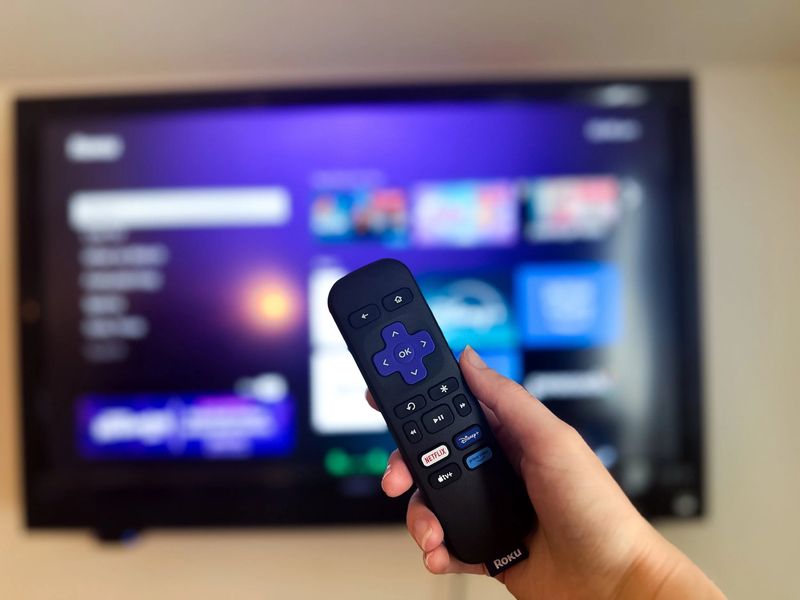
The timing is the first thing to understand. Fox completed the $22 billion Roku acquisition on November 6 — earlier than the publicly projected 2027 closing, and after months of regulatory scrutiny, per the lawsuit as reported by Reuters. The deal is therefore not a proposal that a court is being asked to block in advance; it is a closed transaction, twelve days old, whose integration is presumably already under way. That posture shapes everything about the case. Suits to stop a merger before it closes ask a court to preserve the status quo. Suits filed after closing ask a court to unscramble it — and the relief Newsmax seeks is calibrated to exactly that difficulty, in stages: halt further integration now, preserve Roku as an independently managed business while the case proceeds, and, at the end, require Fox to divest either Tubi or The Roku Channel. The staged structure is an implicit concession to the hardest question in post-closing antitrust litigation, which is not whether the plaintiff has a theory but whether the remedy remains practical once two companies have begun to merge their staffs, systems and strategy.
What the complaint alleges: a Clayton Act Section 7 lawsuit over the FAST market
The legal vehicle is Section 7 of the Clayton Act, the century-old provision that prohibits acquisitions whose effect “may be substantially to lessen competition” or tend to create a monopoly. The Clayton Act Section 7 lawsuit Newsmax has filed turns, as Section 7 cases almost always turn, on the definition of the market. Newsmax’s market is free, ad-supported streaming television — FAST — the fast-growing tier of streaming in which viewers pay nothing and advertisers pay for their attention: services such as Fox’s Tubi and The Roku Channel, alongside a long tail of free channels carried on connected televisions. Within that market as the lawsuit defines it, Newsmax alleges that Fox now holds more than a 70% share, per the lawsuit via Reuters. That figure must be handled with care, and this article handles it the same way throughout: it is an allegation in a complaint, advanced by an interested party, dependent on a market definition the defendants have not yet had the opportunity to contest. It is not a finding by any court or regulator, and no independent body has endorsed it.
The reason the number matters — and the reason the market definition will be fought over so hard — is that antitrust law runs on shares. A combination that unites two large players in a properly defined market, leaving the merged firm with a dominant share, triggers a presumption of illegality that the defendants must then rebut. Define the market narrowly, as FAST alone, and the lawsuit’s alleged 70%-plus figure does heavy work for Newsmax. Define it broadly — all streaming, or all television advertising, or all video — and the same transaction shrinks into a modest position in an enormous field, contested by Netflix, YouTube, Amazon and every broadcaster’s app. Readers will recognise the pattern from this newsroom’s coverage of Paramount’s $81 billion Warner Bros. takeover: in modern media consolidation, the transaction is announced in the language of strategy, but it is judged, if it is judged at all, in the language of market definition. The Roku acquisition antitrust fight will be no different, except that it will be fought after the deal has closed rather than before it.

A deal that closed early — and a regulator that stood aside
The second thing to understand is who is not a party to this case: the United States government. The Justice Department said it would not challenge the deal, citing expected future competition and commitments made by Fox, per Newsmax and Reuters reporting. In the ordinary course of modern merger enforcement, that decision would have ended the matter: the agency with the staff, the subpoena power and the statutory mandate looked at the Fox Roku takeover, extracted commitments, and stood aside. Newsmax’s lawsuit is therefore also an argument about the adequacy of that process. Fox’s pledges — including, per Reuters, a commitment not to discriminate against non-Fox content in search results — are, in Newsmax’s telling, unenforceable, because they were not set out in a consent decree or a court order. The distinction is not technical decoration. A commitment embodied in a consent decree is a judicially enforceable obligation, breach of which carries legal consequences and which a court supervises. A commitment given to an agency in the course of deciding not to sue is, on Newsmax’s account, a promise without a policeman: if the home screen begins to favour Fox’s services, the injured rival’s remedy is to complain to the same department that already declined to act, or — as Newsmax has now done — to sue on its own account.
That is the deeper institutional story inside the Newsmax sues Fox headline. American antitrust law has always contemplated private enforcement: competitors, customers and suppliers injured by an unlawful acquisition may sue under the Clayton Act themselves, and courts have entertained such challenges even to consummated deals. But private merger challenges of this scale are rare, because they are expensive, slow and fought against defendants who can point to the government’s own clearance as evidence — not legally dispositive, but rhetorically powerful — that the transaction was examined and allowed. Newsmax is wagering that the sequence here helps rather than hurts it: that a deal which closed on November 6, ahead of its publicly projected 2027 timetable and after months of regulatory scrutiny, per the lawsuit, can be portrayed not as a transaction the system approved but as one that outran the system’s safeguards, leaving commitments the plaintiff characterises as unenforceable in place of conditions a court could police. Fox, when it responds, will tell the opposite story with the same facts: a deal scrutinised for months, cleared by the department charged with scrutinising it, on the strength of commitments and of competition the department expects to develop. As of November 18, Fox and Roku did not immediately respond to Reuters’ requests for comment, and this article states that plainly rather than filling the silence: their answer will come in filings, and it will be reported here when it does.
The dependence at the centre of the case: Newsmax Roku Channel distribution
Strip the doctrine away and Newsmax’s grievance is concrete. It says it relies on The Roku Channel for distribution of Newsmax TV and Newsmax2 — the Newsmax Roku Channel distribution relationship that makes Roku not merely a competitor’s asset but Newsmax’s own route to market. And it says, via Reuters, that Fox previously refused to carry Newsmax on Tubi, Fox’s own free streaming service. Those two facts, as the complaint frames them, combine into the classic foreclosure theory of vertical antitrust: the merged firm controls an input its rivals need — here, prominent distribution on the dominant connected-TV platform, on the lawsuit’s account of the market — and has already demonstrated, in the Tubi refusal the lawsuit points to, a willingness to withhold its own properties from this particular rival. A platform owner that also owns content faces a standing temptation that economists call self-preferencing: rank your own channels higher in search, feature your own services on the home screen, set carriage terms for rivals that your own properties never have to meet. Fox’s pledge not to discriminate in search results — the very commitment Newsmax calls unenforceable — exists precisely because regulators saw the same temptation. The lawsuit’s essential claim is that seeing it and promising about it are not the same as being prevented from acting on it.

Why does the free tier matter enough to litigate over? Because FAST is where television’s centre of gravity is moving. Subscription streaming has matured into a contest of a few giant services fighting churn; free, ad-supported streaming is where viewing hours and advertising budgets are still growing quickly, where channel brands are built, and where a news network like Newsmax — whose business is reach, habit and advertising — either appears on the home screen or effectively does not exist for a large class of viewers. The alleged free ad-supported streaming TV monopoly is therefore not an argument about a backwater. On the lawsuit’s theory, it is an argument about who controls the fastest-growing shelf in American television, and about whether the owner of that shelf may also be the largest merchant stocking it. The defendants’ counter-theory, when it arrives, will likely be that the shelf is one of many — that viewers move frictionlessly among platforms, that YouTube and the subscription services discipline any FAST pricing or placement power, and that the department’s expectation of future competition was well founded. Both theories cannot be right about the market. Deciding between them is, literally, the court’s job now.

Why this matters
Analysis: the first reason this case matters extends well beyond three companies. It is a test of whether private litigation can function as a second line of merger enforcement when the government declines to act. The Justice Department’s decision not to challenge the Fox Roku takeover rested, per the reporting, on expected future competition and on Fox’s commitments. If a private plaintiff can persuade a court that those commitments are unenforceable as structured — no consent decree, no court order — and that the competitive harm is present rather than speculative, then agency clearance by commitment becomes a weaker instrument across the whole economy: every future merging party will know that a disappointed rival with a credible foreclosure theory can reopen in court what the department closed in negotiation. If Newsmax fails, the opposite lesson hardens: commitments extracted without a decree are, in practice, the end of the road, and rivals who depend on a platform their competitor acquires have no remedy the law will actually deliver. Either outcome writes rules for deals that have not been announced yet.
The second reason is the remedy Newsmax has chosen to request. It is not asking for damages, or for a court order guaranteeing its own carriage, though such orders are the usual currency of distribution disputes. It is asking for the structural remedy: a Fox Tubi Roku Channel divest — Fox required to sell one of the two services whose combination, on the lawsuit’s account, creates the alleged dominance — preceded by a hold-separate regime that keeps Roku independently managed and halts further integration. Structural remedies are antitrust’s heavy artillery, and courts reach for them reluctantly in consummated deals, precisely because integration creates facts — merged ad-sales operations, unified product roadmaps, combined data — that cannot be unmerged by signature. The staged prayer for relief is Newsmax’s answer to that reluctance: freeze the unscrambling problem now, while it is twelve days old, rather than litigating for years over a fully fused company. Whether the court grants interim hold-separate relief will be the first real signal of how seriously the judiciary takes the theory, and it will arrive long before any final judgment.
The third reason is about television itself. The industry’s power has migrated, over a decade, from the owners of channels to the owners of interfaces — the operating systems and home screens that decide what a viewer is offered first. This newsroom’s coverage of the Emmys’ move to Prime Video traced the same migration from the content side: prestige, distribution and gatekeeping are consolidating in the platforms. The Newsmax case is the interface question stated as a legal claim. If the largest FAST services and the largest FAST doorway may be held by one owner, subject only to unenforceable-in-Newsmax’s-account pledges, then the competitive conditions of free television are whatever that owner’s incentives produce. If they may not, a line exists that future platform-content combinations will have to price into their deals. That is a genuinely consequential question, and it is now pending in San Jose regardless of which company one believes.
The numbers, in context
The figures in this case are few, and each deserves its attribution kept attached. $22 billion is the acquisition price, as reported by Reuters. November 6 is the closing date, earlier than the publicly projected 2027 closing, per the lawsuit. Forty-two pages is the length of the complaint, per Newsmax. More than 70% is the share of the FAST market, as the lawsuit defines that market, that Newsmax alleges Fox now holds — an allegation, not a measurement by any neutral body. And the Justice Department’s non-challenge, resting on expected future competition and Fox’s commitments, is the regulatory fact against which the whole suit is set. Notice what the arithmetic of the allegation implies: for a single firm to exceed 70% of a defined market by combining Tubi with The Roku Channel, the market as defined must be one in which those two services were already the overwhelming centre — which is itself the contestable premise. The defendants’ economists will attack the definition; Newsmax’s will defend it with viewing and advertising data the complaint only summarises. The honest summary for readers is that the case will be won or lost on a question that sounds academic — what is the relevant market? — and is in fact the entire ballgame, as it was in the government’s own recent platform cases and in the press-access fight this site covered in the White House press ban hearing, where the definition of the forum likewise decided the rights at stake.
Who benefits, who loses — and the critics’ case
If Newsmax ultimately prevails, the clearest beneficiaries are the other independent channels and services that distribute through Roku and compete with Fox’s properties: a divestiture of either Tubi or The Roku Channel, or even a robust hold-separate with enforceable non-discrimination duties, converts Fox’s pledges into obligations with a supervisor. Advertisers who buy FAST inventory would gain a more contested market for their spending, on the lawsuit’s theory of what competition there would produce. Newsmax itself would gain the thing it says it cannot secure by contract: distribution security on the platform it depends on, guaranteed by a court rather than by the goodwill of the competitor that owns it. And the plaintiffs’ bar would gain a template — a worked example that a post-closing, private, structural challenge can be brought and, on this hypothesis, won.
The losers, on the same hypothesis, start with Fox, which paid $22 billion for a strategic combination — platform plus content plus advertising technology — whose logic a divestiture would partially reverse: selling The Roku Channel surrenders the doorway; selling Tubi surrenders the flagship free service the doorway was meant to feed. Roku’s employees and partners would face a second ownership upheaval hard on the heels of the first. And there is a systemic loser worth naming honestly: the reliability of regulatory clearance. Companies price deals on the expectation that surviving agency review means the transaction will stand; a successful private unwinding, years after clearance, reprices that expectation for every acquirer, which is either a healthy deterrent against overreach or a tax on legitimate consolidation, depending on one’s view of this deal.
The critics of the lawsuit — and their arguments deserve the same full-strength statement as the complaint’s — will begin with the source. Newsmax is not a disinterested enforcer; it is a competitor with a distribution grievance, a history of carriage conflict with Fox that the complaint itself surfaces in the Tubi refusal, and a corporate interest in weakening a rival that now owns its most important shelf. Antitrust law protects competition, not competitors, and defendants in Fox’s position routinely and often successfully argue that a rival’s lost prominence is not the same as consumers’ lost welfare — that viewers, offered a better-integrated free service, may be gaining rather than losing. Critics will add that the department, with compulsory process and industry-wide data, reached the opposite conclusion from the complaint, expecting future competition to discipline the merged firm; that FAST viewing competes for attention with every screen in the house; and that a court asked to divest assets from a closed, cleared transaction should demand proof of actual, not theorised, foreclosure — proof that, twelve days after closing, cannot yet exist in the form of observed conduct. Those are serious arguments. The complaint’s serious answer is that Section 7 was written precisely to arrest monopoly in its incipiency, before the conduct becomes observable and the structure irreversible — which is why the statute says “may be” substantially to lessen competition. The statute’s tense is the case.
What happens next
The procedural road from a filed complaint is long, and its milestones are predictable even if its destination is not. Fox and Roku will answer — by motion to dismiss, most likely, attacking the market definition and the sufficiency of the foreclosure theory before any evidence is taken. Newsmax’s request to halt further integration and preserve Roku as an independently managed business raises the prospect of early, urgent motion practice, in which the court must decide how much of the merger to freeze while the merits are pending; that early ruling, on the balance of hardships and the likelihood of success, will be the first authoritative reading of the case’s strength. Discovery in a Section 7 case of this profile means the internal documents of the deal — the parties’ own assessments of the FAST market, their shares, and their expectations about rivals’ carriage — and those documents, as in every modern merger trial, will matter more than any economist’s model. A trial, if the case survives dismissal, is realistically a 2027 event; an appeal, whichever side loses, is a near-certainty, which is one reason the interim hold-separate question carries so much weight: it decides what the industry looks like while the law takes its course.
Three scenarios bracket the plausible futures. In the first, the case survives dismissal and the hold-separate pressure produces a negotiated outcome — a consent decree, ironically of exactly the kind Newsmax says the original commitments lacked, embodying enforceable non-discrimination and carriage duties under court supervision, possibly with a partial divestiture. In the second, the court accepts the broad market definition, the alleged share collapses into a competitive field, and the complaint is dismissed or defeated at trial, leaving the department’s clearance as the transaction’s final word and Fox’s integration complete. In the third — the outcome Newsmax’s prayer for relief is written to reach — the court finds a Section 7 violation in the FAST market as defined and orders the structural remedy: Fox divests either Tubi or The Roku Channel, unscrambling a $22 billion acquisition by judicial order. Each scenario is live tonight. What is not in doubt is the sequence of the next few weeks: a response from Fox and Roku, who did not immediately respond to Reuters on November 18; the first filings on integration and hold-separate relief; and the market’s own verdict, rendered daily in the shares of Newsmax Inc. and Fox, which readers can follow on the markets tracker linked at the top of this article. Signal Post News will update this story as the defendants answer and as the court rules.
Related coverage
Paramount’s $81B Warner Bros. Takeover Is Complete: Hollywood’s New Skydance Giant
The Emmys Are Leaving Broadcast TV: What Prime Video’s Six-Year Deal Really Means
Trump White House Press Ban Hearing Tests the Limits of Presidential Power
More business coverage: Signal Post News — Business
Sources
Sources: Reuters, November 18, 2026 (18:20 UTC) — Newsmax Broadcasting, LLC, a subsidiary of Newsmax Inc. (NYSE: NMAX), filed a federal antitrust lawsuit against Fox Corporation and Roku, LLC in the U.S. District Court for the Northern District of California, San Jose Division; the allegation that Fox’s $22 billion acquisition of Roku violates Section 7 of the Clayton Act by substantially reducing competition in free, ad-supported streaming television (FAST), and the lawsuit’s allegation that Fox now holds more than a 70% share of that market; Fox’s completion of the acquisition on November 6, earlier than the publicly projected 2027 closing, after months of regulatory scrutiny, per the lawsuit; the Justice Department’s decision not to challenge the deal, citing expected future competition and commitments made by Fox; Newsmax’s position that Fox’s pledges, including not discriminating against non-Fox content in search results, are unenforceable because they were not set out in a consent decree or court order; Newsmax’s reliance on The Roku Channel for distribution of Newsmax TV and Newsmax2 and Fox’s previous refusal to carry Newsmax on Tubi; the relief sought — halting further integration, preserving Roku as an independently managed business, and ultimately requiring Fox to divest either Tubi or The Roku Channel; and that Fox and Roku did not immediately respond to requests for comment — reuters.com. Newsmax, filing announcement, November 18, 2026 — the filing by Newsmax Broadcasting, LLC, counsel Kellogg, Hansen, Todd, Figel & Frederick PLLC, and the 42-page length of the complaint — newsmax.com. All market-share and monopoly characterisations in this article are the lawsuit’s allegations as reported by Reuters, not findings of any court or regulator. Photographs: via Agency 22 Marketing, Roos International, AutoRemarketing and Squid, credited in the captions; all are file photographs.