new Australian stick insect species
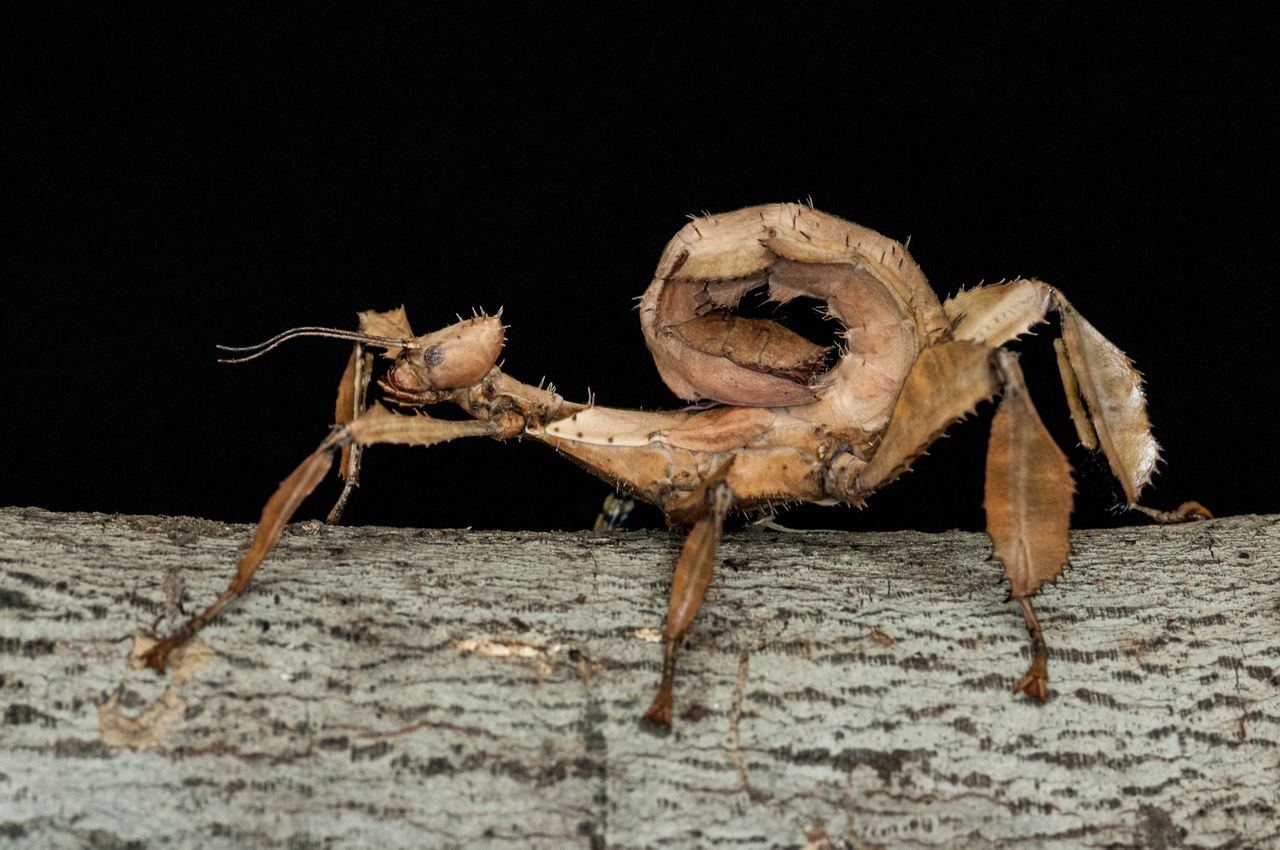
New Australian stick insect species — even the big ones can hide in plain sight. In a paper published September 21, 2026 in the journal Austral Entomology, Braxton R. Jones and colleagues present “A Revision of Australian Anchiale Stål, 1875 (Phasmida: Phasmatidae), with the Description of Two New Species” (DOI: 10.1111/aen.70096). The revision describes Anchiale mabiensis and Anchiale robusta — two giant stick insects new to science — reinstates Anchiale albopunctata, a name buried in synonymy since 1908, and concludes that what taxonomists long treated as two species is actually five, ranging from northern New South Wales through coastal Queensland into the tropical north.
Lead author Dr. Braxton Jones works with the Aola Richards Sydney Insect Hub at the University of Sydney. The study, reported by Smithsonian Magazine, the University of Sydney, Phys.org and ScienceAlert between September 21 and 26, is that rarest of things: a taxonomic detective story spanning a century, solved with DNA, museum drawers, field surveys, captive populations — and some 1,100 citizen-science observations from iNaturalist and the Atlas of Living Australia.
Anchiale mabiensis: the giant of a vanishing rainforest
Anchiale mabiensis is named for the Mabi rainforest of the Atherton Tablelands in Queensland — and that name carries a warning. The species appears endemic to this single rainforest type, of which only 1,050 hectares remained as of 2021, heavily fragmented in an agricultural landscape. Females reach about 11.5 cm (4.5 inches); a specimen photographed for the Smithsonian coverage measured 6.4 inches stretched. Its eggs are distinctive: uniquely lidded, with concentric rings — duller and shorter than the eggs of other Australian Anchiale.
The conservation framing is stark. As the researchers put it, an insect like Anchiale mabiensis, confined to a critically endangered rainforest type, is a concrete example of a species that could have vanished entirely before anyone knew it existed. Discovery and description are the first step toward protection — you cannot conserve what science has not named — but the Mabi remnant keeps shrinking around it.
Anchiale robusta: misidentified for half a century
Anchiale robusta lives in Queensland’s coastal rainforests — and it has been collected, photographed and filed away under the wrong name for decades. Records of the insect go back to at least 1976; its egg case was misidentified as Ctenomorphodes briareus, a name that was itself folded into Anchiale as Anchiale briareus in 2007. For fifty years, in other words, a distinct giant species sat in the scientific record wearing someone else’s label. The revision finally separates it on the combined evidence of mitochondrial DNA from 32 Anchiale specimens, museum collections, field work and the citizen-science observation set.
How the revision was done: DNA, museum drawers and 1,100 citizen scientists
A taxonomic revision is part laboratory science, part archival detective work, and this one leaned on every tool available. The team analyzed mitochondrial DNA from 32 Anchiale specimens, which provided the genetic backbone for separating species that look nearly identical to the human eye. Around that backbone they layered museum collections — pinned specimens gathered over decades, some carrying the wrong names on their labels — field surveys in Queensland’s rainforests, and captive-bred populations that allowed close study of life stages, including the all-important eggs.
Then came the public. Roughly 1,100 citizen-science observations from iNaturalist and the Atlas of Living Australia fed into the revision — photographs taken by hikers, naturalists and backyard observers, timestamped and geolocated, building a distribution map no single research team could have assembled alone. It is one of the clearest recent demonstrations of what citizen science can do for taxonomy: the professionals had the DNA sequencers and the museum keys, but the public had the eyes across thousands of square kilometers of Queensland. The five-species picture that emerged — stretching from northern New South Wales through coastal Queensland into the tropical north — simply would not have been visible without that crowd-sourced range data.
A century of mistaken identity: the 1908 synonymy and the two-that-were-five
The revision’s deepest cut is historical. Anchiale albopunctata, described and then sunk into synonymy in 1908, has been reinstated as a valid species — hidden in the taxonomic basement for 118 years. To “synonymize” a species is to declare it the same as another, retiring its name; to reinstate it is to admit the 1908 judgment was wrong, on evidence the original describers never had. A. robusta’s own paper trail is nearly as tangled: collected since at least 1976, its egg case misread as Ctenomorphodes briareus, that name then transferred into Anchiale as Anchiale briareus in 2007 — each reclassification burying the real animal a little deeper. And the broader finding — two recognized species dissolving into five — shows how morphological similarity can mask real diversity for generations. Australia has roughly 130 described stick insect species out of some 3,000 worldwide; this paper is a reminder that even in well-studied landscapes, and even among large, conspicuous, well-photographed insects, the catalog is incomplete.
Why this matters: extinction before description, and a forestry stake
There are two reasons this paper matters beyond entomology. The first is conservation’s race against the clock: A. mabiensis lives only in a 1,050-hectare rainforest remnant. Species confined to fragments that small can blink out from a single bad fire season, a land-use change, a drought — before or just after being described. Every such description is both a scientific advance and an obituary narrowly avoided.
The second is practical. Stick insects in this group are known for plague-like outbreaks that can strip foliage across wide areas — a genuine forestry and agriculture problem. The revision found that an outbreak-associated insect was actually more than one species. Untangling which species does what, where, and when is the foundation of better pest management: you cannot control an outbreak if you cannot correctly identify the insect causing it. A likely additional undescribed species from Cape York — flagged in the paper as needing more specimens — suggests the practical stakes will only grow.
Who wins, who loses
Winners: Biodiversity science, which gains two species and a corrected genus. The citizen scientists — more than 1,100 iNaturalist and Atlas of Living Australia observations underpinned the revision, a genuine public contribution to taxonomy. Conservation advocates for the Mabi rainforest, who now have a named endemic species to rally around. Forestry managers, who get a clearer pest taxonomy.
Losers: The fragmented Mabi ecosystem — the new species’ only known home, still shrinking in an agricultural landscape. And taxonomic complacency: the assumption that the big, obvious insects have all been found.
What happens next: Cape York and the 1,050 hectares
Two threads to watch. The paper flags a likely additional undescribed Anchiale from Cape York, pending more specimens — field entomologists now have a target, and the citizen-science networks that supplied 1,100 observations will be the fastest way to find it. Every geotagged photograph from the Cape York Peninsula is now potential type-locality evidence.
And in the Atherton Tablelands, the question is whether formal description of A. mabiensis translates into protection for the 1,050-hectare Mabi remnant it calls home. A named endemic species gives conservation advocates something concrete: a creature found nowhere else, living only in fragments of a rainforest type already listed as critically endangered. Whether that is enough to slow fragmentation in an agricultural landscape — where every hectare has an economic use competing against it — is the real test of what taxonomy is for. Naming a species is the beginning of its conservation story, not the end. For a giant insect that waited a century to be noticed, the next chapter cannot wait another.
There is also the forestry thread. Now that the outbreak-associated insect is known to be multiple species, the practical work begins: mapping which Anchiale species drive defoliation events, in which forests, and under what conditions. Pest management built on a wrong species name is management aimed at the wrong target; the revision hands forest managers a corrected map. Expect follow-up studies pairing the new taxonomy with outbreak records — and, in all likelihood, more undescribed Anchiale turning up once researchers start looking with fresh eyes.
Sources
- Jones et al., “A Revision of Australian Anchiale Stål, 1875 (Phasmida: Phasmatidae), with the Description of Two New Species,” Austral Entomology (2026), DOI: 10.1111/aen.70096
- Smithsonian Magazine, “Two New Stick Insect Species Have Been Discovered in Australia—and Another One Was Hiding in Plain Sight” (Sept. 25, 2026)
- University of Sydney, “New stick insect species revealed in Australia’s backyards and rainforests” (Sept. 22, 2026)
- Phys.org, “Large insect species discovered in Australia’s backyards” (Sept. 21, 2026)