World / Middle East & Economy — Two days before Israel votes, Prime Minister Benjamin Netanyahu has floated the most unusual economic defence in the country’s history: if the world sanctions Israel’s banks, Israel will route around the sanctions with cryptocurrency. The Bank of Israel answered within a day, in public and in terms central banks almost never use about their own prime minister: crypto cannot do that, and leaders should be preventing sanctions instead of planning to evade them.
Track it live: live crypto prices and market data on the Signal Post News crypto tracker.
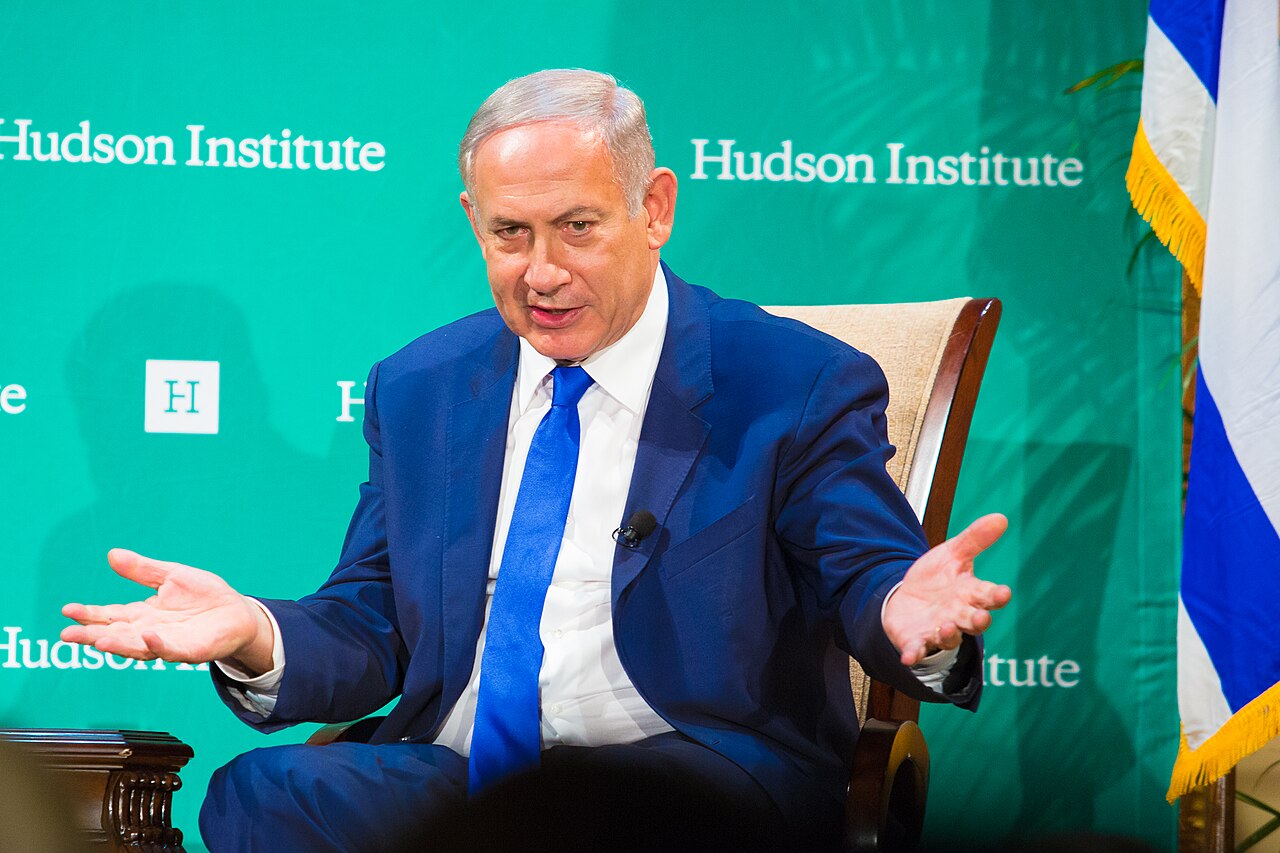
JERUSALEM — The Netanyahu crypto bypass sanctions idea landed on Friday, in an interview with Israel’s Channel 10 economic network, and it has spent the weekend detonating. Netanyahu, who faces re-election on Tuesday, said he was preparing for a scenario in which broader sanctions are imposed on Israel. “There could be sanctions, and sanctions on banks so you need to set up a bypass economy,” he said, in remarks reported by Reuters. “You know, there are currencies that can bypass (sanctions). We are also working on that.” Asked whether he was referring to cryptocurrency, Netanyahu replied: “Very true, very true,” adding that blockchain technology was another possibility. Crypto industry reporting of the same interview described him calling blockchain a national strategic tool and, in one rendering, “an alternative to sanctions.”
By Sunday the proposal had collected, in order, a rare rebuke from Israel’s central bank, an alarm letter from more than 100 economists including a former Bank of Israel governor and several Nobel laureates, a “madness” verdict and a mocking nickname — “BibiCoin” — from his main election rival, and a street-level backlash at Saturday night’s anti-government rally in Tel Aviv. Netanyahu spent Sunday defending his record instead, urging voters to back him and saying that he and U.S. President Donald Trump had two years left to work together to topple Iran’s rulers, Reuters reported. The crypto plan itself he did not withdraw.
The central bank’s rare rebuke
Central banks criticise governments about interest rates and budgets. They do not, as a rule, publicly dismantle a prime minister’s flagship talking point 48 hours before an election — which is what makes the Bank of Israel’s intervention the real story inside this one. The bank said cryptocurrencies cannot serve as a route to bypass sanctions, and that political leaders should focus on policy that would render such measures unnecessary. “The right course for Israel’s economy is to preserve our economic relations with our main trading partners, and to focus on preventing sanctions and their negative impact on the economy,” it said, in a statement carried by Reuters, by Cointelegraph via Israel’s Globes financial daily, and by Middle East Eye.
Read that statement closely and it is doing two things at once. The first sentence is technical: the tool does not work. The second is political, and it is aimed directly at the premise of Netanyahu’s interview — that sanctions are a weather event to be engineered around rather than a consequence of policy choices that can still be changed. The bank is, in effect, telling voters that the correct sanctions strategy is diplomacy, not cryptography. Coming from an institution whose governor Netanyahu’s own government appointed, two days before polling, it is about as close to an institutional vote of no confidence in an economic idea as a central bank can issue without naming the election.

‘BibiCoin’: the economists and the rivals pile in
The professional verdict arrived on Sunday in bulk. More than 100 economists, including former Bank of Israel officials, ex-central bank governor Jacob Frenkel and several Nobel laureates, signed a letter expressing alarm over the proposal, Reuters reported. They warned it would lead to higher unemployment, a fall in foreign investment and the collapse of Israel’s economic standing in the world. “As we have seen in countries that have suffered similar sanctions, such as South Africa, Iran, and Russia, the living standards of Israeli citizens would plummet dramatically, and the state’s ability to finance its security and defend itself against its enemies would be severely damaged,” the letter read. Netanyahu, they wrote, is “knowingly leading the State of Israel toward boycott and international economic isolation, and all he has to offer the Israeli economy is a puzzling solution, one accepted in criminal organizations, that will not help in the slightest.”
The political verdict was blunter. Gadi Eisenkot, Netanyahu’s main rival in Tuesday’s election, called the crypto plan “madness” and said he feared the “BibiCoin policy” would drive companies abroad and undermine national security; in a Saturday post on X, the Yashar party leader wrote that “the BibiCoin vision is a threat to national security.” Opposition leader Yair Lapid said: “Netanyahu has gone off the rails … He promises the citizens of Israel before these elections that they’ll be standing in line for an hour and a half for bread, like in Russia and Iran.” At Saturday evening’s anti-government rally in Tel Aviv, the reaction was street-level: one attendee, Aryeh Cohen, holding a sign reading “enough Bibi’s B.S.,” told Cointelegraph that “an economy that runs on the dark web makes us no better than our enemies,” while another, who gave only her first name, Pnina, asked: “What’s next, the Bank of Israel living ‘neath the law?”
Why this matters
Strip away the election theatre and the episode marks a genuine first: a sitting leader of a major, deeply integrated trading economy has publicly proposed state-level cryptocurrency use as sanctions insurance. Russia, Iran and North Korea have all been accused of using crypto at the margins — to move sanctioned money, fund programmes and launder proceeds — but none of their leaders announced it on television as economic policy, and none of those economies depends on open access to Western capital markets, correspondent banking and technology trade the way Israel’s does. That dependence is the whole point the Bank of Israel and the 100 economists are making: Israel’s prosperity is not a stockpile of value that can be loaded onto a blockchain and carried out of the banking system. It is a flow — of credit lines, export payments, venture investment, insurance, shipping and correspondent accounts — and flows need counterparties who are willing, and legally able, to deal with you.
There is also a quieter admission buried in the interview, and it may outlast the crypto row. A prime minister does not sketch a “bypass economy” on television unless he believes sanctions are a realistic scenario worth preparing voters for. Last month, Britain, France and Canada said they would block imports from Israeli settlements in the West Bank; Cointelegraph counted a dozen Western countries announcing measures targeting settlement goods, amid settler attacks on Palestinians and expanded settlement construction, and economists told the Times of Israel last month those measures could extend into Israel proper. Netanyahu’s answer to that trajectory was not to contest it but to route around it. His central bank’s answer was that the trajectory itself is the problem. That disagreement — between preparing for isolation and preventing it — is now, explicitly, on Tuesday’s ballot.

Can crypto actually bypass sanctions? The evidence says: not at national scale
The technical claim deserves a fair hearing before it is dismissed, because it is not nonsense at small scale. Digital currencies can move value outside some traditional banking channels — that much, Yediot Ahronot columnist Nadav Eyal conceded in an X post quoted by Cointelegraph. “But they are not a substitute for a national financial system,” he wrote. “They don’t provide credit lines to banks, they don’t replace international capital markets, and they don’t persuade foreign companies to violate sanctions that bar them from doing business with Israel.” That last point is the decisive one: sanctions bind the counterparty, not the payment rail. A European importer forbidden to buy does not become willing because the invoice is denominated in bitcoin.
The transparency problem cuts the other way from the popular image. “Crypto and blockchain-based solutions are not the tool for bypassing sanctions,” Ben Samocha, founder of CryptoJungle, Israel’s largest crypto media platform, told Cointelegraph on Sunday. “As demonstrated by the U.S. Treasury against Iran, blockchain investigation allows tracking illicit funds, blocking their fiat gateway, and even freezing them.” Public ledgers are permanent and searchable; the points where crypto touches the real economy — exchanges, stablecoin issuers, banks — are regulated chokepoints that freeze wallets and blacklist addresses as a matter of routine. A state trying to run trade through that system would be writing its evasion attempt into a public record its adversaries can read. Small networks do it anyway, at high cost and small volume. An economy of Israel’s size and openness cannot, which is precisely the Bank of Israel’s one-sentence verdict: the route does not exist.
What happens next: Tuesday decides, the sanctions question does not go away
Opinion polls point to a potential stalemate on Tuesday, with neither Netanyahu’s ruling coalition nor an opposition alliance securing a governing majority, Reuters reported — which means the crypto row is unlikely to be settled by a decisive result either way. Three scenarios follow. If Netanyahu returns to office, expect the “bypass economy” language to be quietly folded into contingency planning while the Bank of Israel’s statement sets the boundary of what officials will actually build; watch whether any ministry publishes a real plan, with a named network, budget or legal framework — none has been announced. If Eisenkot or an opposition alliance governs, the plan dies publicly, but the underlying question survives it: settlement-linked trade measures are already in motion in London, Paris and Ottawa, and any Israeli government will face the same argument about how far they spread. And if the stalemate holds, the statement to re-read is the central bank’s, because institutions outlast campaigns: Israel’s economic establishment has now said, on the record, that isolation is a policy outcome to be prevented — not a fate to be engineered around, in crypto or anything else.

Read next: how the October 7 reckoning is shaping Israel’s election and the Supreme Court fight over barring Arab parties from the ballot.
Sources
Reuters, October 25, 2026, Steven Scheer with additional reporting by Maayan Lubell (the Channel 10 interview and “bypass economy” and “Very true, very true” quotes; the Bank of Israel rebuke and its “right course” statement; the letter from more than 100 economists including Jacob Frenkel and several Nobel laureates; Gadi Eisenkot’s “madness” and “BibiCoin policy” remarks; Yair Lapid’s “gone off the rails” and bread-line quotes; Britain, France and Canada blocking settlement imports last month; Netanyahu’s Sunday defence invoking two years left working with President Trump; polls pointing to stalemate). Cointelegraph, October 25, 2026 (blockchain as a “national strategic tool” per CryptoJungle; a dozen Western countries’ settlement-goods measures and the Times of Israel warning they could extend into Israel proper; Eisenkot’s Saturday X post, “the BibiCoin vision is a threat to national security”; the Bank of Israel statement via Globes; Saturday rally interviews with Aryeh Cohen and Pnina in Tel Aviv; Nadav Eyal’s X post; CryptoJungle founder Ben Samocha on U.S. Treasury blockchain tracking against Iran). Middle East Eye via Hatha Alyoum, October 25, 2026 (the Bank of Israel statement issued Saturday — “cryptocurrencies cannot serve as a means of circumventing sanctions on Israel” — and the interview’s timing four days before the October 27 parliamentary election).