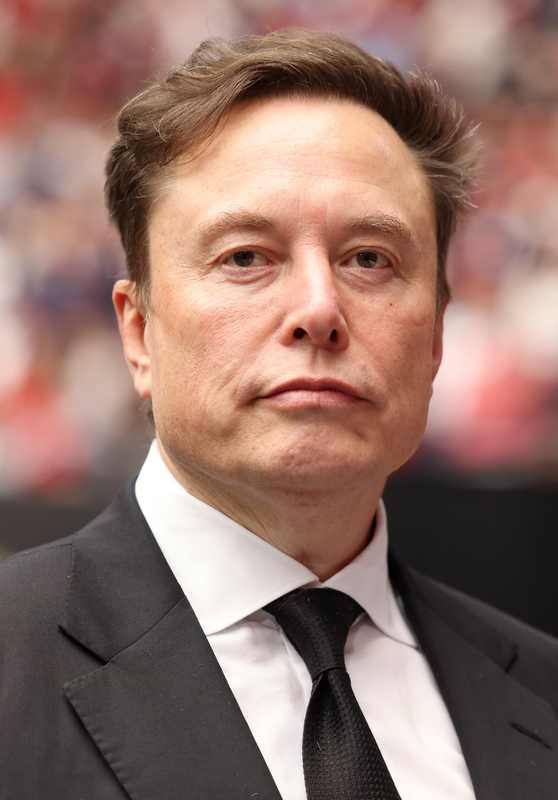
Elon Musk wants Canada broken up. On Wednesday, the billionaire posted on X that Quebec “should separate,” adding that “Alberta and Saskatchewan should separate too” — an Elon Musk Canada separation endorsement beamed to his hundreds of millions of followers. Within a day, Prime Minister Mark Carney fired back in Sherbrooke, Quebec: Canada's future “will be decided by Canadians,” free of interference from “foreign governments and large tech firms that think they can tell us what to do.”
The post that started it
Musk's posts landed Wednesday, October 7, replying to a post about Quebec premier-designate Paul St-Pierre Plamondon, whose separatist Parti Québécois had just won Monday's provincial election. The Associated Press reported his words: “Good. Quebec should separate,” followed by “They would be better off. Alberta and Saskatchewan should separate too.” One outlet reports he first wrote the message in French: “C'est bien. Le Québec devrait se séparer.”
Musk, 55, is South African-born and a Canadian-American who holds Canadian citizenship; he spent part of his teenage years in Canada, arriving first in Montreal. He spent more than a quarter of a billion dollars helping Donald Trump return to the White House in 2024 and briefly led the administration's Department of Government Efficiency. Earlier Wednesday he had also written that it would be “genial” if Plamondon set up “the most anti-woke government in Canada” — the secession posts were part of a broader political jab, not a policy paper.
The pushback was instant. Saskatchewan Premier Scott Moe replied to Musk's post with a single word: “No.” Alberta Premier Danielle Smith said her government, caucus and party support Alberta remaining in Canada, and that she will personally vote to remain.
“No.”
Saskatchewan Premier Scott Moe, replying to Elon Musk on X
Carney's answer in Sherbrooke
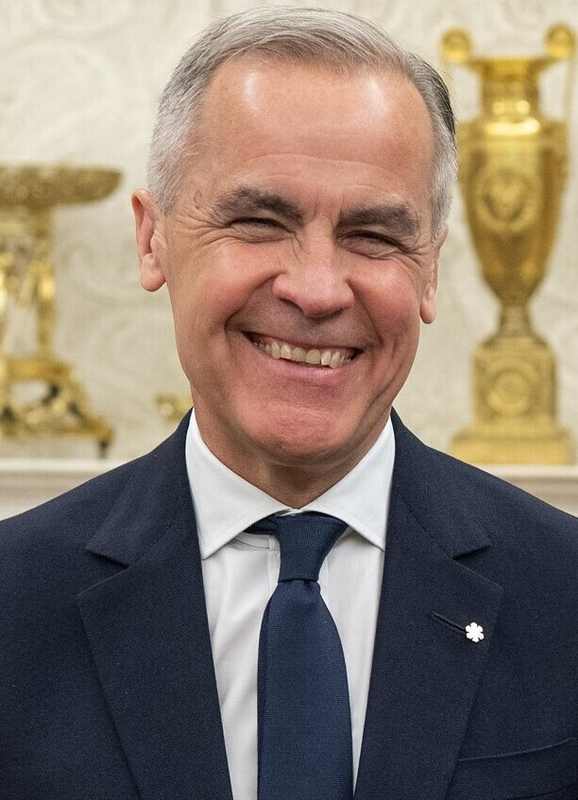
Carney chose his ground carefully: Sherbrooke, Quebec, on Thursday, where he was announcing a national heat-pump and home-retrofit plan — more than $2 billion behind upgrades for over one million homes, with the government saying full uptake could save families more than $1 billion a year on energy bills. It was cooperative federalism as a weapon: show up, cut household costs, and refuse to be lectured on breaking up the country.
“The future of Canada will be decided by Canadians and the priorities of Canadians, the priorities of the people of Quebec,” Carney said, naming those priorities as affordability, social justice, and “a strong Quebec within a more independent and prosperous Canada.” The sharpest line — about Canadians living by their languages and cultures “free from interference from foreign governments and large tech firms” — needed no name attached. Everyone in the room knew whose account has roughly 240 million followers.
“The future of Canada will be decided by Canadians and the priorities of Canadians”
Mark Carney, Sherbrooke, October 8, 2026
Why this matters
This is not just a tweet. Three things make it a real story.
First, the megaphone. Musk owns X and posts to one of the largest audiences on earth. He is also the most prominent billionaire ally of a US president who has repeatedly taunted Canada about becoming America's 51st state, while the two countries grind through a trade war. When American interest in Canada's separatist movements is already under scrutiny, a post like this does not land as a joke — it lands as a signal.
Second, the timing. Alberta votes on October 19 — twelve days away — on whether the province should remain in Canada or move toward a formal separation referendum. A foreign trillionaire telling Albertans they'd be “better off” leaving, days before that vote, is the kind of intervention democracies usually call something else.
Third, the pattern. Musk has repeatedly waded into foreign politics on X — immigration and free-speech fights in Europe, elections abroad, now Canadian confederation. At some point, “just posting” from a man with his reach, his companies, and his proximity to the US president becomes foreign policy by keystroke. Carney's framing — foreign interference — is the Canadian establishment deciding to treat it that way.
The numbers: where separatism really stands
Strip out the noise and the separatist cause is weaker than this week's headlines suggest.
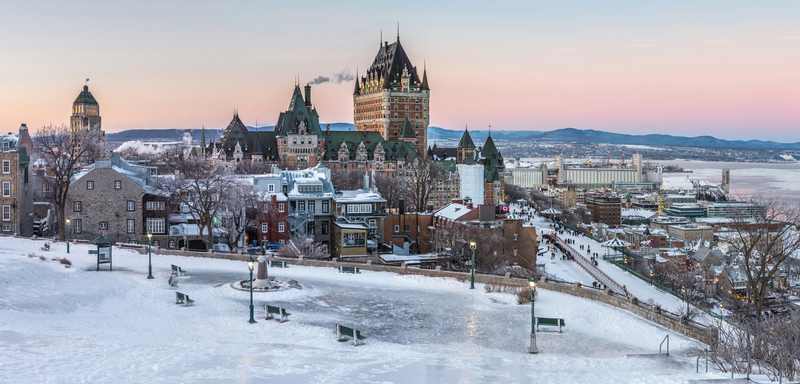
The Parti Québécois won Monday's election with about 28 percent of the popular vote and 59 of the 127 seats — a minority government, not a mandate for independence. As McGill political scientist Daniel Béland notes, support for Quebec independence sits around 30 percent, and the election was driven more by a desire to oust the unpopular Coalition Avenir Québec government than by sovereignty. Plamondon has promised a referendum during his first term, but not while Donald Trump remains in office — which means not before 2029 — and a minority government needs opposition support to survive, let alone to call one.
In Alberta, the October 19 vote asks whether the province should remain in Canada or move toward a separation referendum. Premier Smith, who will vote to remain, says separatist sentiment has actually weakened as her government and Ottawa have addressed Albertans' concerns. In Saskatchewan, some polls show increased secession support — but the premier's entire public response to the world's richest man was “No.”
Who wins, who loses
Winners: sovereigntist movements on both sides of the language divide, which just got the most famous megaphone on the planet for free; separatist fundraisers, who will dine out on this for months; and Musk himself, who collects cultural leverage every time he bends another country's politics around his feed.
Losers: Carney's national-unity project, which now has to spend political capital swatting down a foreign billionaire; Musk's own business interests in Canada — Ottawa just signed a $2.3-billion contract with Telesat for low-earth-orbit military satellite connectivity, an aspiring direct challenger to Musk's Starlink; and Canadian investors, because political noise from a trillionaire shows up in the loonie, in provincial bonds, and in portfolios built on Canadian stocks.
The critics' case deserves air too: Musk's defenders say he was just opining, that Canadians are perfectly capable of ignoring a tweet, and that Carney dressing up a social-media post as “foreign interference” is a prime minister inflating a heckler into a threat. It's a fair challenge — and the test of it is the Alberta vote. If October 19 is a decisive vote to remain, the critics were right and this was theater. If it's close, Carney's framing looks prescient.
The Starlink shadow
Don't miss the business subplot. The Telesat deal — $2.3 billion for Canadian military satellite connectivity — is Ottawa choosing a non-Musk backbone for its low-earth-orbit future at the exact moment Musk is telling Canadians to dissolve their country. Starlink dominates the global LEO market, and Musk's companies operate across Canada; genuine sovereignty chaos would scramble contracts, regulations, and supply chains. Musk is not a neutral observer of Canadian politics. He is a vendor with a grudge and a platform — and Ottawa just picked his competitor.
What happens next
Three scenarios. One: Alberta votes decisively to remain on October 19, separatist momentum deflates, and Musk's posts become a footnote in the long history of Americans opining about Canada. Two: a narrow or messy Alberta result keeps the referendum machinery grinding, and the PQ cites it as proof the federation is fracturing. Three: Ottawa hardens its stance — more cooperative-federalism spending in Quebec and the West, or a sharper line on foreign political interference online.
The PQ's own clock is the slowest one: a minority government, a referendum promise, and a self-imposed wait until Trump leaves office. And in the background, the US-Canada trade war grinds on, with Trump's 51st-state taunts and Musk's secession posts feeding the same Ottawa narrative: the Americans are not just negotiating hard anymore — they're shopping for pieces of the country.
The bottom line
A foreign billionaire with 240 million followers just endorsed breaking up a G7 democracy — and the country's answer, from two premiers and a prime minister, was the same word at different lengths: no. But the honest truth is that this story doesn't get decided on X. It gets decided in Alberta on October 19. Watch that vote, not the feed.
Sources
- Associated Press wire: Musk backs separation for Quebec, Alberta and Saskatchewan
- The Hindu / AP: Carney pushes back on Musk's Canada comments
- Money.ca: market implications of Musk's secession comments
- Canadian Press: provincial and federal reaction