Alberta referendum 2026: Prime Minister Mark Carney and Alberta Premier Danielle Smith shared a Red Deer stage on Friday, October 16 to urge a vote for Option 1 on Question 10 — remain in Canada — while openly splitting over Smith's nine other referendum questions, ahead of the province's first-ever separation vote on Monday, October 19.
Red Deer / Rivals on almost everything — allies on Question 10
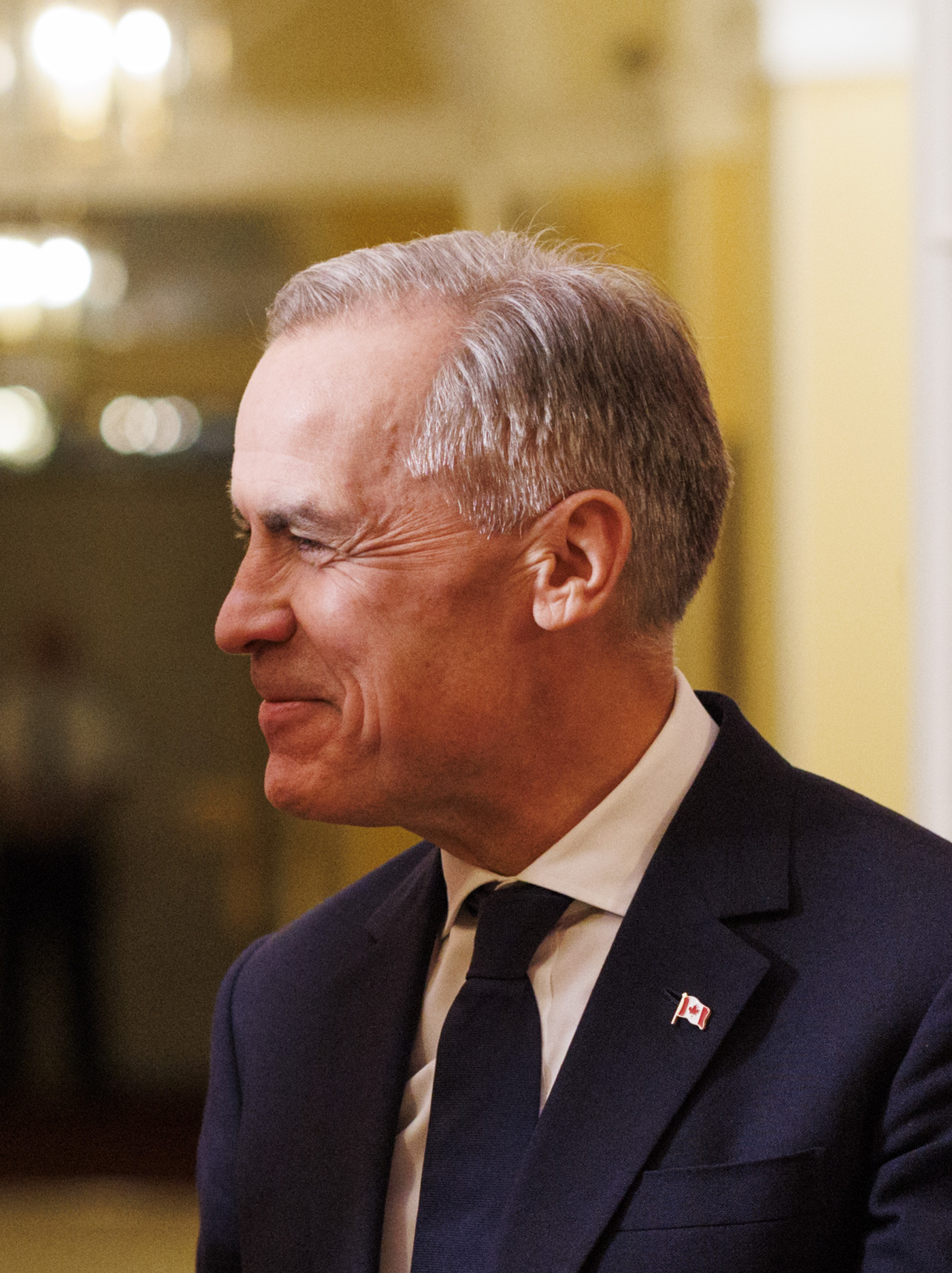
RED DEER, Alberta — The Alberta referendum 2026 campaign produced its defining image on Friday, October 16, and it was not a separatist flag. It was Alberta Premier Danielle Smith standing beside Prime Minister Mark Carney at a pro-Canada rally in Red Deer, the two of them — public adversaries on energy, immigration and the reach of Ottawa — telling the same crowd, in red and white, to vote the same way on the only question the country is watching. "As you know, we don't always agree on everything. We often disagree quite publicly on several things," Smith said. "But today we can all agree that on Question 10, that we are voting for Option 1 to remain in Canada." Question 10, the last of ten questions Albertans decide on Monday, October 19, asks whether Alberta should remain a province of Canada or whether its government should commence the legal process required under the Constitution to hold a binding provincial referendum on separation. It is the first time the oil-rich province has ever put separation to a public vote.
The alliance lasted exactly as long as the photograph. A day earlier, Carney had urged Albertans to vote "no to the nine" — Smith's nine other referendum questions on immigration, access to provincial services and constitutional change — and in Red Deer she answered him to his face, handing the prime minister Alberta government literature promoting those very proposals. "I have bad news for you, Prime Minister: all of the premiers are interested in talking about immigration and how we might be able to reform it," she said. Former Alberta premier Ed Stelmach stood beside her — a man who co-authored an op-ed this week calling on voters to reject Smith's immigration questions. That is the referendum in miniature: a province united, at the top, on staying in Canada, and divided on almost everything the ballot asks beyond that.
What happened in the final 72 hours
Carney, who grew up in Alberta, opened the closing stretch on Thursday in Calgary. At a daytime park event, flanked by Liberal MPs Eleanor Olszewski and Corey Hogan, he pressed voters to reject all nine of Smith's other questions. That night he headlined a Forever Canadian rally at Calgary's BMO Centre — the pro-Canada campaign launched by former deputy premier Thomas Lukaszuk — before a crowd his office estimated at about 5,000 people, some of whom waited more than two hours to clear security. "This referendum comes at the worst possible time," Carney told them. "The world has become more dangerous and divided. Some outside our borders are working to break us so they can own us." He warned voters not to treat the ballot as a protest: "Don't be fooled by the idea you can 'send a message' with your vote. This is not poker. A vote against Canada is a dangerous bluff that will lead to years of deep division and great uncertainty." A decisive result on Monday, he argued, could settle the separation question.
On Friday the prime minister moved to Red Deer for the joint appearance with Smith and a meeting with business leaders, then to Edmonton for a second Forever Canadian rally in the evening, where he repeated the warning — "Some outside our borders are working to break us so they can own us. Never. Never." — and made the case personal: "Alberta is my home. I grew up here. This city, this province, this country have given me everything: my family, my education, my values." Outside the Edmonton venue, independence supporters waved flags and held a sign reading "Say no to Carney's new world order." Federal Conservative leader Pierre Poilievre, Carney's chief rival, spent Friday at a Canada Strong and Free Network conference in Calgary delivering the same verdict from the other side of Canadian politics: "Don't leave your fellow Canadians behind. Lock arms with them." Alberta NDP leader Naheed Nenshi and former premier Rachel Notley had headlined their own pro-Canada rally in Edmonton on Wednesday. Separatist campaigners planned a rally of their own in Edmonton on Saturday.
The voters, meanwhile, have not waited for Monday. Advance voting ran from Tuesday, October 13 through Saturday, October 17 at about 310 advance polling stations, and Elections Alberta reported that roughly a million Albertans — about a third of the province's roughly 2.97 million electors — had already cast advance ballots by Thursday night. More than 652,000 special ballots had been approved and mailed by September 29, and they had to reach the agency by 5 p.m. Friday to count. Officials have braced for turnout far above the roughly 55 percent average of Alberta's last five provincial elections. Smith herself voted in advance: to remain in Canada on Question 10, and yes on her nine questions, which she described as a message to Ottawa that provinces need more autonomy and respect. Her government has committed $4 million to an advertising campaign urging yes votes on the nine and promoting a strong, sovereign Alberta inside a united Canada; the Prime Minister's Office is spending about $250,000 on its own "O Canada" campaign, according to Canadian Press reporting.
The ballot: ten questions, one that echoes
Each question arrives on its own colour-coded ballot, and voters may answer some and decline others. Question 10 will be counted first at every voting location when polls close at 8 p.m. Mountain Time on Monday; because there are more than seven questions, the unofficial count must be completed within 48 hours. Its official wording, set by Order in Council 160/2026 and published by Elections Alberta, is: "Should Alberta remain a province of Canada, or should the Government of Alberta commence the legal process required under the Canadian Constitution to hold a binding provincial referendum on whether or not Alberta should separate from Canada?" Voters mark one of two options — remain a province, or commence that process. The order in council states the result is not binding, and a vote for the second option would not take Alberta out of Canada: it would direct the government to start down a road whose next stop is a second, binding referendum.
The other nine questions explain why Carney and Smith can share a stage and a slogan and still be campaigning against each other. Five concern immigration and voting: more provincial control over immigration, restricting eligibility for provincially funded programmes, a 12-month wait before temporary residents receive provincially funded social supports, fees for temporary residents' health care and education, and proof of citizenship to vote in provincial elections. Four ask whether Alberta should work toward constitutional change so that provinces appoint judges to provincial courts, the federal Senate is abolished, provinces may opt out of federally funded programmes, and provincial laws prevail over federal laws in provincial or shared areas of jurisdiction. Most of the nine touch federal jurisdiction or the Constitution itself, which means even a strong yes could not be implemented by Alberta alone — a point Carney's "no to the nine" pitch leans on, and Smith's campaign answers by arguing the votes are mandates for negotiation, not legislation. Critics of the immigration questions have called them an anti-immigrant dog whistle; Smith counters that the immigration policies of Carney's predecessor drove up the cost of living, strained services and put homes and jobs out of reach, and that migration costs have become prohibitively expensive for the province.
How a fringe demand reached a province-wide ballot
Alberta's grievances are old: a province of about five million people holding the world's fourth-largest proven oil reserves, convinced for generations that Ottawa taxes its energy wealth, regulates its signature industry and takes its votes for granted. What is new is the mechanism. After the April 2025 federal election, Alberta lowered the signature threshold for citizen-initiated referendums. The separatist Alberta Prosperity Project gathered roughly 223,000 verified signatures for a separation question, but a court quashed that petition in May 2026, ruling the government had failed to consult First Nations. Smith — who has said she wants Alberta to remain in Canada, and in May said it was "time to have a vote, understand the will of Albertans on this subject, and move on" — then placed her own tenth question on the ballot, citing both the separatist petition and a rival pro-Canada petition of some 400,000 signatures gathered by the Forever Canadian campaign. First Nations have objected throughout that Treaties 6, 7 and 8 were signed with the Crown before Alberta existed and cannot be altered by a provincial vote; an Alberta court previously ruled the referendum process should have included Indigenous consultations, a decision the province appealed.
What the polls say — and why nobody is relaxing
Every published poll points the same way. A Leger poll of 1,001 Albertans conducted October 2–4 found 70 percent for remaining in Canada, 22 percent for beginning the separation process and 7 percent undecided. A September survey by Janet Brown Opinion Research for CBC found 72 percent for remain against 23 percent for moving toward separation, with support for independence relatively higher among male and rural voters. Smith herself has cited the roughly 22 percent figure as too high for her liking. On those numbers, Monday is not close — and yet the remain campaign is behaving as if it could lose, because of what sits underneath the headline split. Angus Reid polling found that about 41 percent of voters choosing the separation-process option see their vote mainly as sending a message to Ottawa rather than as endorsing actual independence. Carney's "this is not poker" line is aimed precisely at them: a protest vote and a separatist vote are indistinguishable on a hand-counted ballot, and if message-senders, the genuinely separatist quarter and a low or uneven turnout ever align, the arithmetic of a simple majority stops being comfortable. Canadian history supplies the cautionary tale — Quebec's 1995 referendum on sovereignty failed by less than one percentage point — and commentators have reached for Britain's 2016 Brexit vote, another referendum the expected winner assumed was safe, as the modern parallel.
Why this matters
Strip away the rallies and Monday's vote is a test of whether a federation can argue with itself without breaking. Alberta is not voting to leave Canada; it is voting on whether to begin a legal process toward a vote on leaving — a distinction that matters legally and blurs politically. Under the Supreme Court's 1998 Secession Reference, no province may separate unilaterally: a clear majority on a clear question would create a duty to negotiate, and secession itself would require a constitutional amendment negotiated among the federal government, the provinces and territories, with Indigenous treaty rights at the table rather than in the footnotes. Parliament's Clarity Act of 2000 gives the House of Commons the say on whether a question and a majority are clear enough. So even the separatists' best Monday does not produce a country; it produces years of negotiation over borders, debt, currency, pensions, pipelines and treaties, conducted under exactly the "deep division and great uncertainty" Carney described. The remain side's best Monday, by contrast, is the one Carney asked for: a result decisive enough to retire the question for a generation, as he put it, and convert a separatist petition drive into a settled fact.
The external pressure is what gives this referendum its unusual cast. Carney's warning about outsiders working to "break us so they can own us" was not aimed at Alberta separatists; it was aimed south, at a United States president who has waged a trade war against Canada and repeatedly mused about making it the 51st state. That pressure has done something no unity campaign could buy: it has put a Liberal prime minister, a conservative Alberta premier who built her brand on defying Ottawa, the federal Conservative leader and the provincial NDP on the same side of the same question in the same week. "For the first time in a long time, Alberta and Canada are walking together," Smith said on Friday. Independence advocate Tanya Clemens dismissed the Carney–Smith agreements as "basically pinky promises" that came with too many conditions — a reminder that the separatist movement's core argument is not that Alberta dislikes Canada, but that Ottawa's concessions are never written down where they cannot be withdrawn. And some remain voters resent being asked at all: "I think it's a travesty really to be putting our province and our country through this when such a small portion of people are rabble rousing and saying they want to separate from Canada," said Deb Lee, a retired Calgary resident who voted in advance to remain.
Who benefits, who loses
Smith may be the only politician in Canada who can gain from either result on Question 10 — provided remain wins, as expected. She called a vote she opposes one side of, positioned herself as the democrat who let Albertans speak, and stands to emerge with a fresh mandate on the nine questions she actually cares about: immigration control and constitutional leverage, backed, she says, by signs of a thaw with Ottawa, including cooperation on a proposed oil pipeline to the West Coast and her assessment that Carney has substantially addressed seven of nine federal laws Alberta opposed. Carney benefits if the margin is crushing: he campaigned in person, in the province where his party is weakest, and a decisive remain vote lets him claim the national-unity file and the Alberta relationship in a single night. The separatist movement loses the vote and wins the infrastructure — a quarter of a province, professionally organised, with a petition machine that has already forced one referendum is a permanent feature of Alberta politics now, whatever Monday says. The clearest losers in a close or chaotic count would be the people with the least say in the timing: First Nations whose treaties predate the province, businesses pricing investment against constitutional uncertainty, and voters who discover that a message sent on Monday cannot be unsent on Tuesday.
What happens next
Polls are open Monday from 9 a.m. to 8 p.m. Mountain Time at each voter's assigned voting place; anyone in line at closing may still vote, and new voters may register at the polls with accepted identification. Question 10 is counted first, but with ten hand-counted ballots per voter, unofficial results are required only within 48 hours — expect the shape of the result Monday night and the certified picture by Wednesday. Three things to watch in the numbers: the remain margin (below about 60 percent, the "settled for a generation" claim fails and the movement will call the result a beginning); the yes vote on the immigration questions, which Smith will carry to Ottawa as her real mandate and Carney will have to answer as prime minister; and turnout, which both camps privately treat as the true variable — advance voting at roughly a million ballots suggests a province that has decided this vote matters. If remain wins decisively and the nine pass, the fight moves to a federal-provincial table where Smith arrives strengthened and Carney arrives indebted. If the process option somehow wins, the Clarity Act clock, the courts and the treaty nations take over, and Canada enters the most consequential negotiation in its modern history. Either way, Monday is the first time Albertans have ever been asked — and the answer, in whatever proportion, will be quoted in every argument about this federation for years. When a quarter of a province votes to start leaving, even in a losing cause, is that a question settled — or a question that has only just been asked properly for the first time?
Sources
The Associated Press — Rob Gillies, October 16, 2026 (Carney's Calgary Forever Canadian rally, the "break us so they can own us" and "not poker" warnings, the roughly 5,000 crowd estimate, Deb Lee and Tanya Clemens reaction, Poilievre's "lock arms" appeal, Smith on the seven of nine federal laws and pipeline cooperation) · Reuters explainer — October 15, 2026 (nonbinding referendum, first separation vote in Alberta's history, 10 colour-coded questions, polls showing about 70 percent for remain, Smith's advance vote and May remarks, Clarity Act and First Nations objections) · The Globe and Mail via syndication — October 16–17, 2026 (Red Deer joint rally with Smith, Carney and Ed Stelmach, "no to the nine" dispute and the immigration literature exchange) · The Canadian Press — October 2026 (the $4 million Alberta advertising campaign and the Prime Minister's Office $250,000 "O Canada" campaign; former premiers' op-ed on the immigration questions) · Elections Alberta — referendum guide, October 2026 (Question 10 wording under Order in Council 160/2026, advance voting October 13–17 at about 310 stations, special ballots, referendum day hours and the 48-hour unofficial count) · Leger polling, October 2–4, 2026, and Janet Brown Opinion Research for CBC, September 2026 (remain and separation-process support levels).
Related coverage: Alberta to hold separation referendum in October 2026 · Musk backs Canada separation — Carney pushes back