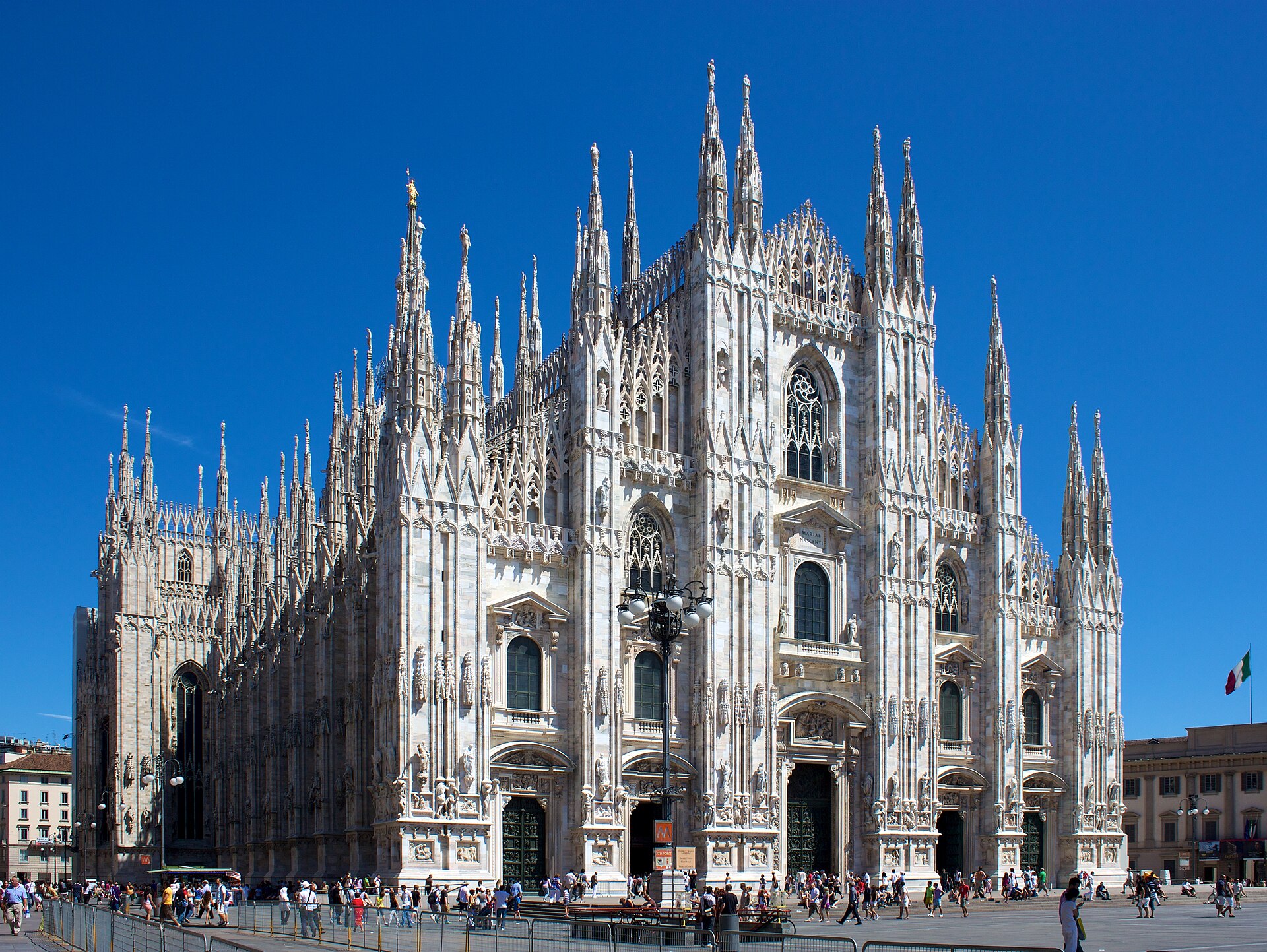
Milan protests October 2026: a cost-of-living march in Italy's financial capital broke into clashes in front of Milan Cathedral on Saturday, October 17, 2026, as police fired tear gas, cleared hooded protesters from the Galleria Vittorio Emanuele II luxury arcade and closed the Duomo metro station — the same evening France counted some 550,000 marchers, making Italy the newest front in a cost-of-living revolt that is now running in at least five European countries at once.
Milan / The cathedral square is the postcard of Italy's richest city. On Saturday evening it filled with tear gas
What happened in Milan on Saturday
The Milan demonstration was called over the same bundle of grievances driving the wider European wave: high prices, low wages and deteriorating public services. According to Reuters, reporting Italian media accounts, the clashes began when groups broke away from the protest in the square in front of Milan's Gothic cathedral and attacked police with stones and other objects; officers in riot gear responded with tear gas. Police also moved to clear hooded protesters from the Galleria Vittorio Emanuele II, the glass-vaulted luxury shopping arcade that opens onto one side of the cathedral square. Shops pulled down their shutters, tourists fled the central area, and the Duomo metro station — the interchange beneath the square — was closed while the clashes continued. Italian media reported several people injured and a number of arrests; no official consolidated toll for Milan had been published by Sunday morning, and the figures in this article are confined to what officials and named agencies have stated.
Milan was not Italy's only flashpoint. In Bologna, police used water cannon to try to disperse crowds after another protest turned violent, and the ANSA news agency reported seven arrests. The pairing matters: two cities, two different protest crowds, the same Saturday — evidence that what happened at the Duomo was not a single local disturbance but the Italian expression of a regional mood.
The same Saturday, across five countries
Italy was the newest front, not the largest. In France, the Interior Ministry put nationwide turnout at around 550,000 people in more than 140 places, including an estimated 110,000 in Paris, while the CGT trade union federation put the figure closer to 800,000. French authorities reported more than 1,200 arrests and around 150 police officers injured. The gravest damage was in Limoges, where the historic town hall was largely lost to a fire set on Saturday night; in Bordeaux, looters smashed their way into luxury stores including Apple, Louis Vuitton and Hermès. President Emmanuel Macron vowed that those who attacked public buildings and looted businesses would be prosecuted and punished, and Prime Minister Sébastien Lecornu accused far-left organisations of orchestrating the violence — while Interior Minister Laurent Nuñez himself acknowledged that the vast majority of demonstrations stayed lawful, describing the destruction as the work of a violent fringe that had attached itself to peaceful marches. Our full report on the French night is here: France protests: 550,000 nationwide, town halls burned.
In Albania's capital, Tirana, Saturday was the fifth consecutive day of violent anti-government protest, with demonstrators throwing rocks, petrol bombs and fireworks at police who answered with tear gas and water cannon; the crowds are demanding Prime Minister Edi Rama's resignation over corruption allegations, hundreds of people have been arrested or investigated, and dozens injured — a crisis we have followed separately: Albania student protests: Edi Rama refuses to resign. In Belgium, student-led demonstrations over education costs, budget cuts and rising prices were dispersed in Brussels with tear gas and water cannon. In Portugal, tens of thousands marched in Lisbon over low wages and housing costs in a country where house prices have more than doubled since 2017. Different flags, different immediate triggers — a farm of grievances underneath that is recognisably the same: inflation that wages have not caught up with, housing that a salary no longer reaches, and public services visibly fraying.
Why this matters
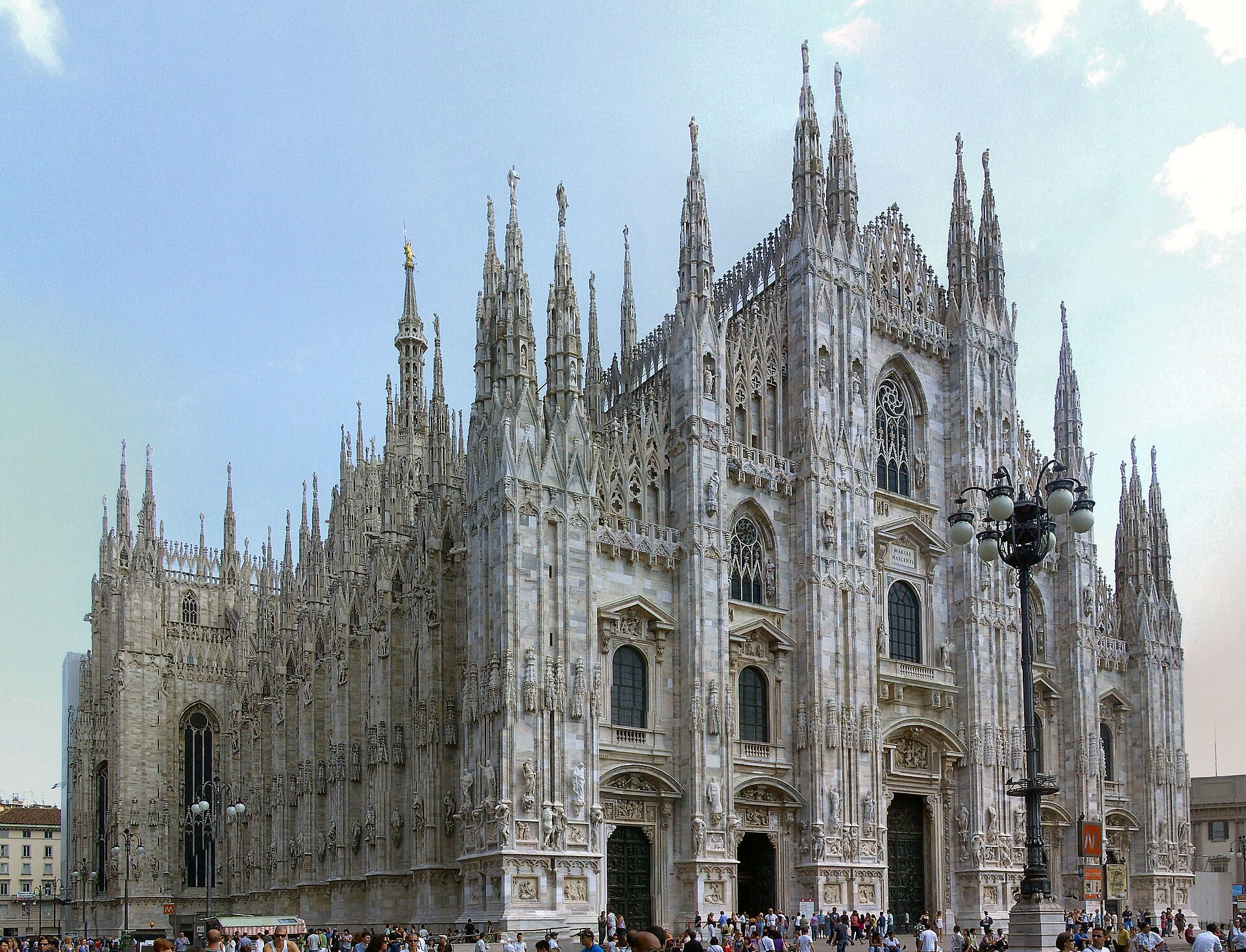
Start with the symbolism, because the protesters plainly did. In Bordeaux the looters chose Apple, Louis Vuitton and Hermès; in Milan the confrontation formed at the door of the Galleria Vittorio Emanuele II, the nineteenth-century arcade that is effectively the city's luxury showroom, under the façade of its cathedral. Cost-of-living movements keep migrating to the addresses where wealth is displayed, because the core complaint is not only that life has become expensive — it is that it has become expensive in full view of people for whom it visibly has not. A government can dispute a statistic; it is harder to dispute a photograph of tear gas drifting across the most famous square in the country's richest city.
Second, simultaneity changes the politics. A one-country protest wave is a national problem with national levers: a budget concession, a ministerial resignation, an election. Five countries in one weekend suggests something structural instead — a post-inflation settlement in which European governments of left and right alike are trying to consolidate budgets, rearm, and hold down deficits while households still feel poorer than they did before the price shock. France's movement began with students backing striking teachers and has run for more than a month; Albania's is explicitly anti-corruption; Portugal's is about housing. The triggers differ, but the fiscal weather is shared, and each capital is now watching the others' streets for a preview of its own next weekend.
Third, there is a numbers argument underneath the tear gas. France's official turnout of 550,000 was roughly double the authorities' own forecast — the state's estimate of its unpopularity was off by a factor of two, in the wrong direction. Union estimates ran higher still. When governments repeatedly under-predict the crowds, it is usually because the grievance is broader than the organised movement that called the march: students and unions supplied the structure, but pensioners, parents and ordinary shoppers supplied much of the mass. That breadth is precisely what makes the Milan development significant — Italy's participation was not organised by the French movement at all. It was imitation, or recognition, which spreads faster than any organisation.
Who gains, who loses — and what each side says
Protesters and their unions say the marches are a democratic alarm bell: wages, pensions and services have been squeezed for years, and Saturday's overwhelmingly peaceful majority — a point even France's interior minister conceded — should not be defined by the minority that burned and looted. Governments answer that the violence is the story: Macron's promise of prosecution, Lecornu's charge of far-left orchestration, and Nuñez's description of "opportunistic delinquents" who hijacked lawful protest are all versions of the same argument — that a movement which cannot police its own edges forfeits public sympathy. Both claims can be partly true at once, and Saturday supplied evidence for each: hundreds of thousands marched without incident, and a town hall that survived two world wars burned down.
The losers are easier to name. Retailers and city centres absorb the immediate damage — shuttered shops on a Saturday in Milan's prime shopping district, a closed metro interchange, tourists rerouted. Municipal governments absorb the repair bills for buildings like Limoges town hall. And incumbent governments absorb the strategic cost: every weekend of this consumes the political capital they need for the budgets that caused the argument in the first place. The potential gainers are opposition movements in each country, which did not have to organise the anger to inherit it — though Albania shows the ceiling of that inheritance: five days of escalating protest have not moved Edi Rama, who blames the opposition and unnamed foreign actors and has not resigned.
What happens next
Three things will decide whether Saturday was a peak or a pattern. The first is the calendar: protest movements live on announced next dates, and the French wave has already demonstrated a weekly rhythm — each Saturday's turnout becomes the baseline the next is judged against. Watch whether Italian unions and student groups now name a date of their own; Milan and Bologna on the same day suggests the Italian movement is looking for one. The second is the government response in each capital: concessions on the specific triggers (education funding in France and Belgium, housing in Portugal) would test whether the movements are really about their stated demands or about a wider loss of confidence that no single concession can settle. The third is the behaviour of the violent fringe, because it now holds unusual power over the story: one more burned landmark would harden public opinion against the marches, while a large, entirely peaceful weekend would make the governments' "extremist" framing much harder to sustain. What is not in serious doubt is the underlying arithmetic. Until wages, rents and public services stop moving in opposite directions, Europe's governments should expect the squares to keep filling — and the postcard views to keep doubling as front lines.
Sources: Reuters, Oct. 17, 2026 (Italian police fired tear gas after attacks with stones and other objects in the square in front of Milan's Gothic cathedral; riot police clearing hooded protesters from the Galleria Vittorio Emanuele II; shops shuttered, tourists fled, Duomo metro station closed, several injured and arrests reported per Italian media; Bologna water cannon and seven arrests per ANSA); Associated Press top-stories coverage, Oct. 18, 2026 (rioters loot stores and set fires in central Milan during cost-of-living protest; clashes across France); DevDiscourse (Reuters syndication), Oct. 17, 2026; The Daily Jagran, Oct. 18, 2026 (five-country roundup: France turnout and arrest figures, Albania's fifth day in Tirana, Brussels tear gas, Lisbon housing march, Portuguese house prices more than doubled since 2017); Daily Caller, Oct. 17, 2026 (Macron's prosecution vow; Lecornu's far-left accusation; the French movement's origins in student demonstrations backing striking teachers). Casualty and arrest figures for Milan itself had not been consolidated by officials at publication; this article reports only attributed figures and will be updated when Italian authorities publish a toll.