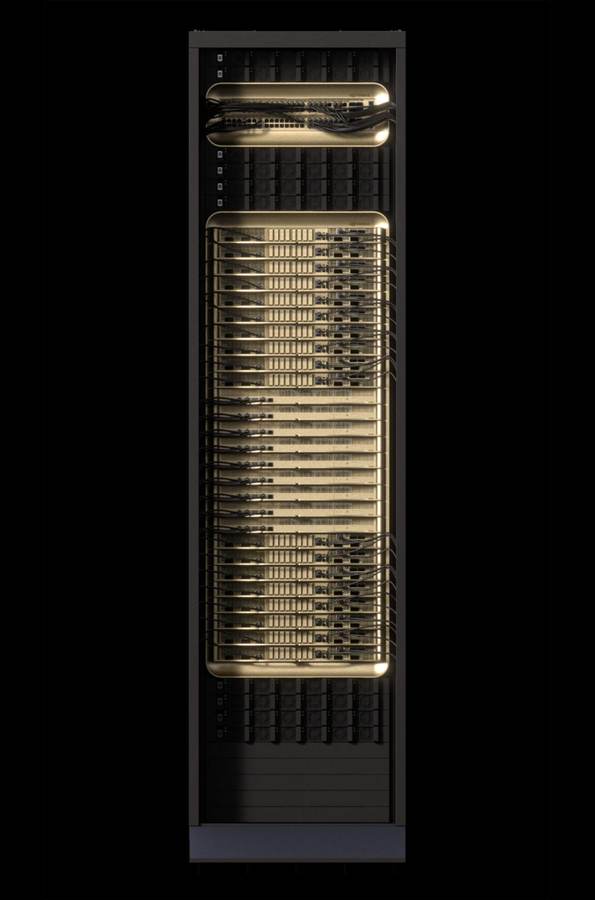
The Amazon Nvidia chips investors deal under discussion would move roughly $8 billion of advanced Nvidia hardware into a special-purpose vehicle funded by outside investors, then lease the equipment back to Amazon for continued use in its U.S. data centers. The Financial Times report, summarized by Reuters, says the talks cover thousands of Grace Blackwell chips installed at more than 12 facilities across five states, including Nevada and Virginia. The hardware would not leave the buildings. Ownership, financing and risk would.
The proposed vehicle would raise money through debt issuance, with investors owning the chips and Amazon making lease payments. Amazon may retain an equity stake of as much as 10%, according to the reporting. The arrangement is not final, and neither Amazon nor Nvidia had provided immediate public comment when Reuters published its account. Those caveats matter: the economics depend on lease terms, residual-value assumptions, guarantees and which party bears downtime or obsolescence risk — details that have not been disclosed.
Still, the outline is significant. A company capable of spending around $200 billion to $220 billion on capital investment in one year is exploring outside ownership for one of the hottest assets in technology. This is not evidence that Amazon lacks cash. It is evidence that the AI build-out is becoming so capital intensive that even the largest balance sheets are searching for structures used in aircraft, real estate, power plants and telecommunications infrastructure.
How the AI chips special purpose vehicle works
An AI chips special purpose vehicle, or SPV, is a legally separate entity created to hold defined assets and financing. In the reported plan, Amazon would transfer or sell Nvidia chips to the SPV. The vehicle would fund the purchase with debt and investor equity. Amazon would lease the same chips back, preserving access to compute while replacing an upfront ownership cost with contractual payments over time.
This is commonly called a sale-and-leaseback when an owner sells an asset and immediately rents it from the buyer. The phrase can be confusing here because some equipment may already be leased or financed. The economic principle is clearer than the label: investors provide capital against a pool of physical AI hardware and a stream of payments from Amazon, one of the world's largest companies.
For Amazon, the appeal is flexibility. Cash recovered from the assets can fund new data centers, power contracts, networking or the next generation of chips. Depending on accounting details, the transaction may also alter reported asset intensity and debt presentation, though modern lease-accounting rules prevent companies from making major obligations simply disappear. A lease liability may still appear on the balance sheet, and investors will examine the commitment even if the legal debt sits inside the SPV.
For outside investors, the appeal is a high-quality counterparty and scarce equipment supporting fast-growing demand. The vehicle can issue debt at a rate linked to Amazon's payment strength rather than to a speculative AI startup. If structured well, it resembles infrastructure finance: long-lived contracts, identifiable assets and predictable cash flows.
The complication is that GPUs are not office towers. Their economic life can be short, their resale value volatile and their performance overtaken by a new architecture. Investors must decide how much the chips will be worth after the lease and whether Amazon has purchase options, renewal rights or guarantees that transfer that risk back. The difference between a low-risk Amazon receivable and a high-risk bet on used GPUs lies in the contract.
Why this matters
The deal is a referendum on the sustainability of the AI capital boom. Big technology companies have justified extraordinary spending on the expectation that cloud customers, model developers and enterprises will pay for ever more computing power. Revenue is growing, but construction, chips, power and networking must be financed years before demand is fully visible. The timing mismatch is now large enough to create a new asset class.
Amazon is not a marginal player seeking survival financing. AWS is a leading cloud platform, and Amazon's broader business generates substantial cash. When a company of this scale considers moving chips into an investor vehicle, it signals that the industry is shifting from balance-sheet-funded experimentation toward structured infrastructure finance. The AI factory is becoming comparable to a utility, airport or aircraft fleet: expensive equipment, long contracts, specialized operators and layers of capital.
The structure also changes who absorbs disappointment. If AI demand continues to rise and the chips stay fully utilized, Amazon gains capacity without tying up as much capital, while investors receive contractual returns. If demand weakens or new chips make the hardware less valuable, losses depend on guarantees and lease terms. Financial engineering does not remove risk. It allocates risk — sometimes clearly, sometimes in ways that become visible only during stress.
That allocation matters beyond Amazon. Banks, pension funds, private credit managers and insurers increasingly want exposure to AI infrastructure. Their participation can accelerate construction and lower the immediate cost for technology companies. It can also spread a technology-cycle downturn into portfolios that did not traditionally carry semiconductor depreciation risk.
What the reported $8 billion covers
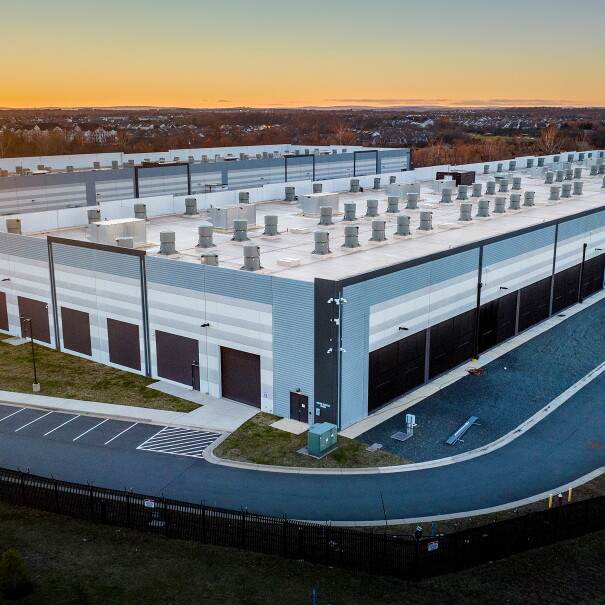
The Financial Times report describes thousands of Nvidia Grace Blackwell chips across more than 12 data centers in five U.S. states. Nevada and Virginia are among the locations. The $8 billion figure is an approximate asset value under discussion, not a final transaction price. It may include systems, networking or installed equipment around the chips, but public summaries do not establish the exact asset perimeter.
Grace Blackwell refers to Nvidia systems that pair Blackwell GPUs with Grace CPUs and high-speed networking for large AI workloads. These are not interchangeable consumer graphics cards. They sit in liquid-cooled racks, draw substantial power and operate as clustered systems. Their value depends partly on the surrounding network, cooling and software stack. Removing a chip from that environment does not preserve the same productive value.
That installation reality explains why the hardware stays put. The SPV does not need to operate the data centers; Amazon does. Investors own a financial interest in equipment whose usefulness depends on Amazon's facilities, power contracts, engineers and customer demand. The arrangement is therefore closer to financing an aircraft that remains inside an airline's fleet than to buying chips for resale on an open market.
The proposed Amazon equity stake of up to 10% may align incentives. Retaining a minority position gives Amazon exposure to the vehicle's performance and can reassure lenders that the company has skin in the game. It does not by itself show how much risk Amazon retains, because guarantees, minimum lease payments and end-of-term obligations matter more than the headline equity percentage.
Amazon's capital spending makes $8 billion look small — and revealing
Amazon projected roughly $200 billion of capital spending for 2026 in February, according to Reuters. After the second quarter, outside estimates and company commentary put the run rate closer to about $220 billion, as summarized by Zacks. Against those totals, $8 billion equals about 3.6% to 4% of a single year's capital budget.
That percentage shows why the transaction is not a rescue. Amazon can carry the assets. But 4% of an enormous budget is still enough to fund another large campus, power commitment or equipment cycle. If the model works, it can be repeated. The strategic importance is not one $8 billion transfer; it is the possibility that AI hardware financing becomes a standing pipeline.
Consider the capital-turnover problem. A chip generation can become economically second-tier within a few years, while data-center buildings and power connections last decades. Owning every component forces Amazon to finance assets with very different lives on the same balance sheet. Leasing shorter-lived accelerators while owning or contracting the longer-lived infrastructure can make the maturity structure more closely match the assets.
The risk is that short equipment lives require fast payback. Investors will demand enough lease income to cover interest, depreciation and uncertainty. If that financing cost exceeds Amazon's own cost of capital by too much, flexibility becomes expensive. The deal only makes sense if preserved cash, risk transfer or accounting treatment is worth the premium.
AWS growth provides the revenue argument
AWS reported second-quarter 2026 revenue of $42.2 billion, up 36.7% from a year earlier, while backlog reached $496 billion. Those figures show strong demand and contracted future work. They also explain why Amazon continues to invest through concerns about an AI bubble: constrained capacity can mean turning away revenue that customers have already committed to use.
Backlog is not the same as guaranteed near-term cash. Contracts can span years, usage can vary and some commitments include conditions. But a nearly half-trillion-dollar backlog gives financiers a basis for modeling lease payments. The stronger AWS demand appears, the more the SPV can be sold as contracted infrastructure rather than speculative silicon.
The central question is utilization. A GPU earns its return when workloads keep it busy at prices above power, operations and financing costs. High list value does not guarantee high economic value. Cloud providers must schedule diverse jobs, manage failures, optimize networking and sell capacity continuously. An underused rack depreciates whether Amazon or an investor vehicle owns it.
Amazon lease-back chips: what moves and what does not
The phrase Amazon lease back chips can make the transaction sound like a physical handoff. In practice, the hardware would remain in Amazon-operated data centers. Legal title and financial claims change; the servers do not roll out the door. Amazon continues to operate the machines, integrate them with AWS and sell compute to customers.
Cash moves in the opposite direction. Investors pay into the vehicle, which acquires the hardware interest. Amazon receives proceeds or reduces financing requirements, then pays rent or lease charges over the contract. The SPV uses those payments to service debt and provide returns to equity holders.
Control is negotiated. Amazon likely needs authority over maintenance, software, workloads and location, while lenders need protections against asset impairment. Insurance, replacement obligations and casualty provisions become central because the collateral is both valuable and technologically fragile. Even routine decisions — moving a rack, swapping a failed board, upgrading a network — can affect the legal definition of the financed asset pool.
End-of-term treatment is another pressure point. Amazon could renew, buy the equipment, return it or allow the vehicle to sell it, depending on the contract. A purchase option shifts residual risk toward Amazon; a true return shifts more toward investors. Without those terms, claims that the company has “offloaded” risk are premature.
Big Tech AI financing meets Wall Street
The Amazon proposal belongs to a wider pattern of Big Tech AI financing on Wall Street. Chip suppliers, cloud providers and model developers are building circular commercial relationships: one party provides capital, another buys infrastructure, and future compute commitments support the debt. The arrangements can be rational responses to huge upfront costs, but they make it harder to see where demand ends and financing begins.
Our analysis of the Broadcom-Anthropic $42 billion financing plan showed an even tighter supplier-lender relationship: infrastructure commitments, chip economics and capital provision wrapped together. Amazon's reported SPV differs because outside investors would own installed assets used by a mature cloud platform. Both deals point to the same constraint: compute demand can grow faster than conventional corporate capital budgets.
Other reported transactions add scale. Tencent has reportedly arranged about $7 billion of AI compute through Oracle. Amazon has pursued long-duration power agreements, including nuclear-linked supply, because electricity is now as strategic as the chips. These deals turn AI growth into a network of obligations stretching across utilities, chipmakers, cloud platforms and capital markets.
The comparison with the 1990s telecommunications boom is instructive but imperfect. Telecom companies used vendor financing and special vehicles to build fiber ahead of demand; overbuilding later produced bankruptcies and cheap capacity that powered the internet. AI could follow a similar path, but today's largest buyers are more profitable and the compute is already heavily used. The danger is not an exact replay. It is the familiar temptation to treat fast demand growth as proof that every financed asset will earn its modeled return.
Who benefits
Amazon benefits if it converts installed hardware into fresh capital while retaining uninterrupted compute access. The structure can diversify funding, preserve borrowing capacity and help match payments to the revenue earned by the chips. AWS customers may benefit if financing allows Amazon to add capacity faster and reduce shortages for high-end instances.
Nvidia benefits because financing expands the pool of buyers able to absorb expensive systems. The company may not be a direct party to the SPV, but liquid markets for financed GPUs can support demand and speed adoption of new generations. Infrastructure investors gain access to an asset class tied to Amazon payments rather than direct exposure to a startup's uncertain revenue.
Banks and private-credit managers can earn fees and interest for arranging debt. Pension funds and insurers may find long-duration contracted payments attractive if structures match their liabilities. Data-center regions can gain construction work and tax revenue, though those benefits come with significant demands on electricity, water and transmission infrastructure.
Who bears the risk
Investors bear some combination of credit, technology and residual-value risk. Credit risk appears low if Amazon guarantees lease payments, but a guarantee also means Amazon has transferred less risk than the headline suggests. Technology risk is harder: a new Nvidia generation, custom accelerators or more efficient models could reduce what older Blackwell systems earn.
Amazon shareholders bear the risk of fixed lease obligations if AI revenue disappoints. A sale can increase near-term cash while leaving years of payments. Analysts therefore should add lease commitments back into leverage measures rather than treating SPV debt as irrelevant. The correct question is not “on balance sheet or off?” but “who must pay under a downside scenario?”
Customers bear concentration risk. If financing ties specific chip pools to long leases, Amazon may have incentives to keep using them even when newer hardware is more efficient. Conversely, a flexible structure can accelerate refreshes by letting capital providers absorb resale. Contract design decides which path wins.
Communities and utilities bear infrastructure externalities. The chips require power and cooling whether their legal owner is Amazon or an SPV. Financing can make projects easier to build without solving grid constraints. If tax incentives or utility investments socialize part of the cost, public scrutiny will rise as data-center loads grow.

What critics will watch
First is transparency. If investors cannot see lease duration, utilization assumptions, guarantees and residual values, they cannot distinguish a secured Amazon payment stream from a leveraged bet on used chips. Public-company disclosures may eventually clarify Amazon's obligations, but SPVs can distribute information unevenly between private lenders and ordinary shareholders.
Second is circularity. Nvidia sells chips to cloud companies; cloud companies provide compute to AI firms; chipmakers or financiers sometimes support the customers buying that compute. Each link can be commercially sound. Together, they can make revenue growth look more independent than it is. Analysts will ask how much demand comes from end users and how much is supported by capital flowing inside the ecosystem.
Third is depreciation. Accounting schedules may assume useful lives that differ from economic reality. A GPU can function for many years yet lose premium earning power quickly when a new generation offers better performance per watt. If leases are priced on slow depreciation and market values fall faster, the SPV's equity absorbs the gap.
Fourth is concentration. Thousands of chips across a dozen facilities sound diversified geographically, but the payment source is still Amazon and the technology supplier is still Nvidia. Correlated risk remains: a shift in Amazon's architecture, a Blackwell-specific issue or an industry downturn can affect much of the pool at once.
The case for the deal
The strongest defense is straightforward corporate finance. Amazon has valuable, productive equipment and a deep market of investors willing to finance it. Matching chip costs with multiyear AWS revenue can improve capital efficiency. Airlines lease planes not because they are insolvent, but because ownership, operating control and financing need not sit in one place.
There is also a speed argument. AI infrastructure decisions are made under supply constraints. Waiting for retained earnings or conventional debt capacity can leave demand unserved. An SPV creates an additional channel without forcing Amazon to slow every other investment. The company can reserve its balance sheet for buildings, power, networking, acquisitions or custom silicon.
Finally, outside investors may be better suited to bear residual-value risk if they can diversify across operators and generations. A specialist vehicle could redeploy equipment, refinance pools and build a secondary market. That is a real economic function, not merely accounting presentation.
The case against it
The skeptical view begins with cost. Amazon can borrow cheaply. Paying an intermediary and equity investors may be more expensive than owning the chips outright. If the company still guarantees most payments and repurchase value, the transaction can become costly leverage wearing the label of flexibility.
The second concern is procyclicality. Financing is easiest when chip values and AI demand look strongest. If conditions reverse, lenders tighten terms just as companies need flexibility most. A repeated SPV program could therefore encourage faster expansion at the top of the cycle and force painful adjustments at the bottom.
The third concern is incentives. Investors may rely on Amazon's name while underestimating hardware risk; Amazon may optimize for access and cash rather than total financing cost; arrangers earn fees when deals close. Strong disclosure and conservative residual assumptions are the safeguards. Without them, risk can migrate to the least informed holder.
What the numbers imply
At $8 billion, the chip pool equals roughly one-fifth of AWS's $42.2 billion quarterly revenue and around 4% of Amazon's annual capital-spending plan. That comparison does not mean the assets pay back in one quarter: AWS revenue funds data centers, staff, networking, software and profit across the entire platform. It shows that the proposed pool is economically material but manageable relative to Amazon's scale.
If an SPV financed 80% of the assets with debt and 20% with equity — a purely illustrative structure, not a reported term — it would issue about $6.4 billion of debt and raise $1.6 billion of equity. A 10% Amazon stake in the vehicle would then represent a portion of that equity, not 10% of the chip value. The example demonstrates why headline percentages cannot reveal risk without the capital stack.
Lease rates will need to cover funding cost, operating protections and depreciation. Even a modest annual percentage applied to $8 billion produces hundreds of millions of dollars in payments. That is why investors will focus on contract length and end value, while Amazon will focus on preserving the option to migrate workloads to newer hardware.
Three scenarios for AI infrastructure spending in 2026
Scenario one: infrastructure finance becomes standard. The Amazon vehicle closes on attractive terms, performs as expected and is followed by additional pools. Other hyperscalers create similar programs, and AI equipment develops a deep securitization market. Capital costs fall, capacity grows and investors treat high-grade compute leases as a distinct infrastructure allocation.
Scenario two: selective use. Amazon finances only certain installed fleets where contracts and utilization are mature. It keeps newer or strategically sensitive chips on its own balance sheet and uses SPVs as one tool among bonds, vendor financing and operating cash. This outcome resembles aircraft leasing: important, recurring and disciplined rather than universal.
Scenario three: a stress test exposes hidden leverage. AI demand slows, model efficiency rises faster than usage or a new chip generation compresses Blackwell values. Vehicles discover their collateral is worth less than modeled. If Amazon guarantees the leases, its obligations remain; if it does not, investors take losses and future financing becomes costly. The hardware keeps running, but the capital structure reprices.
The most likely near-term outcome lies between the first two. Amazon's credit quality and AWS growth make an inaugural vehicle plausible, but the market will need evidence on residual values before treating GPUs like standardized infrastructure. One successful financing does not create liquidity; repeated transactions, transparent performance and a functioning secondary market do.
What happens next
The immediate milestone is whether talks produce a signed vehicle, named investors and disclosed terms. Watch the debt rating, lease duration, Amazon guarantees, purchase options and treatment of replacement equipment. Those details decide whether risk has truly transferred or merely changed legal containers.
Amazon's next capital-spending guidance will offer another signal. If spending remains near $220 billion while the company launches SPVs, the structures are funding acceleration rather than a retreat. If capital spending falls and asset sales rise, the interpretation shifts toward balance-sheet discipline. AWS utilization and backlog conversion matter more than any one financing headline.
The industry signal is already clear. AI's bottleneck is no longer just the ability to design faster chips. It is the ability to finance, power, install and continuously monetize them. The Nvidia Grace Blackwell Amazon story is therefore also a Wall Street story. Silicon performance starts the race; cost of capital increasingly decides who can stay in it.
For Amazon, the proposal is a test of whether investors will fund the machinery of AI at infrastructure scale without demanding infrastructure-like certainty that fast-moving technology rarely provides. For investors, it is a test of whether Amazon's lease payments are enough protection against rapid obsolescence. The chips may never move, but the risk can travel a long way.
Sources
- Reuters — Amazon seeks investors for an $8 billion Nvidia chip vehicle
- Tech Startups — Financial Times report and proposed SPV mechanics
- ABC Money — sale-and-leaseback structure explained
- Reuters — Amazon's 2026 capital-spending projection
- Zacks — Amazon's increased 2026 AI spending outlook
- NVIDIA — Grace Blackwell GB200 NVL72 deployment background
Image sources: Images were sourced from NVIDIA, Amazon and the Tnemec project gallery and are credited individually.