Technology / Big Tech — The fight over Meta commercial terms scraping escalated on three fronts on Friday, October 23, 2026. Meta pushed the effective date of its updated Commercial Terms and Self-Serve Ad Terms back from October 30 to November 20 after complaints to EU and UK antitrust authorities; Britain’s Competition and Markets Authority confirmed it is in “urgent discussions” with the company and warned it may use enforcement powers; the European Commission welcomed the delay and tied it to Meta’s obligations under the Digital Markets Act; and in Washington, Senator Marsha Blackburn told Meta its revised terms still grant “sweeping authority to scrape content from any website associated with Facebook and Instagram business accounts.” Publishers say a clause in the small print would let Meta crawl and reuse content from their own websites. Meta says the terms apply only to its ads and business products and change nothing about how its crawlers work.

BRUSSELS — Meta delays commercial terms scraping plans by three weeks, and the delay itself is the story. A set of contract changes that Meta once expected to slip quietly into force on October 30 will now take effect on November 20, the company said on Friday, “to allow more time for us to explain to our partners and stakeholders what’s changing and what’s not.” What changed is not the company’s mind, at least not yet. What changed is the audience: competition regulators in London and Brussels are now reading the same clause that alarmed publishers, a European publishers’ body is asking the European Commission to consider interim measures before the new date arrives, and a senior United States senator opened a second front on Friday by warning that the terms could harm American creators and businesses.
The dispute is about one paragraph of contract language and what it quietly authorises. Meta’s updated commercial terms — the rulebook accepted by every business that runs a Page, sells through its platforms, buys ads, or uses its business tools across Facebook, Instagram, WhatsApp and Messenger — authorise Meta, or anyone acting on its behalf, to use automated software such as scrapers, bots and crawlers to access, index, cache, analyse, collect, retrieve or crawl the domains, web pages and URLs associated with a business’s products or services, and to pull updates from them periodically. An earlier version of the update said Meta could use content gathered that way to “provide, develop, improve, research, train, and maintain” its products. After publishers objected, Meta removed the word “train” on October 17 and narrowed the stated purpose to advertising and business products. Critics on both sides of the Atlantic now argue the removal changed the wording far more than the substance.
What changed on Friday
Three things happened on October 23. First, Meta confirmed the postponement: the updated Commercial Terms and Self-Serve Ad Terms, previously scheduled to take effect on October 30, will now apply from November 20. The move followed formal complaints by publishers and digital advertisers to antitrust authorities in the European Union and the United Kingdom, who said the terms would give Meta an unlimited right to use their content for its AI services — a claim Meta rejects.
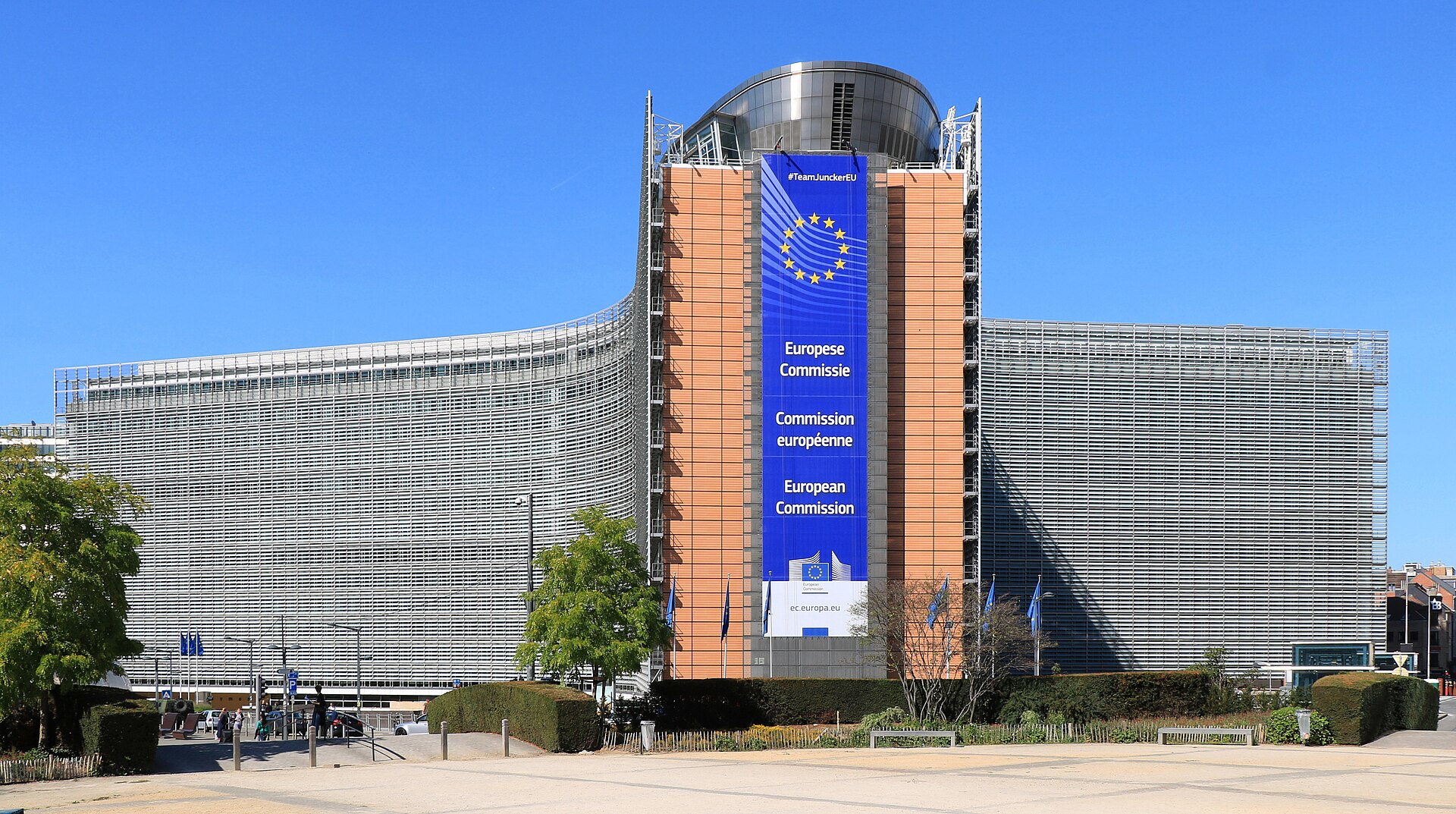
Second, regulators confirmed they are actively engaged. A spokesperson for the UK Competition and Markets Authority (CMA) told Rapporteur that Meta had paused applying the new terms until November 20 and that the CMA was in “urgent discussions with Meta this week on this important issue”; the CMA warned on Friday that it may use its enforcement powers if it finds evidence of a competition infringement. A European Commission spokesperson welcomed the delay, suggested it had arisen “further to discussions between Meta and the Commission,” and said the Commission is committed to ensuring Meta complies with EU competition law and the Digital Markets Act (DMA), the bloc’s Big Tech rulebook, which requires gatekeepers such as Meta to apply fair and reasonable business terms. The Commission also noted information requests it has sent under the EU’s AI Act to providers that failed to publish summaries of their AI training data, though it did not say whether Meta was among those contacted.
Third, the argument crossed the Atlantic. Senator Marsha Blackburn of Tennessee, the Republican chair of the Senate Judiciary Subcommittee on Privacy, Technology and the Law, raised her concerns in a letter reported by Reuters on Friday. The updated terms, she said, “indicate Meta is attempting to exploit American creators and businesses by granting itself sweeping authority to scrape content from any website associated with Facebook and Instagram business accounts.” Blackburn acknowledged that Meta had revised the terms to remove an explicit reference to AI training, but said the changes did not go far enough: the revised language still authorises extensive scraping of external websites and permits Meta to “develop” its business products with what it collects. “Without clear restrictions on how that information may be used, including whether it may be incorporated into AI systems, Meta’s revisions offer little assurance that creators’ intellectual property will be protected,” she said, calling the issue “particularly troubling for American news publishers, creators, and small businesses that rely on Meta’s platforms to reach their audiences and customers.”

The clause at the centre of the fight
The controversy began a week earlier, when Nieman Lab flagged the new language in Meta’s planned update. The core sentence authorises Meta to crawl not just what a business posts on Meta’s own platforms, but the business’s own domains — the websites “associated with” its products or services. For a news publisher, that association is almost automatic: nearly every major publisher operates Facebook and Instagram business accounts to distribute its journalism and sell advertising. On the publishers’ reading, the ordinary act of promoting stories on Meta’s platforms could be treated as contractual permission for Meta to crawl the publisher’s entire website and reuse what it finds.
The European Publishers Council (EPC) put the objection most sharply. On Monday it warned that the updated terms appeared to grant Meta “a blanket licence to exploit a publisher’s work,” extending even to cases where a social-media user simply shares a link to an article. In a statement on Friday, responding to the postponement, the EPC said “little has changed in substance” despite the new date. “For publishers, the stakes include control over their journalism and the revenues that fund professional reporting,” it said, arguing that any additional uses “must require separate, express authorisation, with a meaningful right to refuse without penalty.” The EPC added that it has asked the Commission to impose interim measures on Meta before November 20, should the legal conditions for such an intervention be met. Separately, the World Association of News Publishers (WAN-IFRA) wrote on Thursday to Joel Kaplan, Meta’s chief global affairs officer, asking the company to suspend applying the new terms pending dialogue with the sector.
Lawmakers in Europe used similar language. Axel Voss, an EPP member of the European Parliament long involved in copyright and AI legislation, called Meta’s approach “a textbook abuse of dominance,” arguing there is “no genuine consent here” for business accounts faced with a choice between accepting the terms and leaving platforms they depend on for distribution. “We need clear rules: No AI training without licence, no scraping behind paywalls, respect for robots.txt and opt-outs,” Voss said. Renew lawmaker Veronika Cifrová Ostrihoñová, a former journalist, called the terms “deeply concerning” for newsrooms if they allow scraping without explicit agreement or fair compensation, and urged the Commission to examine the concerns urgently and assess whether interim measures are warranted.
Meta’s defence
Meta’s position has been consistent since the backlash began: the company says critics are misreading a housekeeping update. A Meta spokesperson told Rapporteur that deferring the terms until November 20 would “allow more time for us to explain to our partners and stakeholders what’s changing and what’s not, including how Meta uses web crawlers, and the fact that content owners will still be able to use robots.txt to signal preferences.” Responding to Blackburn’s letter, Meta noted the delay and said the revised terms apply only to its ads and business products and that it is not changing how it uses web crawlers. On October 17, spokesperson Andy Stone said the company had “clarified” the language, that the crawling terms “only apply to our ads and business products,” and that the updates do not give Meta new rights to override content owners’ robots.txt preferences.
Publishers and their lawyers are not reassured, for two specific reasons. First, robots.txt — the file websites use to tell crawlers what they may or may not copy — is a convention, not a law; legal experts who reviewed the terms for Nieman Lab described the revised language as a substantial expansion of Meta’s scraping permissions even after the word “train” was removed, in part because a contract a business has accepted could later be argued to outweigh a robots.txt signal. Second, the stated purpose — to “provide, develop, improve, research, and maintain advertising and business products” — is broad enough, critics say, to cover a great deal of AI development without ever using the word “training.” That gap between Meta’s reassurance (“not about AI training”) and the text’s reach (“develop” our products with what we collect) is exactly the gap Blackburn’s letter presses on.
Why this matters
This is a fight about who writes the price of admission to the modern internet. For twenty years, the bargain between platforms and publishers was mostly about traffic: platforms indexed and linked, publishers received readers. AI has rewritten that bargain, because a crawler no longer needs to send a reader back — it can absorb the reporting itself and answer questions with it. Publishers have spent the last three years trying to convert that absorption into licensing revenue, signing paid deals with AI companies or suing them. A contract clause that treats a business account — something a publisher cannot realistically give up without abandoning its audience on Facebook and Instagram — as consent to crawl its website would, if it stands, hand the largest social platform a route around those negotiations entirely.
The timing sharpens the stakes. The clause surfaced while courts on several continents are still deciding whether AI training on copyrighted work is lawful at all. Contract consent is most valuable precisely when the underlying legal question is unsettled: if a court later rules that training is fair use, Meta’s contractual position becomes a bonus; if a court rules it is not, a signed-away licence becomes the whole game. That is why a trade body is asking for interim measures over a three-week postponement, and why a delay that Meta presents as a courtesy is being treated in Brussels and London as a regulatory event. The story also lands in a longer, colder relationship: Meta stopped paying most publishers for news in 2022 and removed its dedicated news tab in 2024, even as it has more recently signed a small number of deals to license news content for its AI chatbot. Publishers reading the new terms did so against that history.
Who benefits, who loses
If the terms take effect on November 20 substantially unchanged, Meta gains legal certainty for crawling at a scale no licensing programme could match, and every other AI developer faces pressure to demand equivalent rights in its own business contracts. Small businesses and independent creators — who have no licensing departments and no leverage — would be bound by the same clause as global publishers, which is why Blackburn framed her objection around creators and small firms rather than media conglomerates. If regulators force a rewrite — express opt-in for crawling, a binding robots.txt commitment, a carve-out for news content — publishers gain a template they can press on every other platform, and the EPC’s demand for “separate, express authorisation, with a meaningful right to refuse without penalty” becomes the industry’s opening position everywhere. The losers in the current draft, publishers argue, are the newsrooms whose reporting funds the very content being crawled; the loser in the rewrite scenario, Meta argues implicitly, is the advertiser whose product data the crawling was supposedly meant to serve.
What happens next
The new deadline is November 20, and three clocks are now running toward it. In Brussels, the Commission must decide whether the EPC’s request for interim measures meets the legal threshold for intervention before the terms take effect, and its AI Act training-data inquiries give it a second, parallel lever. In London, the CMA’s “urgent discussions” will either produce changes Meta can announce or harden into a formal enforcement track; the CMA has already put the possibility of enforcement powers on the record. In Washington, Blackburn’s letter puts the Senate Judiciary Committee’s privacy and technology panel on notice; a letter alone does not bind Meta, but it signals that the American debate will not be left to European regulators. Meta, for its part, has bought itself three weeks to explain. Whether explanation is enough depends on a question the company has so far answered with a spokesperson’s sentence rather than contract text: will the November 20 version say, in the terms themselves, that content collected under this clause will not be used to train AI systems? Until that sentence exists in the document businesses must sign, publishers say the delay changes the date and nothing else.
Related coverage: Barclays cuts 5,000 jobs as AI reshapes banking · China’s DeepSeek and MiniMax seek approval for global AI use
Sources: Reuters, “Meta to delay new commercial terms criticised by publishers, advertisers” (Oct 23, 2026); Reuters, “Senator says planned Meta commercial terms update could harm US businesses” (Oct 23, 2026); Rapporteur, “Meta delays AI business terms amid media sector outcry” (Oct 23, 2026); Engadget, “Meta tweaks its new terms of service after backlash against scraping” (Oct 19, 2026); Meta Commercial Terms (as quoted by Nieman Lab and Engadget).