Mahrah Al Nahyan sentenced: a member of the Abu Dhabi royal family through marriage has been given a two-year community order at Southwark Crown Court after admitting child neglect, following an incident in which she was found passed out in a London street while a three-year-old in her care played barefoot beside moving traffic.
Abu Dhabi Royal Sentenced in London After Street Collapse

Mahrah Al Nahyan was sentenced on Tuesday, October 13, to a two-year community order with a rehabilitation requirement, and was fined £5,000 with £1,000 in prosecution costs, after pleading guilty to one charge of child neglect. The sentence, imposed by Mr Justice Johnson at Southwark Crown Court, closes a case that began on a June afternoon in West London, when members of the public found her unconscious on the pavement, took charge of the barefoot three-year-old playing beside her, and called the police. She has been in residential treatment for drug addiction since July.
What happened on June 13
The prosecution case, set out in court by Rio Pahlavanpour, was that Al Nahyan had taken cocaine in the days before Saturday, June 13, and that by early afternoon she was incapable of looking after the child in her care. At about 1.50pm, passers-by in a West London street found her slumped against metal railings, barefoot, with a man lying unconscious on his back in a doorway beside her. A 34-second video recorded by an onlooker, later released by the Crown Prosecution Service, shows her sitting motionless on the pavement next to children's toys, including a scooter and a toy plane, her head bowed and her arms crossed.
The child, who was three years old and also barefoot, was playing with the scooter close to moving traffic. Prosecutors told the court that members of the public noticed the child was unattended and intervened because of how close he was to the road. The judge, in his sentencing remarks, described one moment in which the child ran towards the road chasing a piece of paper and had to be contained by a member of the public. The child's relationship to Al Nahyan has not been released, and no details identifying the child were given in court reporting.
Police who attended found Al Nahyan unresponsive; the court heard it took about 30 minutes before she could respond to officers. When she did come round, prosecutors said, she behaved erratically and shouted at them: "This is not a slaughterhouse, why do you care so much? Why are you so worried?" Officers searched her bags and found drug paraphernalia, but no illegal substances. She later admitted to police that she had taken cocaine in the days before the incident.
The sentencing hearing
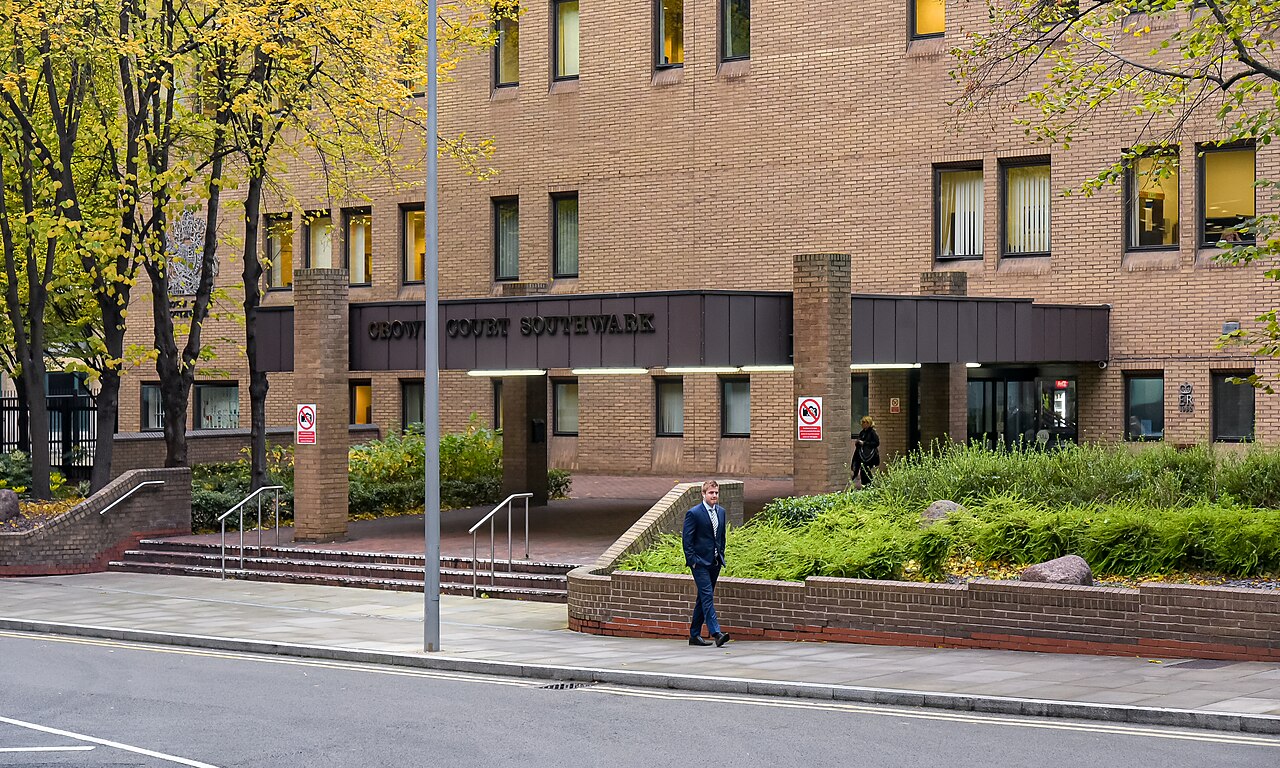
Sentencing her, Mr Justice Johnson told Al Nahyan that by leaving the child to play barefoot in the street while under the influence of drugs, she had shown what he called a recklessness and disregard for the child's safety. But for the intervention of strangers, he said, there was a serious risk the child would have been seriously injured or worse: the child could have run into the road, become lost, or been taken or harmed by a stranger, and could have been distressed at finding both adults unconscious in the street.
The judge imposed a two-year community order with a rehabilitation requirement — a sentence served in the community under probation supervision, structured around treatment rather than custody — and fined her £5,000, with £1,000 in prosecution costs. The court heard that Al Nahyan receives an allowance of £8,000 a month. She left the court building after the hearing photographed by waiting press; the fine and costs together amount to less than one month of that allowance, a proportion the judge set after hearing her means.
The defence: treatment, remorse and a plan
Stephen Vullo KC, in mitigation, told the court that Al Nahyan had not taken drugs on the day of the incident itself, but was exhausted after taking cocaine in the period beforehand. She entered the Priory treatment centre in Woking, Surrey, in July and has not taken drugs since, he said, and has shown significant remorse and resolve to overcome her addiction. "She made a grave mistake that day, and she knows it," he told the judge.
Her immediate plan, the court heard, is to complete all the steps of a three-month programme that finishes at the end of this month. After that, she intends to rent a property in the Guildford area, close to the clinic, and continue attending as a day patient, alongside Narcotics Anonymous meetings. The rehabilitation requirement in her community order is designed to hold that structure in place under supervision for the next two years; breaching a community order can return an offender to court and, ultimately, to custody.
Who Mahrah Al Nahyan is
Al Nahyan is a member of the ruling family of Abu Dhabi through marriage — not a princess or sheikha in her own right, a distinction the court reporting was careful to preserve. The Al Nahyan family rules Abu Dhabi, the largest and wealthiest of the seven emirates of the United Arab Emirates, and provides the UAE's president. The family's wealth is routinely estimated at more than £250 billion (around $300 billion), which places it among the richest royal dynasties on earth, with holdings spanning sovereign investment funds, energy, property and football clubs. Those figures are estimates — the family's finances are not publicly audited — but the scale of the wealth behind the name in the court list was not in dispute.

Like many members of Gulf royal families, she has been based in Britain for extended periods. London is a second home to the Gulf's ruling houses: a place where their children are educated, their property portfolios are managed, their football clubs play, and their medical treatment — including, in this case, addiction treatment — is obtained. It is also, as this case underlines, a place where the ordinary criminal law applies to them in the ordinary way when things go wrong in public.
The law she was sentenced under
Child neglect in England and Wales is prosecuted under section 1 of the Children and Young Persons Act 1933, which covers wilfully neglecting a child in a manner likely to cause unnecessary suffering or injury to health. It is a serious offence that carries a maximum sentence of ten years' imprisonment on indictment. Sentencing courts weigh the harm risked or caused, the defendant's culpability, and mitigation such as an early guilty plea, genuine remorse and engagement with treatment. In this case, the child was physically unharmed — protected, in the event, by strangers — but the risk the judge described was grave, and the sentence combined punishment (the fine), supervision (the two-year order) and treatment (the rehabilitation requirement) rather than immediate custody. Community orders of this kind are the standard disposal where a court accepts that addiction drove the offending and that treatment is under way and likely to continue.
Why this matters
The case matters less for its sentence — a community order is unremarkable in the crown court lists — than for who received it, and where. Gulf royal families occupy a peculiar position in British public life: immensely wealthy, deeply invested in the country's property, sport and education sectors, and largely insulated by privacy, protocol and, for heads of state and their households in some circumstances, legal immunities. None of that insulation operated here. A by-marriage member of the Abu Dhabi ruling family was reported by members of the public, charged by the Crown Prosecution Service, pictured in footage the CPS itself released, sentenced in open court, and photographed leaving it — the full, ordinary machinery of English criminal justice, applied without visible adjustment for the name on the indictment.
London's courts have tested the boundaries of royal privilege before, most prominently in the 2020 High Court fact-finding judgment involving Dubai's ruler and his former wife, which demonstrated that family members of Gulf ruling houses can find their conduct examined in public by British judges. This case sits at the opposite end of the legal scale — a street-level neglect prosecution rather than a dynastic dispute — but it rests on the same principle: presence in London means amenability to London's law, and no serving police officer, prosecutor or judge in this case appears to have treated the defendant's family connections as relevant to anything except, through her allowance, the size of her fine.
There has been no official comment from the UAE authorities or the Al Nahyan family in any of the reporting of the case, and the embassy in London has not issued a statement that any outlet has carried. That silence is itself consistent with how Gulf ruling families handle the private troubles of extended members: the matter is treated as personal and medical, not dynastic. Whether it stays that way may depend on the rehabilitation requirement now structuring her next two years.
What happens next
Al Nahyan's three-month residential programme ends this month. Her stated plan — a rented property near Guildford, day-patient attendance at the Priory, Narcotics Anonymous — will now run under the supervision of her community order until October 2028. If she complies, the case closes quietly. If she breaches the order, she returns before the court, which would then have the full range of sentences, including custody, available to it. For the child at the centre of the case, nothing further was said in court beyond the fact that strangers intervened in time — the outcome the judge returned to, and the one on which the whole hearing, in the end, turned.
Related coverage: UAE and Saudi Arabia edge toward rapprochement as Sheikh Mansour visits Riyadh · Kate Middleton Named Britain's Best Dressed for 2026 as Tatler Crowns the Princess of Wales Again · Harry Meghan King Charles Reunion: Why They Still Haven't Met Six Weeks After the Cotswolds Move
Sources: The Times (October 13); The Sun (October 14); New York Post (October 14). Street image released by the Crown Prosecution Service.