War · Ukraine · Russia
The Luhansk bus attacks seven killed headline rests, for now, on a single chain of reporting: the word of the region’s Moscow-installed governor, carried by Reuters and the Associated Press, with no comment from Kyiv and no independent verification. Seven people were killed and 14 injured in two attacks on buses in Russian-occupied Luhansk region on Thursday, Leonid Pasechnik said. Two boys, aged 15 and 17, are among the injured. What happened on those roads is not yet established — and in a war where each side’s civilian dead become the other side’s evidence, the gap between the claim and the proof is part of the story.
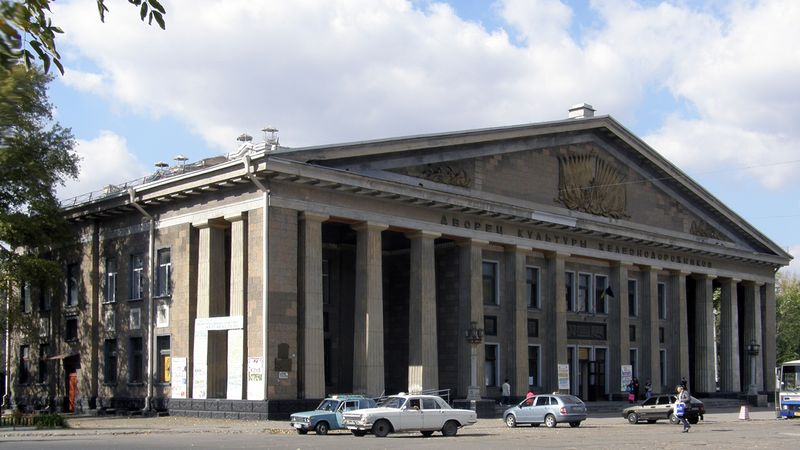
Luhansk, Ukraine — Seven people were killed in Russian-controlled Ukraine’s Luhansk region on Thursday after two separate attacks on buses, the region’s Russian-installed governor, Leonid Pasechnik, said in a statement on the MAX messenger service, Reuters reported. Fourteen people were injured, including two boys aged 15 and 17, he added.
The Associated Press, reporting the same official account in its account of Thursday’s exchanges, described the first incident in more detail: an attack killed five people and wounded 13 others in Ukraine’s Russia-occupied Luhansk region, Kremlin-installed officials said, hitting a bus travelling between the regional capital, Luhansk, and a nearby town. Two teenagers were among the wounded, Pasechnik said, and further details were not immediately available.
A third account, compiled by the Global Event Monitor from two independent tellings, breaks the day down into three incidents: five people killed and 13 injured when a passenger bus was struck; two men also reported killed in an attack on a light commercial vehicle; and another man injured in a separate strike near a bus station in Alchevsk. That breakdown adds up to the same totals Reuters carried — seven killed, 14 injured — but it is a separate telling, and the three accounts have not been reconciled by any independent investigation.
Ukrainian authorities have not commented on the reports. No independent source has verified who carried out the attacks, what weapons were used, or whether any military target was near the vehicles.
Track it live: Ukraine War Map — Live Global Trackers
What we know and what we don’t know
What is documented is narrow. Pasechnik, who heads the Moscow-installed administration of the self-proclaimed Luhansk People’s Republic, announced the tolls on Thursday through the MAX messenger service. Reuters and the Associated Press both carried his account, attributing it to him and to the Kremlin-installed authorities. The Independent’s live coverage carried the same Reuters figures. That is two major wire services reporting one official’s statement — solid evidence that the statement was made, and that local officials are reporting deaths, but not independent confirmation of the attacks themselves.
What is not known is almost everything else. Neither wire report gives the exact locations of the two bus attacks, beyond a bus travelling between Luhansk city and a nearby town and, in the Event Monitor’s telling, a strike near a bus station in Alchevsk, an industrial city south-west of the capital. Neither identifies the weapon. Neither says whether the buses were in service, who the victims were, or what condition the injured are in. And Kyiv’s silence, several hours after the reports moved, means the other government with forces in the region has neither confirmed, denied nor offered its own account.
That pattern — a casualty claim from an occupation authority, silence from the other side, and no outside access to the scene — is the normal information condition of this war’s occupied territories, and it cuts in both directions. Claims from Moscow-installed officials have at times been accurate in their tolls and contested in their attribution; claims from Kyiv about strikes in government-held territory go through a more open, but still official, reporting chain. The honest summary of Thursday’s bus attacks is the one Pasechnik’s own sourcing imposes: seven dead and 14 injured, according to the Russian-installed governor; attribution and circumstances unverified.
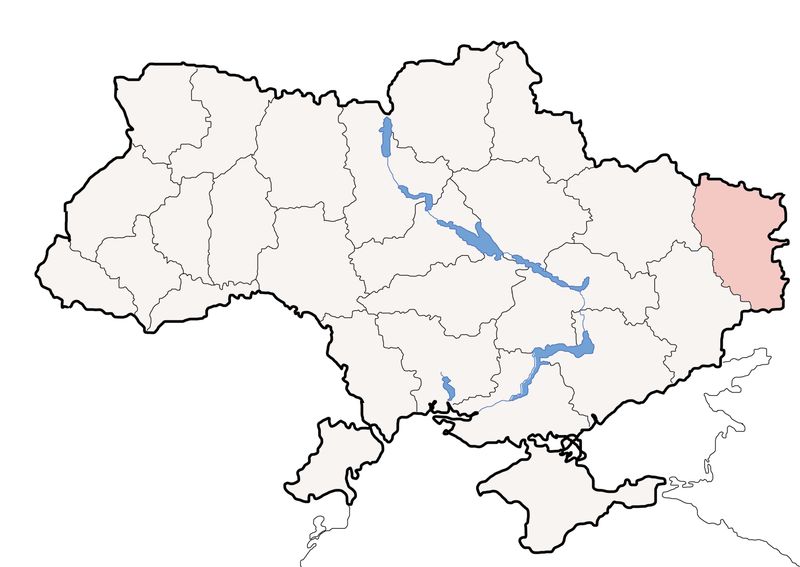
A region held since 2022, reported on by one side
Luhansk is the easternmost of Ukraine’s oblasts, a coal-and-steel region on the Russian border that has been fought over since 2014, when Russian-backed separatists seized parts of it, and occupied almost in full since the first months of the 2022 invasion. Russia formally annexed the region in September 2022, folding it into the Russian Federation as the Luhansk People’s Republic; Ukraine and most United Nations member states do not recognise the annexation, and Kyiv continues to treat the region’s residents as Ukrainian citizens living under occupation.
Pasechnik has led the Moscow-installed administration since 2018. In the years since the full-scale invasion, his government’s statements have been one of the few regular sources of information about daily life — and daily death — in the region, because Ukrainian officials, Ukrainian media and international observers have no routine access to it. When a bus is hit in occupied Luhansk, the first and often only account comes from the administration that governs it. The same is true, in mirror image, when Ukrainian officials in Zaporizhzhia report the toll from a Russian strike: on Monday, Russian glide bombs hit a school in Komyshuvakha being used as a humanitarian aid distribution point, and it was Ukrainian police and President Volodymyr Zelenskyy who supplied the figures — a toll Zelenskyy raised again on Thursday to 43 confirmed killed, with more than 30 people still unaccounted for.
Vehicles have been hit in the region before. In 2024, Moscow-installed authorities reported five people killed when a bus travelling to a cemetery near Kirovsk struck a mine, and two more killed by shelling near Kreminna the same day — reports that, like Thursday’s, rested on the occupation administration’s account. Earlier this month, on November 1, authorities in the region reported at least four people killed in a series of drone attacks on civilian vehicles, including a bus carrying workers from an industrial plant. Thursday’s attacks, if the tolls hold, would be the deadliest single day for the region’s civilian transport this autumn.
Why this matters
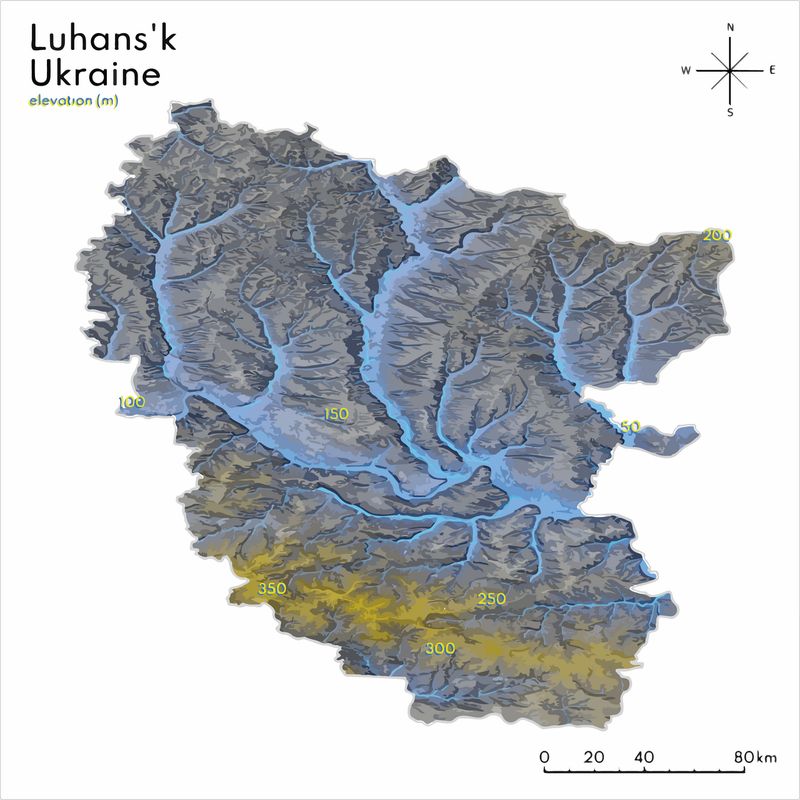
The first reason is the simplest: buses are the circulatory system of an occupied region. Luhansk’s towns are spread across a coal basin the size of a small country, its railways largely given over to military freight, and its working population — miners, plant workers, hospital staff — moves by road. An attack on a bus, whoever carries it out and whatever the intended target, lands on the people with the fewest choices about where to be. Two of the injured on Thursday were 15 and 17 years old.
The second reason is the week these attacks landed in. On Monday, one of the deadliest single strikes of the war killed dozens of civilians queueing for aid at a school in Komyshuvakha; by Thursday, Ukrainian officials were still pulling bodies from the rubble and Zelenskyy was publicly accusing Moscow of a deliberate double strike on rescuers. Russia’s Defence Ministry said that attack targeted Ukrainian military units. Now, three days later, Moscow-installed officials in Luhansk are accusing Ukraine — by implication, since Pasechnik’s statement names no other possible author — of killing civilians on buses. Each side’s worst day becomes the other side’s exhibit. That symmetry is not evidence about either incident; it is the environment in which both will be argued over, at the United Nations and in the talks now gathering pace.
The third reason is timing. The bus attacks were reported hours before negotiators sat down at NATO headquarters in Brussels for a second day of talks on Ukraine’s postwar reconstruction, 2027 funding and security guarantees, and five days before American-mediated working-level talks between Ukraine and Russia open in Abu Dhabi on November 10–11. On Wednesday night, Zelenskyy spent 90 minutes on a call with US envoys Steve Witkoff and Jared Kushner. None of that makes Thursday’s casualties a negotiating move. But every delegation in Brussels and Abu Dhabi will have read the same two wire stories — Komyshuvakha’s 43 and Luhansk’s seven — and each number will be doing quiet work in the room, as a measure of what the war is still doing to civilians while its ending is discussed.
The numbers, in context
Set against the day’s wider exchanges, seven deaths in Luhansk were not the largest figure in Thursday’s reporting — and that is itself part of the context. Ukraine’s air force said Russia launched 128 attack drones overnight, of which 105 were shot down or suppressed; Russia’s Defence Ministry said its forces shot down 496 Ukrainian drones over 13 regions, Crimea and the Black and Azov seas, in what Ukraine’s own outward barrage — the same night’s strikes that set fires at the Ryazan refinery and a Wildberries warehouse — made one of the heaviest nights of the autumn air war. Those are the two militaries’ own tallies, each unverifiable in full, and they describe a war of industrial scale. The bus tolls from Luhansk describe its other register: small, local, and almost impossible to check. Both registers are true at once, and a reader who only follows the big numbers will miss where most of this war’s civilian risk actually sits — on the roads, in the queues, in the vehicles people cannot choose not to board.
Who gains, who loses, what critics say
For the Moscow-installed administration, a documented Ukrainian attack on civilian buses would be politically useful: it answers Komyshuvakha with a Ukrainian atrocity, three days before the Abu Dhabi talks. That usefulness is a reason to scrutinise the claim, not a reason to dismiss it — useful claims can still be true, and the wounded teenagers in Pasechnik’s account are either real or invented, a distinction only evidence can settle. For Kyiv, silence has its own logic: Ukrainian officials rarely comment on operations in occupied territory, and commenting on a claim they consider fabricated would amplify it. But silence also leaves the claim standing alone in the record, which is how single-source tolls harden into accepted fact. Critics of Ukraine’s conduct point to a documented pattern of Ukrainian drone strikes on vehicles in occupied and border regions; critics of Russia’s point to a documented pattern of exaggerated or misattributed casualty claims from occupation authorities, and to the vastly larger toll its own strikes continue to take in government-held Ukraine. Both patterns exist in the record. Neither one verifies Thursday.
What happens next
Three checks will firm up this story in the coming days. First, Kyiv: a comment, a denial, or continued silence from Ukrainian officials will each say something different, and Ukraine’s human rights ombudsman — who is due in Washington for talks connected to the same diplomatic track — is a plausible channel. Second, evidence: photographs, hospital reporting or local media from inside the region, which surface slowly from occupied territory but usually surface. Third, the diplomacy: the attacks were reported on the same day as the Brussels reconstruction talks and days before the Abu Dhabi session on November 10–11, and whether either delegation raises Thursday’s dead — seven in Luhansk, 43 in Komyshuvakha — will show how civilian tolls are being used in a negotiation that has, until now, mostly traded in territory, guarantees and money. Germany’s proposal this week of an extra €100 million to keep Ukraine’s power, water and schools running through winter is a reminder of what the Brussels track is for. The Luhansk buses are a reminder of what it has to stop.
Read next: Ukraine’s drones strike the Ryazan refinery and a Wildberries warehouse · Germany proposes an extra €100 million for Ukraine’s infrastructure
Reporting based on Reuters’ November 5, 2026 report of Leonid Pasechnik’s statement (carried via syndication and by The Independent’s live coverage); the Associated Press’s November 5, 2026 report from Kyiv on the overnight exchanges and the Brussels talks; and the Global Event Monitor’s November 5 incident summary. All casualty figures are as reported by the Russian-installed authorities in Luhansk; Ukrainian authorities had not commented and the reports had not been independently verified at publication. Sources: Reuters via Devdiscourse, Associated Press via Military.com, Global Event Monitor.