World / Europe — The Lisbon housing protest ended its second week the way its first one did: with police in Rossio Square before dawn. Shortly after 2 a.m. on Sunday, Portugal’s PSP cleared the tent camps in Lisbon and Porto in a coordinated operation — 31 people detained, 11 injured on the police count, and 171 tents and camp structures seized. The protesters’ answer, within hours, was that they will be back.

LISBON — Portuguese police cleared a camp in central Lisbon held to protest against the country’s deepening housing crisis, baton-charging demonstrators in the early hours of Sunday and making 25 arrests in the capital, Reuters reported. A parallel operation in Porto detained six more people, and Portugal’s Public Security Police (PSP) put the combined balance at 31 detentions for disobedience, 11 injured and 171 camp structures removed across the two cities. The Lisbon housing protest had pitched more than 100 tents in Rossio Square after a march by thousands on Saturday — and it had already been cleared once, on Tuesday, before the protesters returned and rebuilt it.
The sequence matters more than any single number in it. A camp that police dismantle on Tuesday, that returns the same day, that marches in the thousands on Saturday and that has to be cleared again at 2 a.m. on Sunday is not a public-order problem being solved in stages. It is a political argument the government is losing in public, one tent at a time — about a housing market in which purchase prices have more than doubled since 2017 and rents on new leases have nearly doubled, in one of Europe’s poorest countries by wage levels.
Two hours of warnings, then the batons
The night ran on a timetable both sides understood. According to Portuguese reporting of the PSP’s account, dispersal orders began around 12:30 a.m. at Rossio — officially Praça D. Pedro IV — and at Praça D. João I in Porto, the hour by which the authorised demonstrations were due to have ended. The special police unit moved in at about 2 a.m., on the night Portugal’s clocks went back to winter time, after more than two hours of tension and repeated orders to take the tents down. Reuters, whose reporters were following the march and the camp, described dozens of officers, some with police dogs, moving in shortly after 2 a.m. after warning protesters their tents would be dismantled and that anyone who resisted faced disobedience charges.
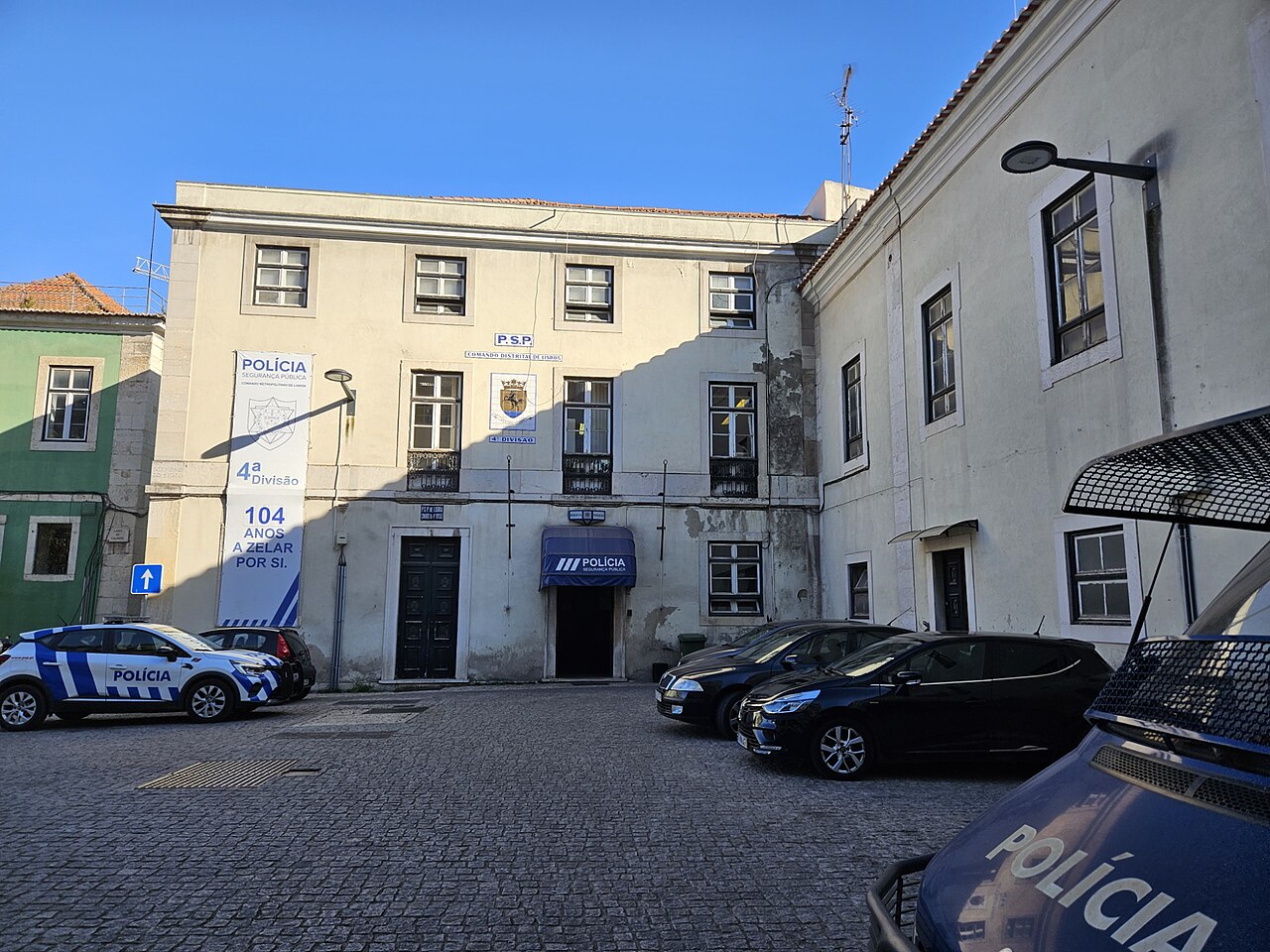
The PSP’s updated balance, carried by Portuguese outlets on Sunday, was precise: 31 people detained for disobedience — 25 in Lisbon and six in Porto — all of them notified to appear before a court on Monday, with those held in Lisbon already being released on Sunday morning. Eleven people were injured, five in Lisbon and six in Porto: three PSP officers and eight civilians, among them an officer hurt after being bitten by a protester’s dog. Municipal police removed and seized 171 camp structures — 117 in Lisbon and 54 in Porto. In Porto, police also seized a firework, three paint cans they said had been thrown at officers, and a container of pepper spray. The PSP called its operation proportionate, and said the daytime marches on Saturday had passed normally in several cities; it was the overnight camps, it argued, that broke the rules on occupying public space and had already damaged public property.
The injury count is contested — and that contest is part of the story
What the two sides agree on is the detentions: 31. What they do not agree on is how violent the night was. The PSP’s figure moved during Sunday — seven injured in an early count, then 11 in its updated balance. The camp’s own account, published by the Acampada de Lisboa movement on social media and reported by Portugal’s Now channel, says dozens of protesters were treated, more than 20 of them taken to Lisbon’s Sao Jose hospital and many others assisted on the spot by the camp’s own care team. One of the first detainees released in Lisbon, a 32-year-old named Filipe, told CMTV he had been caught in the middle after the march, talking with friends by the square’s fountain, and was detained anyway.
Before the operation, Left Bloc lawmaker Fabian Figueiredo, who was at the Rossio camp, had called the planned police action “completely disproportionate,” arguing there had been no public disorder. “The worst thing that could happen tonight was having this police force charge hundreds of people who are here peacefully. Why?” he asked, in remarks reported by Reuters. Police, for their part, point to the Porto seizures and the bitten officer. Readers should hold both accounts the way the evidence currently allows: the baton charge itself is not in dispute — Portuguese television carried the dispersal “a bastonada,” by baton — but the human cost of it is, and the gap between 11 and “dozens” will only close if hospital or court records settle it in the coming days.
Second clearance in a week: how the camps got here
Sunday was the second dawn clearance, not the first. The tent movement began in Porto on October 10 and spread to Lisbon and other cities, part of a wave of housing anger that has also filled streets in neighbouring Spain. In the early hours of Tuesday, October 20, police cleared both camps shortly before 6 a.m. and detained 55 people. In Porto that morning, demonstrators dismantled their own tents under orders; in Lisbon, camp spokesperson Carla Valadao described the clearance as “very aggressive,” while PSP superintendent Sergio Soares told reporters it had been “calm, proportionate and appropriate, with no police charge.” The 55 were released pending a court appearance. By Tuesday afternoon, protesters had poured back into both squares.
They rebuilt in a different form at first — Portuguese reporting described campers voting to take the tents down at night and sleep in the open, in sleeping bags, in what they jokingly called an “aconchada,” a collective cuddle against the autumn cold — and then, after Saturday’s march, in the old form: more than 100 tents in Rossio, about 50 in Porto’s Praça D. João I, and hundreds of supporters gathering to defend the Lisbon encampment. That is the camp police removed on Sunday. The movement’s popular-assembly demands, set out earlier in the occupation, go well beyond one bill: reversing the new rental legislation, an end to demolitions and to evictions with no housing alternative, more public housing, bringing vacant properties back into use, and limits on investment funds in the residential market.
The numbers underneath the tents
Strip the protest away and the arithmetic still explains it. Portugal is grappling with one of Europe’s most acute affordability crises: home prices have more than doubled since 2017 while rents for new leases have nearly doubled, with young people hardest hit, Reuters reported. On the longer measure, Portuguese housing costs rose 124 percent between 2015 and 2024 — roughly twice the EU average pace, on official data cited in coverage of the earlier camp. The Bank of Portugal estimates a shortfall of 300,000 homes nationwide: a missing stock equivalent, as Reuters put it, to the entire housing stock of Lisbon.
“We have an obligation to fight for what we believe in,” Vitor Gomes, a 21-year-old multimedia communications student on Saturday’s march, told Reuters, pointing to housing speculation, wealth concentration and rising inequality as reasons he is pessimistic about the future. Last week a 41-year-old communications consultant at Rossio, Debora Miranda, made the same point from the other end of the age range: “If people don’t feel at home, in every sense of the word, they can’t move forward with their lives … enough is enough.” The immediate legislative target is specific: protesters want the centre-right government to scrap a bill that would make evictions easier and end rent caps on new leases, which has passed a first parliamentary reading — with the far-right Chega party abstaining.
Why this matters
Housing has become the issue on which southern Europe’s post-pandemic settlement is being renegotiated in the street. The same weeks have brought mass housing protests in Spain — covered by Signal Post News in Madrid and in the eviction protests that followed a protester’s death — student-led demonstrations broadening into anti-government protests in Paris, and now a Portuguese camp movement that has survived two police clearances. The pattern is consistent: capital, tourism and higher-earning remote workers have repriced city housing faster than local wages have moved, and governments that respond with supply promises measured in decades are meeting movements measuring their patience in nights spent in a square.
For Portugal’s government, Sunday’s operation creates a familiar trap. Clearing a camp is administratively easy and politically expensive: every clearance since October 10 has produced a larger return, a Saturday march measured in thousands, and a fresh set of images — batons, dogs, tents being loaded into municipal trucks — that recruit for the movement better than its own posters. The alternative, negotiating over the eviction bill and rent caps, means conceding the movement’s central claim: that the crisis is a policy choice. The injury-count dispute will feed the same argument on Monday in court, where 31 disobedience cases give the movement a second public stage in 48 hours.
What happens next
The detained protesters are due in court on Monday, and Portuguese reporting of the movement’s plans points to further action in the coming days, with housing groups promising to return to the streets rather than accept the clearance as the end of the occupation. The legislative fight resumes in parallel: the eviction and rent-cap bill remains in parliament, and every week it advances without a housing package attached, the camps’ argument writes itself. Watch three things: whether the court hearings on Monday draw a crowd of their own; whether the government pairs enforcement with any new supply or rent measure before the next weekend march; and whether hospital records narrow the gap between the PSP’s 11 injured and the movement’s dozens. Until then, Rossio is empty of tents for the second time in a week — and, on the evidence of the last one, not for long.
Read next: Spain’s housing protests spread across Madrid and other cities and the eviction death that ignited Spain’s housing movement.
Sources
Reuters, October 25, 2026, Sergio Goncalves and Miguel Pereira (the Lisbon clearance, baton charge, 25 Lisbon arrests and release pending Monday court, Porto camp of about 50 tents and six arrests, police “proportionate” position, Vitor Gomes and Left Bloc lawmaker Fabian Figueiredo quotes, Saturday march by thousands, more than 100 tents in Rossio, prices and rents since 2017, Bank of Portugal 300,000-home shortfall, the eviction and rent-cap bill and Chega’s abstention). PSP balance via Portuguese press, October 25, 2026 — Jornal 360 and Os Monhacas reporting the Public Security Police statement (31 detentions in total, 11 injured — five in Lisbon and six in Porto, three officers and eight civilians, an officer bitten by a protester’s dog, 171 camp structures removed — 117 in Lisbon and 54 in Porto, and the Porto seizures). Now Canal, October 25, 2026 (Lisbon detainees being released on Sunday morning for Monday court; dispersal orders from 12:30 a.m. and the special unit’s intervention at about 2 a.m.; the Acampada de Lisboa statement that dozens were treated and more than 20 taken to Sao Jose hospital; the released detainee Filipe speaking to CMTV; PSP’s earlier count of seven injured, later updated). Reuters via Al Jazeera / Europe Says, October 21, 2026 (the Tuesday October 20 clearance shortly before 6 a.m., 55 detained, Porto protesters dismantling their own tents, Carla Valadao and PSP superintendent Sergio Soares quotes, protesters returning the same day, the 124 percent 2015–2024 price rise and Debora Miranda quote). Semanario Vox, October 22, 2026 (the movement’s spread from Porto on October 10, the earlier Tuesday clearance’s 55 Lisbon detentions, the “aconchada” open-air sleeping decision and the popular assembly’s demands).