Lane Johnson retires
Philadelphia loses a foundational right tackle in the middle of a season, but Johnson's decision carries a larger message: a player's obligation to the team does not outrank his obligation to remain well.
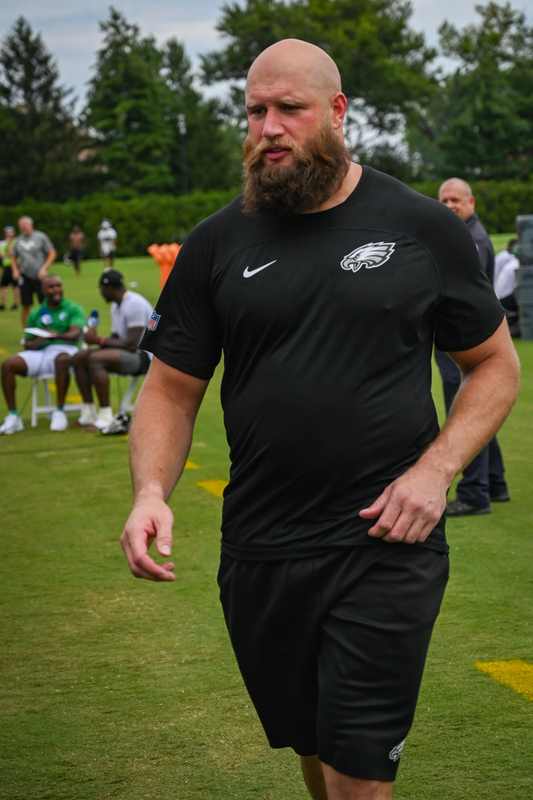
Lane Johnson retires from the NFL at 36, ending one of the most accomplished careers ever built on the Philadelphia Eagles' offensive line. The right tackle announced Tuesday that he was leaving in the middle of his 14th season to focus on his mental health and family. It is a football shock and a human decision at once: Philadelphia loses a player with 171 regular-season starts, five All-Pro honors and two Super Bowl championships, while Johnson chooses not to keep performing after deciding that his head and heart could no longer be fully in the game.
The timing turns a retirement that had been foreshadowed into an immediate roster crisis. Johnson had said in August that this would “probably” be his final season. Yet the Eagles expected that goodbye after the schedule, not four games into it. He was a surprise inactive for Sunday's Week 4 loss to the Los Angeles Rams because of personal reasons, and the team learned that morning that he would not play. Rookie Markell Bell started at right tackle. Bell is now expected to carry the position for the rest of the season.
Johnson's final game came September 28 against the Chicago Bears. There was no farewell tour and no ceremonial last snap announced in advance. That abrupt ending will be difficult for a contender and unsatisfying for supporters who wanted one more postseason run. It is also consistent with the standard Johnson set in his statement: if he could not give the organization all of himself, continuing for appearance's sake would be the less honest choice.
Why this matters
Football teaches durability as a virtue and availability as a duty. Offensive linemen embody that culture more than most: their best work is often noticed only when it disappears, and playing through discomfort is treated as part of the job. Johnson's retirement challenges the idea that mental strain must remain invisible until a convenient date on the league calendar.
For Philadelphia, the cost is concrete. A championship-level line loses its right-side anchor after the roster and season plan were built around him. For the broader NFL, the significance is cultural. Johnson is not stepping away after failing to make a team or sliding quietly into a reserve role. He leaves as a decorated, central player and says plainly that mental health is critical. That gives other players permission to view wellness as part of professional responsibility rather than its opposite.
The decision also creates a hard but necessary distinction between explanation and excuse. Fans can be frustrated by the timing. Coaches can be unsettled by the disruption. Teammates can feel the loss. None of those reactions requires dismissing the reason. The mature reading is that two things can be true: the Eagles are worse off today, and Johnson was entitled to decide that continuing would be worse for him and his family.
The decision and the difficult timing
What the Lane Johnson retirement announcement said
In his social media statement, Johnson put the issue in direct terms: “Right now it is critical that I focus on my mental health.” He said his personal and family priorities had changed. He also framed retirement as a matter of duty, writing that teammates, coaches, the organization and fans deserve someone whose head and heart are 100 percent in the game.
That language matters because it rejects the assumption that leaving is a withdrawal from responsibility. Johnson's argument is the reverse: showing up without the capacity to make the commitment required by the position would be unfair to everyone relying on him. A right tackle must make decisions in fractions of a second while carrying responsibility for the quarterback's protection. If a player believes he cannot meet that standard, candor can be more responsible than endurance.
Why did Lane Johnson retire now?
The public record supplied several signals without making the moment predictable. Johnson missed four practices during training camp for personal reasons. In August, he said the 2026 season would “probably” be his last, pointing to his aging parents' health issues and to his children growing up; his oldest is 13. Then came the Week 4 absence and the team's morning-of-game notice.
Those facts answer why did Lane Johnson retire only as far as Johnson chose to answer it: mental health, family priorities and an inability to promise complete commitment. They do not invite amateur diagnosis. They show that retirement was connected to concerns he had been weighing before the season, even if the exact timing surprised the club. The responsible boundary is to take his explanation seriously without trying to fill in private details he did not disclose.
Lane Johnson mental health advocacy was already part of his legacy
Lane Johnson mental health advocacy did not begin with retirement. He has spoken publicly about his experiences with anxiety and depression and became one of the NFL's most visible voices on the subject. The Eagles named him their 2023 Walter Payton NFL Man of the Year nominee, recognition that placed his impact away from the field beside his performance on it.
Owner Jeffrey Lurie said Johnson's advocacy “has undoubtedly saved lives.” That is a sweeping tribute, but it captures why this retirement resonates beyond roster construction. Athletes are routinely praised for helping others speak openly; the harder test comes when one of them acts on the same principle. If the football world applauds disclosure but condemns a player for making a decision based on it, the applause was conditional.
A career built in one city
Lane Johnson career stats show both excellence and endurance
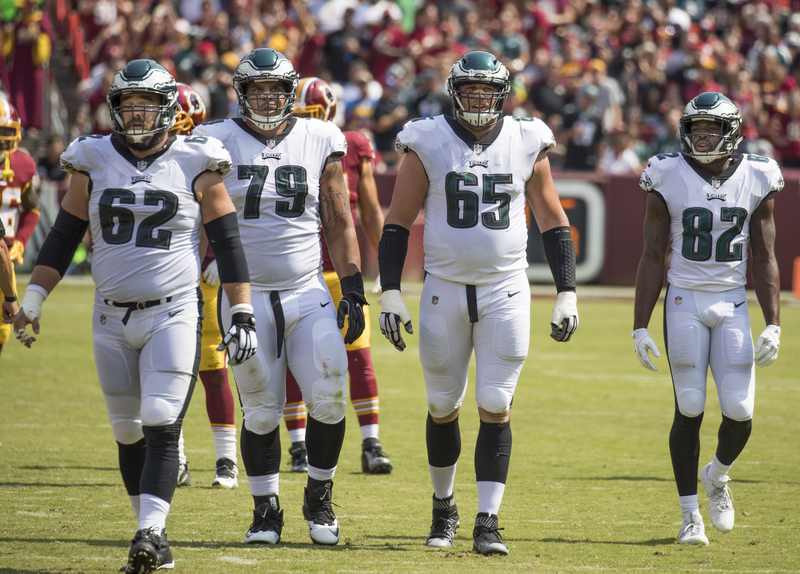
The Eagles selected Johnson fourth overall in the 2013 NFL Draft, and he never played for another franchise. Across 14 seasons, he made 171 regular-season starts and appeared in 186 games including the playoffs. His 15 postseason starts formed the pressure-tested center of a résumé that includes six Pro Bowl selections and five Associated Press All-Pro honors — two first-team and three second-team.
Those Lane Johnson career stats matter because offensive-line value accumulates differently from quarterback or receiver production. There is no touchdown total that summarizes a tackle's work. The case is built from sustained starts, repeated recognition by voters and peers, and the trust of coaches who place a premier pass protector at one of the offense's most consequential positions. One hundred seventy-one starts means more than longevity alone; paired with five All-Pro selections, it shows long-term availability at an elite level.
The team achievements supply another layer. Johnson won two Super Bowls and three NFC titles. He is one of only three players in franchise history to win multiple Super Bowls with the Eagles, and the only offensive lineman in that group. That distinction places him inside Philadelphia history, not merely in a list of very good players who passed through the building.
A rare in-season exit, and the Andrew Luck parallel
Shock retirements are remembered because they rupture the tidy chronology fans expect. Andrew Luck's exit became a reference point for the same reason: an elite player decided that the human cost had overtaken the professional reward before outsiders believed the story was supposed to end. Johnson's circumstances are his own, and the comparison should not flatten them into one narrative. The parallel is the collision between a player's private threshold and a public schedule.
In both kinds of moments, supporters instinctively count what was left — games, playoff chances, one more run — while the player is counting what continued participation would require. The league packages careers as linear campaigns, but bodies, families and mental health do not obey the schedule. The surprise belongs to the audience; the decision belongs to the person living with it.
Who benefits, who loses
Markell Bell Eagles audition becomes the season's defining personnel test
The immediate football opportunity belongs to Markell Bell. The rookie already received the first start when Johnson was inactive against the Rams, and he is expected to replace Johnson for the remainder of the season. There is no gentler introduction available: Bell moves from a depth option to the successor of an all-time Eagle while the games count.
The Markell Bell Eagles storyline should be treated as an audition, not a coronation. One start cannot answer whether he can handle the position over months, adjust to opponents' counters and sustain communication with the rest of the line. It can establish a starting point. Every snap now supplies the coaching staff with information that would otherwise have remained hidden behind Johnson.
That opportunity is the clearest on-field benefit of the timing. Philadelphia learns about Bell under genuine pressure rather than in a protected preseason setting. If he stabilizes the position, the Eagles may have found part of their long-term solution earlier than planned. If he struggles, the front office receives equally valuable clarity about what must be addressed.
The Eagles offensive line 2026 loses more than a blocker
The cost to the Eagles offensive line 2026 is larger than replacing one name on a depth chart. Johnson carried 14 seasons of recognition, calls, adjustments and institutional memory. Even if Bell executes his assignment, the group loses the veteran who had seen nearly every front and understood how Philadelphia's system responded under playoff pressure.
Midseason is also the worst time to redesign protection. Training camp is built for experimentation; October is built for weekly opponents. Coaches must help Bell without changing so much that the rest of the line loses its rhythm. Tight ends, backs and the quarterback may all be affected by how Philadelphia chooses to protect the new starter's edge.
Fans lose an ending, too. Johnson's final game against Chicago passed without the meaning it carries now. There will be no announced farewell drive in uniform. For a city that watched him grow from the fourth overall pick into a champion, that absence of closure is real. It can coexist with respect for the choice.
The argument about timing versus the player-welfare case
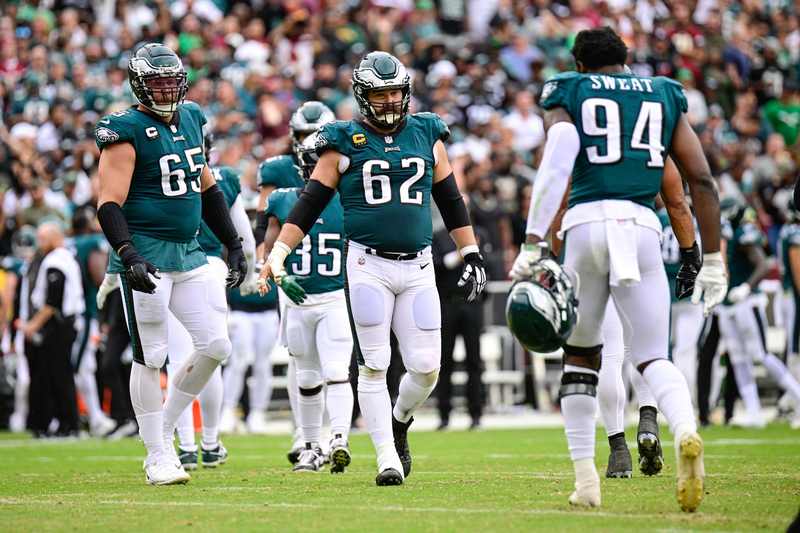
Critics will say Johnson owed the Eagles earlier certainty. The club used its offseason assumptions, roster spots and weekly preparation around the expectation that he would play. The morning-of-game notice before the Rams loss amplified the disruption. Retirement after Week 4 denies the team the clean succession plan it might have built in March or August.
That criticism describes the competitive consequence accurately, but it does not settle the ethical question. Mental health is not a contract deadline, and family circumstances do not always resolve in time for roster planning. Johnson had already signaled that retirement was near. He also gave the team 14 seasons, 186 games including playoffs and a career's worth of physical labor at a punishing position. The idea that those contributions create an unlimited claim on his future mistakes gratitude for ownership.
The strongest player-welfare case is not sentimental. It is practical. A player who says he cannot bring complete focus to a high-speed collision sport is identifying a risk to himself and everyone depending on split-second execution. Football organizations routinely make immediate decisions when physical health changes. Taking an athlete's stated mental health with comparable seriousness is not special treatment; it is consistency.
What comes next
The Philadelphia Eagles season now turns on adaptation
The Philadelphia Eagles season does not pause for mourning. Bell is the expected starter, and the coaching staff must decide how much help to give him, where to simplify and how to preserve the strengths of the rest of the line. The objective is not to ask a rookie to imitate Johnson. It is to build a workable right side around the player Bell is now.
Short-term answers will arrive in protection choices and snap-to-snap performance. The longer-term right-tackle plan will require a more durable judgment: whether Bell can develop into a starter or whether the position becomes a priority after the season. Johnson's departure accelerates that evaluation by months.
The Eagles have navigated abrupt change before. In a recent example, veteran quarterback Case Keenum's role was central to the Bears' Monday-night win over Philadelphia, another reminder that experience and preparation can tilt a game when a team's plans change. Across sports, sudden departures also reshape organizations overnight, as shown by Jon Rahm's exit from LIV Golf. And October pressure leaves little room for adjustment, a truth evident in the Dodgers' postseason push.
The Lane Johnson Hall of Fame case starts with the whole résumé
The Lane Johnson Hall of Fame debate begins with a persuasive combination: six Pro Bowls, five AP All-Pro honors, 171 regular-season starts, 15 postseason starts, two Super Bowl rings and three conference championships. Lurie called him “an all-time Eagle” and said there is “no doubt” Johnson will eventually enter the Pro Football Hall of Fame.
That is an owner's advocacy, not a voting result, but the underlying case is substantial. Offensive linemen rarely have a single statistical argument, so selectors weigh peak recognition, longevity, postseason importance and standing at the position. Johnson checks each category with evidence rather than reputation alone. Ending after four games does not erase the preceding 13 full seasons of work; it fixes the final number and begins the waiting.
Advocacy may become the work after football
Johnson has not announced a formal next job, so predictions should remain modest. Yet the public role he already built offers a likely direction. His openness about anxiety and depression gave athletes a vocabulary for experiences often hidden inside a culture of toughness. Retirement makes that message more consequential because he followed it with action.
He could choose privacy, continued advocacy or some combination of both. The important point is that his influence on the mental-health conversation does not depend on a title. Every future player who sees a decorated veteran set a boundary has a reference point that did not exist in the same form before.
The final measure
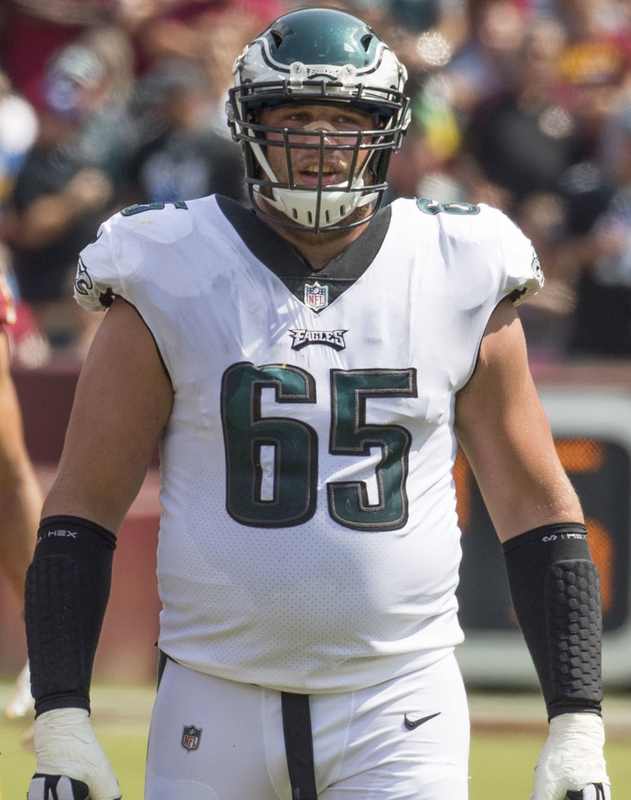
Johnson's career can be measured in starts, honors, banners and January games. It should also be measured in the standard he applied at the end. He said the Eagles deserved a player fully present in mind and commitment, and he concluded that he could no longer promise that. Walking away made the roster problem visible. Staying might only have concealed the personal one.
Philadelphia now turns to Bell and an accelerated succession plan. Johnson turns to the priorities he named. The organization loses a right tackle, the fans lose a proper farewell, and the sport gains an unusually clear statement about where professional obligation stops. That is why this retirement will be remembered not only for when it happened, but for the reason Johnson was willing to say out loud.
Sources
- Reuters: Eagles right tackle Lane Johnson retires to focus on mental health
- USA Today: Lane Johnson announces retirement from the Eagles
- theScore: Eagles' Lane Johnson retires to focus on mental health
- Eagles Wire: Jeffrey Lurie's statement on Lane Johnson's retirement
- Wikimedia Commons: Lane Johnson photo collection and license information
Reporting note: Career totals, honors and the circumstances of Johnson's announcement are drawn from the reporting above. Analysis and framing are by Signal Post News.