Case Keenum Bears Eagles
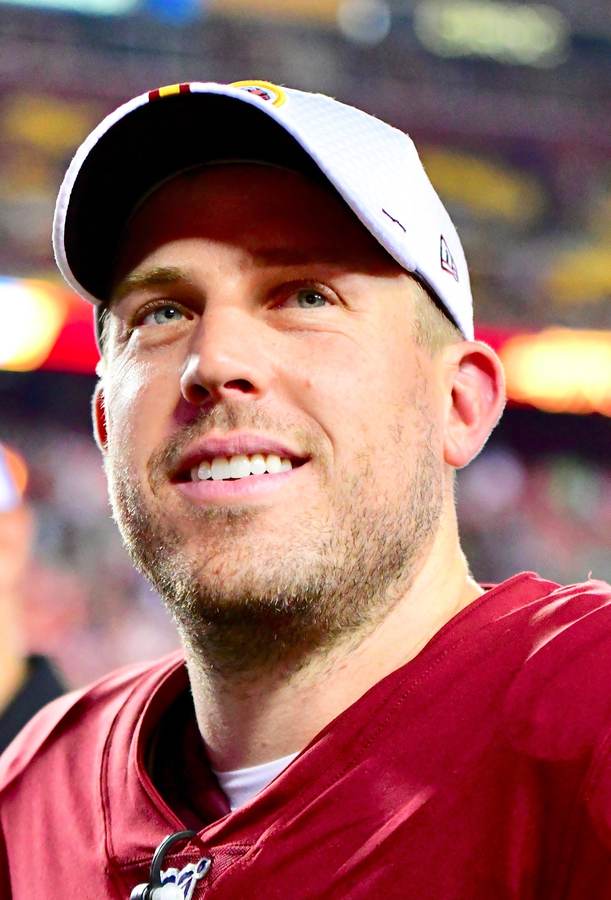
CHICAGO — The Case Keenum Bears Eagles result was the kind of prime-time reversal the NFL produces when depth, preparation and game control overpower the depth chart. Chicago's 38-year-old third-string quarterback had not started in 1,009 days and had not appeared in a regular-season game since December 2023. By the end of Monday night at Soldier Field, he had completed 24 of 34 passes for 247 yards, thrown two touchdowns, run for another and steered the Bears to a 27-7 victory that put both teams at 2-1.
The quarter-by-quarter line described the evening's shape: Chicago 7-3-10-7, Philadelphia 0-7-0-0. Keenum found rookie Luther Burden III for an eight-yard touchdown, hit Kalif Raymond for a 41-yard score after halftime, and finished an eight-minute fourth-quarter drive with a one-yard sneak on third-and-goal. His passer rating was 110.8. He threw no interceptions. For a quarterback asked primarily not to lose the game, the more accurate description is that he won it.
Why this matters
Chicago entered the night without Caleb Williams, sidelined by a hamstring injury, and without a normal week for backup Tyson Bagent. Bagent cleared the concussion protocol on September 27 after being hurt in Week 2, but he lacked the practice repetitions required to run the plan. The Bears stayed with Keenum, and the decision changed more than one result. It showed that Chicago can survive a disruption at the sport's most important position without shrinking the offense into a holding pattern.
The Bears did not win on trickery or one broken play. They outgained Philadelphia 375-248, held the ball for 36 minutes 53 seconds and forced three turnovers. That is a repeatable blueprint: protect the football, sustain drives, create short fields and make the opposing offense play from behind. It also matters in the standings. At 2-1, Chicago leaves Week 3 with proof its ceiling does not disappear the moment Williams is unavailable. Philadelphia, also 2-1, leaves with more urgent questions than the score alone creates.
Keenum's 67th start looked nothing like a farewell cameo
Keenum's last start came on Christmas Eve 2023, when Houston lost 36-22 to Cleveland. Monday was start No. 67 of a career that has repeatedly survived the league's impatience. The historical parallel is not just longevity. With this victory, Keenum joined Ryan Fitzpatrick as the only quarterbacks to win starts for seven different NFL teams — a record built less on franchise status than on the ability to enter unfamiliar circumstances and make an offense functional.
His three total touchdowns also carried a strange echo. Keenum had not produced a three-touchdown game since the 2019 season opener, when he did it for Washington against these same Eagles. The fourth-quarter sneak was his first rushing touchdown since 2019. Those details make the night memorable; the film logic makes it credible. He took the throws the structure provided, moved the chains and avoided the negative plays that can turn a backup start into a field-position disaster.
For Keenum, there was a family dimension beyond the statistics. This was the first game he played in front of both of his young children. His wife, Kimberly, and the children watched an unlikely return become a complete victory, and Keenum told ESPN's Laura Rutledge afterward that sharing the night with them gave the performance a significance the box score could not capture.
The numbers behind the Bears Eagles score
Possession and efficiency explain why a 10-7 halftime game became a rout. Chicago ran through a balanced distribution: Raymond caught six passes for 90 yards and the long touchdown, Burden caught seven for 61 and a score, and D'Andre Swift carried 20 times for 84 yards. Keenum's 24 completions went to a receiving group that produced yards after the catch without asking him to force deep throws into coverage.
Philadelphia's second half went the opposite direction. The Eagles gained roughly 62 yards after halftime, went 2-for-9 on third down and committed 10 penalties. Saquon Barkley still found 82 yards on 15 carries and DeVonta Smith caught six passes for 65, but those isolated gains never became sustained scoring pressure. Chicago's edge in total yardage was 127 yards; its time-of-possession edge was nearly 14 minutes. A team cannot create a comeback if it cannot keep the ball.
The turnovers sharpened every imbalance. Tank Bigsby lost a fumble. Rookie Dillon Thieneman made his first career interception when Andy Dalton, briefly replacing Jalen Hurts during a concussion check, forced a pass into the end zone. Later, on fourth-and-five, T.J. Edwards intercepted Hurts. Chicago's defense did not merely limit points; it repeatedly ended possessions before Philadelphia could test a tiring opponent.
Philadelphia's offensive breakdown
Hurts finished 16-of-25 for 153 yards with one interception and scored Philadelphia's only touchdown on a tush push on the final play of the first half. That drive offered a route back into the game, especially with the Eagles receiving the second-half kickoff. Instead, the offense produced two quick three-and-outs, and Chicago's 41-yard Keenum-to-Raymond touchdown stretched the lead to 20-7.
Critics will focus on Hurts because quarterbacks absorb the verdict in prime time, but the failure was collective. The line did not consistently create manageable third downs. Penalties erased rhythm. Dalton's red-zone interception cost a scoring opportunity during Hurts's evaluation. The defense then allowed a third-string quarterback to control long drives. Philadelphia was not beaten by one spectacular gamble; it was beaten snap by snap, in the areas a contender usually treats as foundational.
Who benefits, who loses and what the critics will say
Keenum is the obvious winner, but the broader beneficiary is Chicago coach Ben Johnson and his offensive staff. Their plan protected a veteran without patronizing him. Raymond and Burden also gained: each demonstrated he can be a primary answer when defenses crowd the run or devote coverage to other targets. The defense benefits most of all from an offense that stayed on the field; pass rushers and coverage players were not asked to defend endless short fields.
Bagent loses certainty, though not necessarily his place. He entered the season as the No. 2 quarterback, and a concussion should not erase the work that earned that role. But Keenum's performance raises the standard for the next decision. If Williams remains out, Chicago cannot treat the backup choice as automatic. The staff must weigh practice health and developmental investment against what Keenum just demonstrated under national scrutiny.
For the Eagles, the losses are conceptual. Their 2-0 start had contained warning signs, but wins tend to mute criticism. A 20-point loss to a third-string quarterback amplifies every concern at once: slow starts, third-down failure, penalty discipline and an inability to generate explosives when trailing. Skeptics can reasonably argue that one September night should not redefine a roster. They can also point out that serious teams use September to remove flaws, not explain them away.
Historical context: the backup quarterback upset
The NFL's most durable backup-quarterback stories share a pattern. They are not usually about a substitute reproducing the starter's full skill set; they are about a veteran understanding which risks the game does not require. Keenum's career already contains the Minneapolis Miracle and multiple emergency assignments. Fitzpatrick's seven-team winning mark represents the same portable competency. Monday added Keenum to that narrow company.
The comparison should not become a quarterback controversy for its own sake. Williams remains Chicago's franchise investment and the offense's long-term ceiling. Keenum's value is different: he showed that a team can keep its identity while the starter heals. That changes the risk calculation around Williams's hamstring. The Bears do not need to accelerate a return merely because the next game matters.
What happens when Caleb Williams returns?
The first scenario is the cleanest: Williams is medically ready, returns as the starter, and Keenum resumes a reserve role with enhanced trust. Monday then becomes insurance made visible — evidence that the Bears can navigate another injury later in the season.
The second scenario is a continued absence. If Williams needs another week, the staff must decide whether Keenum's command outweighs Bagent's standing as the preseason No. 2. Bagent cleared the protocol, but clearance and readiness are not identical. A full practice week could restore the original order; Keenum's 110.8 rating and turnover-free performance could also make continuity the safer choice.
The third scenario is the one Chicago should resist: allowing one excellent night to distort Williams's development. Keenum can stabilize the present without becoming the future. The useful lesson is not that the Bears discovered a new franchise quarterback at 38. It is that they built enough structure around the position for a prepared veteran to execute it. That is how a 2-1 team becomes more resilient rather than merely more controversial.
What comes next for both 2-1 teams
Chicago's next task is to carry this discipline into a shorter preparation week: keep the run game credible, preserve the quick-game answers that helped Keenum, and make the quarterback decision from medical and practice evidence rather than public pressure. The defense must show that three takeaways were a standard it can sustain, not a prime-time spike.
Philadelphia has the harder diagnostic problem. Its rushing talent remains real, and Hurts's résumé is not erased by one game. But 62 second-half yards, 10 penalties and a 2-of-9 third-down line are structural alarms. The Eagles need cleaner early-down execution and a response to defenses that can force them into obvious passing situations. At 2-1, there is time. The danger is mistaking time for proof that the problems will fix themselves.
Sources
- NBC Sports, “Monday Night Football: Case Keenum, Bears beat Eagles 27-7”
- New York Post, “Case Keenum's epic Bears night comes with special family twist”
- USA Today, analysis of Keenum's Monday Night Football win
- Reuters, “Third-string QB Case Keenum guides Bears in blowout of Eagles”
- Wikimedia Commons, Case Keenum photograph
Reporting basis: Final score, drive sequence, player statistics, injury context and career milestones are drawn from the cited game reports. Claims that Keenum set a Bears age record or that Robert Griffin III campaigned for him to keep starting were not included because they were not independently confirmed in the available sources. The requested Commons file is used, but its exact creator and license could not be independently verified because the file page was unavailable; no attribution was inferred from neighboring images.