US Politics
A federal judge refused the Justice Department’s emergency demand to stop California counting mail ballots from more than 20,000 voters the Trump administration alleges are likely noncitizens — and warned federal officials to stop threatening the election workers who process the votes, five days before a midterm election that will decide control of Congress.
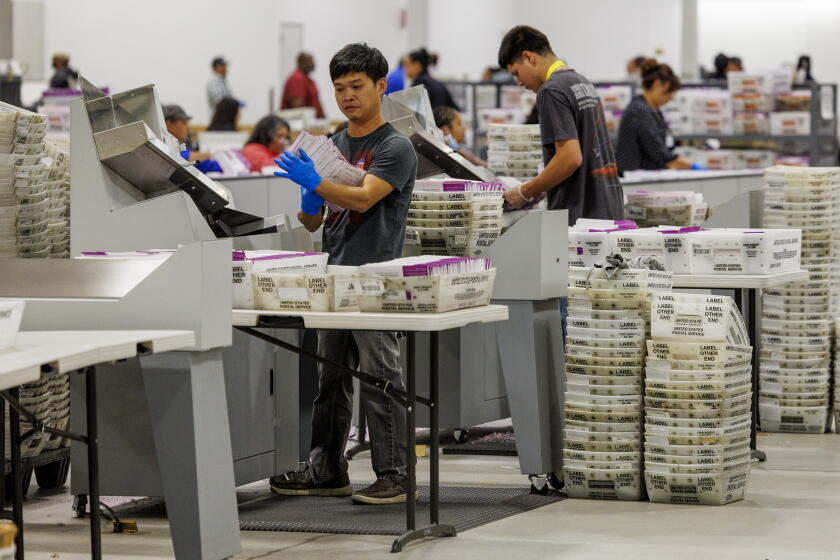
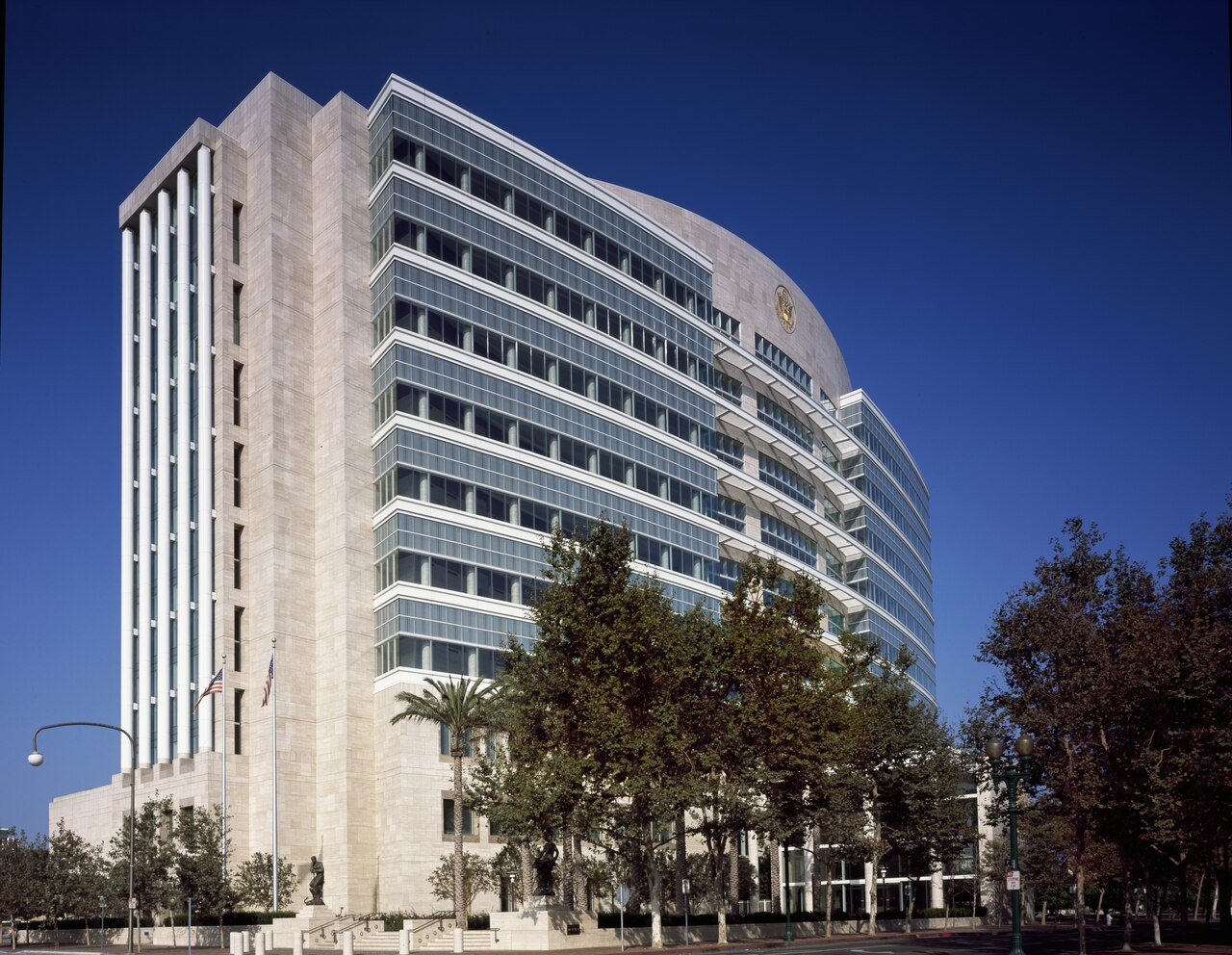
The DOJ California ballots ruling landed on Wednesday with an election already underway. U.S. District Judge David Carter rejected the Justice Department’s request for a temporary restraining order that would have barred California from counting mail ballots for the November 3 midterm elections cast by people on a federal list of more than 20,000 registered voters whom the Trump administration alleges are likely noncitizens. The decision followed a hearing on Tuesday in Los Angeles federal court, where California argued that the department’s assertions rested on “suspect data” and that complying would risk disenfranchising eligible voters.
The Justice Department filed its lawsuit on October 15 — a rare federal intervention in the mechanics of voting weeks before an election — after Secretary of State Shirley Weber and Los Angeles County Registrar-Recorder Dean Logan balked at demands to set the flagged voters’ ballots aside. Carter’s rejection was the second refusal in a single week: on Monday, the 9th U.S. Circuit Court of Appeals rejected the department’s unusual emergency request to block the counting before Carter could rule at all. And closing Tuesday’s hearing, Carter delivered the line that may outlast the ruling itself, addressed to the department and its lead local prosecutor: “This court believes that it would be wise that any threats to state and county election employees cease immediately.”
Precision matters, because the ruling will be misdescribed from both directions. Carter rejected an emergency bid at the temporary-restraining-order stage; he did not end the case. The underlying lawsuit continues, the merits have not been decided, and the more than 20,000 people on the federal list are people the administration alleges are likely noncitizens — the department has not said how many of them actually submitted a mail ballot, and it has never publicly explained how the list was built. What the ruling settles is narrower and, for the next five days, decisive: California flagged ballots counted for the midterms will be processed under California’s existing rules, without a federal segregation order hanging over the count.
What Carter decided — and what he did not
The order the Justice Department wanted was sweeping in effect even if narrow in form: California and Los Angeles County were to identify ballots returned by voters on the federal list, pull them out of the ordinary count, and hold them uncounted while citizenship was verified — in an election in which millions of mail ballots had already been returned and processing was underway. Carter refused. In his written order, as reported by MyNewsLA, the requested intervention “would wreak havoc and disrupt the election that is already underway, create a chilling effect on election workers and voters alike, and discount the votes of United States citizens.” He opened the order, Democracy Docket reported, with a sentence aimed at the demand’s novelty: “Never before in American history has the federal government, on the eve of an election, sought to coerce a state and local government to abandon their own Constitutional elections procedures and bend to the will of the Executive Branch.” California and its people, he wrote, “are sovereign, too.”
At the hearing, Carter pointed the department toward the remedy he said the law actually gives it: if individuals voted unlawfully, prosecutors can charge them — as the department has already done in a series of California cases this month. “You’ve got a remedy for goodness sake,” he told the government’s lawyers, according to MyNewsLA. “Go out and indict.” That distinction — prosecution of individual voters after the fact versus a pre-emptive federal order restructuring how a state counts ballots days before an election — ran through the whole hearing. None of it resolves the underlying suit, filed October 15 and certain to continue after the election. The DOJ California ballot lawsuit was rejected as an emergency; it has not been rejected on the merits, because the merits have not yet been heard.
“Cease immediately”: the fight over threats to election workers
The most consequential exchange of the week may not concern ballots at all, but the people who handle them. The department’s case has been fronted by Bill Essayli, the First Assistant U.S. Attorney for the Central District of California, who argued its position on Tuesday. Essayli had earlier posted on X: “Knowingly processing noncitizen ballots is a federal crime under 18 U.S.C. §§ 611 and 2. We will hold election officials accountable.” The Bill Essayli election officials threat — a public warning, from the region’s top federal prosecutor, that county workers could face criminal liability for counting ballots their own state law tells them to count — became a central issue in the courtroom.
California’s answer, delivered by Deputy Attorney General Michael Cohen, was that the statute does not say what Essayli claims. Section 611, Cohen argued, targets individual voters who vote unlawfully; it “has nothing to do with election administration.” The department had “distort[ed] several legal doctrines beyond recognition,” he said, and he characterised the broader effort as “bullying counties.” Essayli’s position, in his own words in court: “What they cannot do is do nothing and proceed to count the votes.” Both theories are on the record, attributed to the lawyers who made them. What is not in dispute is Carter’s response: closing Tuesday’s hearing, he warned that “any threats to state and county election employees cease immediately” — a sentence directed, as Democracy Docket noted, to the Justice Department team in front of him.
As the California arguments wrapped up, Essayli was disqualified from his post by a different federal judge — a separate ruling about his own authority to hold the job. And this was not Carter’s first encounter with the department’s California election campaign: earlier in this same case, he dismissed a Justice Department attempt to force California to hand over its full voter registration list, ruling the demand illegal. The department has sued some 30 states that refused to turn over voter data and, by the account given in court this week, has lost the majority of those fights so far. Common Cause, which backed California, noted in its October 29 statement that a federal judge in Washington had already ruled the department’s voter-list seizure campaign violates voter privacy and states’ authority over elections.
Two courts in one week said no
The institutional story is unusual even by the standards of election litigation. The department did not simply lose before the trial judge. Before Carter had ruled, it went over his head to the 9th Circuit with an emergency request to block the counting itself. On Monday, the appeals court rejected that request, refusing to consider the emergency appeal until Carter had decided the matter in the first instance. California had asked the appeals court to dismiss the manoeuvre outright, calling it “as unprecedented as it is meritless.”
Sequence is substance in emergency litigation, and the department’s attempt to obtain from a higher court, in advance, the very relief the trial court had not yet evaluated was always going to face scepticism. It received a refusal. Then the trial court, having heard full argument, refused as well. Two courts, at two levels, in three days, declined to stop California’s count. That does not make the department’s theories frivolous in the long run — merits litigation may run for months — but it establishes the operative fact for November 3: no court would reorder a state’s ballot processing in the final week of voting on the record the department presented.
The data story: 20,000 names out of 23 million voters
Strip the case to its arithmetic and its oddity comes into focus. California has roughly 23 million registered voters, a figure the state reported in December 2025. The federal list names more than 20,000 of them. Twenty thousand out of 23 million is about 0.09 percent — roughly one registered voter in every 1,150. That is the entire factual universe of the emergency: a list covering less than a tenth of one percent of the electorate, whose construction the department has declined to explain, applied to an election in which the department cannot say how many of the listed people voted at all.
That last gap is not a rhetorical flourish. The department has not said how many of the more than 20,000 flagged people actually submitted a mail ballot. Some share of any registration list will not vote in a given election; some names on any hastily matched list will be inactive, outdated or wrong. State and county lawyers told Carter the list was compiled by an “unreliable” methodology and that the department “still won’t even tell us how the list was generated.” California’s position is that its safeguards are robust, that the department’s assertions rely on “suspect data,” and that forcing counties to act on the list days before an election would risk disenfranchising eligible voters — citizens misidentified by a matching process no one outside the federal government has been allowed to inspect.
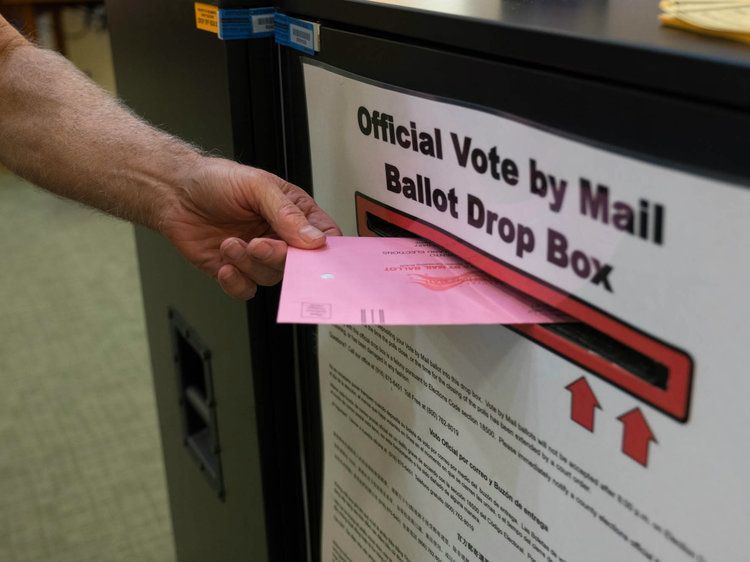
The wider evidence base matters to how the allegation should be weighed. Studies and state audits have repeatedly found that voting by noncitizens in American elections is rare — a conclusion Reuters noted again in reporting Wednesday’s ruling — and the department’s courtroom record this week did nothing to displace it, because the department offered the court a list, not a count of unlawful ballots. That is why this article describes the 20,000 throughout as voters the administration alleges are likely noncitizens. The noncitizen voter list California judge Carter was asked to act on may contain ineligible registrants; it may also contain citizens. On the evidence presented in open court, nobody — including the department that built it — can currently say in what proportions.
48 hours: how the fight reached every county in California
The courtroom fight grew out of a pressure campaign that moved faster than the litigation. Before suing, the department sent letters to Weber and Logan asserting that roughly 20,000 suspected noncitizens were registered and had been sent mail ballots, and demanding action. They balked, questioning the list’s accuracy and the department’s authority, and the department sued on October 15 — the case Signal Post News covered as the DOJ sues California to block 20,000 ballots fight. Then, on Friday, the department widened the campaign: according to the Los Angeles Times, it sent letters to county election offices statewide demanding they segregate ballots from flagged voters, giving officials 48 hours and threatening criminal punishment for refusal — the escalation Signal Post News reported when the DOJ ordered California counties to set aside ballots within 48 hours.
What that demand looks like at county level is best told through Butte County. There, according to the Guardian, Clerk-Recorder Keaton Denlay was handed a poorly formatted Excel spreadsheet on a Friday afternoon by an agent identifying himself as being from the Department of Homeland Security, listing 47 people in his county as unlawfully registered — and was warned that counting their ballots could implicate him personally in a federal crime. Denlay’s response has become the county-level epitaph for the affair: “Taking all this information as a whole, it kind of becomes absurd, so I’m not losing any sleep over it.”
Multiply that Friday afternoon by 58 counties and the administrative reality comes into view. County registrars run elections with small permanent staffs and temporary workers; mail ballots, once opened and separated from their envelopes to protect secrecy, cannot simply be re-sorted by voter. A segregation order days before an election is not a pause button. It is an instruction to rebuild the count mid-flight, under threat of prosecution, on the authority of a list the counties were not permitted to audit — which is why Carter’s warning about threats, and Cohen’s phrase “bullying counties,” were aimed at exactly this machinery.
Why this matters
Start with the calendar. The California mail ballots court ruling 2026 arrived five days before the November 3 midterms, mid-vote, in the state that sends more members to the U.S. House than any other: 52 seats. Control of Congress is tight enough that a handful of California districts are among the races that will decide the House. A federal order segregating California ballots would have thrown the tabulation of the largest House delegation in the country into legal limbo during the very week its results help determine who governs. That is the context in which Carter, and the 9th Circuit before him, weighed the department’s emergency.
Then consider the precedent at stake. For the administration, California is one front in a national campaign: lawsuits against some 30 states over voter data, parallel interventions in Washington and Alaska, and a theory — tested here in its most aggressive form — that the federal executive can compel states to alter ballot processing on the strength of its own undisclosed data-matching. Carter had already rejected the data-demand limb of that campaign in this same case. For California, the fight is over an allocation that long predates this administration: states run elections, and federal courts intervene in a vote’s final days only on powerful showings. Two courts found the showing here wanting. Common Cause, in its October 29 statement, summarised the ruling as blocking “the Department of Justice’s election-eve attempt to pressure local election officials to withhold or discard legitimate ballots without any authority and based on faulty and unreliable data” — advocacy language from an interested party, but a fair statement of where the week’s rulings leave the law.
Finally, consider what emergency litigation does beyond the courtroom. Filed October 15, escalated to every county on a Friday with a 48-hour deadline, appealed before the trial judge could rule, it generates its own facts: frightened county workers, confused voters, and a public impression, impossible to fully correct, that something is deeply wrong with the count. Washington State’s top elections official made precisely that point about the parallel federal letter in his state, saying the timing was meant to cast unfounded suspicion on the election. Courts can deny restraining orders. They cannot un-ring that bell.
The same playbook in two more states
California is the largest stage for the department’s election-eve campaign, but not the only one. In Washington, the department sent a letter on Monday asking officials not to count ballots from 400 voters it says may not be citizens — a smaller list, the same undisclosed methodology, the same timing. Washington’s top elections official responded that the timing itself was meant to cast unfounded suspicion on the vote. In Alaska, the department is in court in a fight Signal Post News is covering separately, where the DOJ sued to block Alaska Senate certification in a dispute built on a ballot-confusion claim involving two candidates with the same surname, asking a judge to prevent certification if the Republican incumbent senator loses narrowly.
Read together, the three interventions describe one playbook with three settings: segregate the ballots (California), hold the ballots (Washington), or hold the certification (Alaska). Each asks a court, or a state official under federal pressure, to interpose a federal objection between voters and a result. California’s courts have now answered twice in one week. The answers in Washington and Alaska are still being written, and lawyers in both states will be reading Carter’s order closely.
Who gains, who pays
An honest accounting has to separate the ruling’s legal effect from its political residue. Legally, California won the week outright: its count proceeds intact, its officials face no segregation order, and a federal judge has told the department, on the record, to stop threatening the state’s election workforce. The administration lost both emergency applications. But it retains something it plainly values: the suspicion itself. The claim that California’s rolls hold more than 20,000 likely noncitizens has now been repeated through two court filings, a statewide letter campaign and days of national coverage, while the corrections — methodology undisclosed, no count of how many flagged people voted, noncitizen voting rare in studies and audits — travel more slowly. Even in defeat, the narrative the department wanted in circulation is in circulation.
The costs are concrete and local: county offices that spent the final week before a midterm answering federal ultimatums instead of simply running the election; temporary workers processing ballots under headlines suggesting their work might be criminal; and every voter on a list no one will explain, wondering whether voting invites federal scrutiny of their citizenship. Carter’s order removes the legal threat over the count. It does not reimburse the counties, and it cannot restore a quiet final week of voting.
What happens next
The election comes first. California will count its mail ballots under its own procedures, and the flagged voters’ ballots will be tabulated with everyone else’s for November 3. Nothing in the ruling prevents the department from prosecuting any individual it can prove voted unlawfully — the remedy Carter pointed to from the bench — and nothing prevents it from continuing the underlying lawsuit, which now moves from emergency skirmishing to the slower merits track, almost certainly extending well past the election it sought to reshape.
The appellate track is the immediate watch. Essayli responded to the ruling by announcing the department would take the fight back to the 9th Circuit and seek emergency relief there — returning to the court that refused its first emergency approach on Monday, now with Carter’s reasoned order in its way. Emergency intervention after a full trial-court hearing, days before an election, on a record two courts found insufficient, is a steep climb; but the department has shown no inclination to climb down, and escalation toward the Supreme Court’s emergency docket cannot be ruled out. Watch, too, for the follow-on proceedings Carter trailed for the coming weeks, at which the department may finally have to explain, on the record, how its list of more than 20,000 names was actually built.
And watch the other two states. Washington’s 400 names and Alaska’s certification fight are the same argument in different procedural clothes, and Carter’s reasoning — that the executive cannot substitute its own undisclosed list for a state’s election procedures on the eve of a vote, and that threats against the people who run elections must stop — is now the leading judicial word on it. The ballots, meanwhile, are being counted. Five days before the election that decides Congress, that is what Wednesday’s ruling actually decided.
Sources
- Reuters, October 29, 2026 — Carter’s rejection of the temporary restraining order, the Tuesday hearing, California’s “suspect data” response, the 9th Circuit’s refusal, and the context that studies and state audits show noncitizen voting is rare.
- Los Angeles Times, October 2026 — the department’s Friday letters to county election offices statewide demanding segregation of flagged voters’ ballots within 48 hours under threat of criminal punishment, following earlier letters to Secretary of State Shirley Weber and Registrar Dean Logan.
- Democracy Docket, October 2026 — Carter’s closing warning that threats to election employees should “cease immediately,” Essayli’s 18 U.S.C. §§ 611 and 2 post, Deputy Attorney General Michael Cohen’s response, and Essayli’s disqualification.
- MyNewsLA, October 28, 2026 — “LA Judge Tosses DOJ Emergency Bid to Set Aside 20,000 ‘Suspect’ Ballots”: the “wreak havoc” order language and the department’s suits against 30 states over voter data.
- The Guardian, October 2026 — Butte County Clerk-Recorder Keaton Denlay, the 47-name spreadsheet delivered by an agent identifying as DHS, and the warning that counting the ballots could implicate him in a federal crime.
- Common Cause, statement, October 29, 2026 — the ruling “blocked the Department of Justice’s election-eve attempt to pressure local election officials to withhold or discard legitimate ballots without any authority and based on faulty and unreliable data,” and the earlier D.C. ruling against the voter-list seizure campaign.