J&J Raises Guidance but Shares Fall 3.9% as MedTech Disappoints

Track it live: Live global markets tracker
The headline Johnson & Johnson Q3 earnings figures were, on their own terms, respectable. Third-quarter sales reached $25.40 billion, just shy of what analysts had expected. Adjusted earnings were $2.59 a share — a figure that beat some published estimates of $2.52 and landed a cent short of others, a split that itself tells you how finely balanced the quarter was. The company then raised its full-year outlook for both sales and profit, with annual sales now expected to reach up to roughly $101.4 billion. On an ordinary morning, that combination — in-line quarter, raised guidance — buys a flat-to-positive stock. J&J did not get an ordinary morning: it reported in the middle of the heaviest earnings session of the season, alongside the banks in our JPMorgan and Goldman Sachs earnings report, and investors who had pushed the shares up 27% this year before Tuesday chose to sell the details.
Medicines carried the quarter
The engine was pharmaceuticals. Medicine revenue came in at $16.76 billion, roughly two-thirds of the company's total, helped by Tremfya, its psoriasis and inflammatory bowel disease drug, which has become one of the growth pillars J&J is building as older blockbusters face competition. That mix shift is the central strategic fact about modern J&J: since spinning off its consumer health business, the company has asked investors to value it as an innovative-medicines and devices company, and quarters like this one — drugs up, devices down — test both halves of that thesis at once.

MedTech, the devices division, was the problem. Sales of $8.64 billion missed expectations, and — the detail that most concerned analysts — all four of the division's segments underperformed rather than a single product line dragging the rest. Broad-based softness in devices usually points to procedure volumes, pricing pressure or share losses in hospitals rather than a one-off supply issue, and it lands at an awkward moment: J&J has been investing heavily in areas like surgical robotics and cardiovascular devices precisely to make MedTech a growth business rather than a drag. A guidance raise built on medicines can paper over one soft device quarter. It cannot paper over a pattern.
The orthopaedics question: spin, not sell
The day's most consequential news may have been structural rather than numerical. J&J's chief financial officer signalled that the company would prefer to spin off its Orthopaedics unit — the business, housed in DePuy Synthes, that makes hip and knee replacements, spine products and trauma hardware — rather than sell it outright. A spin-off hands the unit to existing shareholders as a separate listed company; a sale converts it to cash and, usually, a tax bill. Management's stated preference for a spin suggests it believes the unit is worth more as an independent company — or worth more to shareholders that way — than what a buyer would pay today, with MedTech sentiment weak.
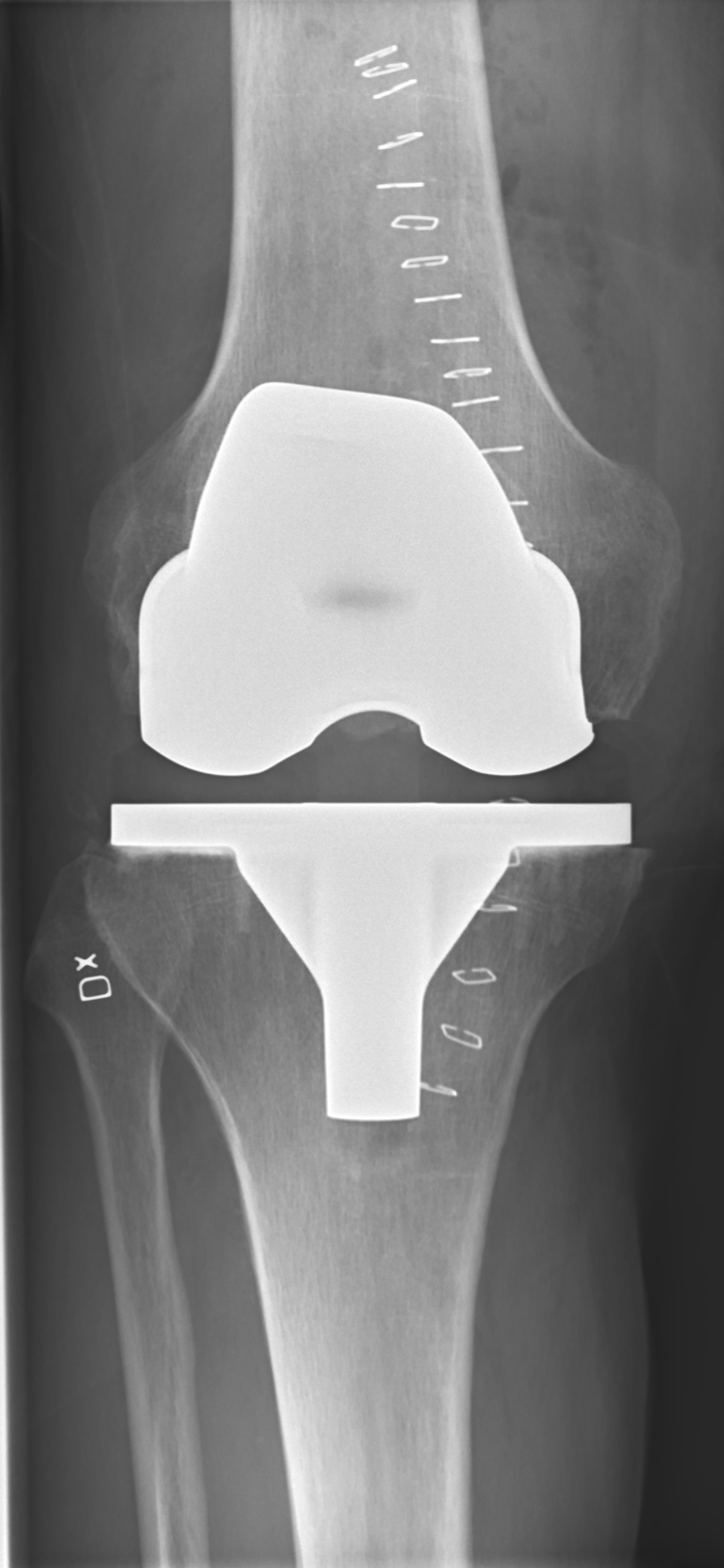
Orthopaedics is a steady, demographically blessed business — ageing populations need new knees and hips in rising numbers every year — but it grows slowly and competes against focused rivals such as Stryker and Zimmer Biomet, whose shares often trade at richer multiples than the segment earns inside a conglomerate. That is the classic spin-off argument: the unit is worth more visible than buried. The counter-argument is equally classic: orthopaedics throws off dependable cash that funds the drug pipeline's risks, and separating it shrinks the diversified cushion that has defined J&J for a century. Tuesday's signal does not settle the debate, but it tells investors which way management is leaning — and it follows the consumer-health separation as the second major piece of the old empire to be prepared for life outside it.
Why this matters
J&J is one of the last true healthcare conglomerates, and its slow unbundling is a case study in how Wall Street now values size. A generation ago, diversification was the point: bandages, baby products, cancer drugs and knee implants under one roof smoothed every cycle. Today the market pays premiums for focus and punishes blended multiples, and J&J's own stock tells the story — up 27% this year before Tuesday, largely on the medicines business, even as its device arm wobbled. Each separation makes the remaining company easier to value and easier to blame. There is no longer anywhere for a weak division to hide.
The quarter also matters beyond one stock. J&J is the first of the big healthcare names to report in a season investors are watching for two things: whether drug pricing and volume can keep offsetting patent losses across the industry, and whether hospital procedure demand — the tide that lifts every device maker — is still rising. Tuesday's answer was split in a way that previews the whole season: prescriptions strong, procedures soft. The broader setup, from bank earnings to the inflation print, is in our Wall Street week-ahead preview, and the macro backdrop the IMF laid out this week is in our IMF global economy warning report.
What the numbers actually say
The market's 3.9% verdict looks harsh against a guidance raise, until you price in where the stock started the day. A share price up 27% year-to-date has already banked a great deal of good news; from that level, "sales just shy of estimates and devices weak everywhere" is a reason to take profits, and several of Tuesday's other reporters got the same treatment — Wells Fargo, reporting the same morning, beat on earnings per share at $1.87 but missed on revenue ($21.87 billion) and net interest income ($12.52 billion) and slipped too. Perfection was the entry price across the whole session.
Look at the mix, though, and the guidance raise is credible rather than cosmetic. Medicines at $16.76 billion against MedTech at $8.64 billion means the growing, higher-margin business is now nearly twice the size of the struggling one; a company does not need devices to shine for the total to rise when drugs carry that much weight. The risk is concentration. The more J&J becomes a medicines company with a device business attached, the more its valuation rides on a handful of drugs like Tremfya and on the patent calendar — the exact exposure the old conglomerate structure existed to dilute. The spin-off preference fits that logic: if concentration is coming anyway, shareholders may as well own the orthopaedics cash flows directly, at a pure-play multiple, instead of at a conglomerate discount.
What happens next
Three things will decide whether Tuesday was a blip or a turning point. First, the orthopaedics separation: expect formal details — structure, timing, leadership — to matter more to the stock than any single quarter from here, because a spin re-rates both the parent and the unit. Second, MedTech's fourth quarter: one broad miss is a warning, two is a trend, and management will be pressed on whether procedure softness is industry-wide or share loss to rivals. Third, the drug pipeline's ability to keep the guidance streak alive as the year turns — the raise to roughly $101.4 billion in sales sets a bar the company now has to clear in public.
For the wider market, J&J's morning was a useful early read on earnings season's mood. Investors arrived willing to reward clean beats and quick to punish anything mixed, however good the guidance. A healthcare giant raised its outlook and lost nearly 4% anyway. Every company reporting after Tuesday now knows the standard.
Sources
Johnson & Johnson third-quarter 2026 results and full-year guidance update (company release, October 13, 2026); contemporaneous market coverage of Johnson & Johnson, JPMorgan Chase, Goldman Sachs, UnitedHealth and Wells Fargo third-quarter results, October 13, 2026.