World / Nepal — Two Japanese climbers missing in Nepal have not been heard from since October 15, high on Gangapurna West, an unclimbed 7,140-metre Himalayan peak. Helicopter searchers have found a bag — and nothing else. Nepali officials must now decide whether to fly again on Friday.
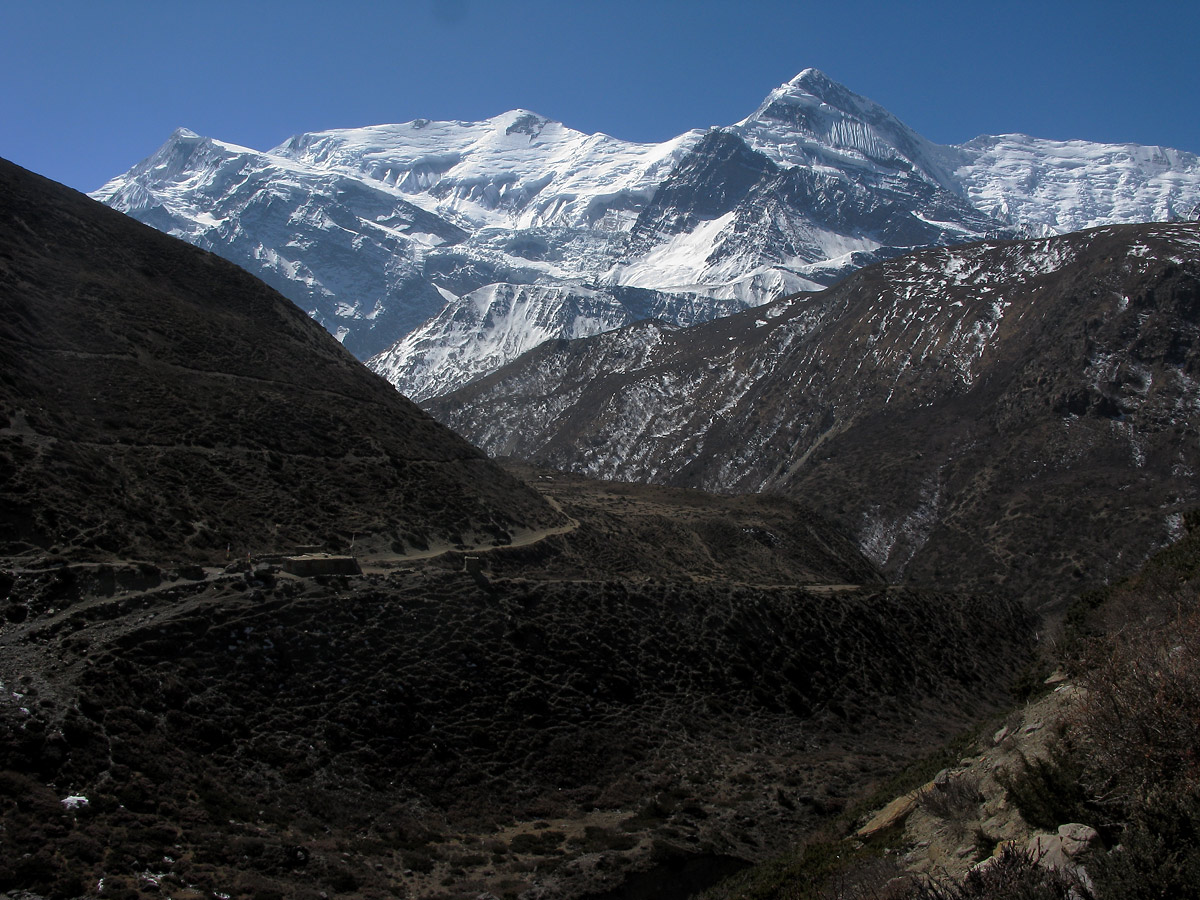
Two Japanese climbers are missing on a Himalayan peak in northern Nepal, and the search for them has entered the phase every mountaineer dreads: the phase where the mountain has stopped answering. Hidesuke Taneishi and Tetsu Hashimoto have been out of touch since October 15 on Gangapurna West, a 7,140-metre (23,425-foot) peak in the Manang district of the Annapurna region, Mukti Ram Khanal, the district's chief district officer, said on Thursday, according to Reuters. The pair were last in contact at about 7,100 metres (23,293 feet) — within roughly 40 vertical metres of a summit nobody has ever stood on. Helicopter rescuers have found no sign of them apart from what appeared to be their bag near the summit, Reuters reported, and authorities are discussing whether to mount another rescue operation on Friday, October 23.
Seven days of silence at that altitude is the fact that hangs over everything else in this story. It is not a verdict — climbers have survived longer silences, and this article will not pretend otherwise — but it is the arithmetic that the men's families, their Kathmandu outfitter and the officials in Manang are all doing tonight, whether they say so out loud or not.
What is known: a bag, a walking stick, and two different altitudes
The confirmed facts are few, and they deserve to be stated precisely, with their sources attached, because in a story like this one the gaps between accounts are themselves information. Reuters, citing Chief District Officer Mukti Ram Khanal, reported on October 22 that the climbers have been missing since October 15, that they were attempting Gangapurna West at 7,140 metres, that officials last had contact with them at about 7,100 metres a week ago, and that helicopter rescuers found what appeared to be their bag near the summit. ExplorersWeb, the mountaineering news outlet that has followed this expedition since September, named the two men as Hidesuke Taneishi and Tetsu Hashimoto, reported that they have been out of touch since October 15 according to Japanese media, and confirmed with Khanal that a helicopter search-and-rescue operation is under way in difficult terrain and deteriorating conditions.
Kathmandu's Tourism Times, citing police, added the ground-level details: the climbers are reported to be from Tokyo; they began their expedition with a Nepali guide after arranging the trip through Cosmo Adventure, a Kathmandu-based company; contact was lost from an altitude of around 7,050 metres; their guide informed the company on October 16; and searchers found a bag and a walking stick. Their families have been informed, the paper reported, and their whereabouts and condition remain unknown.
Read those accounts side by side and two small discrepancies appear. The last-contact altitude is about 7,100 metres in the Reuters account and around 7,050 metres in the police account carried by the Tourism Times. The found objects are a bag in one account, a bag and a walking stick in the other. Neither discrepancy is sinister, and neither should be smoothed away: at 7,000 metres, in a search conducted from a helicopter over broken ice, a 50-metre difference in a reported position is the difference between one serac band and the next. What both accounts agree on is the shape of the event — two climbers, very high on an unclimbed face, a silence that began on October 15, and a search that has so far recovered objects, not people.
An unclimbed peak, a storm, and a Russian team that turned back
Gangapurna West is not a famous mountain, and that is precisely why Taneishi and Hashimoto were on it. The main summit of Gangapurna, at 7,455 metres, was first climbed by a German expedition in 1965 and rises directly above the village of Manang on the Annapurna Circuit. Its western top — also known as Asapurna or Peak Lachenal — has never been climbed, according to ExplorersWeb. In modern Himalayan mountaineering, where the 8,000-metre peaks are queued for and the trade routes are fixed with ropes each season, an unclimbed 7,140-metre summit in the Annapurna region is a genuine prize: a first ascent, a new line, and a place in the record books that no amount of money can buy after the fact.
The pair travelled to Nepal in September, ExplorersWeb reported, aiming at that first ascent in alpine style — a small team, moving light, without the infrastructure of a commercial expedition. Then the weather intervened. A major storm hit Nepal's mountains about three weeks ago, and when no news came from the Japanese pair, the assumption in the climbing community was that they had done the sensible thing and retreated. It now appears they did not — or could not.
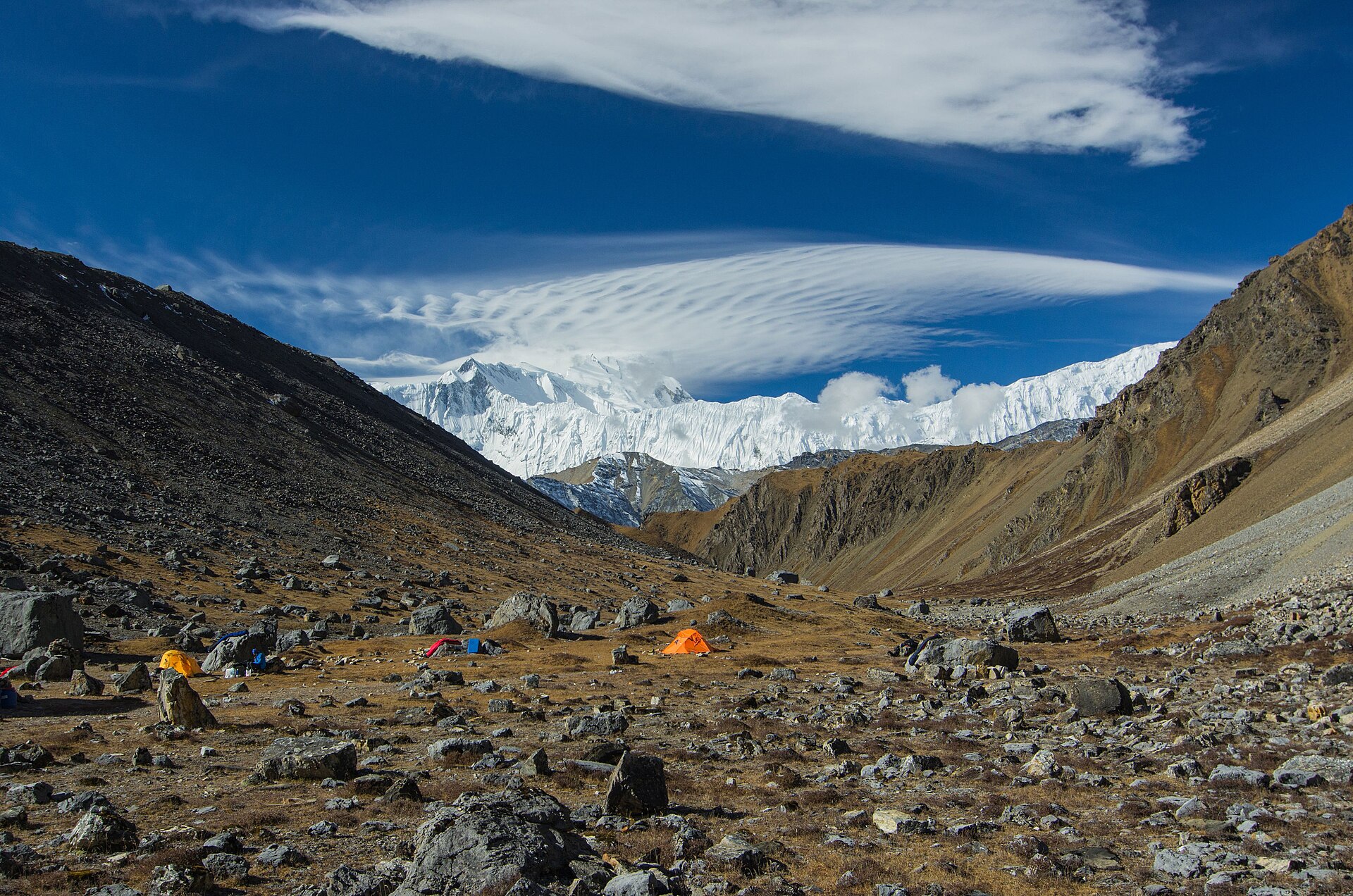
They were also not alone on the mountain. A Russian team pursuing the same unclimbed summit reached Gangapurna West earlier this month and reportedly found no sign of the Japanese climbers on the peak. Bad weather forced the Russians down from their own summit attempt at 6,800 metres, ExplorersWeb reported. That detail matters for two reasons. First, it means a competent team was on the same mountain, higher than most searchers will ever get, and saw nothing — no camp, no tracks that survived the weather, no sign. Second, it fixes the brutality of the conditions in a number: if a fresh team turned back at 6,800 metres, then whatever happened to Taneishi and Hashimoto happened at or above roughly 7,050 to 7,100 metres, in the same weather window, on terrain nobody has ever completed.
Why this matters
It would be easy to file this story as a remote misfortune — two men, a faraway mountain, a risk freely chosen. That filing would miss what the Gangapurna West search is actually testing, which is the shrinking margin between ambition and rescue in the modern Himalaya.
The first-ascent frontier has moved. The famous summits are climbed; the frontier now is exactly this kind of objective — unclimbed subsidiary tops, new routes, small teams moving fast and light in the post-monsoon season. That style of climbing is widely admired, and it is also the style with the thinnest safety net: no fixed ropes above them built by an expedition machine, no line of high camps stocked with oxygen and food, no large team to notice within hours that something is wrong. When contact was lost on October 15, it was their guide, lower down, who raised the alarm with Cosmo Adventure on October 16 — the system worked as designed, and the design still left a week between the silence and Thursday's public confirmation.
The rescue side of the equation is just as strained. A helicopter search at 7,100 metres is close to the operational ceiling of the machines that fly in Nepal: the air is too thin to hover with power to spare, landing near a summit ridge is out of the question, and a search crew's eyes are fighting cloud, spindrift and the camouflage of white on white. The bag found near the summit tells searchers where to look; it cannot tell them what they most need to know. And Manang's officials are making these decisions in a district that, only weeks ago, was recovering bodies from the Himlung Himal avalanche — a disaster in the same district, in the same season, that killed Nepali mountain workers preparing a base camp for foreign clients, and that this site covered as it unfolded: the Himlung avalanche in Manang district. Nepal's autumn season has already asked more of its rescuers, guides and district officials than any season should. Gangapurna West is asking again.
There is a harder question underneath, and honest coverage should name it. When a search becomes a recovery — if it does — the cost and the risk are borne overwhelmingly by Nepalis: the pilots, the district administration, the guides, the families in Manang and Kathmandu who staff the system that foreign ambition relies on. The debate about who should pay for high-altitude rescue, and what small alpine-style teams owe that system before they climb, is not new. A week of silence on an unclimbed peak is the kind of event that forces it back onto the table.
The numbers that frame the search
Strip the story down to its figures and the shape of the problem is stark. The peak: 7,140 metres. The last contact: about 7,100 metres by the district officer's account, around 7,050 metres by the police account — either way, within a single rope-length or two of the top, in the zone mountaineers call the death zone's front porch, where the human body is deteriorating by the hour even when it is resting, fed and sheltered. The Russian turnaround: 6,800 metres, which means the strongest recent attempt on this same summit stopped roughly 300 metres below the point where the Japanese pair were last heard from. The silence: seven days, from October 15 to October 22, spanning at least one major weather cycle. The found evidence: one bag, and by the police account a walking stick — equipment separated from its owners near the summit, which can mean many things, from a deliberate cache on a descent to a fall, and therefore, on its own, proves nothing.
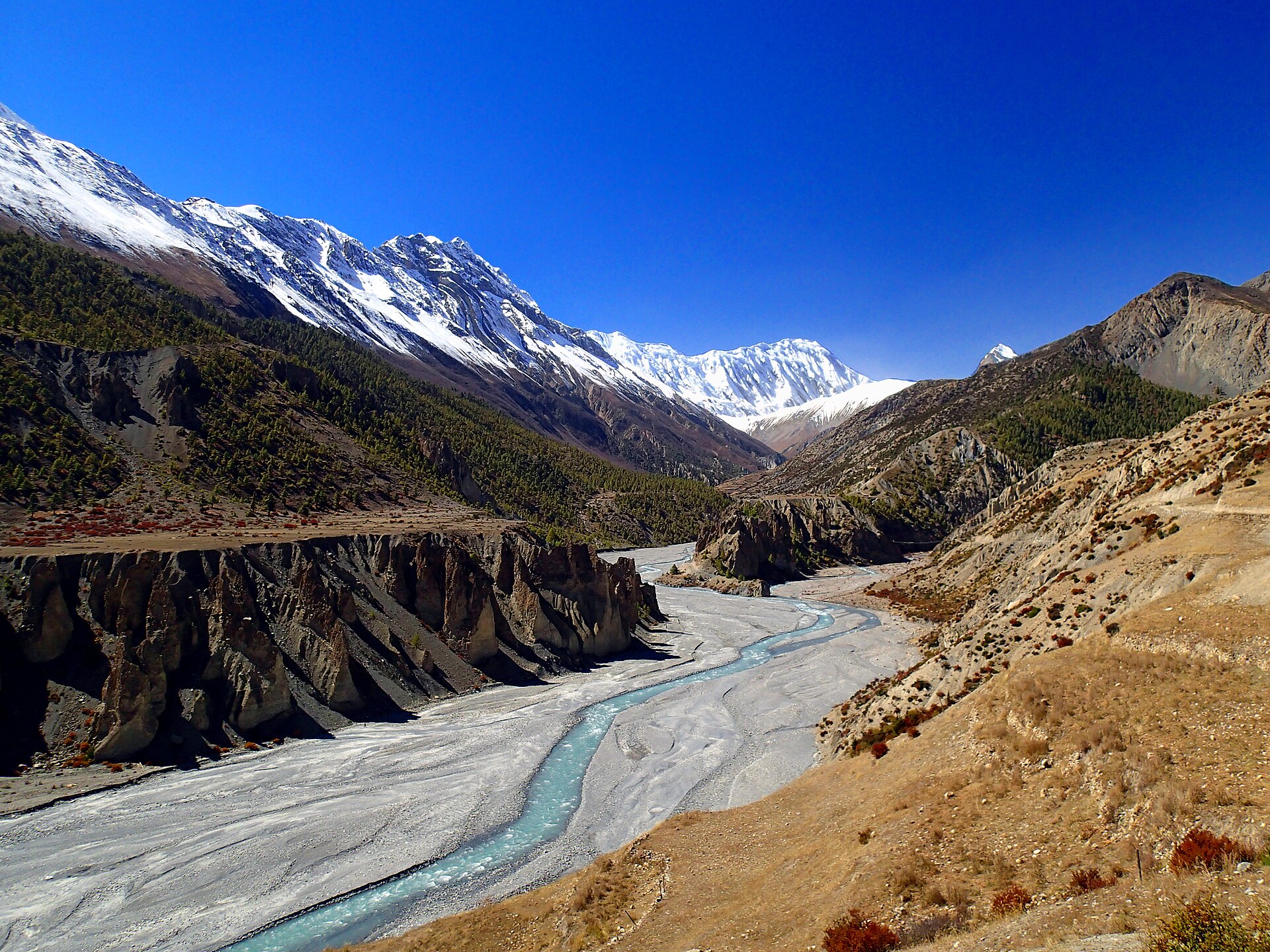
Context sharpens rather than softens those numbers. Gangapurna's main summit, climbed in 1965, stands 315 metres higher than its western top — a reminder that the West peak's difficulty was never its altitude alone but its unclimbed, unmapped upper terrain. Nepal is home to eight of the world's fourteen 8,000-metre peaks and earns a significant share of its tourism income from the climbing economy built around them; Manang district sits on the Annapurna Circuit, one of the most walked trails on earth, which makes the remoteness of what happens above 7,000 metres there easy to underestimate. Thousands of trekkers pass through Manang village at about 3,500 metres every season. The search unfolding this week is happening more than three and a half vertical kilometres above their heads.
What happens next: Friday's decision
The immediate question is the one Khanal's office was still debating on Thursday: whether to conduct another rescue operation on Friday, October 23, Reuters reported. That decision is not bureaucratic hesitation; it is a genuine operational judgement, balancing a weather window against crew safety, a helicopter's performance at extreme altitude against the diminishing probability that another pass finds what previous passes did not. If Friday brings flyable weather, expect the search to concentrate on the summit area where the bag was found and on the fall lines and couloirs below the last-contact altitude — the places a climber who slipped, or who descended in distress, would come to rest. Ground teams, if any are inserted, would likely work from the highest camp that can be safely established, still far below 7,000 metres.
Three scenarios frame the days ahead. In the best — the one everyone involved is entitled to keep working for — the pair are found alive: holed up in a snow cave or a tent below the ridge, out of communication, conserving strength. It has happened before in the Himalaya, and it is why searches are flown at all on day seven. In the middle scenario, the search finds evidence — a camp, a track, further equipment — that narrows the mountain and turns a search of a whole face into a search of a single gully, possibly extending the operation into next week. In the worst, the mountain keeps its secret through Friday's flight, and officials in Manang, the outfitter in Kathmandu and two families in Japan face the decision no protocol can make for them: how long to keep looking, and at what risk to the living.
What is not known
Honesty about the unknowns is not a hedge; in this story it is the core of the reporting. The climbers' condition is unknown — no source has reported a death, and none should be inferred. Their exact position is unknown: the two last-contact altitudes in circulation differ by about 50 metres, and neither may mark where they stopped moving. It is unknown whether they reached the summit of Gangapurna West before whatever went wrong — if they did, theirs would be a first ascent recorded in the cruellest possible way. It is unknown why the bag was where it was found. And it is unknown, as of Thursday, whether Friday's operation will fly at all. What is known is that two experienced climbers went up an unclimbed Himalayan peak in September, that a storm rearranged every plan on the mountain three weeks ago, that a strong Russian team found no trace of them, and that a helicopter has so far brought back a photograph's worth of evidence and nothing more. The search continues. So, on Friday, weather permitting, will the flying.
Sources
Reuters, "Two Japanese climbers missing on a Himalayan peak in Nepal," October 22, 2026 — reuters.com. ExplorersWeb, "Two Climbers Missing on Gangapurna West," October 22, 2026 — explorersweb.com. The Tourism Times (Kathmandu), "Two Japanese climbers missing on Gangapurna for six days," October 22, 2026 — thetourismtimes.com.